Banner

Banner
Showing posts with label art of writing. Show all posts

Wednesday, September 24, 2014

Guest Blog: The Life of a Writer, by Christine Amsden

by Stephanie Osborn
http://www.stephanie-osborn.com

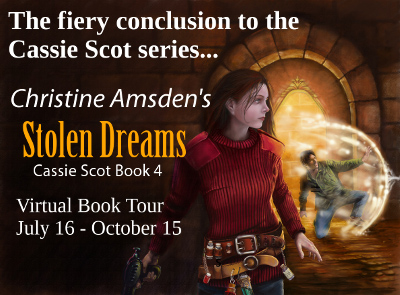
Today we're welcoming fellow Twilight Times author Christine Amsden in for a little break in discussing character development. Instead, we're celebrating the end of a series -- Christine's Cassie Scot series!
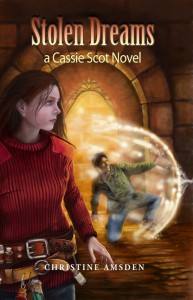

Christine Amsden has been writing fantasy and science fiction for as long as she can remember. She loves to write and it is her dream that others will be inspired by this love and by her stories. Speculative fiction is fun, magical, and imaginative but great speculative fiction is about real people defining themselves through extraordinary situations. Christine writes primarily about people and relationships, and it is in this way that she strives to make science fiction and fantasy meaningful for everyone.creative work may be enough to write an entire novel draft (under extremely bizarre I-officially-hate-you circumstances), or it may only be enough to learn one important lesson before going back to the drawing board. An inspired writer can take a few stolen hours and create magic. An uninspired writer…well, that's the problem with the ideal of the “full time writer,” aside from the paycheck thing. Sooner or later you run out of things to write about.  


At the age of 16, Christine was diagnosed with Stargardt’s Disease, a condition that affects the retina and causes a loss of central vision. She is now legally blind, but has not let this slow her down or get in the way of her dreams.


In addition to writing, Christine teaches workshops on writing at Savvy Authors. She also does some freelance editing work.


Christine currently lives in the Kansas City area with her husband, Austin, who has been her biggest fan and the key to her success. They have two beautiful children.

~~~


The Life of a Writer 

So…you want to be a writer? Are you a dreamer? A story teller? Do you simply love the way words feel when they come together to create a picture? Climb on the crazy train then, and get ready for a long, bumpy ride. 
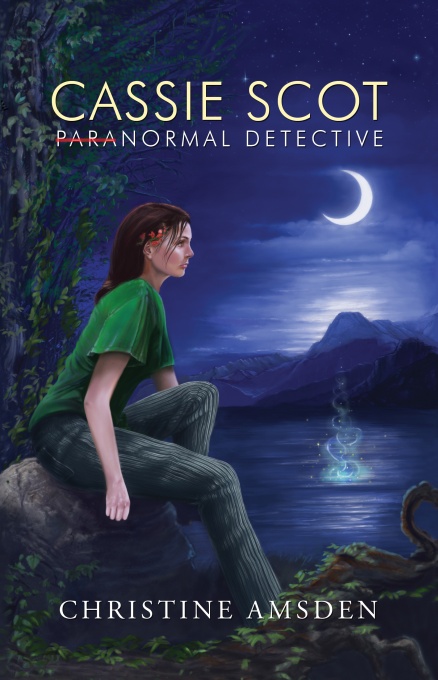
Besides being a writer, I'm also a writing coach. I'm exceptionally good at it for one reason that has come as a surprise to me: I'm honest. Now, I always knew I was honest; what I didn't realize was how rare this quality is, even in a coach. I tell the truth as I see it because only by reflecting both beauty and flaws can I inspire growth in a writer.  

With that in mind, let me tell you the hard, cold truth about being a writer. It doesn't pay. The handful of bestsellers out there cluttering up the pop culture notion of what a writer is represent less than one tenth of one percent of traditionally published authors (I'm not even talking self pub here). If anyone has said, “Don't quit your day job,” they weren't trying to be mean. They were trying to be honest.  

I didn't listen. :) 

I quit my day job ten years ago when I got married, urged by my husband (who made enough for the both of us to live comfortably) to follow my dreams. I took the risk; one of the biggest of my life, and I have no regrets. Children came two years after marriage, filling my days with a combination of domestic and writerly activities that I found perfectly compatible. In a way, diluting my days with a wider variety of activities helped inspire me and make me more productive. I have written six complete novels in the eight-and-a-half years since my son was born (this doesn't include a couple of dead-end projects that were, nevertheless, learning experiences). 

Creative work isn't like other types of work. It isn't linear. It isn't easy to quantify. Forty hours of

That's why I started coaching. It's also why I'm currently looking for creative new opportunities for part-time work. I've got a gig as a judge in a cooking competition coming up soon. Should be fun! 

I know a lot of writers. Their stories are all different, their day jobs all unique, but one common theme rings true: We all long for the day when we can write full time, when our income from writing will support us in a comfortable middle-class lifestyle. I think knowing this story so well is one of the reasons why I'm a fan of TV talent shows like The VoiceAmerica's Got Talent, and (most recently) Rising Star. The acts all come on and say the same thing -- that they dream of getting paid to perform. To do what they love. 
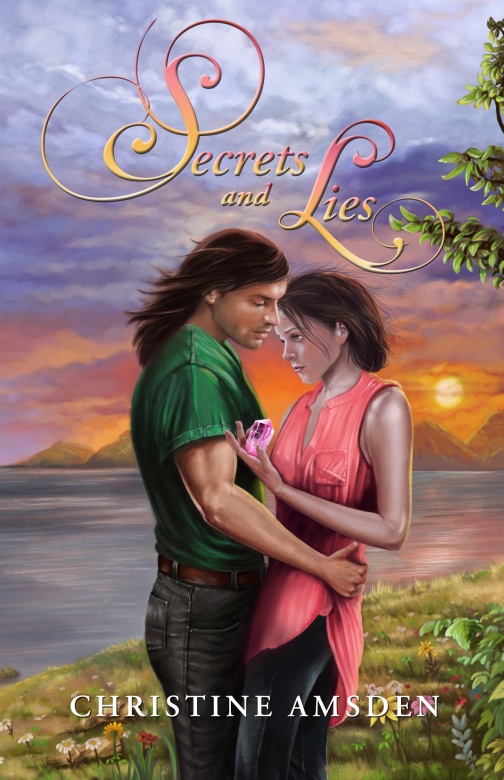
 
You don't want me to sing, but putting that aside, I understand. I really, really do.  

And yet I understand one other thing, or at least, I am working towards understanding. (Self-actualization is more a journey than a destination.) I understand that I am a writer. Fame and fortune are not necessary for us to do what we love. We can do it just because we want to. Because, for whatever reason, these activities fulfill us. 

One of the most common interview questions I get on tour is, “What advice would you give to aspiring writers?” I answer, “Only write if you love it.” The full answer is that if you're writing for fame, or fortune, or for any external force, it's not worth it. Writers write because the written word is our currency. It is an end in and of itself.  

Between one thing and another, I lost track of that fact in the last year or two. I've taken the summer off from writing. I'm spending more time with my kids while they're still young (6 and 8), working on promoting my Cassie Scot series, and still doing a little coaching. Writing will call to me again, sooner or later. It always does. I've already started to feel the pull of a project that would take me in a completely different direction from anything I've done before. It may pan out. It may not. Luckily, as an independent author I can write whatever I like. No one owns my time or my creativity.  

If you want to be a writer, then write. It never even has to be something someone else sees. (Kind of like me singing in the shower where no one else can hear. :) ) If and when it grows to the point where you would like to share it, come seek us authors out on the Internet and join our circles of madness. But if you can, even then, try to keep it in perspective. There is always the dream; we are dreamers by nature, but don't let the dream keep you from living your life now. 


~~~

It's unfortunate, but it's true: If you want to be a writer, don't quit your day job. 

Thanks for that insight, Christine! You're welcome on my blog anytime!

-Stephanie Osborn
http://www.stephanie-osborn.com

Wednesday, June 4, 2014

Elements of Modern Storytelling: Romance, Part 2 of 2 by Christopher Nuttall

By Stephanie Osborn
http://www.stephanie-osborn.com

Last week best-selling author Christopher Nuttall discussed the historicity of the concepts of love, romance, sex, and marriage, presenting information important to the modern reader (or writer!) of historical fiction, with a special emphasis on the Regency period. But Chris writes science fiction and fantasy, and does so quite well, both self-published and through presses like Twilight Times Books and Elsewhen Press.

So let's pick up where we left off, and let Chris tell us how he wielded the element of romance in his own books.


~~~


Chris:

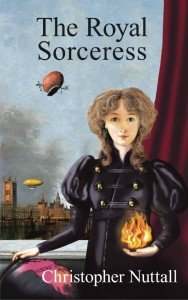
...And now I come to talk about one of my characters and her first true romance. [The Royal Sorceress]

Lady Gwen was born in a world where the principles of ‘sorcery’ – actually, mental powers – were discovered prior to the American Revolution.  This caused a flowering of technology, but it also caused major social problems, particularly as magic helped the British Empire defeat the American rebels and crush the American Revolution.  By the time of the first story, the British aristocracy is firmly in control, but unrest simmers under the surface of Britain. 

Gwen developed magic – powerful magic – fairly early in life.  This became public very quickly, making it impossible for Gwen’s parents to arrange a marriage for her.  (What man wants a wife who can kill him with a thought?)  In a world where noblewomen were expected to be decorative, go to balls and marry someone their parents chose, Gwen lived a fairly isolated life, seething with frustration at not being able to do anything with herself.  By the time she was recruited for the Royal Sorcerers Corps (in the absence of a suitable man) she wanted desperately to prove herself.  But she could also be largely unaware of the dangers of the world.

In her second book, The Great Game, Gwen was courted by a man who came into her life as part of a murder investigation.  Sir Charles seemed, in every aspect, the perfect regency hero; brave, handsome, noble and true.  But how was he to court her?  Normally, any man interested in courting a girl in the era would invite her to a dance, then declare his intentions to her parents.  And yet, Gwen was as independent as any woman could hope to be – perhaps more so – in that time and place.  To approach her parents would have been disastrous.
 
Sir Charles understood his prey (and he was hunting her) very well.  He approached her openly, made himself useful, and invited her to ride with him.  By showing no fear (because of her magic) or contempt (because of her sex) he made a very good impression on someone who had spent little time with men, socially.  Gwen reacted well, perhaps better than he had hoped, and they kissed.  But they went no further.  By refraining from pushing her, Sir Charles earned her respect.  Perhaps he even earned her love.

But his very approach should have been a warning that he had something else in mind.  An honourable man would, perhaps, have approached her parents, even though it would have annoyed Gwen.  A marriage in those days wasn't just a match between a boy and a girl; it was a match between two families.  If they had married, Gwen’s family would have been tangled with Sir Charles’s family.  The consequences of their relationship would have spread further than just the two of them.

Gwen didn't realise, until it was almost too late, just how badly he was playing her.  He wasn't interested in luring her into bed, but in manipulating the outcome of the investigation and – if necessary – betraying her.  In hindsight, the signs were all too clear. 

This shouldn't have been surprising.  Georgian and Victorian noblewomen lived a very sheltered life.   They were coddled and protected from the worst of the world outside their walls.  Those women that might have served as examples of the dangers were often driven into social obscurity or death.  Indeed, medical textbooks of that period often concealed details concerning sex and women’s bodies, even though many details were blindingly obvious.  (A quick look in the mirror would have shown the curious woman that some of the details were wrong.)  But they were not encouraged to develop any form of curiosity.  A wedding night could be a frightening introduction to the world of sex.

There were fewer restrictions on men.  Men were expected to sow their oats in brothels, which were populated by women of the lower classes (and thus not considered completely human.)   A woman who disliked her husband had no easy way to leave him (to some extent, she was his property), while the husband could find solace in the arms of a mistress – or a whore.  Female adultery, on the other hand, would face significant punishment.  A husband could even sue his wife’s lover, on the grounds that his property had been damaged.  It is surprising that there were any cases of adultery at all.

Depicting a romance – or a cold and calculating attempt at seduction – in such a society can be tricky.  Will the author, depicting a world where women are expected to be subordinate (at least in public) be accused of sexism?  Or will the author, showing an underage marriage (by our standards), be accused of condoning paedophilia?  Or will the author, showing a mixed-race marriage in 1900, be accused of racism if he depicts the likely reaction of most contemporaries to such a relationship?

And yet, the alternative – transplanting modern values into the past – is worse.  It becomes laughable to see the past’s heroes and villains mouthing politically-correct phrases, particularly when our social attitudes wouldn't permit many features of life in the past. 

Hollywood History is not real history.  When it comes to setting books in the past, and discussing touchy subjects like romance, it behooves us to remember that.


~~~

Well said, Chris. I find the current tendency to misunderstanding the mores of the time, and the trend toward revisionist history, disturbing. I am even aware of classics of literature which have been "revised" in the name of suiting some modern standard of proper behavior and speech. To me, this is an abomination – if we erase the traces of what those eras were really like, and do not teach them to our children, how can we hope to learn from our own history...which we have consequently forgotten?

And for any writer worth his/her salt, it can be a minefield to traverse the fine line between historical accuracy and not offending readers.

-Stephanie Osborn
http://www.stephanie-osborn.com
Wednesday, April 30, 2014

Elements of Modern Storytelling: Romance, A Guest Blog by Sara Stamey

by Stephanie Osborn
http://www.stephanie-osborn.com

Sara Stamey is a new friend! Word has been getting around in certain parts of the writing community about this blog series, and Sara was one of those who stepped up to the plate and said she wanted to be involved! So you and I will be getting to know her together, through her articles on the art of storytelling. From what I can tell, I think she may be a lot like me!

Enjoy!


~~~

Sara:


  Thanks, Stephanie, for the opportunity to explore approaches to incorporating romance into stories that span all genres – and thanks to the authors of the fascinating excursions already posted.
My own novels tend to cross genres, including mainstream, science fiction, fantasy, mystery/suspense, and thriller plots, but they all include romantic subplots. As other writers in this series have noted, where would the human interest lie without relationship tangles? A lot of those tangles involve romantic attraction and/or consummation. Where I depart from Romance as a genre is that the love/sex relationship is not my main plot, but rather interwoven into other urgent story issues.  It’s another thread of tension to pull readers along – will the lovers get together despite challenges? Maybe because of my style or themes, I usually avoid a “tied up in a bow” neat ending to the romance – more gray areas and ambiguity about where this relationship might go. Because, well, that’s life!
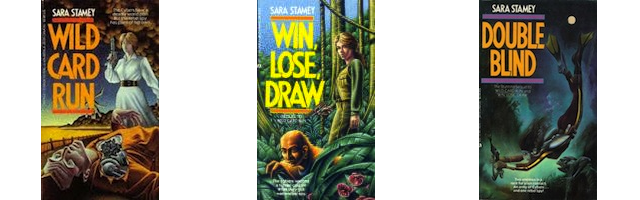
I’ll illustrate my approach by starting with my early science fiction series from Ace/Berkley, the first novel Wild Card Run. The main plot concerns a rebellious game-designer from a restrictive home planet who is challenging the control of humanity by the Cybers, an artificial-intelligence network. (I published this back in the 1980s, and I’m actually listed in some databases as one of the first “Cyberpunk” authors along with William Gibson and others, which tickles me.) Anyway, my heroine Ruth Kurtis is forced to return to her family farm and polyandrous culture (women have multiple husbands), where she has to resist her attraction to her mother’s newest husband, a young man the daughter’s age. This underlying romantic tension helps drive the main plot of her rebellion against the Cybers, and also contributes to one of the themes of the novel, examining the impact of new technologies on human values. And of course, it never hurts to raise issues of social taboos, and the loyalty and betrayal connected with forbidden love –  perennials in storytelling.
The next two novels in the series, Win, Lose, Draw and Double Blind, explore ramifications of nontraditional romantic possibilities – sexual love between different humanoid races, and between human and machine – which seems to be a hot topic today, with the film “Her.” These elements serve to advance my larger plot speculations about the difficulty of defining humanity and identity, which again are timeless themes keeping writers and readers busy over the past centuries.
My recent novels are more mainstream, but again melding genre elements. Islands, romantic
suspense with a psychic tinge, is my closest approach to a romance formula, but again the romantic relationship has a lot of ambiguity and is not central to the mystery/suspense plot. Set in the Caribbean, where I taught scuba years ago, it concerns a young archeologist who arrives on a tropic island to research petroglyphs and solve of the mystery of her brother’s drowning on a sunken treasure ship. The romance angle concerns her chief suspect, whom she investigates while being reluctantly drawn to him despite warnings about the danger she’s courting with this volatile war veteran. The sparks fly between them, but the sexual relationship isn’t thrown in just for heat – it functions to provide clues and red herrings, as well as challenging a lot of preconceptions my heroine carries about the nature of truth and right and wrong, contributing to a larger Faustian theme. How far will she push to learn “the truth”? What happens when you get too deep a glimpse into the “dark side”? Can love help redeem you?

My upcoming metaphysical thriller The Ariadne Connection weaves together three perspectives on a near-future crisis concerning a geomagnetic reversal and a New Leprosy plague. My three main characters become entangled in various romantic subplots, from a tension-filled love triangle, to transgendered love, to traditional heterosexual love with reservations and spiritual dimensions. The main thriller plot is the focus of the novel – a young Greek scientist is christened “Saint Ariadne” when she discovers she can heal the New Leprosy by “laying on hands.” Various dangerous factions pursue her for their own agendas, and the three main characters are mostly occupied with evading pursuit while Ariadne learns to control her growing powers, which have the capability to destroy as well as heal. Love and sex under conditions of extreme uncertainty and stress are opportunities to explore dimensions of the characters, particularly Ariadne, who must weigh eternal questions: Does the end justify the means? Should you use people who love you in the service of a higher goal? Is the focus on a mission strengthened or weakened by allowing intimacy with a partner?  Do we lose ourselves when we give too much to another person? Does the joy of loving outweigh inevitable pain and loss?
I guess it’s obvious that I’m fascinated by the nuances of human behavior, the way our desires color our notions of “truth” and “good versus evil,” and I love to throw characters into stressful situations that test their mettle.  Love is always a big challenge to throw in the path of a character’s goals, as that tug of irrational attraction can really toss in a wild card. Will the relationship strengthen or weaken our characters? What will they learn about themselves that we can share? I hope my stories entertain as well as involve my readers in these enduring explorations.

Author bio:
Sara Stamey’s extended travels in out-of-the-way corners of the globe include treasure hunting and teaching scuba in the Caribbean and Honduras, operating a nuclear reactor, and owning a farm in Southern Chile. Now resettled in her native Northwest Washington, she teaches creative writing at Western Washington University and offers editing services as a “book doctor.” She shares her Squalicum Creek backyard with wild critters and her cats, dog, and very tall husband Thor.
Her romantic suspense novel Islands is described by reviewers as “an intellectual thriller” and "a superior suspense novel….a stomping vivid ride.” A new eBook edition will be released by Book View Café on May 6.


~~~

Yep, I had a feeling I was gonna like this lady.

Be sure to check out her books, folks! They're worth looking into!

And we'll have her back soon to tell us about her upcoming book release!

-Stephanie Osborn
http://www.stephanie-osborn.com

Wednesday, March 26, 2014

Elements of Modern Storytelling: Romance, A Guest Blog by Kenneth Johnson

by Stephanie Osborn
http://www.stephanie-osborn.com

Today's guest blog on Romance as an element of modern storytelling is by Kenneth Johnson. Ken is an interesting individual. Principal Chief of the Florida Tribe of Cherokee Indians, Ken is also a polymath, a social scientist and culturalist. (J.R.R. Tolkien would have called him a "loremaster.") Ken Johnson is better known as "America's Culturalist." He writes primarily on issues of culture, conflict, and literary allegory. He is rather widely published in various magazines and webzines, and I thought his take on elements of modern storytelling would be intriguing and a bit different. I first "e-met" him after he read a couple of my books and contacted me; we met in person a few weeks later when I appeared at a convention local to him.

So let's sit back and see what Ken has to say.


~~~

Kenneth:


As a reader, the greatest feat that a writer can accomplish is maintaining a point of view that captures, and retains, my interest throughout a storyline.   I am extremely particular when it comes to emotional vs. sensual writing.  Oft times, I could care less what the character is feeling emotionally and instead I want the writer to be talking about the textures, smells, sensations, etc. of the moment.  As a reader, romance therefore messes things up for me when it is employed.  By this I mean that romance tends to blur the lines and therefore it is very much like dropping a flash bomb in a room.  When done right, it re-grabs the attention of the reader, re-focuses it, and uses the romance as a carrier to a much more elevated storyline.  However, there is far too much bad writing out there and thus the romantic twist just ends up twisting the story so far out of whack that the reader gives up on the book altogether. 

Indeed, in many ways, romance is to a story what salt is like to food.  Too little can make for a bland story.  Too much can kill a story.  So, the writer has to get that Goldilocks scenario of getting things “just right” – which can become a daunting challenge.

Initially, the writer should spend a great deal of time contemplating both the correct timing as well as the correct type of romance to use.  The writer also needs to take into consideration the culture of the reader as well as the culture that the character represents.  Finally, the writer has a professional duty to contemplate and account for the impact that said romantic twist will have on the reader.

It is on this latter concept of professional responsibility to the impact of romance that I first want to address.   Social scientists have well established a link between visual and actual responses to both romantic and carnal/lustful situations.  Researchers have concluded that the subconscious brain cannot distinguish between actually seeing something happen and seeing something depicted in an audio-visual format on television or in the movies.   That is to say, “You know, but you don’t know,” because your conscious brain is saying, “This is a television show,” while your subconscious is like some teenager yelling out, “They’re really getting it on!”  Some researchers are now beginning to hypothesize that this response to stimuli also applies to the written word.  A select few are now going so far as to say that the written word may be even more sensual than real life, meaning that the subconscious brain would be even less likely to differentiate between writing and the real thing.  This hypothesis takes into account the power of human imagination.  Thus, a literary tryst may have a more physio-emotional impact on the reader than them seeing the real thing.  Such arguments have specifically centered around juvenile-based comics, teen fiction, and even young adult fiction due to the added issue of hormones which can potentially, and adversely, “color” feelings and perceptions.

Of course, all of this is all well and good but it is still just theory.  Quite possibly the greatest impact concern that a writer should have is the reader’s expectations.   For instance, if one is reading a story about an Amish farm, one really would not expect to read about how Helga got ravished by Jacob and ended up covered in chocolate sauce in some barn.  However, by the same token, Jacob taking Helga by the hand, courting her, and stealing a kiss might be something that the reader would more likely expect.  Therefore, the writer not only has to ask, “Would the character do this?” but the writer should also consider, “How will my readers react if this romantic twist plays out this specific way?”

Verily, it is the romantic type that matters as much, if not more, than anything else.  Ultimately, all romance can be broken down into six types or categories:  puppy love, teenage drama, young adult passion, erotica, secondary romance, and golden romance. 

By far the simplest concept to understand is the “puppy love” concept where intentions are pure even though comprehension and motives are likely underdeveloped in the plot line.  While it is the simplest to understand, this type of romance can be the hardest to write because it is so underdeveloped in its motives, rationale, etc.  For this reason, most writers never touch the topic unless in brief to provide a background story or some other accentual element to a much greater storyline. 

Teenage drama is a hot button issue now.  Like puppy love, it lacks rationale – but that is what makes it so great to use!  You can have love, hate, sorrow, etc. all tied in together because the readers are teenagers and they are feeling the ravages of hormonal changes. 

Young adult passion is becoming a more popular segment these days.  Indeed, a number of young readers are tired of carnal-focused romance stories and instead they want to experience the more sophisticated nuances of genuine love between two people who are now more mature and contemplating what to do with their lives. 

By far the greatest bulk of American romance is almost erotica based.  Some of the storylines being developed today are nothing short of something one would have expected from historical erotica writers like Anais Nin.  Such stories hone in on the frustrations of life and provide a release by one giving themselves over to cultural taboos.  But, again, audience and character background means everything.  As a Native American, I am used to intimate body parts being talked about in the casual.  However, the talk of breasts and such, in contemporary society, is deemed “intimate” and so this genre style can be fickle – especially if the writer has a diverse readership or only typically writes from one cultural vantage point. 

Of course, after a while, love oft-times will start to fade.  A growing trend in America is for middle-aged people to have two or more previous marriages in their histories.  So, romance writers have begun to focus on trying to write about reigniting flames in old relationships, finding the right relationship after a long-dead one has failed, etc. 

But, by far, my greatest love of romance storylines is the golden romance where love did not fade and a couple has held on to each other through the years to the point that it has blossomed into something that few people ever experience.  Using a real world example, I remember hearing a story of the late President Reagan.  He was in the final stages of Alzheimer’s disease and he decided to go on a routine walk with his Secret Service detail.  Walking past a person’s yard, he saw a beautiful rose.  When he tried to pick it, a Secret Service agent politely grabbed his hand and said, “Mr. President, this is not your home.”  To that, President Reagan replied, “I know, I am just getting this for my sweetie.”   For me, this is real romance.  I cannot imagine the horror of losing my mind.  It would devastate me.  Yet, through it all, he still wanted to show his wife love and affection with everyday simple gestures that contemporary society seemingly finds no value in anymore.  For this reason, golden romance is, in a way, much like puppy love – only matured.

Naturally, nothing matters more than timing.  You can have everything picked out and properly accounted for with the readers and characters and still mess up a good story with improper timing.  Simply put, you cannot have someone talking about Prussian military tactics one minute, and then having them in a loving embrace the second, without first properly setting the stage.  This is to say that romance happens on a very specific schedule. 

Case in point, golden romance can never happen between two teenagers because they are too young to understand it and appreciate it for what it is.  By the same token, two middle-aged individuals cannot suddenly break out in teenage romance because they should be old enough, and stable enough, that all of the, “I love you, I hate you, let’s make out, oh I feel so ashamed, let’s do it again,” erratic melodrama is well behind them.  

For this reason, the writer had better put serious thought into what type of romance takes what type of timing.  In the case of the Displaced Detective series, a lot of time had to expire for the two main characters, Sherlock and Skye, to get to know each other.  Even then, Sherlock had an inward battle he had to fight where he was nothing short of a cultural fossil trying to live in a new era with new norms.  This all had to play out.  Indeed, it was not until Skye nearly died that Sherlock had the emotional and traumatic stimulation needed for him to uncharacteristically break out of his cultural shell and engage in an atypical, erotic fashion.  Because both were older individuals, this type of romance had to quickly crescendo and move on to a more stable type of romance more fitting of their age and circumstance. 


Verily, when done right, there is no greater way for a writer to develop a storyline than by way of romance.  By its very essence, it is transcendental.  However, more so than with any other element, it has to be used in the appropriate amount, in the correct manner, and at the optimal point in time to give the story the most bang for the readers’ buck.  Some of the greatest stories of our era are won and lost in how the author handles romantic twists.

~~~

Interesting point of view, and I had not thought of dividing up the different "types" of love before, nor of how they necessarily provide for different timing! 

If you'd like to read more of Ken's work, you can find a lot linked to his website: 

-Stephanie Osborn
http://www.stephanie-osborn.com