Banner

Banner
Showing posts with label cross genre. Show all posts

Monday, September 22, 2014

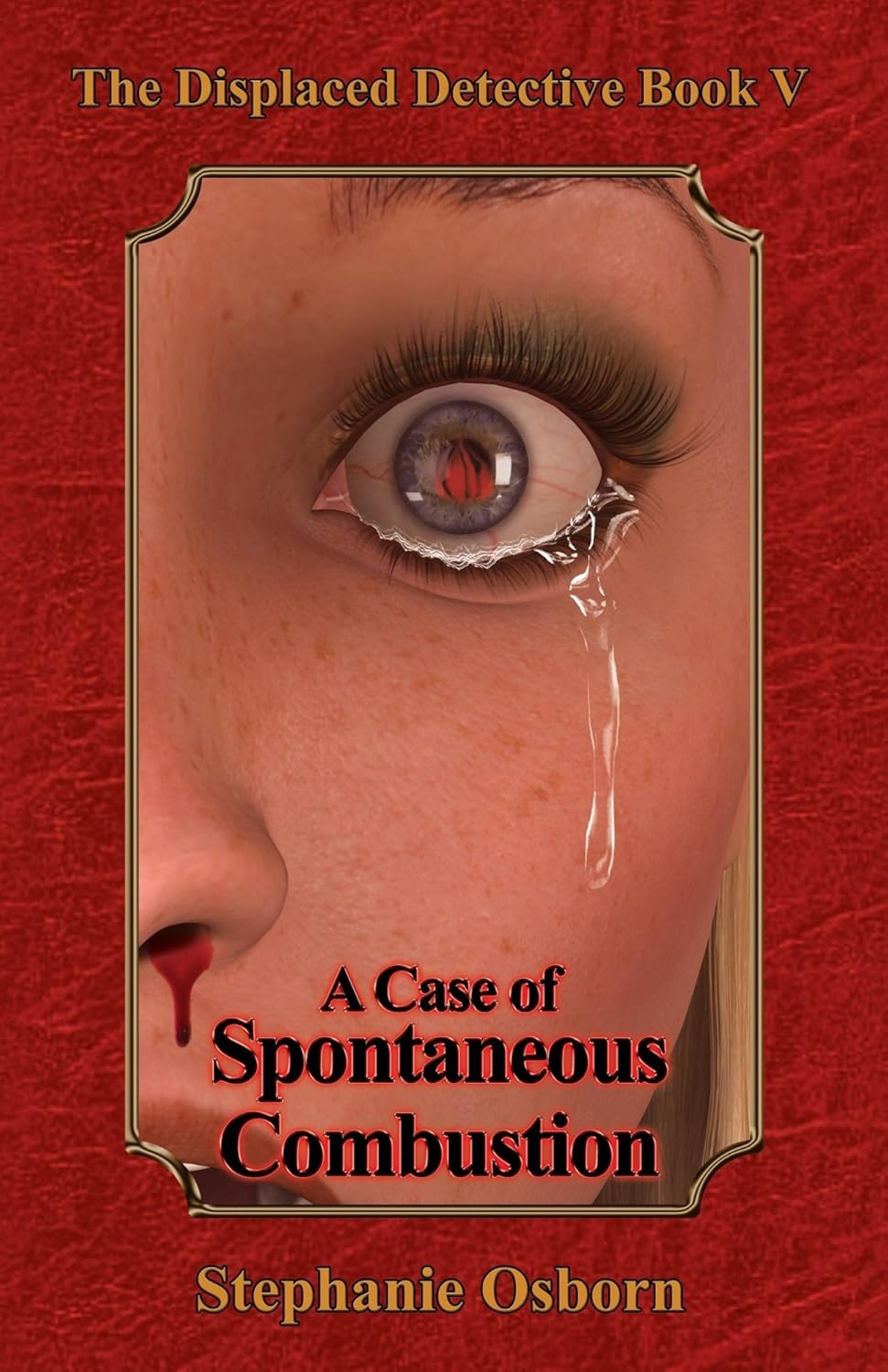
TODAY! Print Release of A Case of Spontaneous Combustion, Book 5 of the Displaced Detective Series!

By Stephanie Osborn
http://www.stephanie-osborn.com

Effective today, I am pleased to announce the print release of book 5 of the Displaced Detective Series, entitled A Case of Spontaneous Combustion!

This book continues the science fiction/mystery adventures of Sherlock Holmes, who has been yanked from an alternate reality in the which he exists, into our modern day reality by Dr. Skye Chadwick, chief scientist of Project: Tesseract. Unable to return to his own place and time, Holmes is forced to adapt, learn, and grow. With Skye's help, he succeeds admirably.


But when an entire village west of London is wiped out in an apparent case of mass spontaneous combustion, Her Majesty’s Secret Service contacts The Holmes Agency to investigate. 

Once in London, Holmes looks into the horror that is now Stonegrange. His investigations take him into a dangerous undercover assignment in search of a possible terror ring, though he cannot determine how a human agency could have caused the disaster. 

Meanwhile, alone in Colorado, Skye is forced to battle raging wildfires and tame a wild mustang stallion, all while believing that her husband has abandoned her.

Who — or what — caused the horror in Stonegrange? Will Holmes find his way safely through the metaphorical minefield that is modern Middle Eastern politics? Will this predicament seriously damage — even destroy — the couple’s relationship? And can Holmes stop the terrorists before they unleash their outrĂ© weapon again?


~~~Excerpt~~~

Prologue—Changes in Routine

Stonegrange was a little old English hamlet in the County of Wiltshire in the Salisbury Plain of England, much like any other such ancient British village: a tiny central square in the midst of which crouched a hoary, venerated church, surrounded by a few small shops, and residences on the outskirts tapering off into the surrounding farmlands. On Sundays the church was full, and on Thursdays the outlying farmers brought their produce in to market. The occasional lorry carried in other supplies, and the Post Office ran every day but Sunday. So small was the village that the constable wasn’t even full time.

Still and all, it wasn’t very far from a main thoroughfare, the A338, that ran through Salisbury and on down to Bournemouth and Poole, and it wasn’t uncommon for lorry drivers to stop for a bite in the local pub, or even park their rigs in an empty lot just off the square for a good, safe night’s rest. Sometimes they even used the lot to hand off cargo from one freight company to another.

So no one thought twice when a flat-bed trailer showed up overnight in the lot, a large wooden crate lashed firmly to its middle. The locals figured it was either a hand-off, or someone’s tractor rig had broken down and been hauled off for repair, while leaving the cargo in a safe place.


* * *

Dr. Skye Chadwick-Holmes, horse trainer, detective, and one of the foremost hyperspatial physicists on the planet, answered the phone at the ranch near Florissant, Colorado.

“Holmes residence,” she murmured. “Skye speaking.”

“Hi there, Skye, Hank Jones here,” Colonel Henry Jones, head of security for Schriever Air Force Base, greeted the lady of the house from the other end of the line. “If you don’t mind, grab Holmes and then hit the speaker phone.”

“Oh, hi, Hank,” Skye replied warmly. “Good to hear from you, but I’m afraid I can’t oblige. Sherlock’s not here right now. Billy Williams called him down to the Springs to update him on some new MI-5 HazMat techniques; I completed my certification last month, but Sherlock had a nasty little cold and missed out.”

“Oh,” Jones said blankly. “Well, are YOU available?”

“Um, I guess so, for whatever that’s worth,” a hesitant Skye said. “Depends. Whatcha got?”

“Murder in the residential quarters at Peterson,” Jones noted, grim. “Suspects and victim were all Schriever personnel, though, so I get to have fun with it. Joy, joy.”

“And you could use a bit of help?”

“‘Fraid so,” Jones sighed. “As usual, I’m short-handed right now. The Pentagon never seems to get the fact that ‘Security’ means ‘document control,’ ‘police force,’ ‘guard duty,’ ‘investigation,’ and half a million other different jobs all rolled together, on a base like this.” He sighed again. “Listen, is there any chance you could meet me down there in about an hour or so, have a look around the crime scene yourself, then call your husband in when he’s available if you need to? As a favor to me? I need to get rolling on it A.S.A.P.”

“Um, okay,” Skye agreed after a moment’s thought. “Yeah, I can at least get started on it, and collect the initial data for Sherlock. Maybe even come to some basic conclusions and formulate a theory for us to work on. Gimme the address and I’ll buzz on down…”


* * *

The trailer remained where it was, off Stonegrange’s central square for two days, and still no one thought to question. After all, tractors had mechanical difficulties just like the residents’ own autos and lorries, and sometimes those difficulties took a few days to repair. So no inquiries were made. The trailer was ignored.

Until, at precisely 11:02 p.m. three nights after its arrival, the crate emitted a soft, reverberating hum. No one was near enough to hear it, however—at least, no one curious enough to bother checking it out. Exactly five minutes later, a loud zap! sounded from the box.

Stonegrange was as silent as the tomb the rest of the night.
 

~~~End Excerpt~~~

The official release date for A Case of Spontaneous Combustion was 15 September in trade paper print format, and it has now worked through the suppliers to the stores! (Ebook formats were available in May. If you prefer a link to Barnes-Noble's website, it's here.)

If you've enjoyed reading the adventures of Sherlock and Skye as much as I've enjoyed writing them, hurry out and get your copy of their latest adventure!

Wednesday, June 4, 2014

Elements of Modern Storytelling: Romance, Part 2 of 2 by Christopher Nuttall

By Stephanie Osborn
http://www.stephanie-osborn.com

Last week best-selling author Christopher Nuttall discussed the historicity of the concepts of love, romance, sex, and marriage, presenting information important to the modern reader (or writer!) of historical fiction, with a special emphasis on the Regency period. But Chris writes science fiction and fantasy, and does so quite well, both self-published and through presses like Twilight Times Books and Elsewhen Press.

So let's pick up where we left off, and let Chris tell us how he wielded the element of romance in his own books.


~~~


Chris:

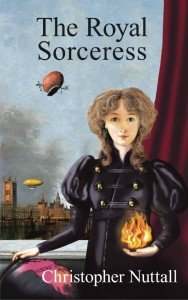
...And now I come to talk about one of my characters and her first true romance. [The Royal Sorceress]

Lady Gwen was born in a world where the principles of ‘sorcery’ – actually, mental powers – were discovered prior to the American Revolution.  This caused a flowering of technology, but it also caused major social problems, particularly as magic helped the British Empire defeat the American rebels and crush the American Revolution.  By the time of the first story, the British aristocracy is firmly in control, but unrest simmers under the surface of Britain. 

Gwen developed magic – powerful magic – fairly early in life.  This became public very quickly, making it impossible for Gwen’s parents to arrange a marriage for her.  (What man wants a wife who can kill him with a thought?)  In a world where noblewomen were expected to be decorative, go to balls and marry someone their parents chose, Gwen lived a fairly isolated life, seething with frustration at not being able to do anything with herself.  By the time she was recruited for the Royal Sorcerers Corps (in the absence of a suitable man) she wanted desperately to prove herself.  But she could also be largely unaware of the dangers of the world.

In her second book, The Great Game, Gwen was courted by a man who came into her life as part of a murder investigation.  Sir Charles seemed, in every aspect, the perfect regency hero; brave, handsome, noble and true.  But how was he to court her?  Normally, any man interested in courting a girl in the era would invite her to a dance, then declare his intentions to her parents.  And yet, Gwen was as independent as any woman could hope to be – perhaps more so – in that time and place.  To approach her parents would have been disastrous.
 
Sir Charles understood his prey (and he was hunting her) very well.  He approached her openly, made himself useful, and invited her to ride with him.  By showing no fear (because of her magic) or contempt (because of her sex) he made a very good impression on someone who had spent little time with men, socially.  Gwen reacted well, perhaps better than he had hoped, and they kissed.  But they went no further.  By refraining from pushing her, Sir Charles earned her respect.  Perhaps he even earned her love.

But his very approach should have been a warning that he had something else in mind.  An honourable man would, perhaps, have approached her parents, even though it would have annoyed Gwen.  A marriage in those days wasn't just a match between a boy and a girl; it was a match between two families.  If they had married, Gwen’s family would have been tangled with Sir Charles’s family.  The consequences of their relationship would have spread further than just the two of them.

Gwen didn't realise, until it was almost too late, just how badly he was playing her.  He wasn't interested in luring her into bed, but in manipulating the outcome of the investigation and – if necessary – betraying her.  In hindsight, the signs were all too clear. 

This shouldn't have been surprising.  Georgian and Victorian noblewomen lived a very sheltered life.   They were coddled and protected from the worst of the world outside their walls.  Those women that might have served as examples of the dangers were often driven into social obscurity or death.  Indeed, medical textbooks of that period often concealed details concerning sex and women’s bodies, even though many details were blindingly obvious.  (A quick look in the mirror would have shown the curious woman that some of the details were wrong.)  But they were not encouraged to develop any form of curiosity.  A wedding night could be a frightening introduction to the world of sex.

There were fewer restrictions on men.  Men were expected to sow their oats in brothels, which were populated by women of the lower classes (and thus not considered completely human.)   A woman who disliked her husband had no easy way to leave him (to some extent, she was his property), while the husband could find solace in the arms of a mistress – or a whore.  Female adultery, on the other hand, would face significant punishment.  A husband could even sue his wife’s lover, on the grounds that his property had been damaged.  It is surprising that there were any cases of adultery at all.

Depicting a romance – or a cold and calculating attempt at seduction – in such a society can be tricky.  Will the author, depicting a world where women are expected to be subordinate (at least in public) be accused of sexism?  Or will the author, showing an underage marriage (by our standards), be accused of condoning paedophilia?  Or will the author, showing a mixed-race marriage in 1900, be accused of racism if he depicts the likely reaction of most contemporaries to such a relationship?

And yet, the alternative – transplanting modern values into the past – is worse.  It becomes laughable to see the past’s heroes and villains mouthing politically-correct phrases, particularly when our social attitudes wouldn't permit many features of life in the past. 

Hollywood History is not real history.  When it comes to setting books in the past, and discussing touchy subjects like romance, it behooves us to remember that.


~~~

Well said, Chris. I find the current tendency to misunderstanding the mores of the time, and the trend toward revisionist history, disturbing. I am even aware of classics of literature which have been "revised" in the name of suiting some modern standard of proper behavior and speech. To me, this is an abomination – if we erase the traces of what those eras were really like, and do not teach them to our children, how can we hope to learn from our own history...which we have consequently forgotten?

And for any writer worth his/her salt, it can be a minefield to traverse the fine line between historical accuracy and not offending readers.

-Stephanie Osborn
http://www.stephanie-osborn.com

Wednesday, May 28, 2014

Elements of Modern Storytelling: Romance, Part 1 of 2 by Christopher Nuttall

by Stephanie Osborn
http://www.stephanie-osborn.com

Starting today, and for the next two weeks, I'd like to welcome indie best-selling author Christopher Nuttall to Comet Tales! He sent me some wonderful stuff, enough for two whole blogs, and so I decided not to overwhelm my readers by cramming it all into one. Part One goes live this week, and Part Two, next week.

Chris is a very successful writer of indie (aka "self-published") books in the science fiction and fantasy genres. He has also written for Twilight Times Books, where I believe a book is shortly forthcoming, and Elsewhen Press. Born in Edinburgh, Scotland, he now resides in Malaysia, so contacting him is occasionally interesting!

[ALERT: The following is a very frank, straightforward discussion of historical attitudes
toward sex and marriage, which were not necessarily considered interchangeable "back in the day." This includes consideration of modern taboos and references (but not obvious descriptions) to dominant positions during sex. It is extremely enlightening, and you will learn something. But if said frankness causes offense, then this particular article is probably not for you. My younger fans may want to skip over it also, as this is probably PG-13 or slightly above. --S.O.]

Welcome, Chris!

~~~


Chris:

Thoughts on a Regency Romance

The past is a foreign country, as the old saying goes.  They do things differently there.

I mean it.  It always surprises me how many people look at the past and ask, quite reasonably, why modern values weren't considered by the denizens of the past?  Why couldn't Queen Elizabeth marry when her father had six wives?  Didn’t she need to have an heir?  But if Elizabeth had married, she would have conceded a great deal of power to her husband, as both Mary Tudor and Mary Queen of Scots found out to their cost.

To us, this seems absurd.  We live in a world where a woman has held the highest elective position in Britain and Germany, while another woman made a determined run for the White House.  A married woman in the West doesn't have to give up her name, share her property  or accept her husband’s every wish as a command.  But that wasn't true, even for noblewomen and princesses.  To marry was to concede independence.

Indeed, the very idea of marrying for love would have seemed strange to our ancestors.  How selfish, they would say, for someone to marry for love!  They would have condemned emotion as a driving force, insisted that their children marry someone suitable for them, someone who could  bring much to the family.   Who would want to marry a pauper, no matter how handsome, brave and kind, when there was a chance to marry the rich town miser, even if he was a jerk?

I first came across this when I read Romeo and Juliet at school.  My first thoughts, upon concluding the play, was that both Romero and Juliet were idiots.  Why didn't they just run off together or simply tell their parents that they were married?  But, if you look at the play through the attitudes of the time, that simply wasn't an option.  Juliet was semi-betrothed to Paris, her parents had certainly not consented to her marriage to Romeo ... and, in making love to Romeo, Juliet had defiled herself forever.  It would be quite easy for Juliet’s father to assume that Romeo had set out to damage his family (and succeeded magnificently) or that Juliet had shattered her family’s honour.  Of such viewpoints are honour killings made.

It actually grows worse when you realise that, in the original play, Romeo and Juliet would have been thirteen.

But this too wasn't uncommon.  Our time points to a certain age as the division between childhood and adulthood.  Their time decreed that a girl was marriageable as soon as she started her periods, when she was capable of bearing children.  Our time would see this as paedophilia, all the worse because the girls were not required to give their consent.  For an author, depicting this can be one hell of a challenge. 

This is not the only disconnect between our world and the attitudes of the past.  The Greeks had an open and semi-tolerant attitude to homosexuality.  The Romans, on the other hand, only considered homosexuality acceptable if the Roman Citizen was doing the penetrating, rather than being penetrated.  (The suggestion that he had been deflowered by a foreign king haunted Julius Caesar for his entire life.)  Later generations raged against homosexuality, while accepting childhood marriages and relationships we would probably consider incest.  Even today, sex and relationships can take very different forms around the world.


And now I come to talk about one of my characters and her first true romance...


~~~

To Be Continued next week!

-Stephanie Osborn
http://www.stephanie-osborn.com

Wednesday, May 14, 2014

A Case of Spontaneous Combustion, Book 5 of the Displaced Detective Series!

By Stephanie Osborn
http://www.stephanie-osborn.com

I am pleased to announce the release of book 5 of the Displaced Detective Series, entitled A Case of Spontaneous Combustion!


This book continues the science fiction/mystery adventures of Sherlock Holmes, who has been yanked from an alternate reality in the which he exists, into our modern day reality by Dr. Skye Chadwick, chief scientist of Project: Tesseract. Unable to return to his own place and time, Holmes is forced to adapt, learn, and grow. With Skye's help, he succeeds admirably.


But when an entire village west of London is wiped out in an apparent case of mass spontaneous combustion, Her Majesty’s Secret Service contacts The Holmes Agency to investigate. 
Once in London, Holmes looks into the horror that is now Stonegrange. His investigations take him into a dangerous undercover assignment in search of a possible terror ring, though he cannot determine how a human agency could have caused the disaster. 
Meanwhile, alone in Colorado, Skye is forced to battle raging wildfires and tame a wild mustang stallion, all while believing that her husband has abandoned her.


Who — or what — caused the horror in Stonegrange? Will Holmes find his way safely through the metaphorical minefield that is modern Middle Eastern politics? Will this predicament seriously damage — even destroy — the couple’s relationship? And can Holmes stop the terrorists before they unleash their outrĂ© weapon again?

~~~Excerpt~~~

Prologue—Changes in Routine

Stonegrange was a little old English hamlet in the County of Wiltshire in the Salisbury Plain of England, much like any other such ancient British village: a tiny central square in the midst of which crouched a hoary, venerated church, surrounded by a few small shops, and residences on the outskirts tapering off into the surrounding farmlands. On Sundays the church was full, and on Thursdays the outlying farmers brought their produce in to market. The occasional lorry carried in other supplies, and the Post Office ran every day but Sunday. So small was the village that the constable wasn’t even full time.
Still and all, it wasn’t very far from a main thoroughfare, the A338, that ran through Salisbury and on down to Bournemouth and Poole, and it wasn’t uncommon for lorry drivers to stop for a bite in the local pub, or even park their rigs in an empty lot just off the square for a good, safe night’s rest. Sometimes they even used the lot to hand off cargo from one freight company to another.
So no one thought twice when a flat-bed trailer showed up overnight in the lot, a large wooden crate lashed firmly to its middle. The locals figured it was either a hand-off, or someone’s tractor rig had broken down and been hauled off for repair, while leaving the cargo in a safe place.
* * *
Dr. Skye Chadwick-Holmes, horse trainer, detective, and one of the foremost hyperspatial physicists on the planet, answered the phone at the ranch near Florissant, Colorado.
“Holmes residence,” she murmured. “Skye speaking.”
“Hi there, Skye, Hank Jones here,” Colonel Henry Jones, head of security for Schriever Air Force Base, greeted the lady of the house from the other end of the line. “If you don’t mind, grab Holmes and then hit the speaker phone.”
“Oh, hi, Hank,” Skye replied warmly. “Good to hear from you, but I’m afraid I can’t oblige. Sherlock’s not here right now. Billy Williams called him down to the Springs to update him on some new MI-5 HazMat techniques; I completed my certification last month, but Sherlock had a nasty little cold and missed out.”
“Oh,” Jones said blankly. “Well, are YOU available?”
“Um, I guess so, for whatever that’s worth,” a hesitant Skye said. “Depends. Whatcha got?”
“Murder in the residential quarters at Peterson,” Jones noted, grim. “Suspects and victim were all Schriever personnel, though, so I get to have fun with it. Joy, joy.”
“And you could use a bit of help?”
“‘Fraid so,” Jones sighed. “As usual, I’m short-handed right now. The Pentagon never seems to get the fact that ‘Security’ means ‘document control,’ ‘police force,’ ‘guard duty,’ ‘investigation,’ and half a million other different jobs all rolled together, on a base like this.” He sighed again. “Listen, is there any chance you could meet me down there in about an hour or so, have a look around the crime scene yourself, then call your husband in when he’s available if you need to? As a favor to me? I need to get rolling on it A.S.A.P.”
“Um, okay,” Skye agreed after a moment’s thought. “Yeah, I can at least get started on it, and collect the initial data for Sherlock. Maybe even come to some basic conclusions and formulate a theory for us to work on. Gimme the address and I’ll buzz on down…”
* * *
The trailer remained where it was, off Stonegrange’s central square for two days, and still no one thought to question. After all, tractors had mechanical difficulties just like the residents’ own autos and lorries, and sometimes those difficulties took a few days to repair. So no inquiries were made. The trailer was ignored.
Until, at precisely 11:02 p.m. three nights after its arrival, the crate emitted a soft, reverberating hum. No one was near enough to hear it, however—at least, no one curious enough to bother checking it out. Exactly five minutes later, a loud zap! sounded from the box.
Stonegrange was as silent as the tomb the rest of the night.


~~~End Excerpt~~~

The official release date for A Case of Spontaneous Combustion is tomorrow, 15 May, in all ebook formats! Trade paper will be available mid-June.

If you've enjoyed reading the adventures of Sherlock and Skye as much as I've enjoyed writing them, hurry out and get your copy of their latest adventure!

-Stephanie Osborn
http://www.stephanie-osborn.com

Wednesday, May 7, 2014

Elements of Modern Storytelling: Romance, A Guest Blog by Dina von Lowencraft

By Stephanie Osborn
http://www.stephanie-osborn.com

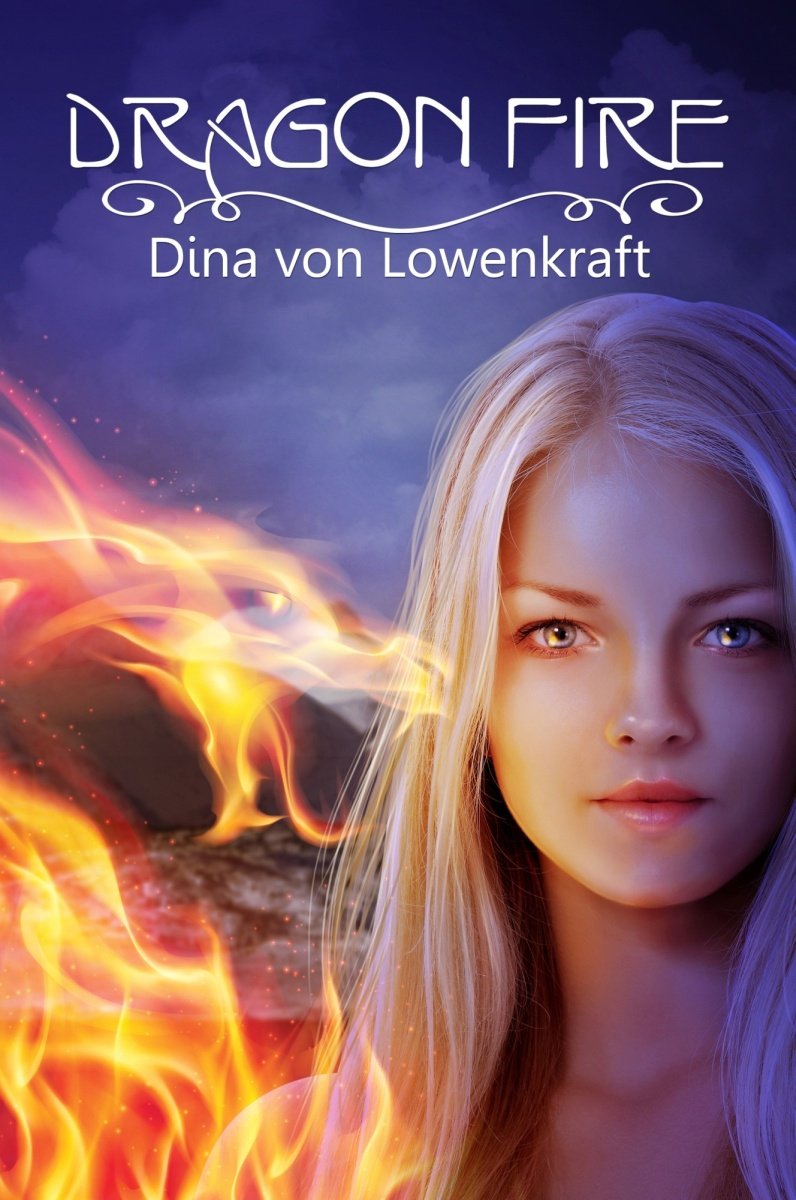
Today we welcome Dina von Lowencraft to the party! Dina's current book is Dragon Fire, a fantasy with plenty of mystery and suspense thrown in. (Have you noticed how many of our authors tend to cross genres? I have. And I'm one of them.) Publisher's Weekly says, "In Lowenkraft’s science fantasy novel [Dragon Fire], the Draak, alien shape-shifting dragons inhabit the Earth unbeknownst to humans, whom they regard as cattle to be exploited. Though nearly driven to extinction by war, the Draak are still consumed with old vendettas. ...Lowenkraft seasons her tale with a critique of the abusive relationships seen in popular works like the Twilight series." 

So now let's see what she has to say!


~~~


Dina:


Certain themes always come back in my writing  whether I set out to write about shape-shifting dragons, cyborgs or steampunk assassins. And one of those themes is romance. So when Stephanie asked if Id be interested in writing a guest post on romance as an element in modern storytelling, I jumped on the chance!

When I first began to write, I just wrote. I didnt think about the themes I wanted to write about or even what genre I wanted to write. But after trying my hand at a few manuscripts, it became clear that the themes I write about are all YA (young adult) themes. I dont consider a book to be YA because the protagonist is a teenager, but rather because the issues (and/or the manner in which those issues are dealt) are in keeping with what young adults are going through. The late teen years are full of change and development – emotionally, physically and personally. It is a time of questioning  of personal identity, of parents, of the society at large, etc. Teenagers are constantly re-making their world, destroying one and creating another. As a young adult I loved that feeling of power, of endless possibility, of freedom. And I still do.

As young adults discover the world, they discover who they are and what they believe in. The sense of time, of perspective, of what love is, is not the same for a Young Adult (first loves, hormonal changes, endless possibilities for the future, etc.) as for a New Adult (probably once hurt and more cautious in love, about to start a job, set up their own house, focus is generally more on pragmatic questions etc.) or an Adult (either in or out of a relationship, but with responsibilities and external demands on their time, and often with a set view of the world and their place in it).

The passion of the young adult protagonist, mixed with the desire to create a better world for themselves or for others, is explosive. I love writing about characters who are forced to choose between what they have been brought up to believe and what they see elsewhere  especially if that choice means giving up something significant such as true love or their future in their community. The choice can be to stay or to change, but it always costs them something. This passion to live, to be true to oneself, to discover new aspects of oneself and others is an obvious opening to romance.

Which is perhaps why romance is often an integral part of the YA genre, even if it isnt the primary focus of the book. Think of Twilight where the story wouldnt exist without the romance between Bella and Edward versus The Hunger Games where romance is not the focus of the story, but it lurks in the background as Katniss deals with a world gone wrong and how to make it a better place. Although there are a few YA books that dont touch upon romance or sexuality, most do.

Emotions and convictions are strong for young adults, and death is so far away that they feel invincible. Everything is fresh and new  and meaningful. First love, first sexual experiences, first heart break…the power of those first relationship(s) is enormous. Whether they last or not, are pleasant or unpleasant, they are likely to color how that person sees the world thereafter. It is part of what will shape their world view, and perhaps even the view they have of themselves. This makes it an intense and powerful element of each characters plot arc. In my YA fantasy, Dragon Fire, my main protagonist, a shape-shifting dragon, falls in love with a human. This changes his view of humans, and his willingness to accept that they are expendable. Which then forces him to go against his community, jeopardizing both his own life and that of his human love interest. The story is not only about this forbidden cross-species love affair, but it is a major element of the plot and of my main characters development as a sentient being.

Although I dont write romances per se, all of my stories have romance as a major or minor plot element. Romance flows as naturally from my characters into their plots as it does in young adults everywhere as they discover who they are, what they believe in and who they want to be with.

Thank you, Stephanie, for asking me to write about this element of modern story telling that is such an integral part of my manuscripts  I have enjoyed reading everyones take on it and look forward to the next installment where another aspect of writing is discussed!


Author Bio:

Born in the US, Dina has lived on 4 continents, worked as a graphic artist for television and as a consultant in the fashion industry. Somewhere between New York and Paris she picked up an MBA and a black belt. Dina is currently the Regional Advisor for SCBWI Belgium, where she lives with her husband, two children, three horses and a cat.

Dina loves to create intricate worlds filled with conflict and passion. She builds her own myths while exploring issues of belonging, racism and the search for truth... after all, how can you find true love if you don’t know who you are and what you believe in? Dina’s key to developing characters is to figure out what they would be willing to die for. And then pushing them to that limit.

Dina is repped by the fabulous Kaylee Davis of Dee Mura Literary.


~~~

Thank YOU, Dina! This is a fascinating take on romance from the mind of a YA writer! Folks, Dragon Fire has had RAVE reviews, and it's well worth your while! Go have a look!

-Stephanie Osborn
http://www.stephanie-osborn.com

Wednesday, April 30, 2014

Elements of Modern Storytelling: Romance, A Guest Blog by Sara Stamey

by Stephanie Osborn
http://www.stephanie-osborn.com


Sara Stamey is a new friend! Word has been getting around in certain parts of the writing community about this blog series, and Sara was one of those who stepped up to the plate and said she wanted to be involved! So you and I will be getting to know her together, through her articles on the art of storytelling. From what I can tell, I think she may be a lot like me!

Enjoy!


~~~

Sara:


  Thanks, Stephanie, for the opportunity to explore approaches to incorporating romance into stories that span all genres – and thanks to the authors of the fascinating excursions already posted.
My own novels tend to cross genres, including mainstream, science fiction, fantasy, mystery/suspense, and thriller plots, but they all include romantic subplots. As other writers in this series have noted, where would the human interest lie without relationship tangles? A lot of those tangles involve romantic attraction and/or consummation. Where I depart from Romance as a genre is that the love/sex relationship is not my main plot, but rather interwoven into other urgent story issues.  It’s another thread of tension to pull readers along – will the lovers get together despite challenges? Maybe because of my style or themes, I usually avoid a “tied up in a bow” neat ending to the romance – more gray areas and ambiguity about where this relationship might go. Because, well, that’s life!
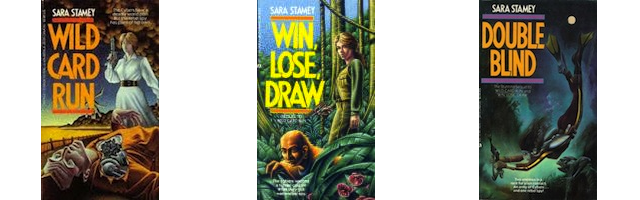
I’ll illustrate my approach by starting with my early science fiction series from Ace/Berkley, the first novel Wild Card Run. The main plot concerns a rebellious game-designer from a restrictive home planet who is challenging the control of humanity by the Cybers, an artificial-intelligence network. (I published this back in the 1980s, and I’m actually listed in some databases as one of the first “Cyberpunk” authors along with William Gibson and others, which tickles me.) Anyway, my heroine Ruth Kurtis is forced to return to her family farm and polyandrous culture (women have multiple husbands), where she has to resist her attraction to her mother’s newest husband, a young man the daughter’s age. This underlying romantic tension helps drive the main plot of her rebellion against the Cybers, and also contributes to one of the themes of the novel, examining the impact of new technologies on human values. And of course, it never hurts to raise issues of social taboos, and the loyalty and betrayal connected with forbidden love –  perennials in storytelling.
The next two novels in the series, Win, Lose, Draw and Double Blind, explore ramifications of nontraditional romantic possibilities – sexual love between different humanoid races, and between human and machine – which seems to be a hot topic today, with the film “Her.” These elements serve to advance my larger plot speculations about the difficulty of defining humanity and identity, which again are timeless themes keeping writers and readers busy over the past centuries.
My recent novels are more mainstream, but again melding genre elements. Islands, romantic
suspense with a psychic tinge, is my closest approach to a romance formula, but again the romantic relationship has a lot of ambiguity and is not central to the mystery/suspense plot. Set in the Caribbean, where I taught scuba years ago, it concerns a young archeologist who arrives on a tropic island to research petroglyphs and solve of the mystery of her brother’s drowning on a sunken treasure ship. The romance angle concerns her chief suspect, whom she investigates while being reluctantly drawn to him despite warnings about the danger she’s courting with this volatile war veteran. The sparks fly between them, but the sexual relationship isn’t thrown in just for heat – it functions to provide clues and red herrings, as well as challenging a lot of preconceptions my heroine carries about the nature of truth and right and wrong, contributing to a larger Faustian theme. How far will she push to learn “the truth”? What happens when you get too deep a glimpse into the “dark side”? Can love help redeem you?

My upcoming metaphysical thriller The Ariadne Connection weaves together three perspectives on a near-future crisis concerning a geomagnetic reversal and a New Leprosy plague. My three main characters become entangled in various romantic subplots, from a tension-filled love triangle, to transgendered love, to traditional heterosexual love with reservations and spiritual dimensions. The main thriller plot is the focus of the novel – a young Greek scientist is christened “Saint Ariadne” when she discovers she can heal the New Leprosy by “laying on hands.” Various dangerous factions pursue her for their own agendas, and the three main characters are mostly occupied with evading pursuit while Ariadne learns to control her growing powers, which have the capability to destroy as well as heal. Love and sex under conditions of extreme uncertainty and stress are opportunities to explore dimensions of the characters, particularly Ariadne, who must weigh eternal questions: Does the end justify the means? Should you use people who love you in the service of a higher goal? Is the focus on a mission strengthened or weakened by allowing intimacy with a partner?  Do we lose ourselves when we give too much to another person? Does the joy of loving outweigh inevitable pain and loss?
I guess it’s obvious that I’m fascinated by the nuances of human behavior, the way our desires color our notions of “truth” and “good versus evil,” and I love to throw characters into stressful situations that test their mettle.  Love is always a big challenge to throw in the path of a character’s goals, as that tug of irrational attraction can really toss in a wild card. Will the relationship strengthen or weaken our characters? What will they learn about themselves that we can share? I hope my stories entertain as well as involve my readers in these enduring explorations.

Author bio:
Sara Stamey’s extended travels in out-of-the-way corners of the globe include treasure hunting and teaching scuba in the Caribbean and Honduras, operating a nuclear reactor, and owning a farm in Southern Chile. Now resettled in her native Northwest Washington, she teaches creative writing at Western Washington University and offers editing services as a “book doctor.” She shares her Squalicum Creek backyard with wild critters and her cats, dog, and very tall husband Thor.
Her romantic suspense novel Islands is described by reviewers as “an intellectual thriller” and "a superior suspense novel….a stomping vivid ride.” A new eBook edition will be released by Book View CafĂ© on May 6.


~~~

Yep, I had a feeling I was gonna like this lady.

Be sure to check out her books, folks! They're worth looking into!

And we'll have her back soon to tell us about her upcoming book release!

-Stephanie Osborn
http://www.stephanie-osborn.com

Wednesday, April 23, 2014

Elements of Modern Storytelling: Romance, A Guest Blog by Herika R. Raymer

by Stephanie Osborn
http://www.stephanie-osborn.com

Today's guest is Herika Raymer. Herika is a very talented writer of short stories and comes by it naturally -- her father is the gifted H. David Blalock. She is also an excellent editor. She, her father, and I are all members of Imagicopter, an arts group specializing in printed media (writing, art, etc.) who help promote each other, schedule group booksignings, etc.

Interestingly, she follows along quite well in the footsteps of our previous two guest bloggers in discussing the history of romance in literature -- and how originally "romance" did NOT equate to "love story," but rather to "fantastical tale."


~~~


Herika:


"Where does ROMANCE fit as an element of modern storytelling?"

Romance has been a part of storytelling since The Beginning.

Yet, what is 'romance'? If you look it up, it begins as fanciful tales in Medieval times, mostly associated with chivalry and the heroic exploits of knights. These romances began as adventure stories. Mainly, romance dealt with stories that "lack basis in fact" or were "emotional" according to the dictionaries -- and most people would say that love is the most illogical aspect of life there is. It cannot be measured, it cannot be explained; it simply is the state of being when one individual cares for another more than they do for themselves. Platonic, familial, or romantic -- each form of love exists and is shown in behavior. So, remarkable and fanciful tales were woven around acts supposedly declared as motivated by love, and thus romance and love became synonymous.

In most instances romance was presented as an attraction between two people in defiance of tradition or culture, such as the tragic tales of Romeo and Juliet, as well as Paris and Helen of Troy. To counteract this destructive image, enter the heroic tales of devotion unending, such as the retelling of Aragorn and Arwen from Lord Of The Rings and Odysseus and Penelope of The Odyssey. Yet the sweet telling of adoration and companionship, as shown in the stories of Sam and Rose from The Hobbit or Ellie and Carl from Up, should not be overlooked. Nor the surprisingly loyal relationships despite what could be considered non-traditional arrangements, as shown in the exploits of the lovable Mike Callahan and his delectable Lady Sally McGee in Spider Robinson's tales, or the incredible pairing of F'lar and Lessa on Pern, or even the arrangement between Hades and Persephone [Greek mythology]. Finally, romance is also affection unrequited, as with Lancelot and Elaine of Corbenic [Arthurian legend] as well as Mary Callahan Fin and Jake Stonebender [also Spider Robinson]. Their attraction was more than lust, more than desire; it was a yearning to be together despite the odds. To share a lifetime together, and a presentation of a loathing to see their lives without the other individual. Each of these couples, despite flaws, showed a willingness to join their lives, share joy, brave adversity, celebrate successes, endure hardship, offer comfort, work through problems, and, most of all, to remain loyal to their partners. Granted no relationship is perfect, but the fact these couples were determined to honor their commitment is remarkable.

So what place does romance, a concept originally meant as adventure and later came to envelop the fanciful aspect of love, have in modern storytelling? Simple: it provides motivation. Much as it did in religious, Medieval, pioneer, Victorian, and previous eras' storytelling.

Though -- and this is just my opinion -- is it possible that romance is giving way once more to lust and obsession? Perhaps it is just me, but the stories of Zeus and the other Olympian gods spiriting around "taking" women and fathering bastard children was not romantic, it was infuriating; and the same holds true for the goddesses seducing men. These are not tales of romance but conquests, of a satiation of primal lust and obsession. These have their place, naturally -- it gave the children the motivation they needed to become either heroes or villains in their own rights. However, it seems to me that more and more stories are reverting more to, "Hey, let's get it on," rather than, "Stay with me."

That would be my question -- what part does LUST fit as an element in modern storytelling?

Romance has been expanded to mean to court or woo; in other words, to endeavor to gain the favor of a person. It is an effort, a discovering of what appeals to the other party and trying to find some common ground to relate on. Granted, certain stalkers take this too far, and that is where it becomes obsessive (Candace from "Phineas and Ferb," anyone?).

Lust is primal: seeing someone desirable, obtaining what you want from them -- usually physical -- and then going on your merry way to the next target. Often it can even be presented as a game, not just between men or women, but men and women. Take the movie Dangerous Liaisons for example; a bet between a man and a woman that led to disastrous consequences. I cannot see the romance in that. To be truthful, I often blame "romance stories" for this. To be more specific, I blame their language. I recall when Harlequin romances, though not very accurate in their depiction of history or even interactions between men and women, at least used alluring language to appeal to the visual senses. I recently read some modern romance and was, well, appalled at the crudity of the language. Crass language, almost painful depictions of interpersonal relations, and just a general disrespect for the atmosphere that took away from any "romantic" essence there might have been. Perhaps that is just me being old-fashioned, but I just could not see anything particularly alluring in reading those words. If anything, it made me cringe. Still, I guess it had its place. After all, even in the old tales lust was the beginning of many stories.

So both have their place in modern storytelling. Where romance is most likely more relationship-oriented, and lust more physical, both have their places in the tales that result in their presence. They provide a way to relate to the characters, to either cheer for their accomplishments or dread their triumphs. To return to the original aspect, romance gave a personal touch. It helps breathe life into the characters, helps the reader understand what is seen in the object of affection, and perhaps even follow why the character is acting the way they are.

Romance makes the character a possible mirror of who the reader is, because surely there is a bit of romance in all of us.

To quote Melinda S. Reynolds:
As far as modern story telling goes, you can have a story without romance; but you can’t have romance without a story. It doesn’t have to be the main driving force, but it does help to put the characters into perspective for the readers and understand basic motives and drives. Lust is the opposite of love. Lust is selfish, love is selfless. Lust is neither romance or love; it gives nothing and takes all.
~~~

Excellently said; I find I am in complete agreement with the use of romance as a means of allowing the reader to relate to the characters.

-Stephanie Osborn
http://www.stephanie-osborn.com

Wednesday, April 16, 2014

Elements of Modern Storytelling: Romance, A Guest Blog by K. E. Kimbriel

by Stephanie Osborn
http://www.stephanie-osborn.com

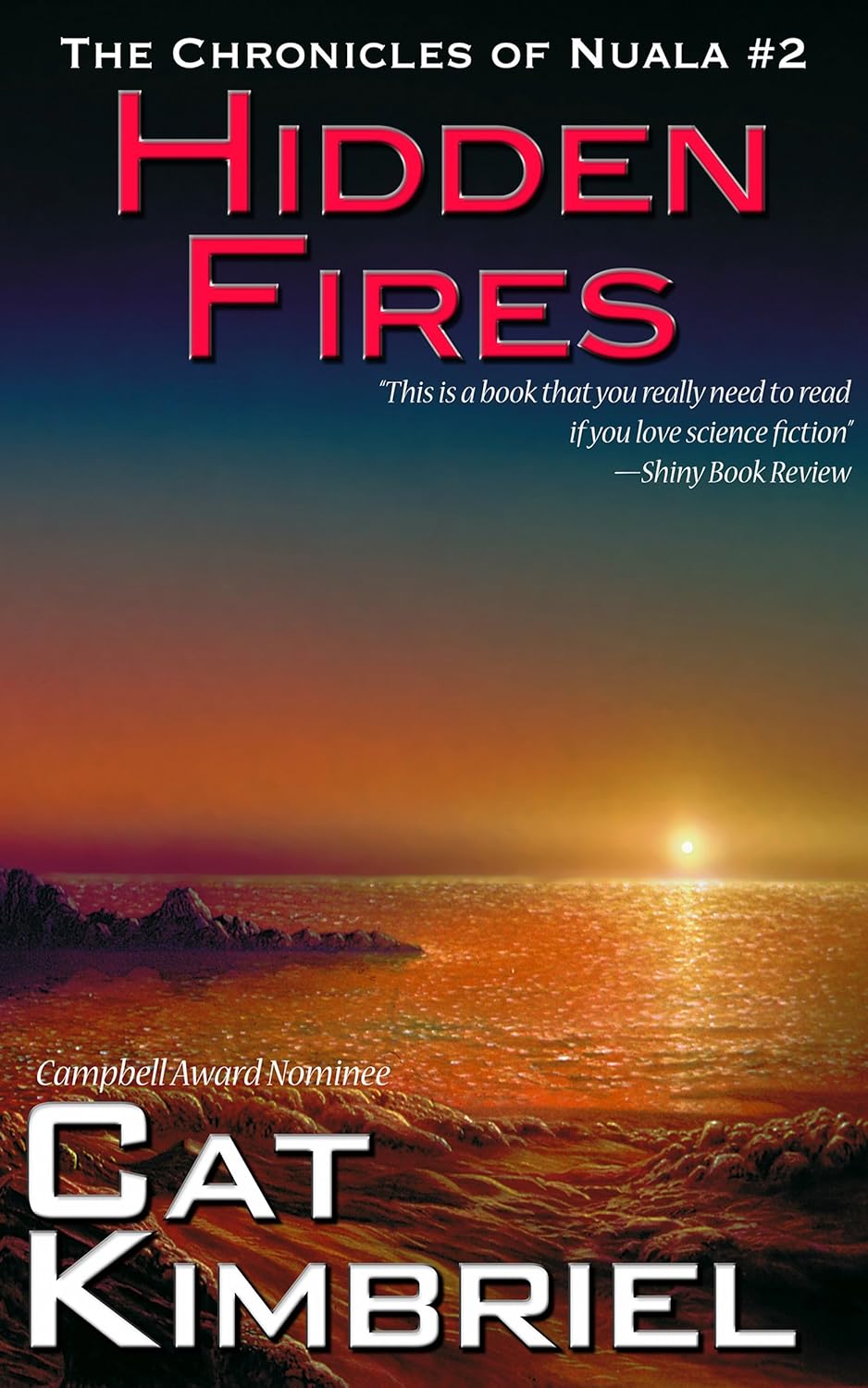
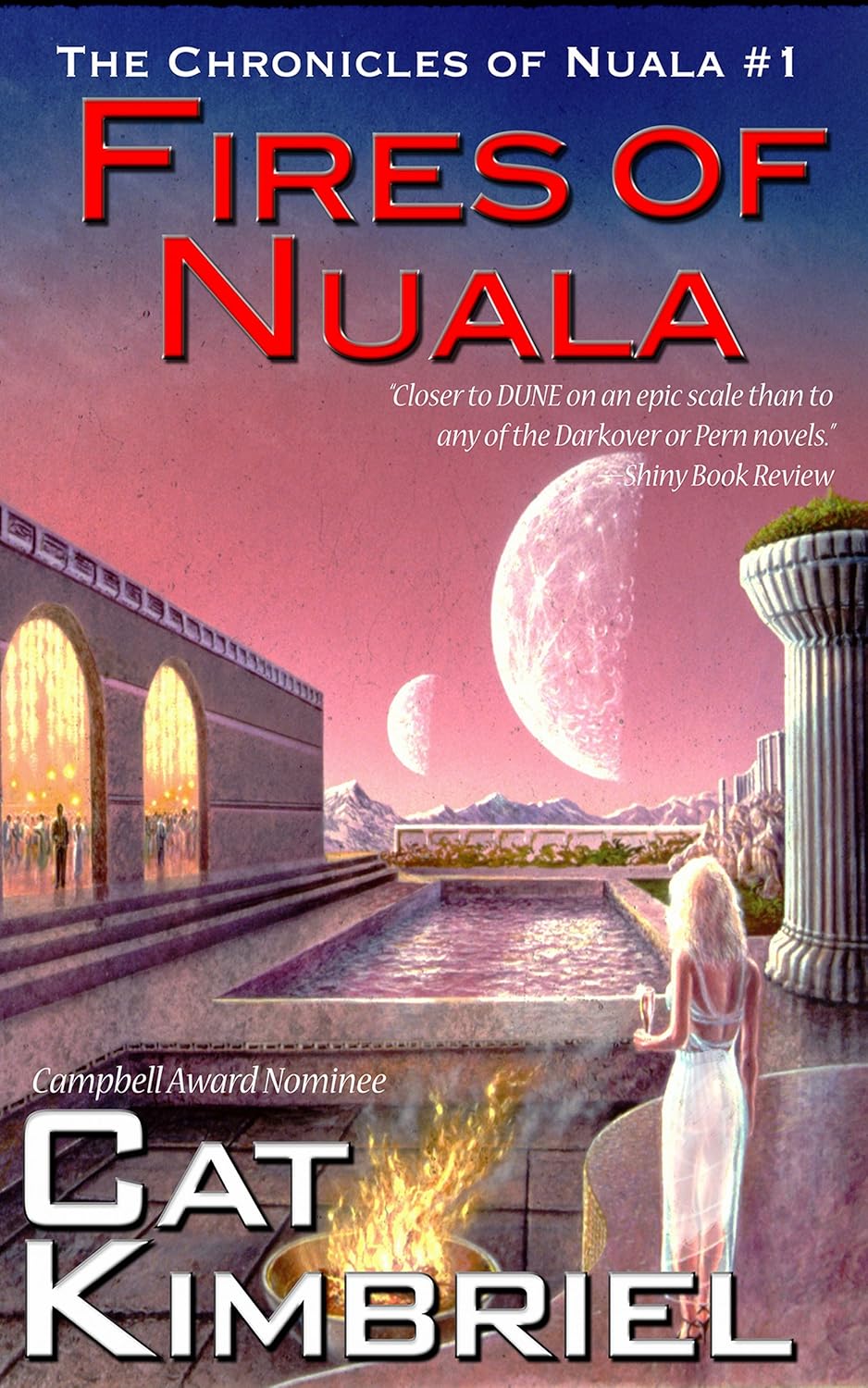
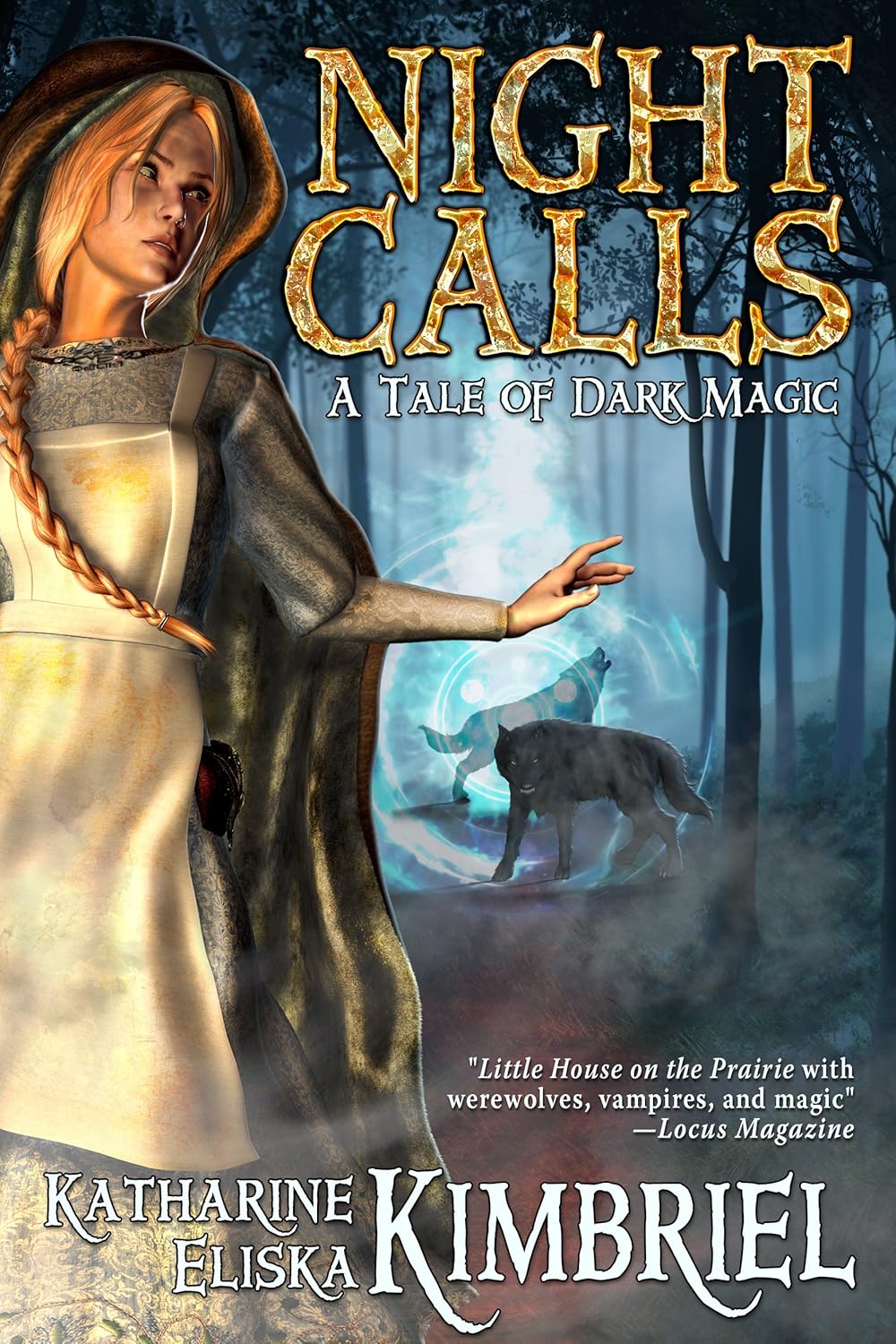
Katharine (K.E.) Kimbriel was introduced to me by last week's guest blogger, Barb Caffrey. Author of the Chronicles of Nuala (available through Book View Cafe) and more, Katharine is an experienced, talented writer. 


~~~


"Where does ROMANCE fit as an element of modern storytelling?"

Stephanie Osborn asked this question, and my immediate thought was “as a subtle puzzle piece.”  I know that is not the usual response to the question.  Half the fiction books published in this country every year by major New York publishers are romances, in almost every flavor you can imagine.  (That is, if by flavor you are imagining one woman and one man who end up in a HEA--Happily Ever After--or, more recently, HFN--Happy For Now--relationship.  Everything else slides in from the shadows, makes a surprise appearance, or even has a small independent publishing line somewhere else.)

Where does romance spring from?  I’m not asking in a technical sense, or a scientific sense.  We know that chemistry and biology triggers the first flush of attraction, and we can research to find out where the modern Western concept of romance began.  I always think of it as starting with Jane Austen—a woman choosing to reject offered security for the hope of at least liking and respecting her partner.  That she ended up with a man whom she also loved, who was solvent enough to support her and their children, was a bonus.  For most women, having it all was a fantasy, but a lovely dream.  We can go back further, into legend—but most of those famous lovers did not end well.

Thinking about it now, I wonder if romance novels were simply a woman’s first reach for respect and mutual affection in a relationship—to regain the ancient courtesies between the sexes, the respect for each sex’s wisdom and knowledge that still lingers in some tribal cultures.  The current tribal forms may not be at all what modern women want in relationships.  But in the past few hundreds of years in Western culture, women were mostly shut out of commerce and expected to make the home (and that was big doings before the Modern Era of electricity and convenience foods.)  All they could hope for was a marriage where their intelligence and personality was respected.  Marriage was often a financial transaction, or a melding of two families’ talents and assets.  Respect, humor, liking the person you were going to share a life with—those were traits to be desired.  Romance was the dessert, the last thing you wanted but could only dream of, because so many failed to get it.

Then more people began to marry for love—for better or worse.  But did they understand each other?  I think women learned to understand their men, to try and keep a home their husbands wanted to return to, a refuge for their men.  But too often the men had no clue what was going on in the heads of the women.

A thesis was once written proposing that women read romances—pure romance, not the newer stories escalating in sexuality—because it is a story where a man becomes obsessed with a woman and is spending all his free time trying to figure out how to understand her, please her, win her.  I suspect that the root of romance lies in understanding The Other—the other sex.  Or if they do not completely understand the other person, they still unconditionally accept them.

I don’t write pure romance, I write fantasy, science fiction, and mystery.  I am interested in putting people into unusual or challenging situations and watching them work their way back out to their new life.  But there is always a romantic thread in my stories, because whether people plan on it or not, romance happens.  Sometimes one of two people thinks, “hummm…” and starts working at it, like my young would-be rebels in Hidden Fires.  Sometimes two people look at each other simultaneously and think “Why did I never notice this person in this way?”  as the protagonists of my short story “Feather of the Phoenix” do.  And sometimes people are working together, surviving together, laughing together, and along the way they realize that something new is growing between them, even as they are saving their corner of the universe, as in Fires of Nuala.


Sometimes there are challenges to the relationship, or temptations.  Some fans want to see Alfreda and Shaw from my Night Calls series finally make a match of it.  Shaw and Allie are only young teens, and they have skills that demand training—they aren’t the kind of people who will fall willy-nilly in love.  But if they awaken to it, after challenges, and others who attempt to lure them in other directions (for if they are both worth winning, they are worth winning by others) then they will fight the world to stay together.


But getting there can be subtle—until the moment it is everything.  I think I write romantic subplots for those of us who position ourselves in things we love in life, and hope to be surprised by love.  Just like in a romance!

~~~

Well said, Katharine! Romance can fit well and surprisingly easily into almost any genre, because in real life, it just...happens.

-Stephanie Osborn
http://www.stephanie-osborn.com