Banner

Banner
Showing posts with label Twilight Times Books. Show all posts

Wednesday, February 25, 2015

Read An Ebook Week!

Read an eBook Week will run from March 1st-7th this year. That starts THIS SUNDAY!

Artwork © Brad Fraunfelter

The following titles will be offered as free giveaways via the Twilight Times Books web site during Read an eBook Week, March 1-7, 2015.

An Elfy on the Loose by Barb Caffrey
Behold the Eyes of Light by Geoff Geauterre
Book Reviewers Talk about their Craft by Mayra Calvani
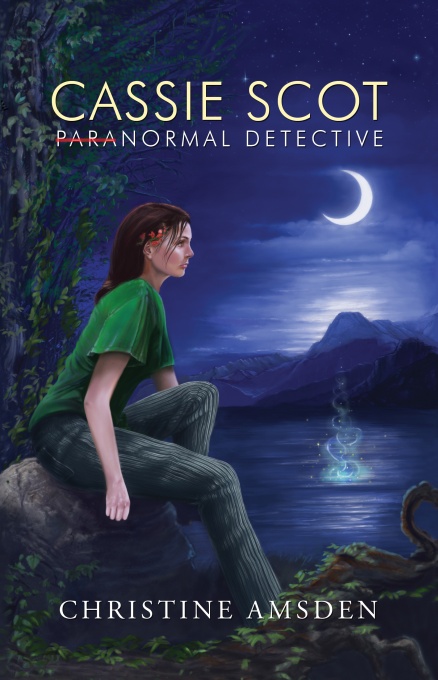
Cassie Scot: ParaNormal Detective by Christine Amden
Death on Delivery by Anne K. Edwards
Deeds of a Colored Soldier During the Rebellion by F. W. Abel
Don't Let the Wind Catch You by Aaron Paul Lazar
How I Wrote My First Book: the story behind the story by Anne K. Edwards and Lida E. Quillen, Editors
Jerome and the Seraph by Robina Williams
Laughing All the Way by Darrell Bain
Literary Sampler by Mayra Calvani, Aaron Paul Lazar and Anne K. Edwards
Monkey Trap by Lee Denning
No Place for Gods by Gerald Mills
Rue the Day by Ralph Freedman
Schooled in Magic by Christopher Nuttall
The Case of the Displaced Detective: The Arrival by Stephanie Osborn
The Storks of La Caridad by Florence Byham Weinberg
Touch of Fate by Christine Amsden
Tremolo: cry of the loon by Aaron Paul Lazar
Who is Margaret? What is She? and Other Stories by Celia A. Leaman


Different books, free, each day! Check it out!

Wednesday, September 24, 2014

Guest Blog: The Life of a Writer, by Christine Amsden

by Stephanie Osborn
http://www.stephanie-osborn.com

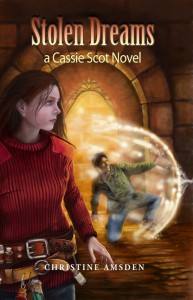
Today we're welcoming fellow Twilight Times author Christine Amsden in for a little break in discussing character development. Instead, we're celebrating the end of a series -- Christine's Cassie Scot series!


Christine Amsden has been writing fantasy and science fiction for as long as she can remember. She loves to write and it is her dream that others will be inspired by this love and by her stories. Speculative fiction is fun, magical, and imaginative but great speculative fiction is about real people defining themselves through extraordinary situations. Christine writes primarily about people and relationships, and it is in this way that she strives to make science fiction and fantasy meaningful for everyone.creative work may be enough to write an entire novel draft (under extremely bizarre I-officially-hate-you circumstances), or it may only be enough to learn one important lesson before going back to the drawing board. An inspired writer can take a few stolen hours and create magic. An uninspired writer…well, that's the problem with the ideal of the “full time writer,” aside from the paycheck thing. Sooner or later you run out of things to write about.  


At the age of 16, Christine was diagnosed with Stargardt’s Disease, a condition that affects the retina and causes a loss of central vision. She is now legally blind, but has not let this slow her down or get in the way of her dreams.


In addition to writing, Christine teaches workshops on writing at Savvy Authors. She also does some freelance editing work.


Christine currently lives in the Kansas City area with her husband, Austin, who has been her biggest fan and the key to her success. They have two beautiful children.

~~~


The Life of a Writer 

So…you want to be a writer? Are you a dreamer? A story teller? Do you simply love the way words feel when they come together to create a picture? Climb on the crazy train then, and get ready for a long, bumpy ride. 

Besides being a writer, I'm also a writing coach. I'm exceptionally good at it for one reason that has come as a surprise to me: I'm honest. Now, I always knew I was honest; what I didn't realize was how rare this quality is, even in a coach. I tell the truth as I see it because only by reflecting both beauty and flaws can I inspire growth in a writer.  

With that in mind, let me tell you the hard, cold truth about being a writer. It doesn't pay. The handful of bestsellers out there cluttering up the pop culture notion of what a writer is represent less than one tenth of one percent of traditionally published authors (I'm not even talking self pub here). If anyone has said, “Don't quit your day job,” they weren't trying to be mean. They were trying to be honest.  

I didn't listen. :) 

I quit my day job ten years ago when I got married, urged by my husband (who made enough for the both of us to live comfortably) to follow my dreams. I took the risk; one of the biggest of my life, and I have no regrets. Children came two years after marriage, filling my days with a combination of domestic and writerly activities that I found perfectly compatible. In a way, diluting my days with a wider variety of activities helped inspire me and make me more productive. I have written six complete novels in the eight-and-a-half years since my son was born (this doesn't include a couple of dead-end projects that were, nevertheless, learning experiences). 

Creative work isn't like other types of work. It isn't linear. It isn't easy to quantify. Forty hours of

That's why I started coaching. It's also why I'm currently looking for creative new opportunities for part-time work. I've got a gig as a judge in a cooking competition coming up soon. Should be fun! 

I know a lot of writers. Their stories are all different, their day jobs all unique, but one common theme rings true: We all long for the day when we can write full time, when our income from writing will support us in a comfortable middle-class lifestyle. I think knowing this story so well is one of the reasons why I'm a fan of TV talent shows like The VoiceAmerica's Got Talent, and (most recently) Rising Star. The acts all come on and say the same thing -- that they dream of getting paid to perform. To do what they love. 
 
You don't want me to sing, but putting that aside, I understand. I really, really do.  

And yet I understand one other thing, or at least, I am working towards understanding. (Self-actualization is more a journey than a destination.) I understand that I am a writer. Fame and fortune are not necessary for us to do what we love. We can do it just because we want to. Because, for whatever reason, these activities fulfill us. 

One of the most common interview questions I get on tour is, “What advice would you give to aspiring writers?” I answer, “Only write if you love it.” The full answer is that if you're writing for fame, or fortune, or for any external force, it's not worth it. Writers write because the written word is our currency. It is an end in and of itself.  

Between one thing and another, I lost track of that fact in the last year or two. I've taken the summer off from writing. I'm spending more time with my kids while they're still young (6 and 8), working on promoting my Cassie Scot series, and still doing a little coaching. Writing will call to me again, sooner or later. It always does. I've already started to feel the pull of a project that would take me in a completely different direction from anything I've done before. It may pan out. It may not. Luckily, as an independent author I can write whatever I like. No one owns my time or my creativity.  

If you want to be a writer, then write. It never even has to be something someone else sees. (Kind of like me singing in the shower where no one else can hear. :) ) If and when it grows to the point where you would like to share it, come seek us authors out on the Internet and join our circles of madness. But if you can, even then, try to keep it in perspective. There is always the dream; we are dreamers by nature, but don't let the dream keep you from living your life now. 


~~~

It's unfortunate, but it's true: If you want to be a writer, don't quit your day job. 

Thanks for that insight, Christine! You're welcome on my blog anytime!

-Stephanie Osborn
http://www.stephanie-osborn.com

Wednesday, June 4, 2014

Elements of Modern Storytelling: Romance, Part 2 of 2 by Christopher Nuttall

By Stephanie Osborn
http://www.stephanie-osborn.com

Last week best-selling author Christopher Nuttall discussed the historicity of the concepts of love, romance, sex, and marriage, presenting information important to the modern reader (or writer!) of historical fiction, with a special emphasis on the Regency period. But Chris writes science fiction and fantasy, and does so quite well, both self-published and through presses like Twilight Times Books and Elsewhen Press.

So let's pick up where we left off, and let Chris tell us how he wielded the element of romance in his own books.


~~~


Chris:

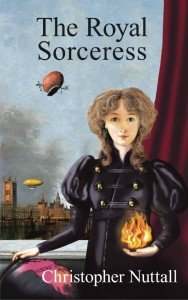
...And now I come to talk about one of my characters and her first true romance. [The Royal Sorceress]

Lady Gwen was born in a world where the principles of ‘sorcery’ – actually, mental powers – were discovered prior to the American Revolution.  This caused a flowering of technology, but it also caused major social problems, particularly as magic helped the British Empire defeat the American rebels and crush the American Revolution.  By the time of the first story, the British aristocracy is firmly in control, but unrest simmers under the surface of Britain. 

Gwen developed magic – powerful magic – fairly early in life.  This became public very quickly, making it impossible for Gwen’s parents to arrange a marriage for her.  (What man wants a wife who can kill him with a thought?)  In a world where noblewomen were expected to be decorative, go to balls and marry someone their parents chose, Gwen lived a fairly isolated life, seething with frustration at not being able to do anything with herself.  By the time she was recruited for the Royal Sorcerers Corps (in the absence of a suitable man) she wanted desperately to prove herself.  But she could also be largely unaware of the dangers of the world.

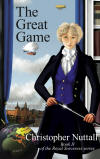
In her second book, The Great Game, Gwen was courted by a man who came into her life as part of a murder investigation.  Sir Charles seemed, in every aspect, the perfect regency hero; brave, handsome, noble and true.  But how was he to court her?  Normally, any man interested in courting a girl in the era would invite her to a dance, then declare his intentions to her parents.  And yet, Gwen was as independent as any woman could hope to be – perhaps more so – in that time and place.  To approach her parents would have been disastrous.
 
Sir Charles understood his prey (and he was hunting her) very well.  He approached her openly, made himself useful, and invited her to ride with him.  By showing no fear (because of her magic) or contempt (because of her sex) he made a very good impression on someone who had spent little time with men, socially.  Gwen reacted well, perhaps better than he had hoped, and they kissed.  But they went no further.  By refraining from pushing her, Sir Charles earned her respect.  Perhaps he even earned her love.

But his very approach should have been a warning that he had something else in mind.  An honourable man would, perhaps, have approached her parents, even though it would have annoyed Gwen.  A marriage in those days wasn't just a match between a boy and a girl; it was a match between two families.  If they had married, Gwen’s family would have been tangled with Sir Charles’s family.  The consequences of their relationship would have spread further than just the two of them.

Gwen didn't realise, until it was almost too late, just how badly he was playing her.  He wasn't interested in luring her into bed, but in manipulating the outcome of the investigation and – if necessary – betraying her.  In hindsight, the signs were all too clear. 

This shouldn't have been surprising.  Georgian and Victorian noblewomen lived a very sheltered life.   They were coddled and protected from the worst of the world outside their walls.  Those women that might have served as examples of the dangers were often driven into social obscurity or death.  Indeed, medical textbooks of that period often concealed details concerning sex and women’s bodies, even though many details were blindingly obvious.  (A quick look in the mirror would have shown the curious woman that some of the details were wrong.)  But they were not encouraged to develop any form of curiosity.  A wedding night could be a frightening introduction to the world of sex.

There were fewer restrictions on men.  Men were expected to sow their oats in brothels, which were populated by women of the lower classes (and thus not considered completely human.)   A woman who disliked her husband had no easy way to leave him (to some extent, she was his property), while the husband could find solace in the arms of a mistress – or a whore.  Female adultery, on the other hand, would face significant punishment.  A husband could even sue his wife’s lover, on the grounds that his property had been damaged.  It is surprising that there were any cases of adultery at all.

Depicting a romance – or a cold and calculating attempt at seduction – in such a society can be tricky.  Will the author, depicting a world where women are expected to be subordinate (at least in public) be accused of sexism?  Or will the author, showing an underage marriage (by our standards), be accused of condoning paedophilia?  Or will the author, showing a mixed-race marriage in 1900, be accused of racism if he depicts the likely reaction of most contemporaries to such a relationship?

And yet, the alternative – transplanting modern values into the past – is worse.  It becomes laughable to see the past’s heroes and villains mouthing politically-correct phrases, particularly when our social attitudes wouldn't permit many features of life in the past. 

Hollywood History is not real history.  When it comes to setting books in the past, and discussing touchy subjects like romance, it behooves us to remember that.


~~~

Well said, Chris. I find the current tendency to misunderstanding the mores of the time, and the trend toward revisionist history, disturbing. I am even aware of classics of literature which have been "revised" in the name of suiting some modern standard of proper behavior and speech. To me, this is an abomination – if we erase the traces of what those eras were really like, and do not teach them to our children, how can we hope to learn from our own history...which we have consequently forgotten?

And for any writer worth his/her salt, it can be a minefield to traverse the fine line between historical accuracy and not offending readers.

-Stephanie Osborn
http://www.stephanie-osborn.com

Wednesday, May 28, 2014

Elements of Modern Storytelling: Romance, Part 1 of 2 by Christopher Nuttall

by Stephanie Osborn
http://www.stephanie-osborn.com

Starting today, and for the next two weeks, I'd like to welcome indie best-selling author Christopher Nuttall to Comet Tales! He sent me some wonderful stuff, enough for two whole blogs, and so I decided not to overwhelm my readers by cramming it all into one. Part One goes live this week, and Part Two, next week.

Chris is a very successful writer of indie (aka "self-published") books in the science fiction and fantasy genres. He has also written for Twilight Times Books, where I believe a book is shortly forthcoming, and Elsewhen Press. Born in Edinburgh, Scotland, he now resides in Malaysia, so contacting him is occasionally interesting!

[ALERT: The following is a very frank, straightforward discussion of historical attitudes
toward sex and marriage, which were not necessarily considered interchangeable "back in the day." This includes consideration of modern taboos and references (but not obvious descriptions) to dominant positions during sex. It is extremely enlightening, and you will learn something. But if said frankness causes offense, then this particular article is probably not for you. My younger fans may want to skip over it also, as this is probably PG-13 or slightly above. --S.O.]

Welcome, Chris!

~~~


Chris:

Thoughts on a Regency Romance

The past is a foreign country, as the old saying goes.  They do things differently there.

I mean it.  It always surprises me how many people look at the past and ask, quite reasonably, why modern values weren't considered by the denizens of the past?  Why couldn't Queen Elizabeth marry when her father had six wives?  Didn’t she need to have an heir?  But if Elizabeth had married, she would have conceded a great deal of power to her husband, as both Mary Tudor and Mary Queen of Scots found out to their cost.

To us, this seems absurd.  We live in a world where a woman has held the highest elective position in Britain and Germany, while another woman made a determined run for the White House.  A married woman in the West doesn't have to give up her name, share her property  or accept her husband’s every wish as a command.  But that wasn't true, even for noblewomen and princesses.  To marry was to concede independence.

Indeed, the very idea of marrying for love would have seemed strange to our ancestors.  How selfish, they would say, for someone to marry for love!  They would have condemned emotion as a driving force, insisted that their children marry someone suitable for them, someone who could  bring much to the family.   Who would want to marry a pauper, no matter how handsome, brave and kind, when there was a chance to marry the rich town miser, even if he was a jerk?

I first came across this when I read Romeo and Juliet at school.  My first thoughts, upon concluding the play, was that both Romero and Juliet were idiots.  Why didn't they just run off together or simply tell their parents that they were married?  But, if you look at the play through the attitudes of the time, that simply wasn't an option.  Juliet was semi-betrothed to Paris, her parents had certainly not consented to her marriage to Romeo ... and, in making love to Romeo, Juliet had defiled herself forever.  It would be quite easy for Juliet’s father to assume that Romeo had set out to damage his family (and succeeded magnificently) or that Juliet had shattered her family’s honour.  Of such viewpoints are honour killings made.

It actually grows worse when you realise that, in the original play, Romeo and Juliet would have been thirteen.

But this too wasn't uncommon.  Our time points to a certain age as the division between childhood and adulthood.  Their time decreed that a girl was marriageable as soon as she started her periods, when she was capable of bearing children.  Our time would see this as paedophilia, all the worse because the girls were not required to give their consent.  For an author, depicting this can be one hell of a challenge. 

This is not the only disconnect between our world and the attitudes of the past.  The Greeks had an open and semi-tolerant attitude to homosexuality.  The Romans, on the other hand, only considered homosexuality acceptable if the Roman Citizen was doing the penetrating, rather than being penetrated.  (The suggestion that he had been deflowered by a foreign king haunted Julius Caesar for his entire life.)  Later generations raged against homosexuality, while accepting childhood marriages and relationships we would probably consider incest.  Even today, sex and relationships can take very different forms around the world.


And now I come to talk about one of my characters and her first true romance...


~~~

To Be Continued next week!

-Stephanie Osborn
http://www.stephanie-osborn.com

Wednesday, March 19, 2014

Elements of Modern Storytelling: Romance, A Guest Blog by Christine Amsden

by Stephanie Osborn
http://www.stephanie-osborn.com

This is blog 2 in our Elements of Modern Storytelling: Romance series. It's by Christine Amsden, a very successful and imaginative fellow author at Twilight Times Books. Christine always has some interesting things to say, so let's get to it.


~~~


Christine:

Where does romance fit as an element of modern storytelling?

Romance is more popular than ever and it's not hard to see why. Modern storytelling is intimate by its very nature, and modern readers want to get to know their favorite characters in ways they never did before. We crave that closeness. That connection. And romance is the ultimate human connection. 

These days limited omniscient third person point of view is so commonplace that we scarcely think about it any longer. Back in the old days, if you wanted to get “inside” a character's head, you needed to use a first person perspective. These days that's not necessary. You can use “he” or “she” to your heart's content and still put us right there inside their skulls, sharing everything they think, hear, see, feel, touch, and smell. In fact, readers have come to expect this.

Why? The answer is simple – movies. These days, books have to compete against movies to provide an enthralling storytelling experience. And let's face it, books can never compete with movies on sights or sounds. Classic books often described a scene from the distant perspective of an omniscient narrator. They would set the stage by describing sights and sounds, what the characters looked like and wore, what they acted like and what they said. But this distant narrator rarely got inside a character's head and when it did it wasn't intimate. It was usually just expedient. 

Imagine modern books trying to use a distant narrator, when live-action movies can show us sights and sounds so much better? How can a book even hope to compete?

Intimacy. The one thing a book can do that a movie cannot is create a connection between the reader and the character. Whether an author uses first person or third person, the expectation is that we (the readers) get to know him or her in ways that no movie could show us. We want nothing more or less than the deepest desires of their heart, and the attitudes behind them.

Coming back around to romance, it is not hard to see that once you've given us a true connection to your character, the busybodies of the world (and most of us are whether we want to admit it or not) want to see those characters happily settled down with the right man/woman/sentient being. Even if that's not what the story is about, once we've established a true connection to a hero or heroine we look for him or her to establish connections with other people. The same way we do in real life. 

Having said that, I often think romance is overemphasized in modern stories. The romantic relationship is not the only way for people to connect with other people. We have friends. Family. Mortal enemies. 

I also worry that the romantic relationship is a true fantasy in many stories. And I'm not talking about magic – I'm talking about things that don't happen in the real world. The way love is often presented, it is indistinguishable from lust, and it establishes a false framework for what a real lifelong commitment is about. 

One challenge authors face today is reader expectations. And as much as readers swear they'd like to read something different, the truth is usually that they want to see something that pushes them just outside their comfort zone – not something that propels them out of it. Which is why I will be a very old woman before I write the non-happily ever after romance I'd love to try (if I ever do).

In the meantime, I'm trying to use romance to support other aspects of story and character, rather than as a focus for the story. (Or even as a superfluous subplot.) In so doing, I'm hoping to create a subtle honesty to the romance in my stories that belies the traditional lust-based undercurrents. In addition, I'm trying to include other important relationships in my characters' lives. 

My Cassie Scot series is an excellent example of what I mean. A lot of my reviews point to the “family drama” in the series and Cassie's friendships as being as compelling as the romance. Seeing these comments warms my heart because this was exactly what I wanted to do. Cassie will eventually be a wife and mother, but for now she is a daughter, sister (six times over), and a friend. 

When it comes to the romance in that series, Cassie isn't ready for it yet. Between magic, mystery, romance, and family drama there's a lot to keep her busy but the arc that drives the story is Cassie's personal coming of age story. She can't be with someone else until she's okay with herself (which she's not at first). Thus the romance supports the story/character and not the other way around.

Of course, there are a lot of books out there and a lot of approaches to romance. I am in no way suggesting that every story should be the same. There will always be a place on readers' shelves for steamy or heartwarming romantic fantasies. I read them myself and enjoy them quite a bit. 

But as romance is inserted as a co-plot into more and more stories, the opportunities for literature as a whole are endless. I've seen more stories about married couples, for instance, showing us that life doesn't end at “I do.” And there is often a great deal of honesty in these tales. 

However it's spun, tales of romance are human connections. And if there is one simple answer I could give to the question of where romance fits as an element of modern storytelling, that would be it: Human connections. 


Christine Amsden
http://www.christineamsden.com

Novels:


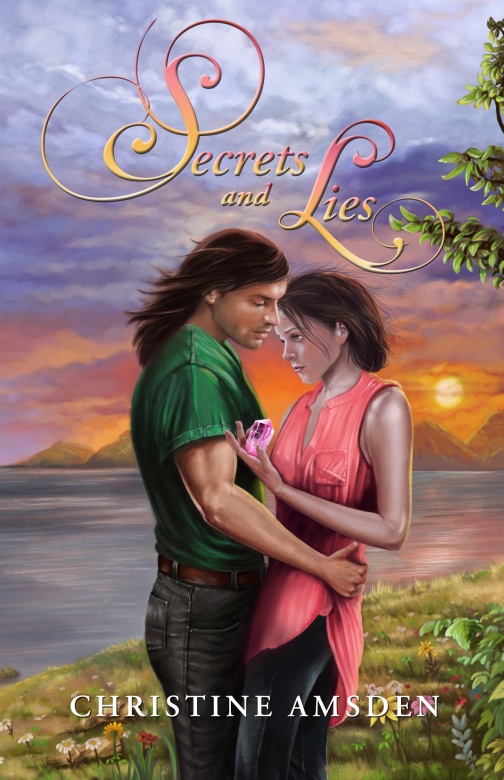
Secrets and Lies (Cassie Scot - Book 2) (December 2013)
Cassie Scot: ParaNormal Detective (May 2013) 2013 Global Ebook Award winner
The Immortality Virus (June 2011), winner of the 2012 Eppie Award
Touch of Fate (November 2007)

~~~

Human connnections. I think she has something there. I knew it would be interesting! Thanks, Christine!

More to come next week with another fellow author!

-Stephanie Osborn

Wednesday, October 30, 2013

The Blue Heron, A Guest Blog

The Blue Heron
by Aaron Paul Lazar

Recently I was able to resume my lunch-walks at work. Aside from getting drenched on one particular excursion—and I mean wringing, dripping, soaking wet—I was able to get away from the office for an hour or even and occasional two hours each time. This is the time during which I plan the next chapter in whatever book I’m working on, and it’s exactly how I wrote my newest release, Don’t Let the Wind Catch You, which features most characters outdoors on horseback, cantering over farmer’s alfalfa fields or in the deep woods. Mind you, I am also fully immersed in nature when I walk, and each of the details that surround me end up in one scene or another in my mysteries.

It’s not planned…it just happens. Sort of a process of osmosis, I guess.

You might wonder how I slipped away from work so easily. I know, it sounds terribly irresponsible and unlikely. But chalk it up to me finally making up for numerous skipped lunches. I was due. Overdue. So I took advantage of these late June days that hovered in the low eighties to change into my shorts and tee shirt and get with nature.  

Yesterday, I ran into a blue heron. Almost literally. Quite opposite to any bird behavior I'd ever seen, he stood just ten feet from me on the trail—simply staring with round yellow eyes.

I walked closer, scuffing my feet.
  
Why doesn't he fly away? Can't he hear me?  

I scraped my sneakers against the gravel again. He slowly turned his feathered head and looked directly at me. 

"What are you doing here?" I asked. (Please don’t judge me, I always talk to animals.)

He continued to stare, his eyes the color of Black-eyed Susan petals. I stepped a little closer and took a dozen photos with my camera phone. Oh, the quality is terrible, but I captured at least a faint image of him. I meant to bring my good camera that day, but in the haste of that oh-so-urgent need to escape the world of technology and feel the sun on my face, I left it on my desk.

He stood regal and aloof. His gray blue plumage seemed healthy, full. He stepped with confidence, swinging his head slowly from side to side.  

I spoke to him, again.  "Aren't you afraid of me? Why don't you fly away?" 

I moved closer, but he only walked a step or two along the path, as if keeping pace with me.

"Are you ill? Do you have a nest around here?"  

I didn't dare close the gap further, since his beak looked long and sharp. Instead, I took a path into a pumpkin field and marched along until I hit the woods. On the return trip, I looked for him, but the bird had vanished.  Relief whooshed through me.

He must be okay.

My mind started to spiral. 

Was it a sign? Was this rare and close encounter perhaps my father's spirit, come to visit?  

It's been sixteen years, but I still long for my father's company. I imagine conversations with him. Okay, I’ll admit it. I hold conversations with him. I know he listens, and I often sense his presence. At risk of embarrassing myself, I will admit that I love letting my mind wander in these preposterous ways, even though I know deep down it's farfetched. But walks alone in nature tend to foster such thoughts in me, and I enjoy the fantasies. Not that I'd admit that out loud to anyone. (Except you, of course.)

Today I returned to the trail, camera in hand, hoping to see my friend. I found him, but not as I had hoped. The poor bird lay on the trail, curled and still.  

It saddened me. I considered taking his picture, walked past him, covered another hour of dirt roads, and returned.

Should I? Could I? Wouldn't it be disgusting? Gross? Crass?  

But I did take his photo, and it was almost a reverent thing. Because even in death, his form held beauty and elegance.

In a very strange way, it was almost like closure.

In my usual self-comforting ritual, I started to imagine that perhaps this was a wise old bird whose time had simply come. Perhaps he'd led a full and resplendent life, soaring over lakes and swooping down to skim the water with his feet. Perhaps he'd caught a thousand silvery fish, balancing on long spindly legs while catching his handsome reflection in the mirror surface of the creek. 

How fortunate was I, to have been graced with his startling presence in his last days on earth? I was blessed to have met this feathered friend, in spite of his untimely demise.

I imagine he’ll show up in one of my books these days. But I think I’ll let him live. Maybe he’ll find a mate. And maybe they’ll have babies. Okay, the wheels are turning. I’d best get back to writing that next chapter. 

Remember, try to get outside as often as you can. Soak in the beauty that surrounds you. Every aspect of nature is a gift from God, and as I often suggest to my readers and friends: when life gets tough, take pleasure in the little things. 

~~~

Amazing, isn't it, the things that inspire us writers?

-Stephanie Osborn
http://www.stephanie-osborn.com

Tuesday, October 15, 2013

Guest Post: Genre Confusion (Doh!) – Urban VS. Contemporary Fantasy

I'd like to introduce another author with Twilight Times Books, Scott Eder. Today we're bombing his new book, Knight of Flame! Please go have a look at it, and buy it! It's even on sale!

-Stephanie Osborn
http://www.stephanie-osborn.com


~~~
Hello. My name is Scott, and I write Urban Fantasy. Wait, no, that's what I did a few weeks ago, before the revelation, before DragonCon.  Today, in my post-DC era, I write Contemporary Fantasy. And the funny thing is that I haven't changed a thing. I still write the same novels, but my genre perception has shifted thanks to the wisdom presented at Dragon*Con.   

I've heard the advice not to worry about genre. Let an agent or editor figure out into which Fantasy subgenre the book should fall since the writer is not typically the best judge. That's all well and good after the fact, once the book is sold and the decisions on how to market it are made. What about when a writer is discussing his work with publishing professionals or other authors?    

When talking about my book, framing it in terms of genre is a natural thing. It's meant to set a certain expectation or set of rules in which the plot unfolds and the characters develop. So, when talking about my book, Knight of Flame, I start off by telling people it's Urban Fantasy with strong romantic elements. Here’s the kicker…I was wrong. 

But, Scott, say it ain't so. I wish I could. I feel kinda silly about it, actually. Thank goodness I came to the realization myself instead of having someone have to point it out to me. I don't claim to know a lot about this industry into which I'm trying hard to break. In fact, I know fairly little.  That's why I keep asking questions, hanging with those who do know about this crazy business, and attending different cons and seminars. Look out World Fantasy, you're next. 

I got my first inkling of my genre faux pas early on. I'd been trying to identify my niche, my stand-out factor. What made my Urban Fantasy novel unique? I realized that one of the differences is POV. My novel has multiple POVs. I haven't seen that much in UF. Most UF stories turn upon the axis of a single driving character—typically a badass detective or bounty hunter protecting their slice of the world from the nefarious creatures of the night. 

I was good with the multiple POV thing. I started talking that up and building my case on how my book differed from the others. That went well until I started asking questions of NYT bestselling UF authors about it and got some strange looks. Perhaps there's a reason there isn't much multiple POV in UF.   

It seems that the general consensus about UF is that the pacing is very fast. That single POV ass-kicker drives through the story at a very fast pace. The characters don't typically amble about smelling the flowers. They find and fight the baddies threatening their town. The tone is dark and gritty, like the dirty streets and water of the cityscape in which they prowl. UF is the noire of the Fantasy genre.  

And that's where it all went crazy. Yeah, I see the dark and the grit and the detective aspect of UF stories. Mine decidedly did not have those elements. I realized the only things my novel and UF had in common was that it occurred in a city (for a little while) and brought magical elements into a real-world setting.  

Sorry, but that's just not enough. So, Knight of Flame is not Urban Fantasy. It's Contemporary or Modern Fantasy. It doesn't have the grit and dark tones of a Faith Hunter, Jim Butcher, or Kim Harrison novel. It's more like the sense of wonder and camaraderie of the Companions of the Hall from R.A. Salvatore's Forgotten Realms books. I loved the interplay between Drizzt, King Bruenor, Wulfgar, Regis, and Cattie-brie. They fed off each other while they saved the world from utter destruction time and again. I wanted to make sure that my characters had that type of relationship and wrote that in from the beginning. Duh. I should have realized.      

The book held true to genre, but the writer got lost somewhere along the way.  

That's not the only place I got lost. This being my first trip to Dragon*Con, I spent a fair amount of time wandering the floors of the Hyatt and the Marriott. When I did find the right room at the right time, I learned, and I'll be passing some of those other lessons on [in his blog --Steph] in the coming weeks.  Stay tuned.  

Have fun, 
Scott 

~~~

See? Even us authors are learning all the time.


-Stephanie Osborn

http://www.stephanie-osborn.com