Banner

Banner
Showing posts with label Lord of the Rings. Show all posts

Wednesday, July 16, 2014

Characterization in AN ELFY ON THE LOOSE, A Guest Blog by Barb Caffrey

By Stephanie Osborn
http://www.stephanie-osborn.com

We're getting ready to start talking about a different element of modern storytelling: character. As she has a new book out, a book with strong characters and more than a hint of romance, I asked Barb Caffrey to write an additional blog article -- not just about how characters work in telling stories, but specifically about how HER characters were designed to interact in her new book, An Elfy On The Loose. Consider this as a kind of segue from Romance to Character Development in our Elements of Modern Storytelling series.

~~~

Characterization in AN ELFY ON THE LOOSE
Or, Why Bruno the Elfy Is So Much Fun to Write
By Barb Caffrey 
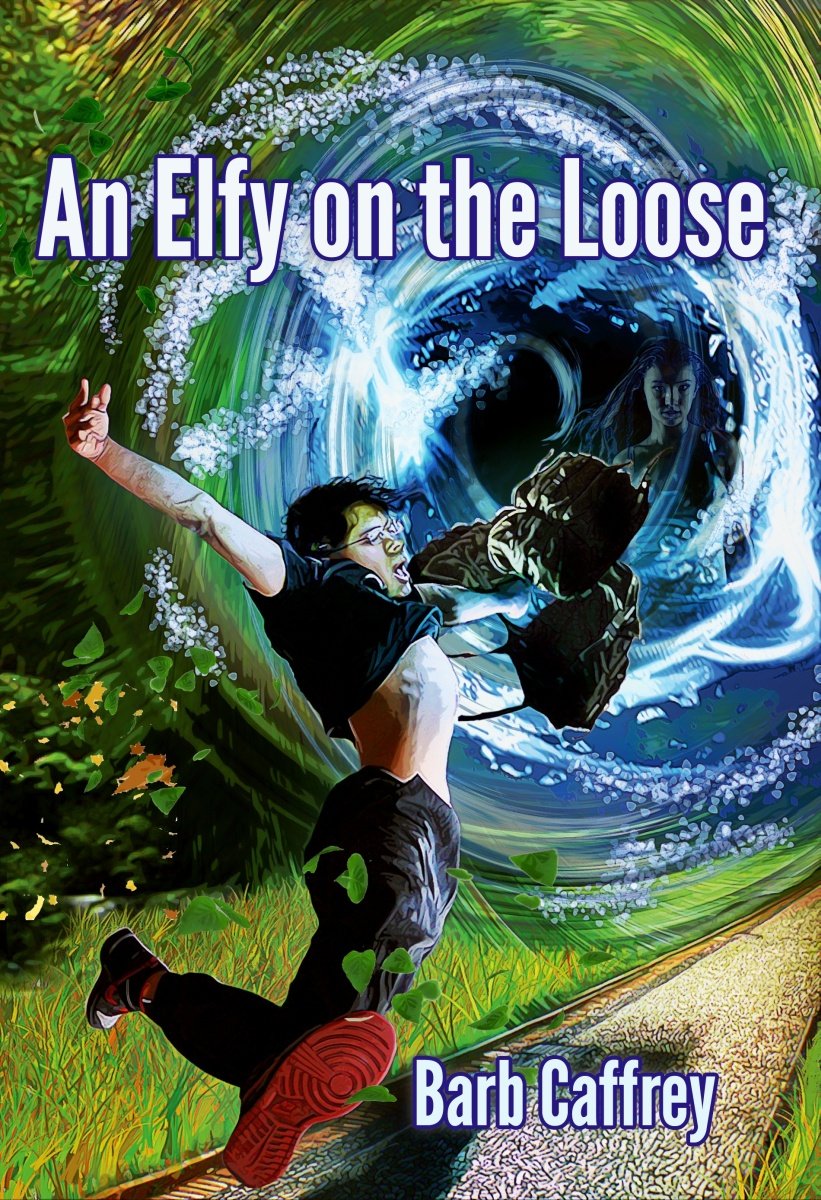
If you've read my novel AN ELFY ON THE LOOSE – or even if you've only heard about it a little – you probably are aware that my main character, Bruno the Elfy, is quite an intriguing character to wrap a book around.
Why? Well, Bruno didn't exactly start out as a hero-type. He's short: he's only three feet tall. He doesn't think he has any appreciable magical skills at the start of AN ELFY ON THE LOOSE, either, and this is a problem considering he comes from the magical race of Elfys – and all of them seem to have at least some magic. (Bruno doesn't realize the reason he doesn't seem to have magical talent is because he's been intentionally mistrained by the orders of the Elfy High Council.) And while he's young – the equivalent of a teenager in human terms – he thinks of himself as jaded, worldly-wise, and experienced.
Of course, many teens do the latter. And it's because of their lack of experience when teens think they already have experience that the story of AN ELFY ON THE LOOSE originally came to me.
But I'm getting ahead of myself.
Actually, Bruno the Elfy came to me in a dream. I had just read an anthology about Elves, where the editor – whose name escapes me – said (my best paraphrase here), "These aren't your typical Elfie-welfie types of Elves. They actually do things."
And Bruno piped up with, "It's not like that!"
I noticed that Bruno was dressed all in black. And he proceeded to tell me earnestly that while the Elfys in his culture liked to rhyme (thus the nonsense term "Elfy-welfy), he, himself, did not. And while the Elfys in his culture liked loud clothing – the louder, the better – he, himself, obviously did not.
Then I found out he was trapped in a haunted house in California. He'd been sent there by the Elfy High Council, a rather mysterious bunch of people from another dimension I'd get to know (and mostly dislike). His teacher, Roberto the Wise, did not agree with the decision to maroon Bruno on our Earth, and was trying to get him back...but Bruno had met Sarah – a young, Human girl, and his eventual love interest – and Bruno didn't want to leave her behind.
Just knowing that much gave me an insight into Bruno's character. He's loyal, almost to a fault. He is a good judge of character. He doesn't know much about himself (as most teens or teen-equivalents truly don't), but he does know this: He believes in good things – love, friendship, and ideals.
And as I went on, I learned that Bruno is also a scholar – as Roberto's one of the foremost scholars in the Elfy Realm, that's no surprise. Bruno has a lot more magic than he thinks, something Roberto knew but couldn't directly tell him due to the wishes of the High Council. And there truly is a conspiracy against Bruno.
All of that helped me as I tried to figure out more about what Bruno's doing in that haunted house. Much less more about the diminutive and enigmatic Sarah, who surely must be a whole lot older than she seems – but why? And again, what's she doing there at all?
Many young men of whatever species would probably run away from Sarah, no matter how attractive she is and no matter how short she is – which has to be an attraction for Bruno, no matter how much he denies it – because there's something obviously wrong there. Sarah's parents are awful, and not just to her. They have trapped Bruno for no reason except that he's an Elfy and they apparently don't care much for Elfys. So you'd think Bruno would just want to get away from that whole situation, run to Roberto, and forget about Sarah, her dastardly parents, and that whole, strange, screwed-up house…
But Bruno doesn't do that.
Even though he's not a prototypical hero-type, Bruno believes in fairness. As Sarah has been kind to him, he judges her for what she is along with what she's done – and after Roberto's attempt to rescue him goes horribly wrong, Sarah does her best to hide Bruno from her family. That, too, works in her favor.
And as they get to know each other during this desperate crisis, they realize they have a lot in common. They both have magic. They're both a wee bit older than they thought. And they both believe in the same things – love matters. Family, no matter how screwed up, matters. (Though no one should suffer abuse. Ever.) And good can indeed win over evil, providing you're careful, smart and willing to work with others for the benefit of all.
But none of it – not one blessed thing – would work without Bruno. He is a fully realized, multidimensional character with likes and dislikes, strengths and weaknesses, and seems like someone you might just know...that is, if he weren't so short. And it's because of this that you can buy into his adventures, you can buy into his romance, and you can buy into the fact that this young Elfy just might be able to save everyone if he just can figure it out in time.
That, to my mind, is why Bruno is so much fun to write.
~~~

Interesting, every bit of that, Barb. In fact, Bruno rather reminds me of one of the main characters from a true fantasy classic -- Frodo Baggins, of J. R. R. Tolkien's Lord of the Rings trilogy. Short, diminutive male of a non-human race; not possessed of great magical powers, or really, great powers in general; trapped in a situation for which he didn't ask; yet responsible, loyal, and determined.

Folks, be sure to check out An Elfy On The Loose.

-Stephanie Osborn
http://www.stephanie-osborn.com

Wednesday, April 23, 2014

Elements of Modern Storytelling: Romance, A Guest Blog by Herika R. Raymer

by Stephanie Osborn
http://www.stephanie-osborn.com

Today's guest is Herika Raymer. Herika is a very talented writer of short stories and comes by it naturally -- her father is the gifted H. David Blalock. She is also an excellent editor. She, her father, and I are all members of Imagicopter, an arts group specializing in printed media (writing, art, etc.) who help promote each other, schedule group booksignings, etc.

Interestingly, she follows along quite well in the footsteps of our previous two guest bloggers in discussing the history of romance in literature -- and how originally "romance" did NOT equate to "love story," but rather to "fantastical tale."


~~~


Herika:


"Where does ROMANCE fit as an element of modern storytelling?"

Romance has been a part of storytelling since The Beginning.

Yet, what is 'romance'? If you look it up, it begins as fanciful tales in Medieval times, mostly associated with chivalry and the heroic exploits of knights. These romances began as adventure stories. Mainly, romance dealt with stories that "lack basis in fact" or were "emotional" according to the dictionaries -- and most people would say that love is the most illogical aspect of life there is. It cannot be measured, it cannot be explained; it simply is the state of being when one individual cares for another more than they do for themselves. Platonic, familial, or romantic -- each form of love exists and is shown in behavior. So, remarkable and fanciful tales were woven around acts supposedly declared as motivated by love, and thus romance and love became synonymous.

In most instances romance was presented as an attraction between two people in defiance of tradition or culture, such as the tragic tales of Romeo and Juliet, as well as Paris and Helen of Troy. To counteract this destructive image, enter the heroic tales of devotion unending, such as the retelling of Aragorn and Arwen from Lord Of The Rings and Odysseus and Penelope of The Odyssey. Yet the sweet telling of adoration and companionship, as shown in the stories of Sam and Rose from The Hobbit or Ellie and Carl from Up, should not be overlooked. Nor the surprisingly loyal relationships despite what could be considered non-traditional arrangements, as shown in the exploits of the lovable Mike Callahan and his delectable Lady Sally McGee in Spider Robinson's tales, or the incredible pairing of F'lar and Lessa on Pern, or even the arrangement between Hades and Persephone [Greek mythology]. Finally, romance is also affection unrequited, as with Lancelot and Elaine of Corbenic [Arthurian legend] as well as Mary Callahan Fin and Jake Stonebender [also Spider Robinson]. Their attraction was more than lust, more than desire; it was a yearning to be together despite the odds. To share a lifetime together, and a presentation of a loathing to see their lives without the other individual. Each of these couples, despite flaws, showed a willingness to join their lives, share joy, brave adversity, celebrate successes, endure hardship, offer comfort, work through problems, and, most of all, to remain loyal to their partners. Granted no relationship is perfect, but the fact these couples were determined to honor their commitment is remarkable.

So what place does romance, a concept originally meant as adventure and later came to envelop the fanciful aspect of love, have in modern storytelling? Simple: it provides motivation. Much as it did in religious, Medieval, pioneer, Victorian, and previous eras' storytelling.

Though -- and this is just my opinion -- is it possible that romance is giving way once more to lust and obsession? Perhaps it is just me, but the stories of Zeus and the other Olympian gods spiriting around "taking" women and fathering bastard children was not romantic, it was infuriating; and the same holds true for the goddesses seducing men. These are not tales of romance but conquests, of a satiation of primal lust and obsession. These have their place, naturally -- it gave the children the motivation they needed to become either heroes or villains in their own rights. However, it seems to me that more and more stories are reverting more to, "Hey, let's get it on," rather than, "Stay with me."

That would be my question -- what part does LUST fit as an element in modern storytelling?

Romance has been expanded to mean to court or woo; in other words, to endeavor to gain the favor of a person. It is an effort, a discovering of what appeals to the other party and trying to find some common ground to relate on. Granted, certain stalkers take this too far, and that is where it becomes obsessive (Candace from "Phineas and Ferb," anyone?).

Lust is primal: seeing someone desirable, obtaining what you want from them -- usually physical -- and then going on your merry way to the next target. Often it can even be presented as a game, not just between men or women, but men and women. Take the movie Dangerous Liaisons for example; a bet between a man and a woman that led to disastrous consequences. I cannot see the romance in that. To be truthful, I often blame "romance stories" for this. To be more specific, I blame their language. I recall when Harlequin romances, though not very accurate in their depiction of history or even interactions between men and women, at least used alluring language to appeal to the visual senses. I recently read some modern romance and was, well, appalled at the crudity of the language. Crass language, almost painful depictions of interpersonal relations, and just a general disrespect for the atmosphere that took away from any "romantic" essence there might have been. Perhaps that is just me being old-fashioned, but I just could not see anything particularly alluring in reading those words. If anything, it made me cringe. Still, I guess it had its place. After all, even in the old tales lust was the beginning of many stories.

So both have their place in modern storytelling. Where romance is most likely more relationship-oriented, and lust more physical, both have their places in the tales that result in their presence. They provide a way to relate to the characters, to either cheer for their accomplishments or dread their triumphs. To return to the original aspect, romance gave a personal touch. It helps breathe life into the characters, helps the reader understand what is seen in the object of affection, and perhaps even follow why the character is acting the way they are.

Romance makes the character a possible mirror of who the reader is, because surely there is a bit of romance in all of us.

To quote Melinda S. Reynolds:
As far as modern story telling goes, you can have a story without romance; but you can’t have romance without a story. It doesn’t have to be the main driving force, but it does help to put the characters into perspective for the readers and understand basic motives and drives. Lust is the opposite of love. Lust is selfish, love is selfless. Lust is neither romance or love; it gives nothing and takes all.
~~~

Excellently said; I find I am in complete agreement with the use of romance as a means of allowing the reader to relate to the characters.

-Stephanie Osborn
http://www.stephanie-osborn.com