Banner

Banner
Showing posts with label romance. Show all posts

Wednesday, November 5, 2014

Interlude: A Guest Blog by Dina von Lowencraft

by Stephanie Osborn
http://www.stephanie-osborn.com

Today, in preparation for holiday gift-giving, fellow author Dina von Lowencraft will tell you all about her book, Dragon Fire!


~~~
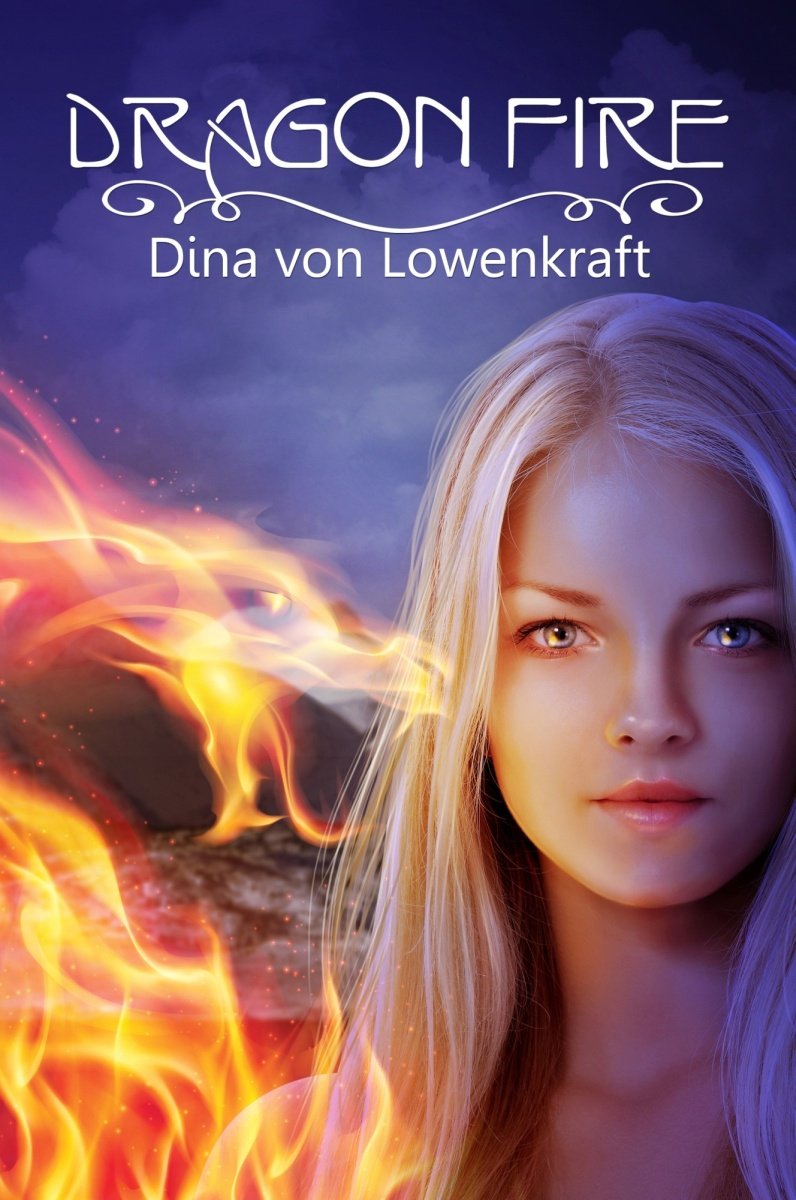

Some choices are hard to live with. 
But some choices will kill you. 
When seventeen-year-old Anna first meets Rakan in her hometown north of the Arctic Circle, she is attracted to the pulsing energy that surrounds him. Unaware that he is a shapeshifting dragon, Anna is drawn into a murderous cycle of revenge that pits Rakan and his clan against her best friend June. 
Torn between his forbidden relationship with Anna, that could cost them both their lives, and restoring his family’s honor by killing June, Rakan must decide what is right. And what is worth living – or dying – for.


The Story Behind Dragon Fire


The funny thing about Dragon Fire is that it didn’t start out as a book on its own. It started out as a subplot in another manuscript. After writing Call, the first book in a planned four book series, and thinking it was market-ready, I began to query it. And no one was interested. All I got, if I got anything at all, were form rejections. I gathered my courage, read several craft books, and re-wrote it before querying it again. But my second batch of queries had no better results than the first.


Frustrated and a bit stumped as to how to improve my manuscript, I once again stocked up on craft books. A few months later, after reading Donald Maass’s Writing the Breakout Novel and analyzing several YA books with his ideas in mind, I began to understand where tension was lacking in Call.


Unfortunately, I still didn’t know how to fix it -- especially since it would mean cutting about 40-60 thousand words. And yet I wasn’t ready to leave the world I had created and loved. So I decided to pull out a subplot from Call’s sequel and write that. That subplot, about a young shapeshifting dragon named Rakan and the human he falls in love with named Anna, became Dragon Fire.


While writing Dragon Fire I signed up for Jordan Rosenfeld’s class, ‘Building Tension’. Taking this class was essential to my growth as a writer and it made Dragon Fire a better manuscript. I would take scenes from my work-in-progress and apply the lesson to it, improving it a first time. Then I’d get feedback and I’d re-write it again, improving it even more. All of this before rewriting one final time to produce the ‘first’ draft.


Once Dragon Fire was complete, I queried it and got several requests for fulls. In the end, I had the good fortune of being able to choose between three publishers, and I chose Twilight Times Books. And now, finally, I’m ready to go back to Call and re-write it!

~~~

Born in the US, Dina has lived on 4 continents, worked as a graphic artist for television and as a consultant in the fashion industry. Somewhere between New York and Paris she picked up an MBA and a black belt – and still thinks the two are connected. Dina is currently the Regional Advisor for SCBWI Belgium, where she lives with her husband, two children, three horses and a cat.


Dina loves to create intricate worlds filled with conflict and passion. She builds her own myths while exploring issues of belonging, racism and the search for truth... after all, how can you find true love if you don’t know who you are and what you believe in? Dina’s key to developing characters is to figure out what they would be willing to die for. And then pushing them to that limit.


Dina is now repped by the fabulous Kaylee Davis of Dee Mura Literary Agency.

-Stephanie Osborn
http://www.stephanie-osborn.com

Wednesday, October 22, 2014

Interlude: A Guest Blog by Aaron Paul Lazar

by Stephanie Osborn
http://www.stephanie-osborn.com

We're going to hold off awhile on the Elements of Modern Storytelling series. Why? Because it's HOLIDAY TIME! And all us authors want to tell all you readers about our books, in case you want to get (or want to ask for) one for a Christmas/Hannukah/Kwanzaa gift!

Leading off, it's Aaron Paul Lazar!


~~~

So I Broke the Rules – Go Ahead and Shoot Me!

©2014 Aaron Lazar

I didn’t intend to write a series when I created the rather kooky and slightly paranormal mystery, For the Birds. I knew it would feature a pretty little red bird on the cover (see below), because I’d just had a vivid dream about her. Out of the wild blue yonder, Ruby came to me and insisted on a book of her own. I’d never owned a bird, never even known anyone with a feathered pet, but this dream was so vibrant I couldn’t get Ruby out of my mind.

Marcella and Quinn “Black Eagle” Hollister came upon the scene as Ruby’s owners, and Marcella’s mother, Thelma, popped out of nowhere. Before I knew it, I had created a dynamic and diverse family and their pets. True to my dream, I set the story in the Adirondack Mountains, which set me craving for the mountains, woods, lakes, and rivers that I’d come to love. I just had to get up there again.

Fortunately, or unfortunately, as the case may be, I was laid off from my engineering job at Kodak right around the same time. So, with lots of free time on our hands, we headed up to the mountains and discovered the cabin where the story takes place. Tall Pines is a rustic, wonderful cabin situated on seven acres of pines above the Sacandaga River in Hope, NY. We fell in love with it, and it has become the center of the series that grew from For the Birds.

When Marcella Hollister’s prize parakeet gets zapped by a wayward power line in the same pool as her mother, the ensuing psychic link helps Marcella chase her mother’s kidnappers through the Adirondack Mountains, where she unearths a fifty-year-old secret about her dear father with shocking links to a hidden treasure.

I really didn’t plan to include paranormal or spiritual elements in For The Birds, either. I just went ahead, guns blazing, and let the story blast out of me.

You can’t exactly call me a planner. But I have a hard time trying to keep up with myself. I know, that sounds nuts. But it’s how I write.

When I finished this book, I was in love with the characters. My readers wanted more of Marcella and her gorgeous half-Seneca husband, and they seemed to enjoy our jaunts to the Adirondacks. At the same time, I’d recently become infatuated and obsessed with essential oils. There was no question that my characters would also discover them, and it came as no surprise that I used the healing power of essential oils as one of the main themes in the second Tall Pines book, Essentially Yours.

Strangely enough, however, this book was a bit different. Although it’s dubbed a mystery, it had more suspense and action than the first book. If I had to give it a genre on its own, I would have called it romantic suspense.

Hey! Where’s the consistency?

If push came to shove, I’d say it’s in the characters and the telling of a great story set in the same locale.
 
Marcella’s first love has been MIA for eighteen years. Callie, her best friend and Sky’s sister, flips out when a mysterious package from Sky arrives on her doorstep. Inside his old backpack are bottles of precious essential oils, a memory stick, and a bag of emeralds. Are these his final effects? Or is Sky alive?
 Drug company goons want the data on the memory stick, because it links a newly discovered essential oil with a leukemia cure. They kidnap Callie, hoping to lure Sky into the open. Marcella and Quinn track her to the wilderness of the Adirondack Mountains, where against all odds they fight to save Callie and preserve the proof that could change the world.

The characters screamed at me to write more, especially Marcella’s newly introduced old flame, Sky Lissoneau, and his damaged, but adorable, sister, Callie. I thrived on the tension between Marcella’s husband and her first love, who showed up after eighteen years with a whole gang of villains chasing him through the Adirondack woods. Quinn—usually a quiet and passive soul—is insanely jealous of Sky. After all these years, Sky still adores Marcella, and can’t get that look of desperate heartache out of his eyes. I let all hell break loose in Marcella’s family and in the mountains where the scientific medical studies were being held to prove that a common lake week held the key to curing leukemia. Mix together some nasty drug company thugs and a bit of mysticism with crystals, oils, and the love of a big old Bernese Mountain Dog, and you have Essentially Yours.

When I wrote Sanctuary, book three, I was obsessed with what I called “my Indian soul.” With the help of a Cherokee historian friend, I wove substantial elements of Native American traditions into this mystery/suspense. Using mystical elements of crystals, smooth river stones, essential oils, and a haunted mountain top, I pushed the psychic barrier a bit here and allowed a bit of mind-melding.

This doesn’t belong in a mystery, does it? You’d really expect it more in Star Trek. But hell, like I said, I didn’t care. I just forged ahead.
 
Marcella’s husband, Quinn “Black Eagle” Hollister, severed ties to his family and friends on the Seneca reservation years ago. He rarely mentions his past—until his young cousin Kitty collapses on the couple’s doorstep in the dead of a rainswept night. After two Seneca men break into their home with intent to kill, the Hollisters flee with the mute and injured girl to Tall Pines, their cabin in the Adirondacks. Marcella, unable to bear a child of her own, unleashes her motherly instincts caring for Kitty. As the girl slowly recovers, they start to piece together who wants them dead, and why.

When it came time to write Betrayal, which flowed out immediately after Sanctuary, I wanted to create a winter mystery full of threats, sexual upheaval, and plenty of chase scenes. I didn’t expect to introduce a pair of serial killers who left bodies on the icy shores of the Sacandaga, but that’s what happened.

I also introduced some pretty dark relationship issues into Marcella’s marriage. She feels Quinn betrays her, and flees to Tall Pines to escape for a while. Trouble is, Sky is waiting there for her, and it’s all she can do not to let herself fall into his arms. The old passion is still there, and it tortures her to look into his sea green eyes.
 
Marcella Hollister realized a lifetime of hopes and dreams when she was given custody of a child. A cousin of her half-Seneca husband, Quinn, the baby’s mother was murdered in a political plot—and Marcella, who’s never been able to have children of her own, formed an instant bond with little Kimi. Then a distant relative comes forward to claim Kimi—and Quinn, who Marcella thought understood her pain better than anyone, allows them to take the baby without a fight. 
Confused and deeply wounded, Marcella takes off for Tall Pines, their secluded Adirondack cabin. She hopes the peace and natural beauty of the mountains will help clear her head and decide whether to forgive Quinn…or leave him. But the situation at Tall Pines is anything but peaceful. Her high school lover, Sky, arrives to help out—and Marcella discovers her old feelings may not be as distant as she thought. Worse, a serial killer is stalking young women in the area. And when a teen girl whose mother works with Sky goes missing, Marcella and everyone she cares for wind up dead center in the killer’s sights.

If I were to read Betrayal on its own, I might classify it as a romantic thriller.

Uh huh. Not a kooky, paranormal mystery like For the Birds. Not a romantic suspense, like Essentially Yours. Not a Native American spiritual mystery, like Sanctuary.

I know, I know! Where’s my consistency? Where’s my platform planning?

That said -- I must tell you my Tall Pines fans and readers don’t give a darn into which official genre my books fall. You could certainly still classify them as mysteries. But they don’t care, and frankly, neither do I. It’s the characters we care about, and they are going to be here for the long haul.

So, yeah. I broke the rules. Please don’t shoot me.


Aaron Paul Lazar
www.lazarbooks.com
~~~

Aaron Paul Lazar writes to soothe his soul. A bestselling Kindle author of 22 books, including three addictive mystery series, writing books, and a new love story, Aaron enjoys the Genesee Valley countryside in upstate New York, where his characters embrace life, play with their dogs and grandkids, grow sumptuous gardens, and chase bad guys. Visit his website at http://www.lazarbooks.com and watch for his upcoming release, UNDER THE ICE. Aaron has won over 18 book awards for his novels and finds writing to be his form of "cheap therapy." Feel free to connect with him on Facebook or his website; he loves to connect with readers!


 ~~~

So here we are with our first recommendation, folks! The Tall Pines Mysteries by Aaron Paul Lazar! Go check 'em out!

-Stephanie Osborn
http://www.stephanie-osborn.com


Wednesday, July 16, 2014

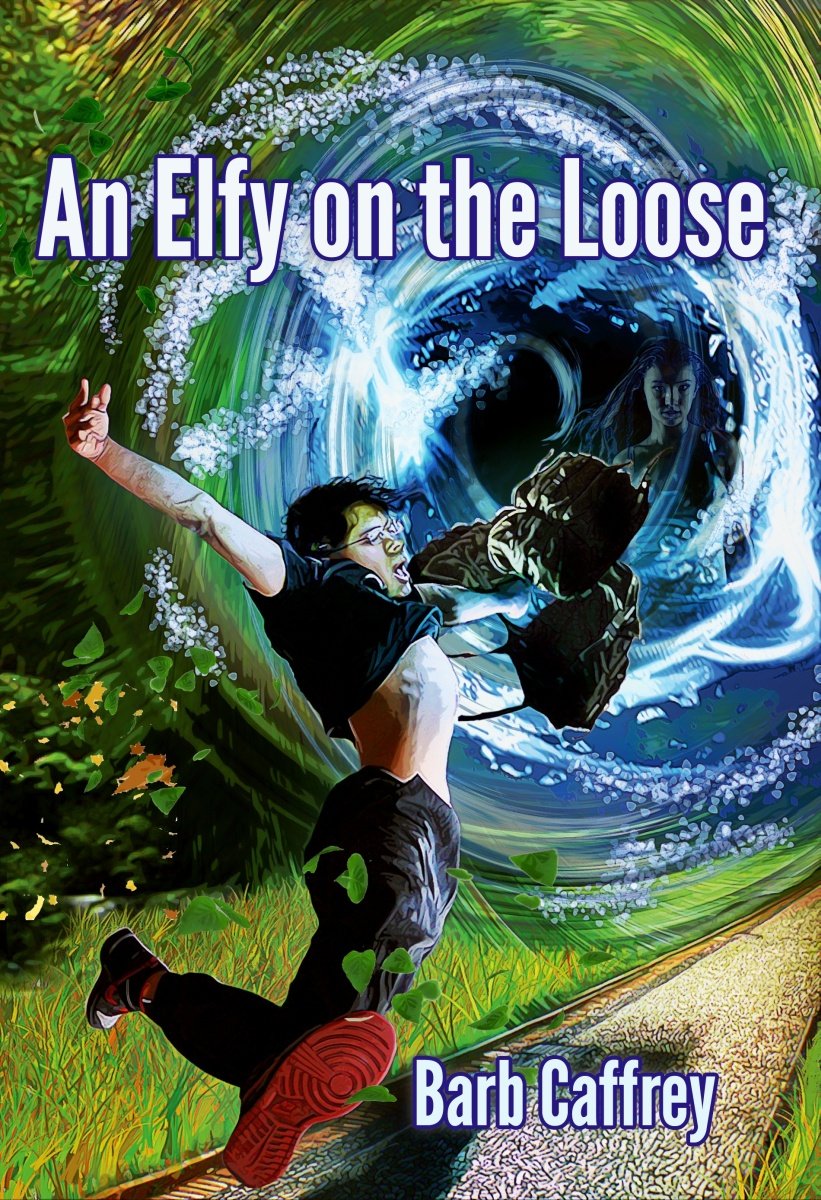
Characterization in AN ELFY ON THE LOOSE, A Guest Blog by Barb Caffrey

By Stephanie Osborn
http://www.stephanie-osborn.com

We're getting ready to start talking about a different element of modern storytelling: character. As she has a new book out, a book with strong characters and more than a hint of romance, I asked Barb Caffrey to write an additional blog article -- not just about how characters work in telling stories, but specifically about how HER characters were designed to interact in her new book, An Elfy On The Loose. Consider this as a kind of segue from Romance to Character Development in our Elements of Modern Storytelling series.

~~~

Characterization in AN ELFY ON THE LOOSE
Or, Why Bruno the Elfy Is So Much Fun to Write
By Barb Caffrey 
If you've read my novel AN ELFY ON THE LOOSE – or even if you've only heard about it a little – you probably are aware that my main character, Bruno the Elfy, is quite an intriguing character to wrap a book around.
Why? Well, Bruno didn't exactly start out as a hero-type. He's short: he's only three feet tall. He doesn't think he has any appreciable magical skills at the start of AN ELFY ON THE LOOSE, either, and this is a problem considering he comes from the magical race of Elfys – and all of them seem to have at least some magic. (Bruno doesn't realize the reason he doesn't seem to have magical talent is because he's been intentionally mistrained by the orders of the Elfy High Council.) And while he's young – the equivalent of a teenager in human terms – he thinks of himself as jaded, worldly-wise, and experienced.
Of course, many teens do the latter. And it's because of their lack of experience when teens think they already have experience that the story of AN ELFY ON THE LOOSE originally came to me.
But I'm getting ahead of myself.
Actually, Bruno the Elfy came to me in a dream. I had just read an anthology about Elves, where the editor – whose name escapes me – said (my best paraphrase here), "These aren't your typical Elfie-welfie types of Elves. They actually do things."
And Bruno piped up with, "It's not like that!"
I noticed that Bruno was dressed all in black. And he proceeded to tell me earnestly that while the Elfys in his culture liked to rhyme (thus the nonsense term "Elfy-welfy), he, himself, did not. And while the Elfys in his culture liked loud clothing – the louder, the better – he, himself, obviously did not.
Then I found out he was trapped in a haunted house in California. He'd been sent there by the Elfy High Council, a rather mysterious bunch of people from another dimension I'd get to know (and mostly dislike). His teacher, Roberto the Wise, did not agree with the decision to maroon Bruno on our Earth, and was trying to get him back...but Bruno had met Sarah – a young, Human girl, and his eventual love interest – and Bruno didn't want to leave her behind.
Just knowing that much gave me an insight into Bruno's character. He's loyal, almost to a fault. He is a good judge of character. He doesn't know much about himself (as most teens or teen-equivalents truly don't), but he does know this: He believes in good things – love, friendship, and ideals.
And as I went on, I learned that Bruno is also a scholar – as Roberto's one of the foremost scholars in the Elfy Realm, that's no surprise. Bruno has a lot more magic than he thinks, something Roberto knew but couldn't directly tell him due to the wishes of the High Council. And there truly is a conspiracy against Bruno.
All of that helped me as I tried to figure out more about what Bruno's doing in that haunted house. Much less more about the diminutive and enigmatic Sarah, who surely must be a whole lot older than she seems – but why? And again, what's she doing there at all?
Many young men of whatever species would probably run away from Sarah, no matter how attractive she is and no matter how short she is – which has to be an attraction for Bruno, no matter how much he denies it – because there's something obviously wrong there. Sarah's parents are awful, and not just to her. They have trapped Bruno for no reason except that he's an Elfy and they apparently don't care much for Elfys. So you'd think Bruno would just want to get away from that whole situation, run to Roberto, and forget about Sarah, her dastardly parents, and that whole, strange, screwed-up house…
But Bruno doesn't do that.
Even though he's not a prototypical hero-type, Bruno believes in fairness. As Sarah has been kind to him, he judges her for what she is along with what she's done – and after Roberto's attempt to rescue him goes horribly wrong, Sarah does her best to hide Bruno from her family. That, too, works in her favor.
And as they get to know each other during this desperate crisis, they realize they have a lot in common. They both have magic. They're both a wee bit older than they thought. And they both believe in the same things – love matters. Family, no matter how screwed up, matters. (Though no one should suffer abuse. Ever.) And good can indeed win over evil, providing you're careful, smart and willing to work with others for the benefit of all.
But none of it – not one blessed thing – would work without Bruno. He is a fully realized, multidimensional character with likes and dislikes, strengths and weaknesses, and seems like someone you might just know...that is, if he weren't so short. And it's because of this that you can buy into his adventures, you can buy into his romance, and you can buy into the fact that this young Elfy just might be able to save everyone if he just can figure it out in time.
That, to my mind, is why Bruno is so much fun to write.
~~~

Interesting, every bit of that, Barb. In fact, Bruno rather reminds me of one of the main characters from a true fantasy classic -- Frodo Baggins, of J. R. R. Tolkien's Lord of the Rings trilogy. Short, diminutive male of a non-human race; not possessed of great magical powers, or really, great powers in general; trapped in a situation for which he didn't ask; yet responsible, loyal, and determined.

Folks, be sure to check out An Elfy On The Loose.

-Stephanie Osborn
http://www.stephanie-osborn.com

Wednesday, July 9, 2014

Elements of Modern Storytelling: Romance, A Guest Blog by Dellani Oakes

By Stephanie Osborn
http://www.stephanie-osborn.com

Today we have another romance writer -- but Dellani Oakes writes romance/suspense/thriller/mystery crossovers! (Have you noticed a distinct trend in authors writing genre crossovers? I really think bookstores should look into this.) Dellani is an old friend and a skilled writer, blogger, book reviewer, and podcaster, with her own BlogTalkRadio show. This should be interesting.

~~~


Dellani:

I write romance. More specifically, I write romantic suspense. Why the blend? Because I like some spice to my mysteries and some mystery mixed with romance. I like the conflict in my stories to be between the main characters and an outside force. I don't like stories where the hero & heroine fight constantly. Where's the fun in that? It's much more entertaining to have the characters work together against a common foe. They grow closer to one another and find that they are better as a couple than they are on their own.
     A little romance can enhance any story. I don't mean that the plot should grind to a halt so the characters can have a hot love scene. That isn't necessary. Instead, the main characters can find their strength by way of their union. Certain action films spring to mind, such classic movies as Demolition Man, Total Recall or Commando. Although the main characters are fighting the bad guys, they fall in love. The conflict brings them closer together. They conquer the foe, accomplish their goal and go home for some hot sex—which happens off screen.
Stories needn't have graphic love scenes to be effective. Clasped hands, stolen kisses, furtive glances can all add to characterization and plot development. The main point of a
romance is having the characters fall in love. The wonderful thing about romance is that it can be an element of virtually any story, adding depth, without distracting from the the plot.
Not that there's anything wrong with having some hot sex in the story. My novel, The Ninja Tattoo, has plenty of spicy scenes. However, Indian Summer and Under the WesternSky do not. In all three stories, the main characters work together against a common enemy. They may have disagreements and misunderstandings, but they work things out—together.
Do my characters argue? Yes. Do they have misunderstandings and get their feelings hurt? Of course. That's human nature. However, they employ a technique that works well in stories and real life—they communicate. I'm sick of stories where the main characters have a huge argument, make assumptions and refuse to talk to one another for 90 percent of the book—unless it's to fight. But by some miracle, they discover they truly love one another and are miserable when they are apart. I can't help wondering how long their happily ever after lasts. I give it a year.
Whether it's a mystery, sci-fi, thriller, suspense or noir, romance enhances the story. The reader cares more deeply and becomes more invested in a character's fate if they like him. If he's a jerk to his friends and his women, no one is going to care what happens. (In my books, those guys are usually murder victims waiting to be killed.) Regardless of genre, a little romance can add depth and scope to the storyline.

~~~

I'm in firm agreement, Dellani! Well said!

Everyone be sure to check out Dellani's books on Amazon!


-Stephanie Osborn
http://www.stephanie-osborn.com

Wednesday, July 2, 2014

Elements of Modern Storytelling: Romance, A Guest Blog by Darcie Wilde

By Stephanie Osborn
http://www.stephanie-osborn.com


Today's blog article is by another new friend, Darcie Wilde, who does not write science fiction, but romance. THIS should be interesting! [Some frank language is used; be aware, you who are easily embarrassed.]

Welcome, Darcie!


~~~

Darcie:


First of all, thanks to Stephanie for hosting this blog, and this series. 
I’m Darcie Wilde, and I write Romance.  My latest book, LORD OF THE RAKES is out now, and the sequel THE ACCIDENTAL ABDUCTION, arrives in stores and online in September. 
I’m here to talk about romance as the most potentially subversive of all storytelling elements. 
You heard me. 
First, some data points: 
Romance is the biggest of the literary genres.  Fifty-two percent of the paperbacks, and a similarly massive percentage of the ebooks sold are Romances and the majority of the readers are women.  An estimated five percent of Romance readers and writers are male.  Even with this gender disparity, there isn't another genre that matches romance for reach and diversity among the reading public.  Romance readers come from across the spectrum; young, old, middle-aged; rich, poor, middle-income; high school educated, college educated, Ph.D.  All racial and ethnic groups.  It’s one of the few genres that extends its reach every year, even without monster hits like 50 SHADES OF GRAY. 
And yet.    
What do we hear about Romance? It’s shallow.  Formulaic.  Stupid.  It’s only read by bored housewives.  It’s Mommy porn.  I’d never read that stuff.  I don’t like romance in my science fiction/fantasy/mystery. 
Why?   
Why, despite its indisputable reach, breadth, profitability and interest among the reading public, is Romance, or even the romantic element, so loudly and continuously frowned on?  To the point where some readers aren’t comfortable admitting that they do read it?    
Because Romance is subversive. 
Yes, it is.  And I can prove it. 
See, Romance is not only primarily read by women, it is primarily edited and published by women.  This is a trend that started back in the 1980s and has only grown.  Not coincidently, this is when Romance, which was already a large genre, exploded.  There’s a really clear reason for this.  It was the first time and place in history that women were able to take control of their own fantasy lives from top to bottom.   
That’s right.  Romance is women in charge of their own fantasies. 
Women are expected to control their fantasy lives as tightly as they control their physical lives.  They are expected to limit not just their real-life dreams and ambitions but they must limit how they think about those dreams and ambitions, especially when it comes to sex and relationships.  Not only are they not supposed to have sex, or enjoy sex, until they find The One (man), they are not supposed to
even think about sex.  And this is when they’re young and single.  

Once they become mothers, let alone grandmothers, they aren’t even supposed to consider sex.  Never mind the shame and humiliation of not being pretty.  There are endless movies and TV shows in which a nebishy fat guy wins true love.  When was the last time you saw a positive portrayal of a sexually active overweight woman?  
Women are also supposed to treat their marriage and family as the single most important piece of their lives.  They are expected to make any sacrifice to the needs of that marriage and that family.  But they are not supposed to think about, much less consider, what it would take for those relationships to be fulfilling and these sacrifices to be worthwhile, never mind reciprocated.   
Because that’s shallow.  That’s stupid.   You’ll only be disappointed when he’s not Mr. Darcy.  Men like that don’t really exist. 
So, love-and-marriage is the most important part of your life, but don’t think about it.  Don’t dream about it.  Don’t consider whether you might have a right to respect, friendship and frequent orgasms or what it would take to get any of these.   
Except, then there’s Romance. 
You can consider all these things in Romance, or in a romance.  You can explore types of relationship, not to mention the boundaries of friendship and respect, in terms of how people who look like you feel about them.  You can try on roles, identities and, yes, problems as freely as your men get to in every single other storytelling environment.  You can imagine winning at what you’ve always been told is most important part of your life.  You get to engage in any kind of sexual fantasy floats your boat, and a few that you’ve only kind of heard about, in an absolutely safe environment without judgement or shame.   
Nowhere else does a woman get to do this, except Romance.  In Romance a sexually active woman is not judged, she’s the heroine.  In Romance a woman who has suffered is not just the victim, she’s triumphant.  In Romance, it is men who are judged, weighed and evaluated, and the primary consideration is their conduct towards women.  In Romance, the woman is not just expected to care enough to sacrifice her time and ambitions for her family, somebody out there cares enough to make those sacrifices for her.  She is not just servant, she is served (and yes, you can take that however you want).  She’s not going to die because the monster always eats the slut first.  She’s not going to be shamed because she looks different, she’s going to be considered beautiful for it.  She’s not going to be abandoned because she slept with the wrong guy.  Her sexuality does not define or limit her.  She is guaranteed to have other female friends, family members and co-workers around her who she can and does talk to about any subject, including her love life. 
She gets to make the ultimate decision as to whether she goes or stays, and who she stays with.  She can fall in love with a monster, and it will still work out.  She chooses.  She wins.   
And she makes the money for writing about all these things, and bringing them to the reading public.  Sometimes astoundingly good money.  
And it’s not just women.  Gay men, lesbians and yes, men and women of minority ethnic groups — especially African American men — expressing the full range of sexuality, attraction and relationships in positive romantic settings, whether vanilla or kinked, and gaining happy endings, is so controversial as to be a tiny fraction of published fiction, even within Romance itself.   
This is not because there’s no interest.  When such books are published, they do well, if (and it’s a big if) they can be found.  People across the human spectrum like to try on relationships, and ideas about relationships and power and love, within the safe setting that a work of fiction provides.  They like to see people who look like them triumph in love, and sex and family without restrictions imposed from the outside. 
Because it is ultimately this range of emotion, this expression, this full, free, fair choice in life and love, that says who is fully human and who is fully powerful. 
This is massively subversive.   
It’s also insanely popular, and yet almost universally criticized. 
It's something to think about.  
~~~

Fascinating! This is an interesting take on the subject from someone who writes in the genre -- not merely uses it in another genre. It is certainly true that once upon a time women had fewer options for exploring their dreams than they do today. It is also true that such works of fiction were frowned upon in that day and age because of the perception of such things as libertine. I wonder if that's from whence comes the modern attitude of disdain for romance.

-Stephanie Osborn
http://www.stephanie-osborn.com
Wednesday, June 25, 2014

Elements of Modern Storytelling: Romance, A Guest Blog by Mindy Klasky

By Stephanie Osborn
http://www.stephanie-osborn.com
[Today is a special day for me -- it so happens that we are discussing romance on my wedding anniversary. GO US! Ahem...now on to the regular blog.]

Today's guest in our ongoing series of elements of storytelling is Mindy Klasky!

Mindy Klasky learned to read when her parents shoved a book in her hands and told her she could travel anywhere through stories. As a writer, Mindy has traveled through various genres, including hot contemporary romance. In her spare time, Mindy knits, quilts, and tries to tame her to-be-read shelf.


~~~


Mindy:


I've been following the various guest posts about Elements of Storytelling with great interest, especially the posts about romance.  Over the years, my own writing has transitioned from traditional fantasy to humorous paranormal romance to contemporary romance (with no magical or fantasy element.)  My writing has also become a great deal "spicier" than it was in my early books.  Therefore, I'm looking forward to chatting about an important Element of Storytelling:  The Love Scene. 

Okay.  Not everyone is going to call this subject matter a love scene.  A lot of people will say that I'm talking about sex scenes.  I used to think the difference was academic – a discussion point used by romance writers to remind the world that their work isn't just about sex; rather, we write about real emotions with real personal stakes. 

I've come to realize, though, that the nomenclature does matter.  Because when a scene-with-sex is done right, it becomes much more.  It becomes a scene about characters, a scene about emotions.   

Most readers are completely familiar with the mechanics of sex, both the basic physical function and its most common variants.  If the only purpose of a sex scene were to describe that relatively limited range of physical activity, our books would get boring almost immediately. 

But a well-written love scene does more than describe the mechanics of sex.  A proper love scene informs the readers of the emotions of the characters before, during, and after their physical interaction.  Those emotions become the engines of the scene, providing the layers that keep readers from skimming and yawning (or, occasionally, laughing uproariously at physically impossible actions). 

Imagine these scenes: 

  • An imaginative woman seducing a willing man, making love for the first time and discovering each other's preferences and reactions to assorted stimuli (for example, a key love scene in my novel PERFECT PITCH) 
  • A couple who have known each other for decades, never acting on their mutual attraction because of society's condemnation of May/December relationships (the background for CATCHING HELL) 
  • An experienced lover with extensive knowledge of sexual stimuli seducing a willing but inexperienced and partner for the first time (the setup for REACHING FIRST [coming soon]) 

The mechanics can be identical in each of these scenarios – naughty bits will rub against naughty bits.  But the weight of the scene, the meaning of the actions, will vary vastly depending on the underlying emotional gloss.  Therefore, as an author of love scenes, I need to focus on the emotional words in the scene.  I need to pay especially close attention to my action verbs, to my adjectives, to my adverbs. 

Love scenes have a lot in common with action scenes in a novel.  Sure, it's great to know my hero is the greatest broadswordsman in the history of broadswordsmen.  But a truly great fight scene will show me what it costs him to use his weapon – how he needs to harness all his strength, what it takes for him to heft the blade after his ribs are broken by his opponent, how the bones of his arm jangle after each clash.  He must be aware of each cost of every action (and inaction) in every second of his battle – his deeds may result in his own injury or death and/or in the injury or death of all his allies. 

Violence.  Sex.  When written well, they both allow an author to reveal depths of a character. 

What books have you read that have effective love scenes – scenes that divulge information about the characters, even as they advance the story with the sexual activity they present? 

~~~

Nicely done, Mindy! Yes, I must agree -- a well-done love/sex scene is a powerful way of depicting the inner lives of the characters involved!

So, Gentle Readers, care to answer her closing question in the comments? What books can you think of that have love scenes that advance the story AND tell you more about the characters?

-Stephanie Osborn
http://www.stephanie-osborn.com