Banner

Banner
Showing posts with label history. Show all posts

Thursday, January 1, 2015

Happy New Year!

by Stephanie Osborn
http://www.stephanie-osborn.com


And today marks the first day of 2015! Wow, how fast they go.

We'll do the traditional thing of singing Auld Lang Syne, but before we do, let's find out a bit about it, shall we?

Everybody knows the first verse and the chorus, but did you know there were five verses? Robert Burns, poet laureate of Scotland, wrote it in 1788 -- at least, he wrote the lyrics. The tune was an old folk tune, nobody knows just how old. According to Burns himself, he didn't write even the lyrics, but took dictation from an elder. So it may all be an ancient folk tune.

And the title, "auld lang syne," transliterates as, "old long since," or as we would say today, "a long time ago." In understanding the song, we need to realize that not only is the English archaic, but the lyrics veer back and forth between English, Scots Gaelic, and Scots English dialect! But in general one may take it as two old friends, having come to a milestone in their lives, reminiscing over a pint. Rather apropos to a New Year's Day, I think.

(If you want a good idea of what is really being said, check out Wikipedia, which actually has a very decent modern translation. I don't usually recommend it as a be-all end-all, but in this case, it's pretty good.)

And now let's have a look at the entire song.

~~~

Auld Lang Syne
by Robert Burns

Should auld acquaintance be forgot, 
And never brought to mind? 
Should auld acquaintance be forgot, 
And auld lang syne! 

For auld lang syne, my dear, 
For auld lang syne. 
We'll tak a cup o' kindness yet, 
For auld lang syne. 

And surely ye'll be your pint stowp! 
And surely I'll be mine! 
And we'll tak a cup o'kindness yet, 
For auld lang syne. 

For auld lang syne, my dear, 
For auld lang syne. 
We'll tak a cup o' kindness yet, 
For auld lang syne.

We twa hae run about the braes, 
And pou'd the gowans fine; 
But we've wander'd mony a weary fit, 
Sin' auld lang syne. 

For auld lang syne, my dear, 
For auld lang syne. 
We'll tak a cup o' kindness yet, 
For auld lang syne. 

We twa hae paidl'd in the burn, 
Frae morning sun till dine; 
But seas between us braid hae roar'd 
Sin' auld lang syne. 

For auld lang syne, my dear, 
For auld lang syne. 
We'll tak a cup o' kindness yet, 
For auld lang syne.

And there's a hand, my trusty fere! 
And gie's a hand o' thine! 
And we'll tak a right gude-willie waught, 
For auld lang syne. 

For auld lang syne, my dear, 
For auld lang syne. 
We'll tak a cup o' kindness yet, 
For auld lang syne.


~~~

May 2015 bring you blessings and happiness, now and the whole year through!

-Stephanie Osborn
http://www.stephanie-osborn.com

Wednesday, April 16, 2014

Elements of Modern Storytelling: Romance, A Guest Blog by K. E. Kimbriel

by Stephanie Osborn
http://www.stephanie-osborn.com

Katharine (K.E.) Kimbriel was introduced to me by last week's guest blogger, Barb Caffrey. Author of the Chronicles of Nuala (available through Book View Cafe) and more, Katharine is an experienced, talented writer. 


~~~


"Where does ROMANCE fit as an element of modern storytelling?"

Stephanie Osborn asked this question, and my immediate thought was “as a subtle puzzle piece.”  I know that is not the usual response to the question.  Half the fiction books published in this country every year by major New York publishers are romances, in almost every flavor you can imagine.  (That is, if by flavor you are imagining one woman and one man who end up in a HEA--Happily Ever After--or, more recently, HFN--Happy For Now--relationship.  Everything else slides in from the shadows, makes a surprise appearance, or even has a small independent publishing line somewhere else.)

Where does romance spring from?  I’m not asking in a technical sense, or a scientific sense.  We know that chemistry and biology triggers the first flush of attraction, and we can research to find out where the modern Western concept of romance began.  I always think of it as starting with Jane Austen—a woman choosing to reject offered security for the hope of at least liking and respecting her partner.  That she ended up with a man whom she also loved, who was solvent enough to support her and their children, was a bonus.  For most women, having it all was a fantasy, but a lovely dream.  We can go back further, into legend—but most of those famous lovers did not end well.

Thinking about it now, I wonder if romance novels were simply a woman’s first reach for respect and mutual affection in a relationship—to regain the ancient courtesies between the sexes, the respect for each sex’s wisdom and knowledge that still lingers in some tribal cultures.  The current tribal forms may not be at all what modern women want in relationships.  But in the past few hundreds of years in Western culture, women were mostly shut out of commerce and expected to make the home (and that was big doings before the Modern Era of electricity and convenience foods.)  All they could hope for was a marriage where their intelligence and personality was respected.  Marriage was often a financial transaction, or a melding of two families’ talents and assets.  Respect, humor, liking the person you were going to share a life with—those were traits to be desired.  Romance was the dessert, the last thing you wanted but could only dream of, because so many failed to get it.

Then more people began to marry for love—for better or worse.  But did they understand each other?  I think women learned to understand their men, to try and keep a home their husbands wanted to return to, a refuge for their men.  But too often the men had no clue what was going on in the heads of the women.

A thesis was once written proposing that women read romances—pure romance, not the newer stories escalating in sexuality—because it is a story where a man becomes obsessed with a woman and is spending all his free time trying to figure out how to understand her, please her, win her.  I suspect that the root of romance lies in understanding The Other—the other sex.  Or if they do not completely understand the other person, they still unconditionally accept them.

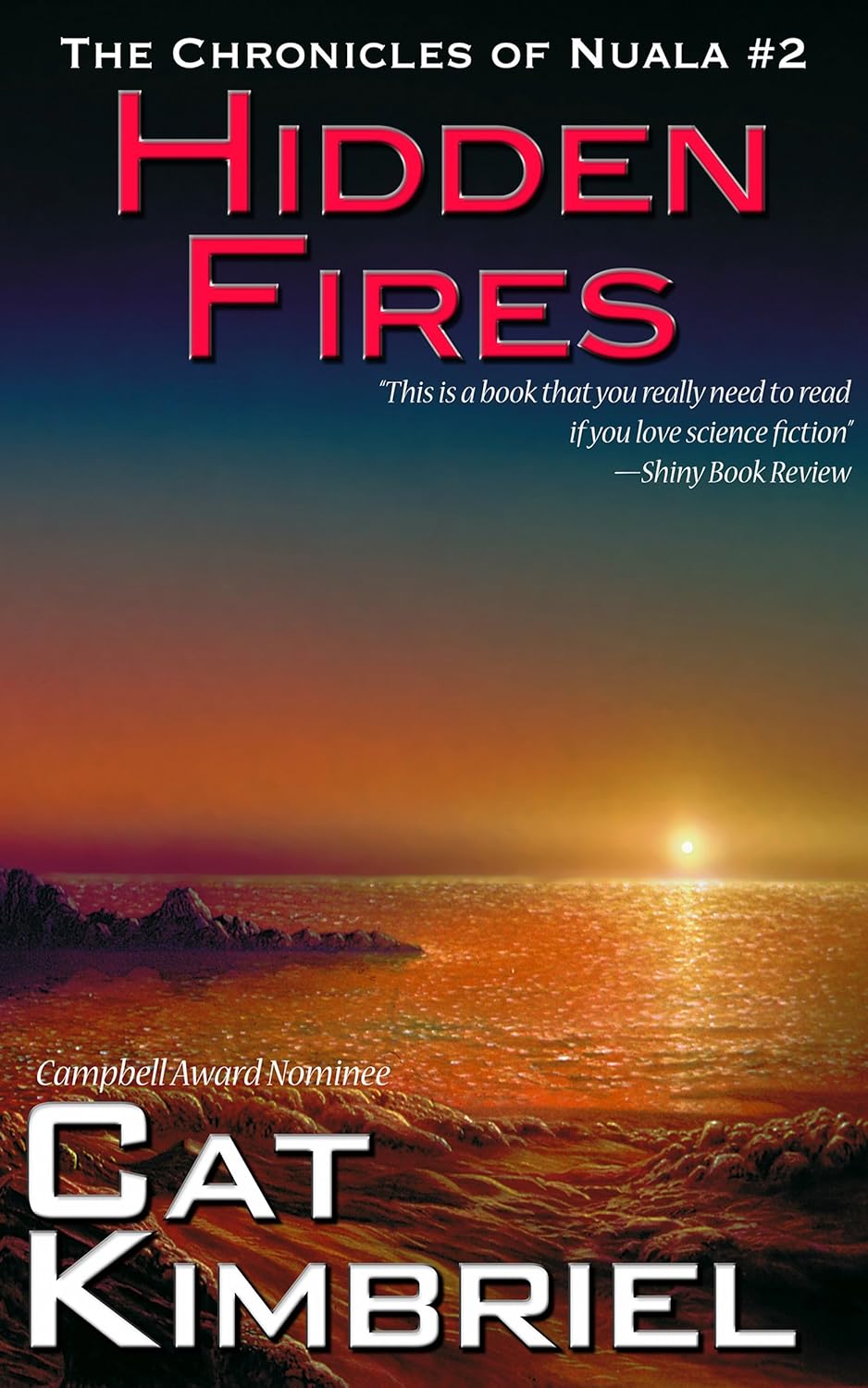
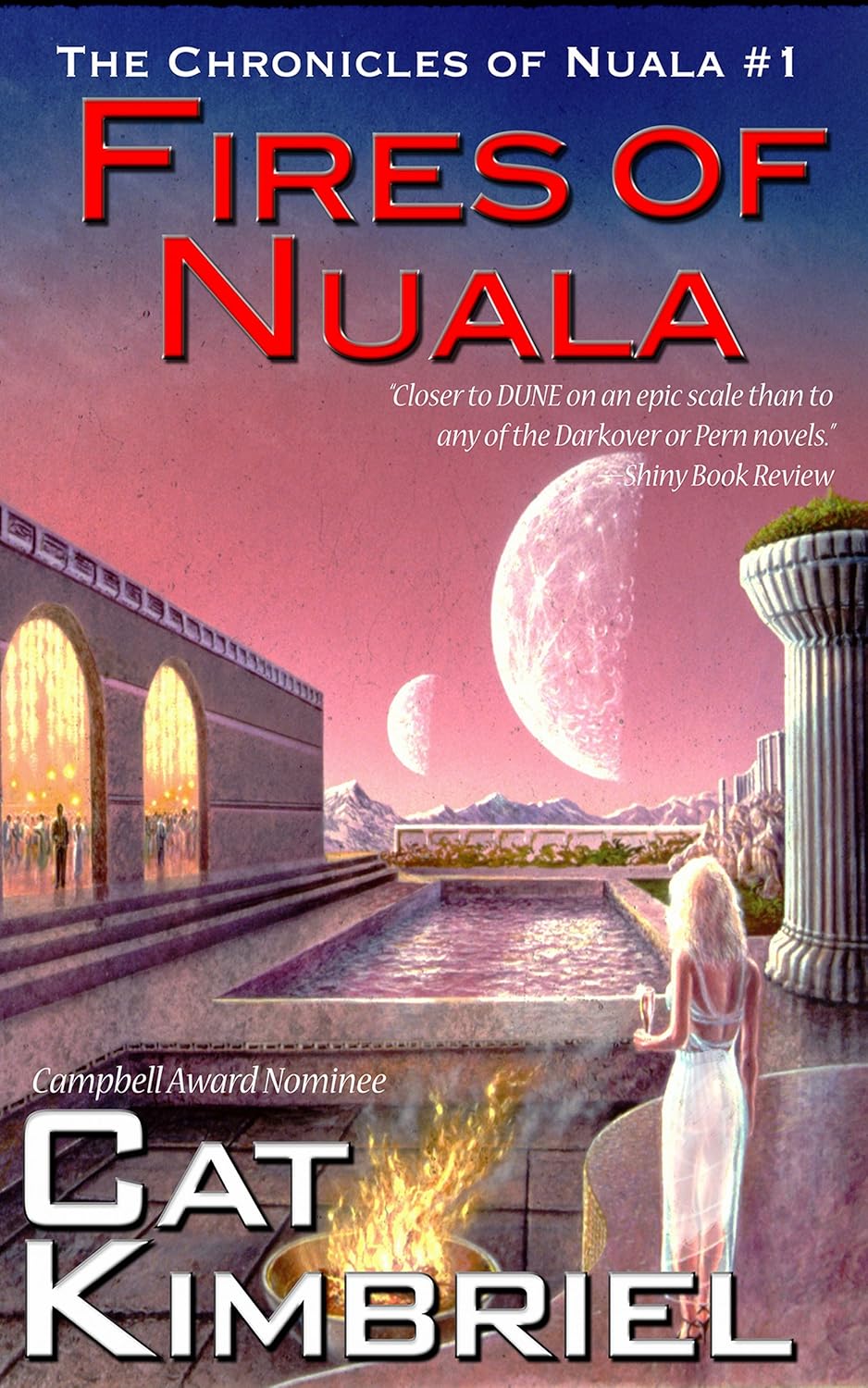
I don’t write pure romance, I write fantasy, science fiction, and mystery.  I am interested in putting people into unusual or challenging situations and watching them work their way back out to their new life.  But there is always a romantic thread in my stories, because whether people plan on it or not, romance happens.  Sometimes one of two people thinks, “hummm…” and starts working at it, like my young would-be rebels in Hidden Fires.  Sometimes two people look at each other simultaneously and think “Why did I never notice this person in this way?”  as the protagonists of my short story “Feather of the Phoenix” do.  And sometimes people are working together, surviving together, laughing together, and along the way they realize that something new is growing between them, even as they are saving their corner of the universe, as in Fires of Nuala.


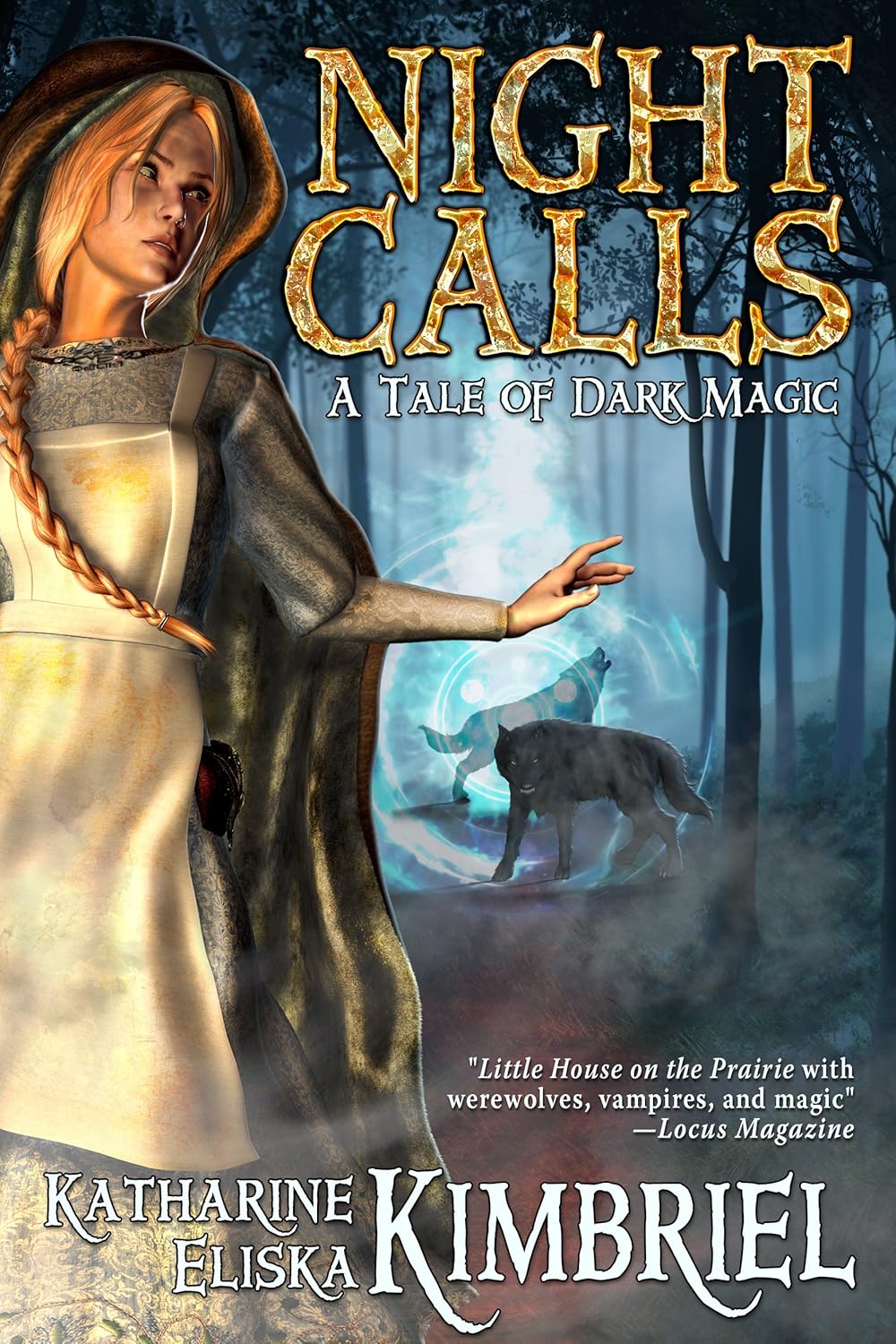
Sometimes there are challenges to the relationship, or temptations.  Some fans want to see Alfreda and Shaw from my Night Calls series finally make a match of it.  Shaw and Allie are only young teens, and they have skills that demand training—they aren’t the kind of people who will fall willy-nilly in love.  But if they awaken to it, after challenges, and others who attempt to lure them in other directions (for if they are both worth winning, they are worth winning by others) then they will fight the world to stay together.


But getting there can be subtle—until the moment it is everything.  I think I write romantic subplots for those of us who position ourselves in things we love in life, and hope to be surprised by love.  Just like in a romance!

~~~

Well said, Katharine! Romance can fit well and surprisingly easily into almost any genre, because in real life, it just...happens.

-Stephanie Osborn
http://www.stephanie-osborn.com

Wednesday, April 9, 2014

Elements of Modern Storytelling: Romance, A Guest Blog by Barb Caffrey

by Stephanie Osborn
http://www.stephanie-osborn.com

Today's take on romance as a part of modern stories is rather unique, since Barb Caffrey (a new Twilight Times author, and now something of a protege of mine, as well as an excellent editor in her own right) looks at the history of romance itself, and how that factors into storytelling over the centuries. Her first book, An Elfy On The Loose, by TTB, will be out soon! (Rumor has it the release will be in June -- which seems appropriate!)

~~~

Barb:

When Stephanie Osborn asked me and a number of other writers to talk about romance as an element of storytelling, I wasn't sure what to say. Sure, there's the obvious – romance has been around forever in one fashion or another, and many novelists and playwrights have written about it. Geoffrey Chaucer had an ironic and bawdy take on it with his stories of the Wife of Bath (who was married many times more than once and proud of it, too), while Shakespeare had so many different takes on romance – failed and, every so often, one that actually works – it's hard to keep track of them all.


Courtly love, though, used to take different formats than it does now. In the 13th and 14th Centuries, women were to be adored from afar and put up on pedestals. Troubadours and Trouvéres sang to court ladies, and some lost their hearts to them, no doubt...but most did absolutely nothing about it for a wide variety of reasons.

Actual marriages were usually made for business considerations – say, if two people from adjoining farming families married, land would be settled upon them from the existing family farms. Or if a prosperous merchant family trained an apprentice from a different family and that apprentice wanted to take over the family business, usually he'd have to marry in.

So how did romance as a thing actually come to be? Well, feelings and hormones aside, the lot of women from early on was probably none too good in most societies. Being bartered in marriage was by far the least of these ancient women's worries. But as our world matured and societies became more stable, there was more leisure time available – especially in the upper classes – and people started to think.

Why couldn't marriages be made where both people respected and liked each other? Why, if everything else was equal, couldn't a suitor actually romantically care about his proposed wife? Wouldn't that be beneficial to all concerned?

Slowly, societal mores changed, and as they did, storytelling changed with it. This is when we started to see tales like Chaucer's, where the older Wife of Bath tells younger, prospective brides and grooms that love is not all it's cracked up to be – but sex has its charms all the same.

So there was a two-stranded theme to romance as of that moment: Love, and sex. If you can get both at the same time, more power to you; but if you can't, sex by itself along with respect and a bit of liking beats whatever's in second place.

We see that now in contemporary romances of all descriptions, but most particularly in erotic romance. There, the sexual act is much more of a player, and the romance behind it usually doesn't signify too much (though in the best erotic romances, both are intertwined).

In other romances, love is usually shown to be a melding of sexual attraction (hormonal), liking and mutual respect. The latter two take time to engender, but once you have them, they build and build and build...

In my own work, which is relentlessly cross-genre but I suppose you could call "humorous romantic urban fantasy," that's the tactic I use. My hero and heroine in AN ELFY ON THE LOOSE, Bruno and Sarah, get to know each other during an extremely stressful period in both their lives. The more they know about each other, the more they like each other...and as both are at the right age for a romance, it's not surprising they have one. It's my own conceit that a young man of whatever species (Bruno is an Elfy, a type of shorter Elf) would worry far, far more than he is usually given credit for when it comes to romance, in order for people to laugh a bit while remembering their first attempts at dating and romance.

Personally, whenever I try to write a story without some element of romance in it, I find it much harder. Romance is part of the human condition, and whether you're in the far future (as is my late husband Michael's character Joey Maverick, hero of "A Dark and Stormy Night" and "On Westmount Station"), the not-so-distant past (as with Katharine Eliska Kimbriel's Night Calls series, set in early 19th Century Michigan), or the present-day (as with Stephanie Osborn's own Displaced Detective series or my own AN ELFY ON THE LOOSE), romance is possible because the human condition doesn't change all that much over time.

Even in stories where romance isn't part of the main theme, such as Rosemary Edghill's Bast novels about a Wiccan detective in modern-day New York (collected in BELL, BOOK AND MURDER), romance still plays an integral part. Who's dating whom and who's sleeping with who has to be factored in by Bast as she does her best to solve mysteries; who wants whom, and why, also must be considered.

Don't think that because your story doesn't contain a well-developed romantic strain that romance doesn't matter to you as a storyteller. Sometimes the absence of romance tells you more than its presence.

To sum up, the way we express things now has changed from Chaucer's or Shakespeare's time. Women have far more of a say in our governments, we have more say as to who we marry and when (at least in the West), we can and do own businesses and we often direct our own affairs. But our need for connection, for closeness, and for understanding has not changed.

Whether you're talking about a romance between a traditional male-female couple, a same-sex romance or a romance between two aliens we can barely comprehend, romance still matters and must be taken into account regardless of genre.

So long live romance! And may we continue to see it in all its various forms as long as stories are told.

~~~

Excellently said! And a nice historical brief on romance through the ages, both in story and in real life. I look forward to posting a blog about Barb's new book, An Elfy On The Loose, when it's released!

-Stephanie Osborn
http://www.stephanie-osborn.com


Thursday, November 28, 2013

The First Thanksgiving in America and its Establishment as a National Holiday

by Stephanie Osborn

Thanksgiving the First

"They began now to gather in the small harvest they had, and to fit up their houses and dwellings against winter, being all well recovered in health and strength and had all things in good plenty. For as some were thus employed in affairs abroad, others were exercised in fishing, about cod and bass and other fish, of which they took good store, of which every family had their portion. All the summer there was no want; and now began to come in store of fowl, as winter approached, of which this place did abound when they came first (but afterward decreased by degrees). And besides waterfowl there was great store of wild turkeys, of which they took many, besides venison, etc. Besides, they had about a peck a meal a week to a person, or now since harvest, Indian corn to the proportion. Which made many afterwards write so largely of their plenty here to their friends in England, which were not feigned but true reports."
~~William Bradford, Of Plymouth Plantation, describing events of year 1621

"Our harvest being gotten in, our governor sent four men on fowling, that so we might after a special manner rejoice together after we had gathered the fruits of our labor. They four in one day killed as much fowl as, with a little help beside, served the company almost a week. At which time, amongst other recreations, we exercised our arms, many of the Indians coming amongst us, and among the rest their greatest king Massasoit, with some ninety men, whom for three days we entertained and feasted, and they went out and killed five deer, which we brought to the plantation and bestowed on our governor, and upon the captain and others. And although it be not always so plentiful as it was at this time with us, yet by the goodness of God, we are so far from want that we often wish you partakers of our plenty."
~~Edward Winslow, Mourt's Relation, describing events of year 1621

This was the first Thanksgiving held in the United States, by the Pilgrims in Massachusetts. 

Thanksgiving the Second

Two years later, however, they held another, and it was possibly more important and more poignant. You see, they had had a nearly disastrous drought which came close to destroying their crops. Bradford, the governor of the colony, ordered this Thanksgiving, about which he had this to say:

"And afterwards the Lord sent them such seasonable showers, with interchange of fair warm weather as, through His blessing, caused a fruitful and liberal harvest, to their no small comfort and rejoicing. For which mercy, in time convenient, they also set apart a day of thanksgiving…
"By this time harvest was come, and instead of famine now God gave them plenty … for which they blessed God. And the effect of their particular planting was well seen, for all had … pretty well … so as any general want or famine had not been amongst them since to this day."
~~William Bradford, Of Plymouth Plantation, describing events of year 1623

Making It Permanent

Thanksgiving was observed by one group or another throughout the Colonies from that time on. In some, such as Pennsylvania, it had become an annual affair long before the Revolution. Under the Articles of Confederation, in 1782 U.S. President John Hanson set the date as the fourth Thursday of the month of November. But it was a few days after the ratification of the Constitution, in 1789, that President George Washington made it official. He said,

"Whereas it is the duty of all Nations to acknowledge the providence of Almighty God, to obey his will, to be grateful for his benefits, and humbly to implore his protection and favor, and whereas both Houses of Congress have by their joint Committee requested me 'to recommend to the People of the United States a day of public thanksgiving and prayer to be observed by acknowledging with grateful hearts the many signal favors of Almighty God especially by affording them an opportunity peaceably to establish a form of government for their safety and happiness.'
"Now therefore I do recommend and assign Thursday the 26th day of November next to be devoted by the People of these States to the service of that great and glorious Being, who is the beneficent Author of all the good that was, that is, or that will be. That we may then all unite in rendering unto him our sincere and humble thanks, for his kind care and protection of the People of this Country previous to their becoming a Nation, for the signal and manifold mercies, and the favorable interpositions of his providence, which we experienced in the course and conclusion of the late war, for the great degree of tranquility, union, and plenty, which we have since enjoyed, for the peaceable and rational manner, in which we have been enabled to establish constitutions of government for our safety and happiness, and particularly the national One now lately instituted, for the civil and religious liberty with which we are blessed; and the means we have of acquiring and diffusing useful knowledge; and in general for all the great and various favors which he hath been pleased to confer upon us.
"And also that we may then unite in most humbly offering our prayers and supplications to the great Lord and Ruler of Nations and beseech him to pardon our national and other transgressions, to enable us all, whether in public or private stations, to perform our several and relative duties properly and punctually, to render our national government a blessing to all the people, by constantly being a Government of wise, just, and constitutional laws, discreetly and faithfully executed and obeyed, to protect and guide all Sovereigns and Nations (especially such as have shown kindness unto us) and to bless them with good government, peace, and concord. To promote the knowledge and practice of true religion and virtue, and the encrease of science among them and Us, and generally to grant unto all Mankind such a degree of temporal prosperity as he alone knows to be best.
"Given under my hand at the City of New York the third day of October in the year of our Lord 1789."

However, Thanksgiving still remained an intermittent national holiday, issued by Presidential proclamation when desired; not at all during, for example, the presidency of Thomas Jefferson, but several times during the tenure of James Madison. Finally, in 1863, President Lincoln established an annual national holiday on the last Thursday of November:

"The year that is drawing towards its close, has been filled with the blessings of fruitful fields and healthful skies. To these bounties, which are so constantly enjoyed that we are prone to forget the source from which they come, others have been added, which are of so extraordinary a nature, that they cannot fail to penetrate and soften even the heart which is habitually insensible to the ever watchful providence of Almighty God. In the midst of a civil war of unequalled magnitude and severity, which has sometimes seemed to foreign States to invite and to provoke their aggression, peace has been preserved with all nations, order has been maintained, the laws have been respected and obeyed, and harmony has prevailed everywhere except in the theatre of military conflict; while that theatre has been greatly contracted by the advancing armies and navies of the Union. Needful diversions of wealth and of strength from the fields of peaceful industry to the national defence, have not arrested the plough, the shuttle, or the ship; the axe had enlarged the borders of our settlements, and the mines, as well of iron and coal as of the precious metals, have yielded even more abundantly than heretofore. Population has steadily increased, notwithstanding the waste that has been made in the camp, the siege and the battle-field; and the country, rejoicing in the consciousness of augmented strength and vigor, is permitted to expect continuance of years, with large increase of freedom.
"No human counsel hath devised nor hath any mortal hand worked out these great things. They are the gracious gifts of the Most High God, who, while dealing with us in anger for our sins, hath nevertheless remembered mercy.
"It has seemed to me fit and proper that they should be solemnly, reverently and gratefully acknowledged as with one heart and voice by the whole American people. I do therefore invite my fellow citizens in every part of the United States, and also those who are at sea and those who are sojourning in foreign lands, to set apart and observe the last Thursday of November next, as a day of Thanksgiving and Praise to our beneficent Father who dwelleth in the Heavens. And I recommend to them that while offering up the ascriptions justly due to Him for such singular deliverances and blessings, they do also, with humble penitence for our national perverseness and disobedience, commend to his tender care all those who have become widows, orphans, mourners or sufferers in the lamentable civil strife in which we are unavoidably engaged, and fervently implore the interposition of the Almighty Hand to heal the wounds of the nation and to restore it as soon as may be consistent with the Divine purposes to the full enjoyment of peace, harmony, tranquility and Union.
"In testimony whereof, I have hereunto set my hand, and caused the seal of the United States to be affixed.
"Done at the city of Washington, this third day of October, in the year of Our Lord one thousand eight hundred and sixty-three, and of the independence of the United States the eighty-eighth."
"Proclamation of President Abraham Lincoln, October 3, 1863."

Today may I offer my sincerest blessings of the season, and my heartfelt thanks for each of you reading my words. God bless you all. Happy Thanksgiving!

-Stephanie Osborn

Monday, January 28, 2013

The Center Cannot Hold, Part 2

by Stephanie Osborn
http://www.stephanie-osborn.com

And the 4th installment from Sarah Hoyt's blog today. There are those of you who may not be interested. However, I think these are things that are important to consider in today's economic situations, and the new year is definitely the time to be considering them. I don't always agree with Sarah on some things, though we are friends. (Hey, friends don't have to agree all the time. But we still get along. That's why we're FRIENDS.) But like I said, it makes some thoughtful reading. And as someone born and raised in Portugal, she brings a fascinating perspective to the topic.

~~~


The Center Cannot Hold, Part 2

by Sarah A. Hoyt


The idea of creating inflation to get out of a disastrous debt situation is neither unknown nor rare. Countries like Greece and Portugal coasted on it for years (and we could go on about what losing that ability has done to them) partly because as “touristic countries” they thrived on being “cheap” by keeping their currency devalued.

You borrow high-value currency and pay the same nominal amount of low-value currency. Fine. That makes sense. But if you don’t let the savings and assets people have appreciate at the same rate, via high interest rates, (which in turn pushes company assets and – usually – salaries up, even though not in real value) you’re going to have people who don’t make enough to eat or to buy…anything. (Look, ALL intervention in economics is stupid, ultimately, because economics is not something someone can CONTROL. It is instead a playground for the law of unintended consequences. It's as if we developed an ability to control the weather and were in shock when keeping it pleasant in Iowa buried NYC in ice or something.)

It seems to me we’re headed there. Most of my friends are beyond pinched this Christmas, and that’s the ones who still have jobs.

If I had to guess I’d say this strategy was cooked up to get us out of the real estate collapse. The inflation is supposed to catch up so that real estate assets never “devalue” in numbers, just in real value. And the interest rates are kept forcibly low so that people will soak up the bad assets and so that those in marginal positions can refinance. (We know how well that last part is working – not.)

Mind you, if that really is the idea, this gang is dumber than dirt. First because if people's money holdings and salary stay the same, buying a house is still difficult, no matter how low the interest rates. Second, because they’re not taking in account that those of us working as contractors and getting paid on contracts made years ago, will end up destitute and not be able to afford...not just houses, but anything. I don’t know how many of us there are, but the fact salaries aren’t going up means salaried employees, of which there are a lot, will end up in the same fix.

In Portugal there was an enormous “soak up” of completely paid off real-estate, a lot of it inherited over generations. In fact, it might have been the norm. Having a mortgage back then was odd. This meant that your property appreciated massively and if you got in real trouble, you could sell it and move on. (Various restrictions on selling rented out places, and rent control made this more difficult than it sounds, but…still. You weren’t talking about people having to meet mortgage payments, house repairs, food, fuel, etc, with salaries that remain static and depreciating currency reserves while a lot of the rest goes up. On the food side, too, most people back then had at least some gardens and some "creation" – chickens, goats, etc.)

On the other hand, it’s entirely possible I’m attributing to stupidity that which is more easily explained by malice: they want to turn us into beggars, because beggars are easy to please. No, wait, that still means stupidity, because what can’t go on, won’t, and like with price fixing, when you make it impossible for people to live, people find extra-legal means.

Okay – another way in which we’re different: we’re the world’s charity [fund]. We still give financial aid to most of the world, and have for close on to a century. (We might that way have enabled tyranny, but that’s something else.) We’re the world’s grantor of peace.

If we withdraw, even well short of a total collapse, will the world finally grow up? Or will it go back to the long wars of the 18th and 19th century everywhere, to the point commerce can’t take place?

Make no mistake, whatever bad things happen in the US will be ten times worse in the rest of the world. And don’t say, “Who cares?” Some – if not most – of those people are much better at WMDs than at feeding their people and will consider knocking the “old champ off” a much greater priority than actually taking care of their starving population.

(A friend of mine said, “Whatever happens now, we’re going to lose at least one major city.” I’d like to say he was wrong, but I have the same feeling.)

Other ways we’re different: we have more guns per capita than anywhere except those places that encourage/enforce gun ownership, like Switzerland. This is not a bad thing because:

Even in the milder of the “things go wrong” scenario, where things go bad first are the people who are marginal now, living at the edge of both society and often legality. Where you see any crackup first in society is higher crime rates – we’re seeing that – and lack of safety on the streets. The fact that a lot of people have guns will probably hold some of that (at least) down.

We have a military that is more in the tradition of service than of machismo. We’re probably the last of the Western powers with a military tradition and our military tradition is…odd, built on winning hearts and souls, more than on, “Shoot them all and let G-d sort them out.” Yes, I know, sometimes the rules of engagement (ROEs) are stupid (Okay the ROEs are mostly stupid) but still, it has a built in, “you don’t kill unless you need to.” This makes us different from, say, the various Latin American countries that have had crack ups.

Will the US military fire on the populace if things get bad enough? Some places. Some populace. As someone said, behavior means a lot.

BUT the US military are also generally a force for good and order, and given a central collapse, might hold things together long enough for things to coalesce in another form. Might. One can hope. (Of course, I keep thinking of Starship Troopers, “And then the veterans had had enough.”)

All of these together, particularly the economic thing, added to the chaotic force of changing technology and the decentralization that tech has been forcing on industry and commerce even as our politics and education and other…non-commercial enterprises have got more centralized, has the effect of making us a particularly unpredictable juggernaut.

It won't be like movies or books, because those move on logic. Real people aren't logical. They're cranky, emotional and ornery. A group of one or the other some place can send things spinning out of control. [I'm reminded of one of my favorite lines from the first Men in Black movie, “A person is smart. People are dumb, panicky, dangerous animals and you know it.” -Steph]

In the best of all possible worlds, you’re going to hit a point where the answer to, “Are things getting better or worse?” will have to be, “Yes.” And then things start smoothing off, if we’re lucky in 25 or so years, so that I can still see it. (Or maybe faster. We’re Americans. We go fast. Hey, look, I’m Heinlein’s kid. The glass is not half full. It’s brimming over.)

On the other hand, it’s unpredictable, and I don’t think the people in charge know that, just like the people in charge of publishing don’t seem to be aware that ebooks aren’t just a “novelty fad.” There is a certain type of credentialed-not-brilliant (but thinks he/she is, because...credentialed) individual for whom knowledge is what exists in books and what your professors passed to you. If reality disagrees, then you deny reality as hard as you can.

Most of the people in charge most places are busy denying reality. Which makes the rest of us real nervous.

Hope for the best. Prepare for the worst. Stay informed. Keep moving. Keep working.
~~~
 
Or as my grandmother used to say, "Hope for the best, prepare for the worst, and take whatever God sends."
 
-Stephanie Osborn
http://www.stephanie-osborn.com

Monday, January 14, 2013

Preparing For The Long Rains, Part 2

by Stephanie Osborn
 
Last week we read part 1 of Preparing For The Long Rains. Today we pick up with the rest.


~~~

Preparing For The Long Rains, Part 2

by Sarah Hoyt


So, what will the collapse look like?

I don’t know. And you don’t either. All we know, because we can feel it, like sand grains shifting on a dune in the first movements of something that is not even fully visible, but which will suddenly remake the landscape, is that we’re already in the process of collapsing. For a definition of collapsing.

What I’m betting on, of course, is a collapse that collides full-on with the catastrophic innovation of tech. What this will look like is like an accelerated version of what we have right now, and, to an extent, of what Portugal had in the seventies. The old ways and those in control of them at all levels – from education to production; from politics to news – will be collapsing but at the same time they’ll be each day less relevant, as they get replaced.

This is sort of – if you need a visual – like making a train into an airplane while it is running. It’s chaotic, very scary and not painless. Some people will get crushed as gears get moved, and some people will fall out by the wayside and die as the shell is changed. And some others will fall from great height, even, as the plane takes off.

Or, to leave the overstretched metaphor behind:

It won’t be pretty, and I advise to have prep stuff on hand – you know, guns and canned, and such. Whether to move to the city or rural is something else. Yes, I know what you guys hear – and the instinct to “go and hide.” But I’ve read accounts of Argentina’s collapse, and the worst stuff happened in the countryside, where isolated farmhouses were raided. If you were in the city, for the most part, you were all right. (Which I’d say was more likely if your city has military presence.)

But again, there is no way of KNOWING. All you can do is sort of guess and sort of prepare, and of course, ideally you’d have a town residence with a rural getaway, or vice versa, but not if you’re as broke as I am.

HOWEVER because you expect the new to emerge from the old, with preparing for the collapse of the old, for interruptions of supplies, for disruptions in electricity, etc., if you believe this is the sort of collapse that’s coming, you’ll be doing what you can to prepare your profession for the new order. In my case, this means getting up electronic as much as I can, so I might have at least some income should paper distribution collapse. I don’t know what it would be for your profession, but if I were a computer-person, I’d be trying to establish the ability to have different contracts on the side. (If your current employment contract allows it.) As we’ve spoken of before, what you should be trying for is as many and as varied streams of income as you can. If you’re a writer not making much, yet, married to someone in a traditional industry that’s going to get whacked, I urge you to do what I’m doing, and write like mad and put it up as much as you can, in as many genres as you can. (Though I’ll note, for me at least, bubblegum seems to sell best.)

I’m doing this because I don’t believe we’ll collapse totally. Can we? Well, sure. Again, as I said, we’ve never seen anything QUITE like what we’re starting on.

But here’s the thing – if we collapse totally…well…I can’t afford to buy a farm. I can’t afford to store enough food for the next fifty years. The best I can do is buy books on building log cabins and trapping animals, and supplying the kids with bows and arrows. Then if the unthinkable happens, we shall go and colonize the national forest. (No? Why not?) As long as I have some food to survive till a crop can be got in, well, it’s much like preparing for the catastrophic change – except that we never get to be civilized again and therefore all the ebooks count for nothing. Worth trying, anyway because you never know. And what else are you going to do if you’re not massively wealthy and able to prepare for the fall of civilization? Sit around knitting your total collapse blankie?

There is a third option, and for all I know it might be the most likely. It would be the most likely if we had an America to save us. It’s called the “modified hangout.” You slide and slide and slide, and there’s no ending to the slide. Africa has gone through this and Europe is heading into it (though we’re helping it by propping it up – yes, we’re still giving foreign aid to most of the world.) This is a world in which services become worse and worse starting with those the government provides, from supplemental income to mail to (where it does so) electricity. All of it becomes unreliable, untrustworthy, subject to the whims of bureaucrats and how much baksheesh you’re willing to pay. Every year is a little worse than the last. And you just…hang on.

At the end of this is the world of Heinlein’s Friday, with everyone in armored cars and people in guarded compounds, and the rest of it resembling what a total collapse would do, but crossed with the world of Mad Max.

I wouldn’t bet on this last one. It is unlikely. To get there, you need someone subsidizing you, because your society stops functioning long before this to the point where it keeps food and clothing available, much less keeping someone very wealthy. I don’t think America can keep itself on this path without outside help and – get this very carefully – there is no outside help.

At the same time, even if it happens, how do you prepare for it? Well, the best thing is to have some stuff laid by so you can protect yourself and yours and provide in case of shortages.

BUT most of all, the best thing is to be very wealthy and able to afford a private enclave.

My plan – though it’s unlikely it will bring me enough wealth – is to do exactly the same I would do in the first instances. Because if there’s any chance of my being wealthy it is to have a book (or more) hit.

So, right now, I’m very busy – which has the advantage of keeping me from fretting too much. (You should see me when I fret too much.)

The best thing to do when the rain starts falling and you don’t know if it’s just a severe shower or forty days and forty nights is build your ark.

Even if it’s just made of words and electrons.

Do go on with life – it might be important and your "peacetime activities" might yet be the most important thing in making the collapse non-permanent – but keep an eye on that rain. And prepare for any eventuality.
~~~
 
There is wisdom here if we choose to see it.
 
-Stephanie Osborn

Monday, January 7, 2013

Preparing For The Long Rains, Part 1

by Stephanie Osborn
http://www.stephanie-osborn.com


This is a reblog of a particularly interesting post by Sarah A. Hoyt which she put on her blog in early December. As we prepare to begin a New Year, it may be worth reading. I present part 1 to you on this first Monday of the new year. Perhaps it isn't the usual celebratory sort of thing, it isn't resolutions, but the turn of the year is a time for thoughtfulness and introspection too. I think we could use a little of that this year.
 
 
~~~
Preparing For The Long Rains, Part 1

by Sarah Hoyt
As many of you know, I’m watching Foyle’s War, kind of the way I watch things these days: when I need to iron, or do something else that occupies the hands but not the eyes (much) or the mind (at all) I turn on a couple of episodes (thank heavens for Amazon prime. I remember being very much broke and not having cable – as we don’t now – and not being able to watch anything. With Amazon prime and the stuff free for kindle, I’d have had a much easier time of it.)

I’ve before talked about sudden insights, things I’ve known all along, but which suddenly seem fresh and new. Like “they didn’t know they were going to win.” It also started me reading about the World Wars again, which means eventually there will be some blogs related to that, but I need to be more “with it.” [Sarah has been ill. Nasty flu bug I think. --Steph]

The most amazing thing of all, though, is that despite all the restrictions they lived under, the rationing, the coupon books, the collecting of every piece of scrap, most people lived as though the war weren’t happening. (I’ve often considered, too, that while the idea of rationing was completely wrong-headed economically and might have FED scarcity, it might have been the right thing to do PSYCHOLOGICALLY creating that sense of unity of purpose. I’ve also wondered if the problem was that after 9/11 we weren’t asked to plant victory gardens or buy war bonds, but simply to “go shopping.” Yes, I know it was sound in many ways, but it might have made a difference psychologically if people felt they were contributing. Or perhaps not.)

Of course the series is a mystery series, and there is usually something involving the war – because that’s how they sold it to the producers – but you sort of catch glimpses of people around, and you get the feeling most people were…what was it people were doing while Noah built the ark? They were marrying and being given in marriage, having babies, worrying about where to live. Even when the war affected all of those, it wasn’t the main concern. The main concern was everything else: who loved whom, who hated whom, what the crop was going to be, and why the kid was acting weird. All this without knowing if they’d win or lose, or what the next year (or month) would bring.

Right now, sometimes I feel as though this is what the whole world is doing around me. They’re making plans, getting comfy, settling down, fixing what’s wrong with their lives – or perhaps trying to survive unemployment, illness, other life stuff.

And then periodically I get together with a friend, or sit down with an old acquaintance and I hear how much more seriously they’re preparing. It’s all guns and canned food, and why am I still living in an urban area, have I gone nuts? And don’t I realize it’s time to set aside the writing/publishing thing and worry about preparing to survive the collapse?

And then I feel like it’s me who is going about everyday life, unaware that there’s something big coming down the pike.

I am aware there is something big coming down the pike. I think even those who “aren’t” or who deny it, know it at some level. There is a…tense feeling in the air, and everyone is sitting on the edge of their chairs. There is a suspended-breath feel – waiting for the next shoe to drop.

The thing is that no one knows what the next shoe will be. A light sneaker? An army boot? A baby bootie?

Each of us has a mental image of disaster, mine formed by experiences (and books, and movies) and other people’s by THEIR experiences and books and movies.

The problem is no one knows. This has never happened before.

And before you start screaming at me, that of course it has happened before, that even recently the USSR folded like a pack of cards, that we know exactly what collapse looks like…sigh. No we don’t.

Oh, sure, we can look back to say the French revolution and see what happened when the leading power of the day got buried in deficit and went mad. We can look at the collapses in Argentina, and… everywhere else in the 20th century. But the parallels aren’t right.

If you go back far enough – the French revolution – you’re dealing with a completely different state of affairs, not just mentally but also at the economic/material level.

You see, America has changed the game, both ways. I remember hearing it mentioned that the USSR still commanded loyalty because peasants STILL lived better than under the Tzars. A similar thing was said here about Scandinavia and socialism. Their life improved. And the same could be said about Portugal under its strong-man regime. People can point to how poor Portugal was, but we thought we were rich. As a child, I always wore shoes, for instance, even if the summer “sandals” were the shoes that had stopped fitting in winter strategically cut. I had winter coats. We had coal delivered. I didn’t have to do what Mom did and go, barefoot, along the train line, gleaning coal dropped by the trains. I got Christmas gifts, usually a variety of plastic stuff. It wasn’t just “we’ll have some fruit for desert and that’s how we know it’s a holiday.

This was because things that started in America – including the improvements in agriculture, the new processes and new materials – allowed a level of prosperity that was still better than anything the world had known before. Even in countries doing their best to slit their own throats, the easier ways of producing things and the abundance of food made a difference. Things got better. (And everyone got used to thinking that was the way of the world. BTW I’m aware this process didn’t start with America. It started with Great Britain and the Industrial Revolution. But then the torch got passed and things accelerated.
The other part of this – influencing all collapses in the 20th century – is that America tends to support other countries in trouble. This is a double edged blessing, btw. There is reason to wonder if the USSR would have survived nearly as long, with its dysfunctional regime, without the grain we were willing to provide at bargain basement prices…because we had it.

We don’t have an America to bail us out, and we don’t have an America to keep innovating as we collapse. We ARE America, and there is no one to pass the torch to.

Please, please, please, don’t tell me that Brazil or China stand ready…Brazil is in a pretty good place now, partly bolstered by our petro dollars, but let’s not kid ourselves. Until they fix their political culture, they’ll continue going through the boom and bust cycle in a way we can’t even imagine. As for China…China will not survive our collapse, and as it cracks it will show us what a crack up really means. All of those who are my age and were astonished that the USSR didn’t fight like a wounded bear as it died, might yet get to see this process.

By the time Great Britain started its self-inflicted decline, the US was already well on its way to moving into the lead industrially and agriculturally. There is no country in that position. There are countries that can pretend to be in that position, but not when you look at internals.
~~~

I'll present part 2 next Monday.

-Stephanie Osborn
http://www.stephanie-osborn.com