Banner

Banner

Thursday, August 4, 2016

Throw-Back Thursday: Some Quick Look-Backs and Current Updates

by Stephanie Osborn
http://www.stephanie-osborn.com


Okay, folks, just a quick look into the past for those of you interested; this whole concept started off when a fellow author named Sarah Hoyt asked me to guest-blog for her about solar activity. Since then, she asked me back, so I have two posts on her blog about solar activity, one of which is only a few weeks old. Rather than re-post the whole thing here, I am simply going to link to her blog, to the particular articles in question.

So here's the first one, with lots of background info. It was first posted in May of 2015.
https://accordingtohoyt.com/2015/05/30/solar-space-and-terrestrial-weather-some-reflections-by-stephanie-osborn/

And here is the second one, which was posted in early July 2016.
https://accordingtohoyt.com/2016/07/15/here-spot-cmere-spot-by-stephanie-osborn/

I still get notifications on these from Sarah's blog, and will answer if you have questions, so feel free to post questions or comments, here or there, or in the Osborn Cosmic Weather Report group on Facebook.

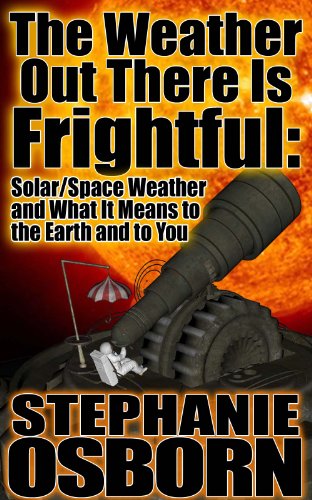
For those who want even more information, I strongly recommend picking up my ebook, The Weather Out There Is Frightful: Solar/Space Weather and What It Means for the Earth and You. It's written by a professional astronomer (me) trained in spotted variable star science, for lay people with little to no science background.


CURRENT SOLAR UPDATE: As of this writing (early 4 Aug) we are currently in our fourth consecutive day of no visible sunspots on the near side. This is the fourth group of spotless days since June 1st. The total number of spotless days since that date currently totals 24 out of 64, or 37.5%. If we add in the days with only a tiny, short-lived spot group in that same time frame, we add in 9 more days, or 33 out of 64, at 51.6%.


A visible-light image of the Sun, taken by the Solar Dynamics Observatory on August 2, 2016, depicting a lack of sunspots on the solar near side.
~~~

HOUSEKEEPING NOTE: Oh, by the way, abusive comments and/or argumentative comments will be moderated on the Comet Tales blog and in the Facebook group. And I reserve the right not to answer such posts on Sarah's blog. I don't put up with trolling. I have better things to do with my time.

~Stephanie Osborn
http://www.stephanie-osborn.com

Wednesday, August 3, 2016

Solar/Geomagnetic Activity!

by Stephanie Osborn
http://www.stephanie-osborn.com

HEADS UP, SPACE FANS!

Earth is currently experiencing a GEOMAGNETIC STORM! These occur when a sudden influx of plasma (a gas cloud of charged particles) enters Earth's magnetic field from outside, most often from solar activity (a coronal mass ejection aka CME, or an enhanced wind stream from a coronal hole). They can be mild, strong, or severe, depending upon how dense the plasma cloud is.

Okay, for those of you just tuning in, let's work on explaining some terms.

~~~
      We are also sitting inside the atmosphere of the Sun, which is called the corona. Yes, we are, even at 93 million miles distant. It generates a wind, usually coming out from the Sun and spiraling away – yeah, the “solar wind.” Granted, the corona isn't very dense, but it's dense enough to create some effects, and we're working on using it to our benefit, like in solar sails and such, which can use the solar wind as much as light pressure (different topic) to maneuver around the Solar System like the spaceborne clipper ships of old. 
      But when the Sun gets... agitated, we'll say... the solar wind can get a lot denser. Coronal holes tend to move gradually from the poles down to lower latitudes, and the Sun's face develops an astronomical case of acne. This usually occurs around the time of solar maximum.
~The Weather Out There Is Frightful, Stephanie Osborn, ©2011
~~~

Now, a coronal hole is just a place in the magnetic field where the field lines stretch out to infinity, rather than looping back around, like the poles of a bar magnet. That means that the plasma can channel outward along those field lines, deep into the solar system.
This is an image of the inner corona of the Sun, taken by the Solar Dynamics Observatory on August 2, 2016, at a wavelength of 211 Angstroms. The dark regions are the coronal holes, which show up nicely at this spectral region.

If Earth happens to run into one of these "enhanced solar wind streams," as they're called, if it's strong enough, it slams into our magnetic field like a bow wave from a ship. This compressed the magnetic field on the sunward side, and stretches out the "tail" on the anti-sunward side. If the tail is stretched enough, it can snap off, and "magnetic reconnection" occurs, when the field lines reattach closer in. But magnetic reattachment itself generates a HUGE surge of energy, which is fed back into Earth along our own poles.
~~~
      So what are the effects of coronal hole winds and Coronal Mass Ejections (CMEs)? 
      They can actually raise the temperature of the outer layers of the Earth's atmosphere (the thermosphere, aptly named) sufficient to cause it to expand. This affects us, because that increases drag on satellites and spacecraft, and can cause the orbits of satellites to decay and re-enter well before they were intended... 
     Disruption of the Earth's magnetic field can be a problem. It can disrupt radio communication (including cell phones) rather severely. It can damage satellites that remain in orbit. It can generate “induced current” in any lengthy conductor...And it causes the aurorae. Most of you reading this have heard of the Northern Lights, properly termed the Aurora Borealis, but there are also the Southern Lights, the Aurora Australis. These are actually ovals that circle the magnetic poles of Earth (and most other planets with magnetic fields, by the way. They've been photographed on Jupiter.) They are where the charged particles that have been caught up from the solar wind or CME into the geomagnetic field follow the field lines down into the atmosphere. The gas molecules become excited into a higher energy state, then discharge that extra energy as light. This is very similar–in fact, essentially the same–as a fluorescent light bulb, only natural and not contained. The colors are determined mostly by the main gas that is fluorescing. Carbon dioxide produces white light; nitrogen, pink or red; oxygen, green or blue. (It can also generate ozone.)
~The Weather Out There Is Frightful, Stephanie Osborn, ©2011

~~~

So what we've got, space fans, is a big ol' coronal hole generating an enhanced solar wind stream, and the Earth ran smack into it. Currently the planetary K-index (a rough measure of the strength of the disturbance in the planetary mag field) is oscillating between 5 and 4, and at 5, we start geomagnetic storming. It's minor, so far, but it's there. So we are under an official NOAA GEOMAGNETIC STORM ALERT for MINOR GEOMAGNETIC STORMING.

This in turn means that there will be some heating of the upper atmosphere, and it can induce some currents in conductive materials near the poles. Communications may be affected in high latitudes, and migratory animals may briefly become confused.

But what it ALSO means is that we have an AURORA ALERT for high latitudes! Now, NOAA doesn't put out aurora alerts. But I do! My followers on Facebook know that whenever conditions are right, I issue an aurora alert, and give a heads-up to the regions who can reasonably expect to see one. This is not a guarantee that you WILL, only that the probability is GOOD. Therefore --

Residents of Canada, Greenland, extreme northern Russia, Finland, Sweden, Norway, Iceland, possibly extreme northern Scotland, Antarctica and the islands in the Antarctic oceans, Australia's state of Tasmania, the southern tip of New Zealand's south island, and the northern regions of the following USA states: Maine, Michigan, Minnesota, parts of North Dakota, and essentially all of Alaska --

Keep an eye to the skies tonight! You just might see an aurora!

~Stephanie Osborn
http://www.stephanie-osborn.com


Monday, August 1, 2016

A New Direction

by Stephanie Osborn
http://www.stephanie-osborn.com
1 August 2016

Effective today, I'm taking Comet Tales in a new direction.

Many of you know me as an author. Many know me as a scientist. Oddly, many do NOT know me as BOTH.

So I'm going to show y'all how it works! Starting today, Comet Tales is going to feature the latest information in solar weather, and space weather and news! Alongside that will be information on my latest book releases, and any titles of mine that pertain to the space news of the day!

I won't be posting on a completely regular basis; rather, I'll post on an as-needed basis to ensure you have the most up-to-date information I've got! That might be once a day, it might be once a week, depending on what's happening. It may be a longish post, detailing and explaining a solar event, or it may be a link to a detailed article, with a few comments. So keep up with the blog! Follow me, and you'll always know the latest going on in the space above our atmosphere!


Today's space news:


Asteroid Bennu

We've got a little time, but asteroid 101955 Bennu could cause problems in about 120 years:
http://news.sky.com/story/asteroid-strike-could-cause-immense-suffering-10519054

It's unlikely but not impossible.

Can we do anything about it? Yes.

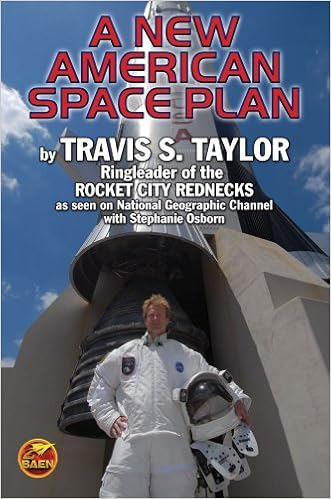
Travis S. Taylor and I discussed that in our nonfiction book, A New American Space Plan. There are many possible ways to redirect an asteroid or comet, and we cover them all in our book. Check it out!


Sunspots/Solar Activity

Also we have yet another day with no visible sunspots. If the active sunspots that rotated off about 5 days ago have survived, they would seem to be the only spots on the solar surface. The most recent imagery from the STEREO website (which is NOT on the Solarham website, which has begun updating less and less frequently in recent weeks) indicates that they have indeed survived and are nearing the center of the solar farside disk.

Spot group 2570, which showed up to end the last no-spot run, dissipated on Saturday; another short-lived binary spot group showed up on Sunday but didn't even stay around long enough to be numbered, and now, officially August 2nd GMT/UTC, we are back to no spots.

If I count the "dinky" spots as being essentially no spots, then 30 out of the last 63 days have had little to no sunspots visible (47.6%). 22 out of 63 were unequivocally spotless (34.9%).

And yes, I do know a thing or two about this -- my graduate work was in spotted variable star astronomy. I have an ebook out about solar variability called The Weather Out There Is Frightful, and it talks about spots, flares, coronal mass ejections, the solar cycle, extended minima, and more. 


~Stephanie Osborn
http://www.stephanie-osborn.com

Wednesday, June 17, 2015

A Guest Blog: Lisa M. Collins and Archaeology

by Stephanie Osborn
http://www.stephanie-osborn.com

Lisa Collins is an online friend of mine, a lady after my own heart for her interest in several sciences. So when she put out a request to guest blog for her latest release, The House Bast Made, I said, "Sure!" despite the fact that my blog has been inactive for several months. (Hopefully this will change in future; it seems that the various social media have not followed through on the intended charges for "advertising.") So here she is, to tell you a little about herself.


~~~


Archaeology and Me
by Lisa M. Collins


I have a deep and abiding love for all things ancient Egyptian. When I was little, I found an old, worn book about the country, which I still have to this day. Imagine me out in the backyard doing excavations trying to find bits and bobs of interest. In my mind, I was a great archaeologist. As time moved on, other subjects took the place of archaeology in my heart. By the time I graduated college, I considered myself a historian. What most people don’t understand about degrees in the humanities is that you must be able to communicate in written form. Without words how would the world have learned from Plato, Aristotle, the Prophets, Bertrand Russell, or Martin Luther King, Jr?

The written word is what accurately preserves ideas, leading to thought, and then to action. This drives me to present my words, thoughts, and ideas in writing. I studied not only the masters like Shakespeare, Tolstoy, Hemingway, Austen, Woolf, Mark Twain, Frederick Douglass, and Maya Angelou, but also speech writers for the White House and newspapers. Any time I find a writer who draws me into their story, I study how they accomplished the goal.

My desire to write starts off with a sad tale and a dash of memory. In 2008 the company I worked for downsized and I was one of the many who were let go. I had a small severance package so I didn’t immediately have to hit the byways looking for work. There I was, looking for what to do next and I was reminded of how, when I was little, I would tell stories to entertain my friends. To figure out how to begin writing my imaginings down for others I went to the wisest ‘person’ I know—that’s right, Dr. Google! I came across NaNoWriMo, or National Novel Writing Month. Being a total fiction n00b, I decided to take up the challenge and write 50,000 words in the month of November. Believe it or not, right out of the gate, I did it!

Later I got a job working for the State of Arkansas, but the itch to write never fell into the background. I kept dabbling and learning from others. Eventually, I had several things published in non-fiction venues, such as the state newspaper and journals, but passion was to write fiction. One thing you need to know about me is that I love goal setting and lists, so I set a goal of producing one new short story a month, and a secondary goal to find publishers who would print my work. As any of you out there in publishing already know, I got my fair share of rejection letters. My very first one hangs on the wall by my desk.

Rejection is hard, but I didn’t let that hold me back. I went back to the drawing board. Read books on craft. Read novels like I wanted to write. The day finally arrived in early 2013 when my first science fiction short story, The Tree of Life, was accepted into an anthology! I was over the moon! Rejections, however, still happen. I have come to the realization they are part and parcel of the writing life. Each one I receive proves to me I’m not standing still, I’m working, and I will prevail. Also in the last five to ten years a new way of presenting work to the public has exploded into the mainstream. Indie publishing. Now writers have the opportunity to showcase work directly to readers without a go-between. Some writers do all their work independently, others only work with publishers, but I find myself in between these two. I am both traditionally published and indie published. I love the freedom to chart my own course.

When I was writing my latest novella, The House Bast Made, I got to put my archaeology hat back on. It felt good, like I was revisiting an old friend…you know, the kind that gets you into trouble, but you love every moment. This book was such fun to write. I knew the setting in Egypt’s Valley of the Kings was going to be perfect for some fantastical paranormal fun. Our archaeologist, Reid Cannon, comes to the realization—myths need not be fairy tales. Reid and his friends get embroiled in a war between gods and goddesses that has raged for eons. Reid and his crew must come together to save a friend from the brink of death and the world from utter chaos. My hope is that you will enjoy your time in the Valley of the Kings and join us next time when Reid Cannon travels to South America!

Where can readers find out more about you and where can they buy The House Bast Made?

Wookiees for Cookies Racing Team https://wookieesforcookies.wordpress.com/

For Deep Fried Dixie Goodness follow Lisa as Tea and Cornbread https://twitter.com/teaandcornbread https://www.facebook.com/teaandcornbread
And at the Tea and Cornbread blog http://teaandcornbread.wordpress.com/

Looking for more of:


Sign up to get the latest info on book launches and special newsletter only promotions!


~~~

A little more about Lisa:

Lisa M. Collins has always been interested in Outer Space, Adventure stories, and Southern culture. She was born in Dixie and has always lived south of the Mason Dixon Line. She graduated from the University of Arkansas with a bachelor’s degree in history with specializations in American and Russian history. Lisa lives in central Arkansas with her husband and an adorable cat, Baby Girl, who believes she is Lisa’s co-author. Lisa has one adult son who is married to his high school sweetheart.
Lisa’s non-fiction has been published in the Arkansas Democrat-Gazette and the Dead Mule School of Southern Literature. . She copy edited and researched on Understanding Global Slavery by University of California Press. Her science fiction story, The Tree of Life, is in the 2013-2014 anthology by Holdfast Magazine. These days she edits for Metahuman Press, and is an upcoming creative contributor with Pro Se Productions and Mechanoid Press. She is a Sally A. Williams Grant winner from the Arkansas Arts Council for writing.

Meanwhile, as the blog break gave me a chance to get a brand-new book out the door (more about THAT later!), I'll try to get my act together and start posting again on a regular schedule, guys.

-Stephanie Osborn
http://www.stephanie-osborn.com

Wednesday, February 25, 2015

Read An Ebook Week!

Read an eBook Week will run from March 1st-7th this year. That starts THIS SUNDAY!

Artwork © Brad Fraunfelter

The following titles will be offered as free giveaways via the Twilight Times Books web site during Read an eBook Week, March 1-7, 2015.

An Elfy on the Loose by Barb Caffrey
Behold the Eyes of Light by Geoff Geauterre
Book Reviewers Talk about their Craft by Mayra Calvani
Cassie Scot: ParaNormal Detective by Christine Amden
Death on Delivery by Anne K. Edwards
Deeds of a Colored Soldier During the Rebellion by F. W. Abel
Don't Let the Wind Catch You by Aaron Paul Lazar
How I Wrote My First Book: the story behind the story by Anne K. Edwards and Lida E. Quillen, Editors
Jerome and the Seraph by Robina Williams
Laughing All the Way by Darrell Bain
Literary Sampler by Mayra Calvani, Aaron Paul Lazar and Anne K. Edwards
Monkey Trap by Lee Denning
No Place for Gods by Gerald Mills
Rue the Day by Ralph Freedman
Schooled in Magic by Christopher Nuttall
The Case of the Displaced Detective: The Arrival by Stephanie Osborn
The Storks of La Caridad by Florence Byham Weinberg
Touch of Fate by Christine Amsden
Tremolo: cry of the loon by Aaron Paul Lazar
Who is Margaret? What is She? and Other Stories by Celia A. Leaman


Different books, free, each day! Check it out!