Banner

Banner
Showing posts with label Burnout. Show all posts

Thursday, September 29, 2016

Solar, Space, and Geomag Weather parts VI and VII and other things

by Stephanie Osborn
http://www.stephanie-osborn.com


Okay, I'm a little bit behind on mirroring the posts here, guys; forgive me. I've been very busy with a new book release, which I'll talk about below.


But so here are parts VI and VII of the series, as found on Sarah Hoyt's blog, According to Hoyt:

part VI: https://accordingtohoyt.com/2016/09/22/solar-space-and-geomagnetic-weather-part-vi-solar-earth-defcon-levels-by-stephanie-osborn/

part VII: https://accordingtohoyt.com/2016/09/29/solar-space-and-geomagnetic-weather-part-vii-the-carrington-event-by-stephanie-osborn/

Feel free to post comments or questions there or here.

~~~

In addition, and despite the fearmongering of certain nigh-tabloid excuses for newspapers, we are currently experiencing MODERATE (not severe) geomagnetic storming as a result of the high-speed solar wind stream from a coronal hole.

A coronal hole is never going to generate a geomagnetic superstorm, folks, I don't care what the reporters are saying. It requires a superflare producing a mammoth CME to generate such a superstorm. And yes, we are indeed currently experiencing moderate geomagnetic storming. The K index is at about 6. A superstorm would produce a K index of 9 (maxxed out).  Residents of New England, the Great Lakes states, the northern Midwest, the extreme northern Pacific Northwest, Canada, Alaska, Greenland, Iceland, Scotland, the Nordic countries, northern Russia/Siberia, northern China, the northern Kamchatka peninsula, Tasmania, the southern island of New Zealand, and of course Antarctica, should all be on the lookout for aurorae tonight and possibly tomorrow night.

~~~

For those interested in a smidge more information, may I recommend The Weather Out There Is Frightful: Solar/Space Weather and What It Means for the Earth and You, available for Kindle.


In addition, I have a new novel release. Fear in the French Quarter is the sixth book in the Displaced Detective series, and is available in print, Kindle, and Nook.

If you are in the New Orleans area this weekend, come by the CONtraflow science fiction convention at the Airport Hilton! I'll be throwing a release party on Saturday night!


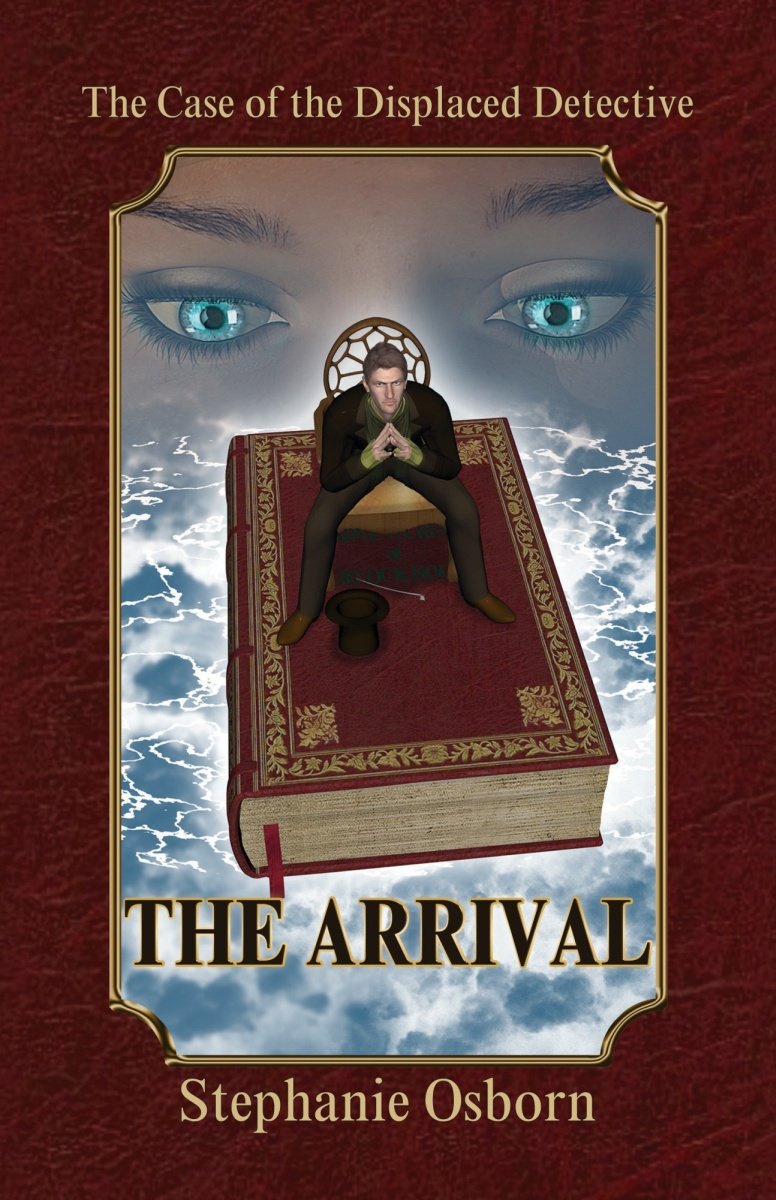
Book 1 of the series, The Case of the Displaced Detective: The Arrival, is currently on sale in ebook
formats for $0.99.
Books 2-4 of the series are also discounted.


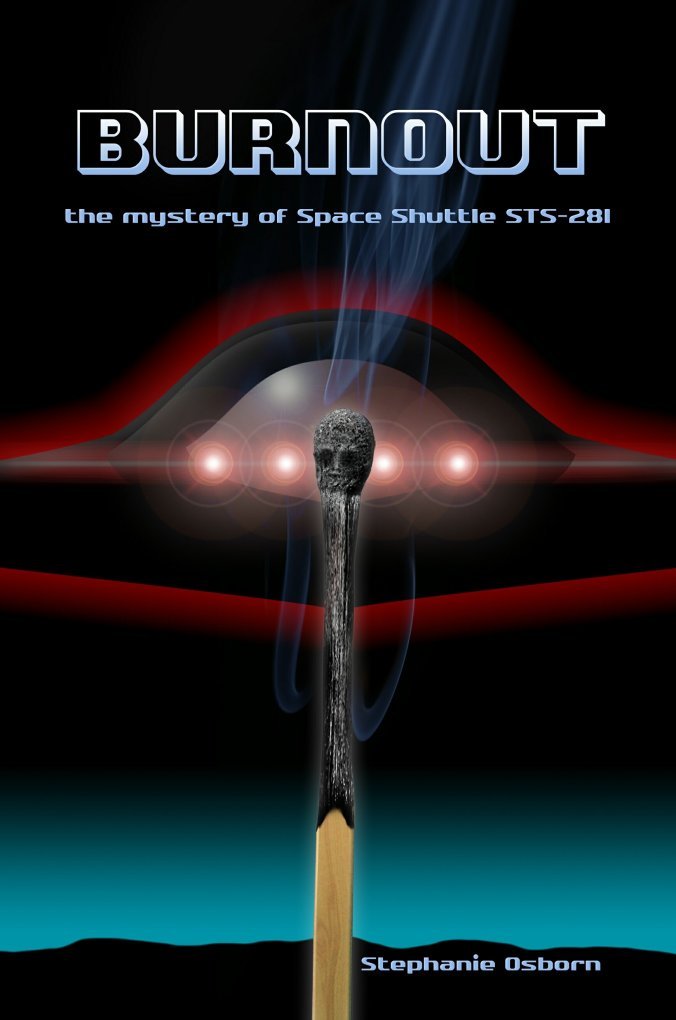
My very first novel, Burnout: The mystery of Space Shuttle STS-281, which eerily predicted the Columbia disaster (being written, though not published, before that disaster), is also on sale in ebook formats for $0.99.


Monday, November 10, 2014

Interlude: Burnout: The mystery of Space Shuttle STS-281, by Stephanie Osborn

by Stephanie Osborn
http://www.stephanie-osborn.com

How do you react when you discover that the next Shuttle disaster has happened...
...right on schedule?

Burnout is a science fiction mystery about a Space Shuttle disaster that turns out to be no accident. As the true scope of the disaster is gradually uncovered by the principal investigators, "Crash" Murphy and Dr. Mike Anders, they find themselves running for their lives, as lovers, friends and coworkers involved in the investigation perish around them. What happened to the Shuttle? Who is responsible and why? Why is the government calling it an accident? Why is someone willing to kill to keep it a secret? And how big is the conspiracy?

They say, "Write what you know," and I did. I finished the first draft and gave it to my writing mentor, Travis S. Taylor...and then Columbia went down. And I found that I pretty much nailed it in my fictional disaster scenario: orbital inclination, incoming trajectory, overflown states, intended approach to the Cape, region of breakup, debris field, I nailed it all. The only difference was a slight extension of the debris field into the Gulf of Mexico off the Texas coast, and this was due to the fact that my fictional scenario was no accident.

And right now, Burnout is on sale in all ebook formats! More, if you buy the print book at Amazon, for a limited time you can get the ebook too, for only $0.99! 

Why is this happening, you may ask? Simple. The December issue of Analog magazine, on store shelves right now, carries an article I co-authored with my partners, detailing our SPEARED concept and materials research -- a concept that was inspired by the Columbia disaster, killing a friend of mine aboard her, and my having just completed the Burnout rough draft when the disaster occurred. 

So in honor of my friend Kalpana Chawla, and SPEARED, which I hope will prevent anyone else from dying like she did, Burnout is on sale until the end of November.

Here. Have a "taste."

~~~


...Overhead, the sky was a deep, rich, star-spangled Prussian blue; along the western horizon could be seen the faintest hint of deep teal. “Lessee…” he glanced at the TV, to the ground track Mission Control was displaying on the big front screen, then looked at the night sky, trying to correlate the two. “She oughta show up… somewhere over in there.” He waved a hand heavenward, in a vaguely northwestern direction.

Conversation in the back yard of the ranch house ceased as everyone clustered together in the darkness, searching the west-northwestern sky. The only artificial illumination came from the TV screen, and the NASA Public Affairs Office Commentator could be heard in the background as he delivered general remarks about the landing.

“…and this is a somewhat unusual re-entry pattern over North America, due to the successful efforts to retrieve the multi-million-dollar Next Generation Tethered Satellite, dubbed NexGen or NTS, which was co-manifested on STS-281 with the Mission to Planet Earth payload, Gaia-1. This nighttime landing will make for spectacular observations by residents of California, Nevada, southern Utah, Arizona, New Mexico, and Texas. Coastal residents of the Gulf States may also be able to observe…”

“Hey, big brother,” Jimmy remarked curiously, “isn’t the commander of this flight an old friend of yours?”

“Yup,” Crash replied, still scanning the star-strewn, blue-black sky. “Lawrence Jackson. Jet. He and I flew in the same squadron in ‘Nam. Been buddies ever since. There’s almost nothing we wouldn’t do for each other—except give up a slot in the astronaut corps.” Crash pulled a wry face.

“Yeah, that’s right,” Ham Carter remembered. “He beat you out for the slot, didn’t he?”

“Uh-huh, he did—only because Jackson comes before Murphy in the alphabet.”

“Look! There it is!” Sally exclaimed, pointing into the western sky, and all but jumping up and down. “Crash! Isn’t that it?” she urged her brother-in-law.

“Yeah, Sally, I—” Crash did a double take and surveyed the blazing spark as it shot through the black velvet sky, then gave a swift glance at Hamilton Carter. “Ham, have they got a re-entry DTO on this flight?”

“No, Crash—I see it, too,” Ham acknowledged, forehead creasing with worry. “Listen… can I use—”

“Cell phone right here,” Crash scooped the instrument off the corner of the picnic table and shoved it into Carter’s hands as he looked back up. “Damn, Jet, get it in gear, old buddy!” he exclaimed with increasing concern.

“What’s wrong, Crash? What’s happening?” Jimmy asked his suddenly worried brother, as the flaming speck, growing larger and larger, flew almost straight overhead. Smaller sparks could now be seen peeling off the main object.

“Dammit! Jet, flare out, man! Shit! Break it out! NOW!!” Crash began shouting into the sky. Tracy, the “fourth team” relief FAO, was frozen, staring upward in shock, and Ham stood stiffly, head tilted back, listening to the cell phone he held to his ear. They all watched dumbly as the white-hot streak shot by overhead and disappeared behind the house, trailing flaming sparks in its wake.

Crash ran around the house to the front, trying to keep the airborne conflagration in view, and the others followed. “Damn, Jimmy, she’s comin’ in hot,” he belatedly answered his little brother. “Jet’s not bleeding off velocity in the roll reversals like he’s supposed to…” Crash paused, horrified. “Not that it looks like it would do much good, anyway…”

The gathered celebrants watched in stunned disbelief as the fireball plunged toward the southeastern horizon, flickered, and burned out.

~~~

Interested? Have a go at it on Amazon, then! (Here's Barnes-Noble and Books-A-Million too, if you'd rather.) Remember, I spent over two decades working in the civilian (NASA) and military (DoD) space programs, and put my knowledge to good use in this book. 

Happy Holidays!

-Stephanie Osborn
http://www.stephanie-osborn.com

Wednesday, October 15, 2014

Elements of Modern Storytellling: Character Development, by Stephanie Osborn

by Stephanie Osborn
http://www.stephanie-osborn.com

I suppose it's time for me to take my own turn on this topic. I've got quite a few books out there by now, with more coming, and I do have a great deal of fun playing in all these different worlds. The feedback I get from fans is amusing and thought-provoking by turns.

For instance, many people tend to actually forget that my version of Sherlock Holmes (as found in the Displaced Detective Series) is not a real person (at least in our continuum!). A couple of years back, right after the horrific movie theater shooting in Boulder, CO, one fan sent me an email (which seems to be the preferred form of fan letter these days). You see, the shooter's name was John Holmes, and she started off wanting to know if he was perchance kin to Sherlock, and if Sherlock was upset about having such a villainous deed in the family, or at least with the same name. She caught herself partway through, evidently, and modified the letter such that she wished she could ask him those things, but it was obvious that Holmes and Chadwick were real people to her.

Another, more recent, fan letter is one I excerpt for publicity purposes, with permission; it was simply that good. 


"It's like you took Holmes out from under a dusty glass dome in a shadowy Victorian parlor crammed with momentos[sic] and knick-knacks and gave him a new lease on life. Skye is cool too and their relationship helps make the multiverse a less lonely place."
~~Esther Willson, reader

And that was my purpose. While Holmes was so real during the time of Sir Arthur Conan Doyle that, when The Final Problem was published, Victorian men and women went into mourning, over the years since, Holmes has become something of a stereotype, I'm afraid. You can go almost anywhere in the world and show someone a silhouette of a man with a hawk nose, a pipe, and a double-brimmed cap, and s/he will respond, "Sherlock Holmes!" I wanted to lift him from that stereotype, to make him live and breathe and feel and think again, for modern readers. (And yes, I did it well before either the BBC or CBS series, or the Guy Ritchie/Robert Downey Jr. film franchise.)

Now, as to how I build my characters, it's actually fairly simple. The great actor and portrayer of Holmes, Jeremy Brett, was fond of referring to his process of disappearing into the character as "becoming." And as I've trod the boards of the stage some little bit myself, and use a similar technique, so I modified it for use in my writing. I search within myself, my personality, for some facet that fits the type of character I am looking to create. Then I use that facet as the foundation for the character, and begin to add to it. A quirk here, an eccentricity there, a flaw, a virtue, on and on. I weight the types of "bricks" according to what sort of character I'm building: a villain will have more flaws than virtues, and a hero vice versa. Experiences in their backgrounds (and yes, I tend to fully flesh out their personal histories, even if I never use them, at least for main characters -- because you never know when something in that history will be useful in a future book) may be imagined, or may be pulled from my own experience and modified, as appropriate. Intellect, etiquette, education, family, all are taken into consideration. And by the time I'm done, I have a character. 

But the character isn't really fully developed until I write him/her. There's something about recording a character's behavior that brings it alive in the mind's eye.


Now, you'll notice that I draw a lot on myself. But I should note that that's how I relate to the characters, just as we usually make friends of people that have something in common with ourselves. Even Holmes, who was created by a man who lived and died long before I was born -- because I recognize facets of myself, my psyche, the way I think, in the great detective. Pecadilloes we share, and the like. And I think this is what enables me to render him as a living, breathing human. It can be useful, in the circumstances, to simply think, "What would I do in this situation?"


"In this case the matter was simplified by Brunton's intelligence being quite first-rate, so that it was unnecessary to make any allowance for the personal equation, as the astronomers have dubbed it."~~Sherlock Holmes, The Musgrave Ritual

And so it is. Not that I mean it in an egotistical fashion; rather, I am trying to say that an ability to relate to the character in some way better enables me to adjudge what that character would do, say, or think.

I find it interesting to note that I have been accused of writing a "Mary Sue" in the character of Dr. Skye Chadwick. But in point of fact I drew no more on myself for her than I did for Holmes, and no one has ever called Holmes my Mary Sue. (It could be argued, in any case, that Watson was Doyle's "Mary Sue," if one really wanted to go there.) 

If there were ever a Mary Sue for me in my writing, it would have to be in my very first book, Burnout: The mystery of Space Shuttle STS-281. This book has two main characters, "Crash" Murphy and Mike Anders. Crash is a retired NASA flight controller turned author, and Mike is an astronomer. Sound familiar? It should, if you've read my bio. In fact if you were to take these two characters, merge them into one, and flip the gender, you would have a very close approximation to myself, saving only Crash's military experience. And in this case it was quite deliberate. That book hits very close to home for me in many respects, and even more so after the Columbia disaster occurred. Why should anyone be surprised to find that I based the main characters upon myself?

They grew beyond that, of course. I think if you are a halfway decent writer and have done your proper work, then that will happen. And at some point they become real to me, so real that it might as well be that they exist in another spacetime continuum. And for all I know, they do. 

So when I come back to a new book in the series, it's like going to visit an old friend. I delight in it, and hate it when I finish the book -- because that means the current visit has ended, and I have to go home. 

If I've done my job properly, when you read it, you'll feel the same way.

-Stephanie Osborn
http://www.stephanie-osborn.com

Wednesday, March 12, 2014

Elements of Modern Storytelling: Romance

by Stephanie Osborn
http://www.stephanie-osborn.com

Last week I promised you a new series of blogs, to include many guest authors, on The Elements of Modern Storytelling. This week we start the first element, which I have chosen to be Romance. The plan is for me to lead off each new element with my own blog post, followed by views from other authors. Some elements may have more posts, some less, depending entirely on the inspiration of my guest authors, and it's entirely possible that my own schedule could get wonky, in which case someone else may lead off on an element. But that's the plan. And we all know that a good plan never survives first engagement with the enemy (Time, in this case), so we'll see. Anyway. On to the disccussion.

~~~


I write, as most of you know, principally science fiction mysteries. It's a deliberate cross-genre blend. But I also usually have some element of romance in my stories as well. I even (GASP!) allowed Sherlock Holmes to fall in love in my Displaced Detective series. That in itself has created a lot of stir. And a significant number of science fiction fans (mostly male per my observations, interestingly enough) think that romance has no place in sci-fi.

I beg to differ.

Few things are so revealing of one's character as one's behavior when falling, or fully, in love. This is as true in real life as it is in fiction. Granted, it is possible for some to hide their true natures; it's why people get immersed into a relationship only to discover that the partner is abusive, and the like. But in general, I think it's so. When we were dating, my funny, impetuous, spontaneous now-husband grew a serious, gentle side, a courtly side, and he's never lost those things. Meanwhile, curious, serious, reserved me, always with a plan, discovered that spontaneity could be fun. We learned something new about ourselves. It wasn't so much that those things were never in us to begin with as it was that each helped the other discover it in themselves.

This is why I use romance as a tool in my writer's kit. Romance enables me to more fully flesh out the character. To me, it is one of the things that helps bring a character to life in the mind of the reader. And if you'll recall some of my recent posts, that's my ultimate goal in creating a character: bringing him/her/it to life in your imagination. I used it on both protagonists in Burnout: The mystery of Space Shuttle STS-281, in different ways, to pretty good effect, I think.

So if watching the internal struggle, the anxieties, fears, joys and triumphs of a person in love cannot bring that character to life in the reader's mind, frankly, nothing can. It is a microcosm of life.

Okay, fine, so why the [expletive redacted] did you make Sherlock Holmes, of all people, fall in love?

Well, I didn't. That was sort of his idea. And once he explained it to me, it made sense. He's also stubborn enough to insist on it anyway, whether I liked it or not -- which he did, but initially I didn't.

[See, the characters, on some level, become real to me, too. I have yet to decide if the theory of alternate universes where literary characters exist as actual people might be real, or not. But sometimes it surely seems as if the ideas come from somewhere Out There.]

Now, I'll admit that I deliberately challenged him with a brilliant, genius-intellect modern woman. Mostly because I wanted to see if this was a stressor to him. The whole point behind the first Displaced Detective story (which takes place across two volumes, The Case of the Displaced Detective: The Arrival and The Case of the Displaced Detective: At Speed) was to take the great intelligence of the Great Detective, along with all his imagination, creativity, strengths, foibles, preconceptions, and faults, and plop him down in a situation that was so outre that a lesser man would have gone mad. And then I wanted to see what he'd do. This was an experiment on my part, because I didn't have any particular clear plan for what would happen, save that I knew major plot events and I knew who the antagonists were. I set the initial conditions and let it run, following what was in character for the various personae dramatis.

There is also one other thing that I added to the mix as a running theme, and that was the concept of parallelism. If we are going to discuss parallel worlds, universes, then we might as well look at how they are similar -- or not -- across multiple continua. And so I introduced the idea that there were parallels to Holmes' native continuum in Skye Chadwick's, and one of those...was her.

You see, in her own continuum, the one to which Holmes moves, at least until his advent she WAS him. She was her world's Sherlock Holmes. Only, just as other, more direct, versions of Holmes didn't all become detectives (this is mentioned in some of the later books, which haven't come out yet), so too did Chadwick fall into another field of endeavor, namely hyperspatial physics. She is (in her universe) to hyperspatial physics what Albert Einstein was to relativity. (No, not really another parallel. Just a metaphor.)

Well, I mean really. Holmes has been accused of being narcissistic. So doesn't it stand to reason that, when presented with a version of himself in reasonably attractive female form, he might fall? Especially if he's in a highly charged emotional situation such as being yanked to a freakin' different spacetime? He thought so, and when once he had laid out his logic, I did, too.

"I have never loved, Watson, but if I did and if the woman I loved had met such an end, I might act even as our lawless lion-hunter has done."
~Sherlock Holmes, The Adventure of the Devil's Foot

Right here, in Arthur Conan Doyle's own story, he admits that he knows his own emotions would be powerful, in the circumstance. So what if...?

And once again, romance proved a useful tool. Because we -- "we" being Holmes and me -- were able to demonstrate that the great intellect still functions well even through the throes of a tumultuous beginning love affair. And, that relationship having been firmly established, he reverts even more to the Victorian gentleman he always was. And Doyle was right -- the powerful intellect has powerful emotions, even if he does keep them largely hidden from the rest of the world. ("Still waters run deep," and all that.) And such a relationship is capable of being to him the distraction, the divertissement, that an active mind sometimes needs to be able to see the forest through the trees.

I always knew Holmes was a strong character. My intent was to make Chadwick a strong character as well, a strong woman to Holmes' strong man, an equal. How much the more, then, when they have formed such a strong attachment to one another, yet each must still let the other go marching into danger? I've found the arrangement to be ripe for displaying their strengths and weaknesses.

I think it is, also, one of the reasons why the series has a strong fan following.

Romance. It's good for way more than just a fling.

~~~

Next week, Christine Amsden's take on The Elements of Modern Storytelling: Romance.

-Stephanie Osborn
http://www.stephanie-osborn.com

Wednesday, January 8, 2014

Taking a short break

by Stephanie Osborn
http://www.stephanie-osborn.com

Hi guys! I'm sorry to disappoint you today, but I've just come off a very busy holiday season, I'm working on three different books, and I just haven't had a chance to devote time and grey matter to a blog article for today.

We have family scattered over three states, and everybody does stuff at different times, beginning at Thanksgiving. See, there's my in-laws, who do lunch. My family, who does dinner. Oh, and my sister's birthday is Thanksgiving weekend, so we have to celebrate her birthday while everyone's in one spot. And traditionally we all decorate my parents' Christmas tree too, because again, all in one spot. All that makes for one very long, very eventful, very fun day.

Plus my husband, graphic artist and award-winning magician Darrell Osborn, scheduled several really cool shows for us to attend -- such as the Radio City Christmas Spectacular at the Opryhouse in Nashville TN. And the Mythbusters Behind the Myths Tour.

So we did a lot -- a LOT -- of traveling. Pretty much all day trips, but still. It was a good holiday season.

Meanwhile, I'm working on, like I said, three different books. Four really, if you count the one I'm editing. Okay, there's five I really need to work on. Six, if you count the one that's at the publisher's editor right now. (Yeah, I am a busy little -- LOOK! SQUIRREL!)

I'm working on the Cresperian Saga book #4, which will be titled Heritage. I've kind of decided that, well, I'm already the THIRD author to have worked on the series, maybe it should be one of those "shared universes" things, like the 1632 Series (into which I've been invited to venture, by the by, just as soon as I can dig out from under). So I've invited another author to come in and co-author with me, and he's agreed. More about that at a later date, but it'll be fun, and it'll help provide my co-author with some good experience and training, and most importantly we will get the current Cresperian War story arc tied up. I don't plan on closing off the book with a hard series ending, because I think this might be a fun series, like I said, to be a shared universe, and just maybe my co-author and others might want to kick up their heels in it.

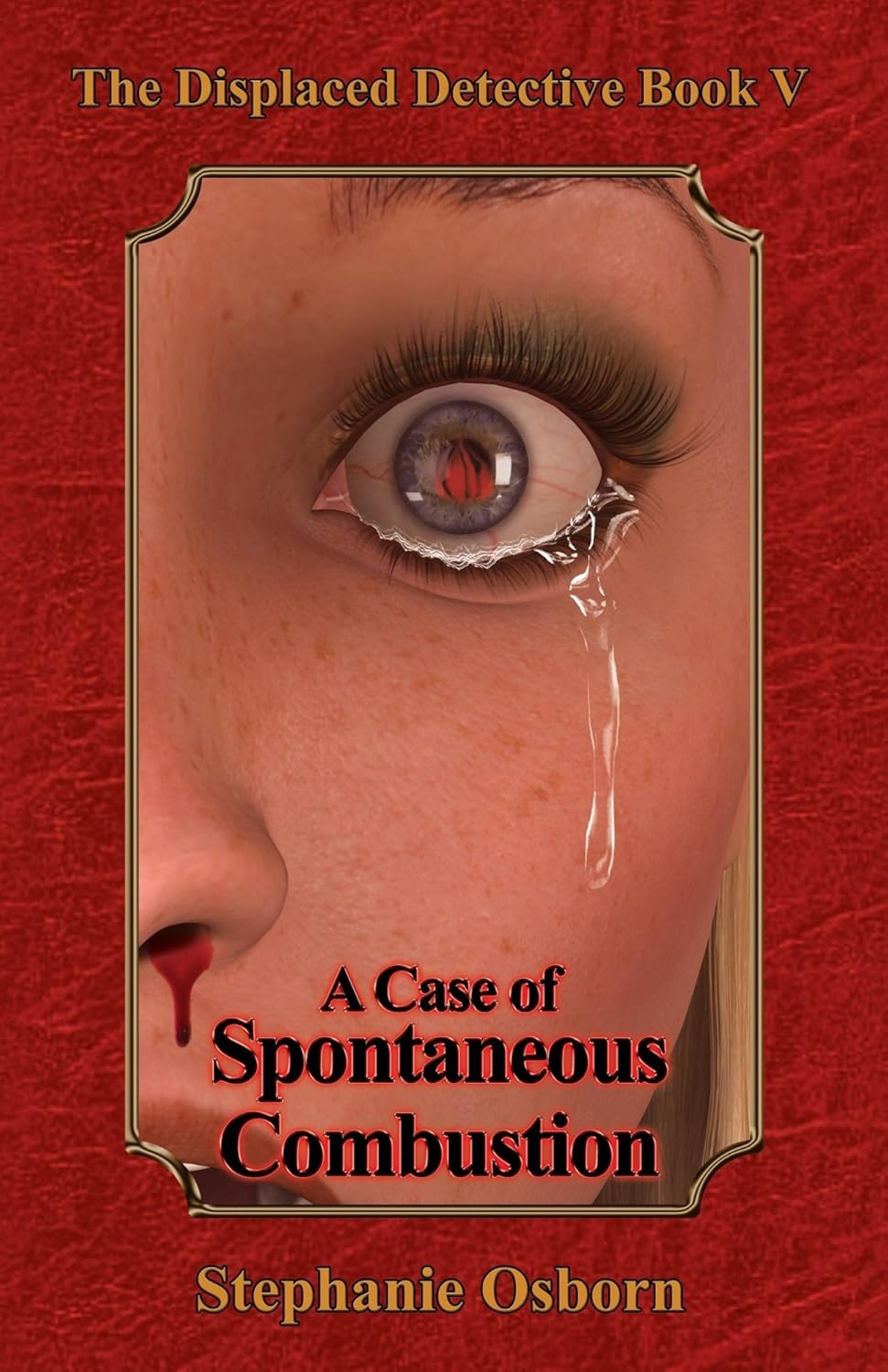
The book at the publisher's editor is the fifth Displaced Detective book, entitled A Case of Spontaneous Combustion. I swear to you that the story is contained in one volume this time! I'm currently waiting for edits to come back from the publisher, then I'll have to review them and incorporate them. The core of the mystery involves a tiny village in England, on the Salisbury Plain, which is wiped out in an apparent mass spontaneous combustion. Holmes is, naturally, brought in to investigate, and hijinks ensue.

I'm writing book 6 in the same series, and it's going to be called Fear in the French Quarter. I'd had an idea for a story in the series, but I was going to set it in a castle in Europe someplace, much later on in the series sequence. But back in October I was a special guest at a science fiction convention in greater New Orleans, called CONtraflow. It was HUGE fun, made more so by getting to play tourist while we were there. I got to try alligator (I love it!) and visit Cafe du Monde, and prowl the French Quarter with friends (one of which had been a Tulane student, so knew the area well), and generally enjoy myself. (I already knew I liked crawdads, gumbo, jumbalaya, and beignets.) So I'm walking through the French Quarter at night and suddenly in my head I start hearing Holmes and Skye talking, making comments about the place, and I realize they're having their own adventure -- someplace out there in the multiverse where they exist and are real!

I started writing that story the next day.

It's already completely plotted out; I just need to get it into the computer in readable form. It's basically a ghost story -- since NOLA is rumored to be the most haunted city in the world, it seemed an even more natural setting than an ancient castle, for that sort of thing.

Book 7 in that same series was originally going to be book 6, until the plot bunny of Fear in the French Quarter hit. So I just slid it on back -- it works even better that way, I think -- and so I've started A Little Matter of Earthquakes. Actually had started it early in 2013, but I'm still working on the science to make the central concept doable, aided by my friend and grad school mate, physicist Dr. James K. Woosley. (He makes a great partner to brainstorm scientific concepts, being a huge SF fan himself.) So sliding it back a bit, like I said, works well, not only in terms of my work load, but in terms of the flow from book to book of the series. What's it about? Eh, just what it sounds like: seismic activity is ramping up in the Pacific Northwest. The problem is that it's even occurring in places that, geologically speaking, it shouldn't. When an old friend of Skye's from their graduate school days is killed in a phreatic eruption, the Holmeses attend the funeral, and discover the unusual nature of the seismic activity.

And Book 8 is that book I told you I was editing on, but haven't submitted yet. The Adventure of Shining Mountain Lodge was written before I even finished Book 5, but it requires some building of history among the characters. It's finished, I just have to tweak it periodically to account for things that get included in 5, 6, and 7. A wetback is found in the middle of a snowdrift in January in Rocky Mountain National Park, half-starved, barely dressed, filthy and battered...and dies almost before they can get him to the hospital. Of radiation exposure.

The book that I need to be working on is the sequel to Burnout: The mystery of Space Shuttle STS-281. It's in work...slowly. It's called Escape Velocity. And it picks up pretty much where Burnout left off.

But you're going to have to be very very patient with me for this one. It took me over a decade just to write Burnout, because it hit so close to home. I spent over two decades working console for space missions of one sort or another, much of it for Shuttle and Station, and my main focus was getting the science while protecting the astronauts. When I lost a friend aboard the Columbia disaster, it devastated me. It was all I could do to keep working on Burnout. It was written, but it needed polishing, see. And I find that Escape Velocity is just as hard to write, and for the same reasons. So it comes in fits and spurts. I plan to try to get it completed in 2014 though. Because I've also developed a concept that my partners and I believe will ensure that no one else has to die like KC did.

I'll tell you about SPEARED next week, if y'all are interested.


-Stephanie Osborn
http://www.stephanie-osborn.com

Wednesday, December 4, 2013

Book Excerpt: The Fetish

I thought I'd give my fans a taste of what I have available that they might not know about, for the next few weeks. The Fetish is a short story set in the same universe as Burnout: The mystery of Space Shuttle STS-281. Those who have read that book may recall that Dr. Mike Anders purchased a little lapis spaceman fetish as a necklace at a Native American trading post; The Fetish is the story of how that object came to exist. I am also proud to say that it was an EPIC Award Finalist. There's a good deal of Native American lore in it, and some might consider it a fantasy, but it is indeed science fiction. Here's an excerpt; hope you enjoy it!

-Stephanie Osborn
http://www.stephanie-osborn.com

~~~

The Zuni youth, barely in his teens, listened carefully to his medicine man ― a lone Zuni priest, something of a rarity for the Zuni ― as he prepared to set out upon his journey.

“This is the time,” James Running Horse told his pupil. “It is midsummer, when the Twins come to the mountaintops. Yes, the Twins,” he nodded, seeing young Vernon White Owl opening his mouth to speak. “The Beloved Two. If you are to continue being my apprentice, you must have their approval first. Only then will you truly become my son and heir, and all my secrets will be given to you.”

“But how will I know them?” Vernon asked, worried.

“You will know them,” James said, firm but gentle. “They are like none you have ever seen before.”

“None?”

“Look.” James swept his arm across the vertical rock wall of the canyon in which they camped. “Study these drawings. The drawings of the Ancient Ones, the Anasazi. They have faded much in just the years I have known them; they must have been beautiful, detailed things when first they were made. But if you keep them in memory, you will know the Beloved Twins when you see them.”

Vernon stared at the ancient paintings, trying to affix their details in his memory. All were tall; some had broad bodies, others narrow. All had two protrusions, like insect antennae, or fox ears, or mushrooms, on the top of the head. They all had two prominent arms, but not all appeared to have feet. Some seemed to have tails like snakes instead. In their current condition, and to Vernon's untrained eye, it was impossible to tell whether they were coming or going, although none of them were painted in profile. He returned his attention to his teacher.

“What if they don't come?” he continued his anxious train of thought.

“...They will come.” But Vernon had caught the hesitation, the uncertainty in his master's voice.

“Will they both come?” Vernon wondered. “Ahaiyuta and Matsailema?”

“Not necessarily,” James murmured, as at last the hint of a smile came to his tanned, wizened face. “They are busy, and they often follow the starry entrails of Atahsaia across the sky, the grey, ugly demon who once ate our people, to ensure that he does not somehow regenerate. They protect us still.”

“From what?”

A full smile finally cracked the dark, weathered skin. “Ah, that is what you are here to find out!” James said. “Now, you have been through the preparation, a special medicine preparation I have made sure was as complete as possible, and tomorrow is what the white men call the solstice. It is an important time ― a time of vision. You have a few hours before sundown; just sufficient to climb to the peak yonder.” He pointed at the mountaintop at the head of the canyon. “You are as ready as you will ever be, and as ready as I can make you. Go. I will await you here, however long it takes. You will know when your quest is ended.”

Vernon nodded. He stripped to his skin, leaving his clothing and shoes behind with his mentor, and set off alone toward the peak. The only thing he carried was his whittling knife, on a thong around his
neck.
 
* * *

That night, Vernon was exceedingly glad that it was the summer solstice, for the wind on the mountain peak was chilly even so. He found the small cave, really little more than a notch in the peak, that the vision questers of his people had used for generations, and settled in for the night, although he had his doubts that he would be able to sleep. It had been a long walk, and the last hundred yards of the climb had been arduous; he was sweating profusely, and very tired. Nevertheless, he was growing cold as the sweat on his skin chilled in the breeze. He huddled near the back of the cave and tried to stay out of the wind, knowing he was going to be even more miserable very soon.

Eventually, in the arid air of the high desert, his bare skin dried, and he felt somewhat warmer, although, he decided, that was relative. The sky was crystal clear, a deep blue so dark that it was almost, but not quite, black, and millions of diamonds twinkled across it. But he knew that beautiful, clear skies meant colder nights. He curled himself into a tight ball against the rock, thankful for the daytime heat that still radiated from its rough, sandy surface, and waited.

Sooner or later, he knew, I will sleep, or I will have a vision. Or both.

* * *
But he didn't sleep that night. He was too miserably cold, and the stone was too rough, and he was still too energetic and excited, despite the rigorous preparation Running Horse had put him through.

Long, horrid hours later, the sun rose red over the reddish-orange sandstone rocks, making the whole world around him look like it had been bathed in blood. As soon as it did, the temperatures began to rise, and Vernon spent an hour or so in relative comfort ― except for his empty belly and dry throat. But before the sun was halfway up the sky, Vernon was beginning to sweat again. Somewhere in the distance, the call of a golden eagle echoed among the standing stones and canyons, and Vernon shielded his eyes with his hand and looked for it, finally spotting it far away, near the mouth of the canyon where he had been the day before, where his mentor, Running Horse, still camped in wait.

“That is good,” he decided. “We are guarded even here. The white men cannot find me and take me back to the boarding school.”

~~~

Thus begins The Fetish. If you are interested in reading more, The Fetish can be purchased here (for Kindle) or here (other formats).

Have fun reading!

-Stephanie Osborn
http://www.stephanie-osborn.com

Friday, November 22, 2013

Fantastic Blog Hop!

I'm joining the Fantastic Blog Hop! The Cereal Authors group is doing a blog hop, with events and giveaways on Facebook at the Fantastic Blog Party! The party runs today and tomorrow, and we're supposed to answer some trivia questions about ourselves, so hang on!

-Stephanie Osborn
http://www.stephanie-osborn.com

Name a famous author you've met, nearly met or wish you'd met.
   I met Ray Bradbury briefly at the World Science Fiction Convention in Atlanta in 1986. I had just bought a large plush stegosaurus in the dealer’s room and was carrying it under one arm through the room, when Mr. Bradbury, with his handler, came down the aisle from the other direction. He halted his handler in mid-sentence, left his side and made a beeline for me, when he started petting my stuffed dinosaur and discussing the creatures with me! Turns out he loved dinos. It was very cool.
   At that time, I wasn’t a writer. Since becoming a writer, I’ve met numerous authors, including New York Times bestsellers, like Jerry Pournelle, Larry Niven, Larry Correia, Eric Flint, John Ringo, Travis S. Taylor, Sarah Hoyt, and more.

What are the weirdest things a character ever did in a book?
   Oh me. I suppose it depends on your definition of weird. I write science fiction; in the regular world, most of it would be weird!
   Falling in love with and marrying an alien, maybe? That happened several times in the Cresperian Saga
   Then there’s always deciding you’re going to infiltrate Area 51 while being a fugitive yourself, which happened in Burnout.

Who really wrote the book, you or your characters?
   Initially it was, more or less, the characters. It’s been said that I write very cinematically; well, that’s because I watch the events play out on this little screen inside my eyelids, and I just write down what I see, hear, and otherwise observe. But as I’ve gained more writing experience, I have gotten rather more control over the plot, at least. Now I tell the characters what I want them to do, and they tell me how they’d do it!

How many books have you started and how many have you finished?
   There isn’t a book that I’ve started that I haven’t finished, sooner or later. Some are currently in work; there’s 4 of those. There’s a couple of things that I wrote some years ago that are derivative works, and I’m dinking around with “filing off the serial numbers,” as Sarah Hoyt puts it, and making it fully my own original work. But I do that around working on other stuff, because I don’t know if it’ll work or not, so I don’t want to waste a bunch of time and energy on it, when I have other stuff I know I need to do.

What's the hardest part with writing: the writing of the story or the editing?
   Oh, the writing, by far. In general editing is fairly easy for me. I’ve done so much editing over the years – theses, government papers, reports, etc. – I actually free-lance as an editor and like it. I love writing too, but the creative energy that I have to pour into it renders it much harder than editing.

If one of your books could be made into a movie, which would you choose and who would you cast?
   Do I have to choose?
   Well, my first book, Burnout: The mystery of Space Shuttle STS-281, was a film in my head, no lie. And there have been numerous attempts to translate it to film, but so far it hasn’t gone through. We do keep trying.
   But when I first wrote it, I could see actors playing the roles. Tommy Lee Jones was Crash Murphy; Hugo Weaving was Dr. Michael Anders. Hugh Jackman was Steve Blake, Harrison Ford was Jet Jackson, James Cromwell a NASA manager…on and on. I had every major character cast in my head. It’d never get made like that; too many stars, too many schedules to coordinate, too much money. But in my head, that’s what they look like.

How many books have you written in total?
   Well, back when I was first trying to get published, I wrote an entire series that was intended to become a movie-to-novel franchise. Unfortunately I was never able to sell it due to the issue of rights being tied up. I currently have 22 books (some contributions to anthologies and the like) in print, with a 23rd coming soon. If I add in that unpublished series and a few other novella-to-novel-length stories I wrote but never published, I’ve probably written close to 40 books.

Where did the last one take place?
   The one that’s just gone under contract is Displaced Detective book 5, A Case of Spontaneous Combustion, and it takes place in London. The one I’m working on now, Displaced Detective number 6, is called Fear in the French Quarter and takes place in New Orleans.
   Then there’s the sequel to Burnout, called Escape Velocity. It, like its predecessor, roams over half the planet.
   And the fourth Cresperian Saga book, Heritage, takes place partly on Earth, partly in space, and partly in the Cresperian system.

Besides writing, what’s your favorite hobby?
   Oh um, that’s a hard one. I read – a LOT – and I like to shop. I like researching stuff – yeah, I really do. I can lose hours to the search for information, learning new stuff the whole time. But then, what does one expect of a scientist, I suppose. I used to do a good bit of live theatre, but that requires a bigger block of time than I have to give these days. Still, it’s how I met my husband: we both auditioned for and were cast in a play in college.

What is your genre?
   Well, I tend to cross genres a lot.  Science fiction mystery, for the most part, I’d say. I usually throw in some romance (because romance occurs in real life – people do fall in love, and I want my characters to be as realistic as possible), and a judicious dash of suspense/thriller.

What’s your Country of Origin?
   Born and reared in the good ol’ USA.

What are the names of your two leads?
   For which books?

   For Burnout, it’s “Crash” Murphy and Mike Anders. For the Point series, it’s Ray and Samantha Brady. For the Cresperian Saga, it changes from book to book. For the Displaced Detective series, it’s Sherlock Holmes and Skye Chadwick.

Don't forget to stop by The Fantastic Blog Party and enter to win a free book!

-Stephanie Osborn
http://www.stephanie-osborn.com

Monday, March 4, 2013

Remembrance: Columbia (Part 2)

by Stephanie Osborn


It is perhaps best if I simply let the timeline of the catastrophe speak for itself. Due to my familiarity with the subject, one of the crewmembers, and the bird itself, perhaps my readers will forgive me if I pull from the Wikipedia article on the matter [http://en.wikipedia.org/wiki/Columbia_disaster]. Having read the CAIB (Columbia Accident Investigation Board) Report in some detail, I find it to be accurate in the essentials.

~~~

The following is a timeline of Columbia's re-entry. The shuttle was scheduled to land at 9:16 a.m. EST.

2:30 a.m. EST, February 1, 2003 – The Entry Flight Control Team began duty in the Mission Control Center.

The Flight Control Team had not been working on any issues or problems related to the planned de-orbit and re-entry of Columbia. In particular, the team had indicated no concerns about the debris impact to the left wing during ascent, and treated the re-entry like any other. The team worked through the de-orbit preparation checklist and re-entry checklist procedures. Weather forecasters, with the help of pilots in the Shuttle Training Aircraft, evaluated landing-site weather conditions at the Kennedy Space Center.

8:00 – Mission Control Center Entry Flight Director LeRoy Cain polled the Mission Control room for a GO/NO-GO decision for the de-orbit burn.

All weather observations and forecasts were within guidelines set by the flight rules, and all systems were normal.

8:10 – The Capsule Communicator (CAPCOM) notified the crew that they were GO for de-orbit burn.

8:15:30 (EI-1719) – Husband and McCool executed the de-orbit burn using Columbia’s two Orbital Maneuvering System engines.

The Orbiter was upside down and tail-first over the Indian Ocean at an altitude of 175 miles (282 km) when the burn was executed. The de-orbit maneuver was performed on the 255th orbit, and the 2-minute, 38-second burn slowed the Orbiter from 17,500 miles per hour (7.8 km/s) to begin her re-entry into the atmosphere. During the de-orbit burn, the crew felt about 10% of the effects of gravity. There were no problems during the burn, after which Husband maneuvered Columbia into a right-side-up, forward-facing position, with the Orbiter's nose pitched up.

8:44:09 (EI+000) – Entry Interface (EI), arbitrarily defined as the point at which the Orbiter enters the discernible atmosphere at 400,000 feet (120 km; 76 mi), occurred over the Pacific Ocean.

As Columbia descended from outer space into the atmosphere, the heat produced by air molecules colliding with the Orbiter typically caused wing leading-edge temperatures to rise steadily, reaching an estimated 2,500 °F (1,370 °C) during the next six minutes. (As former Space Shuttle Program Manager Wayne Hale stated in a press briefing, about 90% of this heating is the result of compression of the atmospheric gas caused by the orbiter's supersonic flight, rather than the result of friction.)

Columbia at approximately 8:57. Debris is visible coming from the left wing (bottom).

8:48:39 (EI+270) – A sensor on the left wing leading edge spar showed strains higher than those seen on previous Columbia re-entries.

This was recorded only on the Modular Auxiliary Data System, which is similar in concept to a flight data recorder, and was not telemetered to ground controllers or displayed to the crew.

8:49:32 (EI+323) – Columbia executed a planned roll to the right. Speed: Mach 24.5.

Columbia began a banking turn to manage lift and therefore limit the Orbiter's rate of descent and heating.

8:50:53 (EI+404) – Columbia entered a 10-minute period of peak heating, during which the thermal stresses were at their maximum. Speed: Mach 24.1; altitude: 243,000 feet (74 km; 46 mi).

8:52:00 (EI+471) – Columbia was approximately 300 miles (480 km) west of the California coastline. The wing leading-edge temperatures usually reached 2,650 °F (1,450 °C) at this point.

8:53:26 (EI+557) – Columbia crossed the California coast west of Sacramento. Speed: Mach 23; altitude: 231,600 feet (70.6 km; 43.9 mi).

8:53:46 (EI+577) – Signs of debris being shed were sighted by people out to watch the re-entry. Speed: Mach 22.8; altitude: 230,200 feet (70.2 km; 43.6 mi).

The superheated air surrounding the Orbiter suddenly brightened, causing a streak in the Orbiter's luminescent trail that was quite noticeable in the pre-dawn skies over the West Coast. Observers witnessed another four similar events during the following 23 seconds. Dialogue on some of the amateur footage indicates the observers were aware of the abnormality of what they were filming.

8:54:24 (EI+615) – The Maintenance, Mechanical, and Crew Systems (MMACS) officer informed the Flight Director that four hydraulic sensors in the left wing were indicating "off-scale low." In Mission Control, re-entry had been proceeding normally up to this point.

"Off-scale low" is a reading that falls below the minimum capability of the sensor, and it usually indicates that the sensor has failed (stopped functioning, due to internal or external factors), rather than that the quantity it measures is actually below the sensor's minimum response value. The Entry Team continued to discuss the failed indicators.

8:54:25 (EI+616) – Columbia crossed from California into Nevada airspace. Speed: Mach 22.5; altitude: 227,400 feet (69.3 km; 43.1 mi).

Witnesses observed a bright flash at this point and 18 similar events in the next four minutes.

8:55:00 (EI+651) – Nearly 11 minutes after Columbia re-entered the atmosphere, wing leading-edge temperatures normally reached nearly 3,000 °F (1,650 °C).

8:55:32 (EI+683) – Columbia crossed from Nevada into Utah. Speed: Mach 21.8; altitude: 223,400 feet (68.1 km; 42.3 mi).

8:55:52 (EI+703) – Columbia crossed from Utah into Arizona.

8:56:30 (EI+741) – Columbia initiated a roll reversal, turning from right to left over Arizona.

8:56:45 (EI+756) – Columbia crossed from Arizona to New Mexico. Speed: Mach 20.9; altitude: 219,000 feet (67 km; 41 mi).

8:57:24 (EI+795) – Columbia passed just north of Albuquerque.

8:58:00 (EI+831) – At this point, wing leading-edge temperatures typically decreased to 2,880 °F (1,580 °C).

8:58:20 (EI+851) – Columbia crossed from New Mexico into Texas. Speed: Mach 19.5; altitude: 209,800 feet (63.9 km; 39.7 mi).

At about this time, the Orbiter shed a Thermal Protection System tile, the most westerly piece of debris that has been recovered. Searchers found the tile in a field in Littlefield, Texas, just northwest of Lubbock.

8:59:15 (EI+906) – MMACS informed the Flight Director that pressure readings had been lost on both left main landing-gear tires. The Flight Director then told the Capsule Communicator (CAPCOM) to let the crew know that Mission Control saw the messages and was evaluating the indications, and added that the Flight Control Team did not understand the crew's last transmission. [I believe that it was around this point that the pressurized landing-gear tires likely exploded from the heat. At the very least it would have torn a huge hole in the underbelly of the wing, if not outright sheared off a substantial portion thereof. Note that the next several entries occur in fractions of a second. --Osborn]

8:59:32 (EI+923) – A broken response from the mission commander was recorded: "Roger, uh, bu – [cut off in mid-word] ..." It was the last communication from the crew and the last telemetry signal received in Mission Control.

8:59:37 (EI+928) – Hydraulic pressure, which is required to move the flight control surfaces, was lost at approximately

8:59:37. At that time, the Master Alarm would have sounded for the loss of hydraulics, and the shuttle began to lose control, beginning to roll and yaw uncontrollably, and the crew would have become aware of the serious problem.

9:00:18 (EI+969) – Videos and eyewitness reports by observers on the ground in and near Dallas revealed that the Orbiter had disintegrated overhead, continuing to break up into more and smaller pieces, and leaving multiple contrails, as it continued eastward. In Mission Control, while the loss of signal was a cause for concern, there was no sign of any serious problem. Prior to orbiter breakup at 9:00:18, the Columbia cabin pressure was nominal and the crew was capable of conscious actions. The crew module remained mostly intact through the breakup, though it had lost enough structural integrity that it lost pressure, and was completely depressurized no later than 9:00:53.

9:00:57 (EI+1008) - The still intact crew module was seen breaking into small subcomponents. It disappeared from view at 9:01:10. The crew, if not already dead, were dead no later than this point. [I will take issue with this statement later. -Osborn]

9:05 – Residents of north central Texas, particularly near Tyler, reported a loud boom, a small concussion wave, smoke trails and debris in the clear skies above the counties east of Dallas.

9:12:39 (EI+1710) – After hearing of reports of the shuttle being seen to break apart, the NASA flight director declared a contingency (events leading to loss of the vehicle) and alerted search and rescue teams in the debris area. He made a call to the Ground Controller: "GC; flight, GC; flight. Lock the doors." Two minutes later Mission Control put contingency procedures into effect. Nobody was permitted to enter or leave the room, and flight controllers had to preserve all the mission data for later investigation.

~~~

The morning of the disaster was about 3 months after my husband had had emergency heart bypass surgery. It had been a grueling recovery for both of us, and I clearly recall that it was the weekend (I believe it was Saturday) and we had slept in. I got up, wandered into the den, grabbed the remote, and hit the power. The television came on to the last channel we'd watched – the Weather Channel – and even they were reporting that “...Space Shuttle Columbia is twelve minutes late exiting the re-entry comm blackout.” I knew what that meant; I worked too long on those birds – on THAT bird – not to. Twelve seconds...maybe. Twelve minutes, there was no doubt. I turned and yelled down the hall, “HONEY! Get in here! We've lost a Shuttle!”

In retrospect, probably not the wisest thing to do to a recovering heart patient.

But he survived. They didn't.

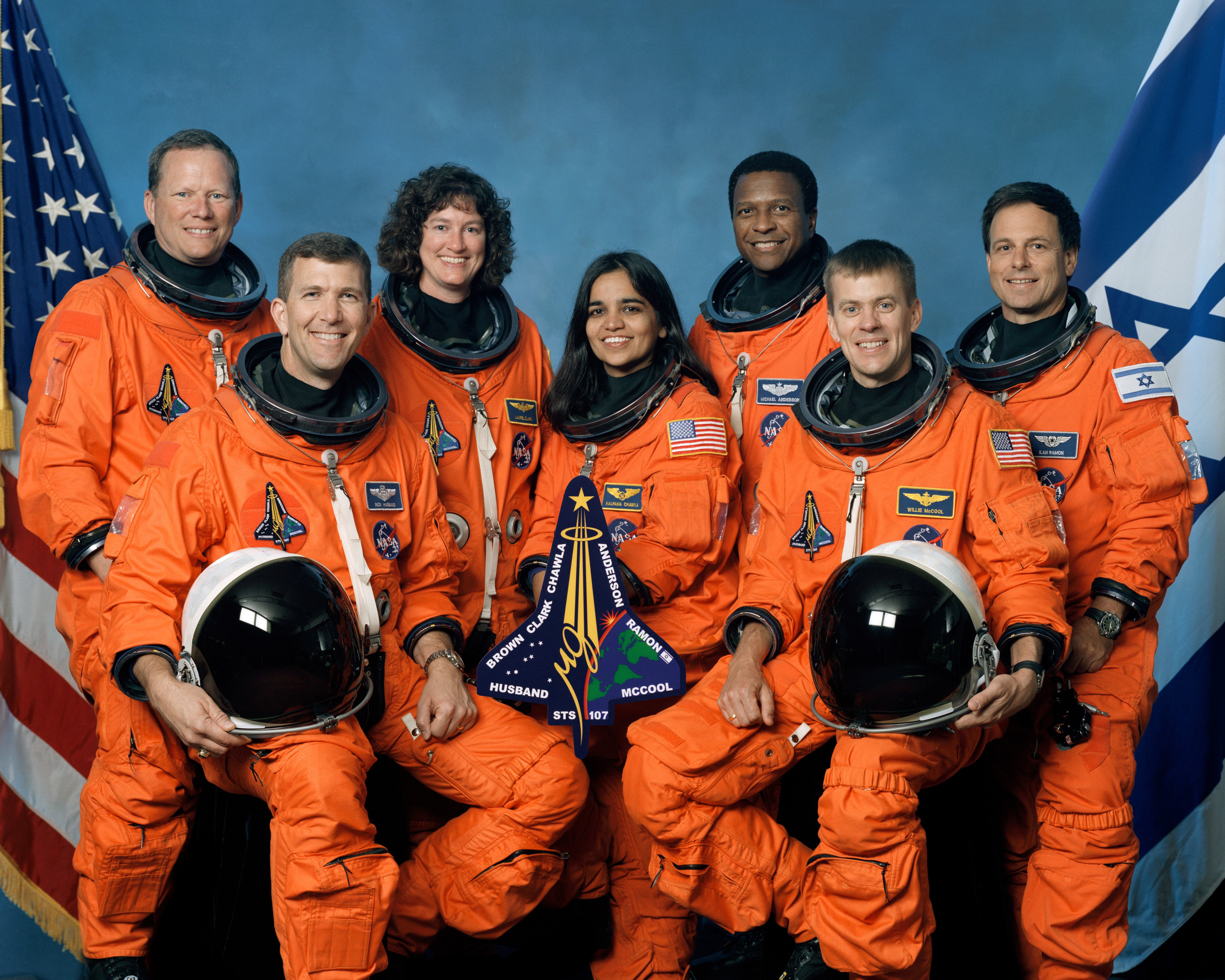
It was so very surreal for me, and still is. I worked with Columbia more than any other shuttle in the fleet. I had a friend on board her – I helped train Kalpana Chawla for her first mission, back in '97. I'd kept up with her, popping into the Astronaut Office to look for her whenever I was in Houston. We'd have a cup of coffee, sit down and catch up, laughing and chatting. But I was doing DOD work at that point, and had lost track of who was scheduled for which flights. It wasn't until my husband asked me if I'd known any of the crew that I thought to check. And I was horrified. KC had one of the widest smiles, the most cheerful demeanors, of anyone I have known, before or since. To think she went through that...it was, and is, hard for me to accept.

I'd written a book, entitled Burnout:The mystery of Space Shuttle STS-281. It was fiction, every bit of it. It was in the hands of my writing mentor, and later sometime co-author, Travis S. Taylor, to read and critique. He was going to help me polish it, then help me find a publisher. I'd researched using the information from the Challenger disaster, but decided to make it very obviously NOT that incident; I'd chosen a re-entry scenario instead. The disaster which now played out before my eyes was precisely what I'd written into the book. Travis had to talk me out of trashing it instead.

In the end, life went on for some of us. My book, and numerous more, have been published. In January 2012, I was invited to return to my undergraduate alma mater, Austin Peay State University, to help support the library and to give a talk and a book-signing. It was a messy, cold, stormy night with torrents of rain falling when I arrived at the location and began setting up. The Friends of the Library were setting up around me for a reception before the talk, when a gentleman showed up. In all honesty I cannot recall his name because what came next was very...I'm not sure the English language has the word for what I felt in those ensuing minutes.

Because he told me he had been one of the 3 field coroners for the Columbia disaster. He had come, partly to answer the questions I had about it that I'd never been able to answer, and partly to hear my perspective on it. He had copies of the autopsy reports which I was allowed to flip through – though I can't recall a word on any page. And he gave me the answer I didn't want to hear: my friend KC had been alive through the breakup – they all had. In fact, he told me, at least one crewman was found on the ground, body intact, death due to multiple blunt force traumas. He didn't say so outright, but I can interpret that – he died when he hit the ground.

A recent presentation I made on scientific and engineering work done since then included a summation of that chat. I was later gently challenged on the matter of the crew's deaths. This upset me because, unable to remember the man's name, I hadn't a way to verify his credentials. (If you're out there, mystery man, please contact me through this blog.) But today, as I refreshed my memory on the details of the catastrophe, I found a newspaper report that took its information from the final version of the CAIB report, and I quote:

The Working Group found no irregularities in its extensive review of all applicable medical records and crew health data. The Armed Forces Institute of Pathology and the Federal Bureau of Investigation conducted forensic analyses on the remains of the crew of Columbia after they were recovered. It was determined that the acceleration levels the crew module experienced prior to its catastrophic failure were not lethal. The death of the crew members was due to blunt trauma and hypoxia. The exact time of death - sometime after 9:00:19 a.m. Eastern Standard Time - cannot be determined because of the lack of direct physical or recorded evidence.” [http://www.spaceflightnow.com/columbia/report/030826crew/]

As a result of all this, some colleagues and I from SIGMA, the science fiction think tank [www.sigmaforum.org], are in process of developing a new system called SPEARED – Single Person Emergency Atmospheric Re-Entry Device. (This is the “scientific and engineering work” I mentioned earlier.) We have patents pending and hope that someday soon this new system will prevent deaths such as those aboard Columbia, and maybe even Challenger.

I'll keep you posted.


-Stephanie Osborn

Monday, February 25, 2013

Remembrance: Columbia (Part 1)

by Stephanie Osborn


You may remember that I started my career as a payload flight controller for first Shuttle, and then Station. And that I had a friend aboard Columbia during her final flight. For those who have read my all-too-painfully prescient book, Burnout: The mystery of Space Shuttle STS-281, you know I dedicated that book to my friend Kalpana Chawla, her crewmates, and all those who have died in pursuit of space. "Ad astra, per ardua." ("To the stars, through struggle/adversity.")

We've just passed through a period of time of which most people are unaware. You see, all of the major space disasters that America has experienced all occurred within a 2-3 week span on the calendar. And interestingly, they occurred in chronological order on the calendar.


Apollo 1 Fire - January 27

Space Shuttle Challenger disaster - January 28

Space Shuttle Columbia disaster - February 1


~~~

Columbia - What happened?


On February 1, 2003, space shuttle Columbia experienced a catastrophic malfunction during re-entry. This was a result of damage sustained during lift-off 17 days earlier, on 16 January. Debris – specifically, a briefcase-sized piece of insulating foam from the external tank (ET) penetrated the leading edge of the port wing, and gouged a groove the length of the wing, possibly dislodging and at least damaging the flashing surrounding the port landing gear, and driving part of the carbon-carbon composite heat shielding on the leading edge into the wing’s interior.

The combination resulted in softening the wing struts, shearing off the wing when hydraulic pressure failed, resulting in a loss of control.

The resulting total loss of aerodynamic stability as well as wing loss caused a failure of structural integrity of the vessel, which broke apart around the crew at ~Mach17 or higher.

Kalpana Chawla, my friend, was a crew member.

But why did all this happen? Why did the foam turn loose? How could FOAM damage the wing?

First of all, remember when we talked about the Challenger disaster, how the SRBs (solid rocket boosters) had to be cast in segments like concrete? It's sorta like that for the external tank, too. Oh, it doesn't have to be done in segments, but it's next to impossible not to, because the thing is so durn big. So you spray your container for as far as it'll go, then you get another and pick up where you left off. That still results in a kind of segmentation, because there's a slight discontinuity in the uniformity of the foam at the point where you stopped and switched to a fresh container. At that discontinuity, you can get tiny cracks, you can get bubbling, you can get ice crystal formation, especially given the ET's function of holding cryogenic fuels. Unfortunately there's just no other way to do it with current technology. And while it had been noticed in several previous Shuttle missions that bits of foam would spall, nothing serious had ever come of it.

Until Columbia's last voyage, of course.

So how the blazes (pardon the rather dark pun) did a hunk of foam do this?


The foam is largely composed of a variety of dichlorofluoroethane. That stuff has a density of 1.25g/cc at 20°C. For a suitcase-sized piece, we'll assume dimensions of roughly 3in x 12in x 15in – this just happens to be the size of one of my laptop cases, and a reasonable approximation. That translates to 7.62cm x 30.48cm x 38.10cm. This yields a volume of 8849cc. This gives a mass for that little chunk of foam of just a smidge over 11kg (24lb and change)! At the time it detached, the Shuttle was moving at a little under Mach 2.5, about 840m/s or 1,870mph. Engineers estimated the impact occurred with a closing speed of ~530mph (~883km/hr or 245m/s) Therefore the kinetic energy of the impact was ½mv2, which is 0.5 x 11kg x (245m/s)2, which comes to roughly 330,000J. Put a simpler way, over a falling distance of about one meter, that is the equivalent of about 37 tons of force.

Not exactly a light tap.

So, at T + 82s, a chunk of foam fell off the left bipod foam ramp, hit the leading edge of the wing – one of the most crucial areas, as the only thing to take more friction heat during re-entry is the nose – and punched a hole in it, and according to the information I had, may also have gouged a scratch down the bottom of the wing.


During the mission, something was observed floating away from Columbia's underside on orbit. It is still not known for certain if this was a piece of the reinforced carbon-carbon heat shielding, or if it was a piece of flashing from the landing gear bay door, or something else. Also during the mission, the ground reviewed footage of the launch, specifically that from the camera which had become routine only 2 launches prior, to look for evidence of possible damage due to foam spalling. Concern was raised, but NASA management refused despite multiple requests for DOD viewing assistane from the engineers and scientists who worked on the heat management system. In this respect, the Columbia Accident Investigation Board (CAIB) reached the same conclusions that the Rogers Commission reached after Challenger – a difference in the views of management and the working engineers and scientists. To quote Richard Feynman from the Rogers Commission, "It appears that there are enormous differences of opinion as to the probability of a failure with loss of vehicle and of human life. The estimates range from roughly 1 in 100 to 1 in 100,000. The higher figures come from the working engineers, and the very low figures from management. What are the causes and consequences of this lack of agreement? … we could properly ask, 'What is the cause of management's fantastic faith in the machinery?'"

But that is precisely what happened. Per the blog of Wayne Hale, one of the Flight Directors on that mission, JSC's Director of Mission Operations, John Harpold, told him, “You know, there is nothing we can do about damage to the TPS. If it has been damaged it’s probably better not to know. I think the crew would rather not know. Don’t you think it would be better for them to have a happy successful flight and die unexpectedly during entry than to stay on orbit, knowing that there was nothing to be done, until the air ran out?” [http://waynehale.wordpress.com/2013/01/13/after-ten-years-working-on-the-wrong-problem/]

Unfortunately, according to Hale, the Astronaut Office agreed. Everyone in charge agreed. And so nothing was done, no attempt was even made to find out if there was anything seriously wrong.

At the point in time when management decided to let the crew fly blind, the end game was set.

Next week we'll chronicle Columbia's final moments.


-Stephanie Osborn