Banner

Banner
Showing posts with label character. Show all posts

Wednesday, October 15, 2014

Elements of Modern Storytellling: Character Development, by Stephanie Osborn

by Stephanie Osborn
http://www.stephanie-osborn.com

I suppose it's time for me to take my own turn on this topic. I've got quite a few books out there by now, with more coming, and I do have a great deal of fun playing in all these different worlds. The feedback I get from fans is amusing and thought-provoking by turns.
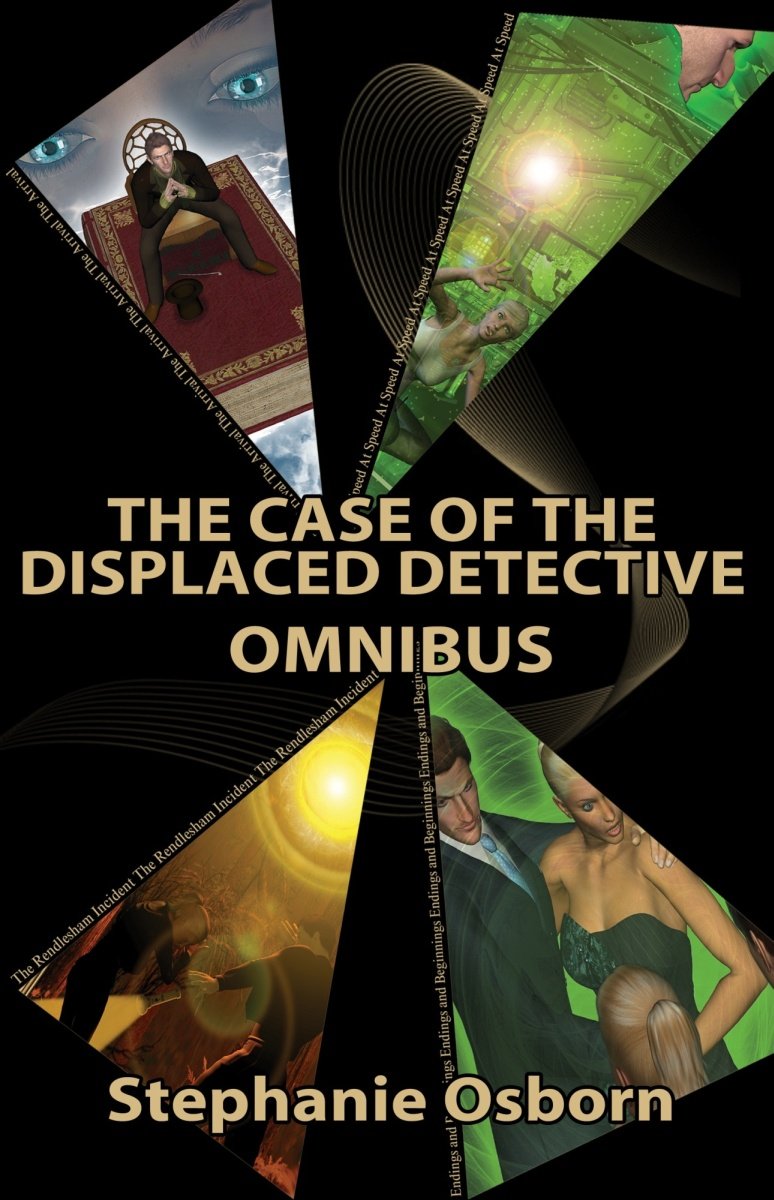
For instance, many people tend to actually forget that my version of Sherlock Holmes (as found in the Displaced Detective Series) is not a real person (at least in our continuum!). A couple of years back, right after the horrific movie theater shooting in Boulder, CO, one fan sent me an email (which seems to be the preferred form of fan letter these days). You see, the shooter's name was John Holmes, and she started off wanting to know if he was perchance kin to Sherlock, and if Sherlock was upset about having such a villainous deed in the family, or at least with the same name. She caught herself partway through, evidently, and modified the letter such that she wished she could ask him those things, but it was obvious that Holmes and Chadwick were real people to her.

Another, more recent, fan letter is one I excerpt for publicity purposes, with permission; it was simply that good. 


"It's like you took Holmes out from under a dusty glass dome in a shadowy Victorian parlor crammed with momentos[sic] and knick-knacks and gave him a new lease on life. Skye is cool too and their relationship helps make the multiverse a less lonely place."
~~Esther Willson, reader

And that was my purpose. While Holmes was so real during the time of Sir Arthur Conan Doyle that, when The Final Problem was published, Victorian men and women went into mourning, over the years since, Holmes has become something of a stereotype, I'm afraid. You can go almost anywhere in the world and show someone a silhouette of a man with a hawk nose, a pipe, and a double-brimmed cap, and s/he will respond, "Sherlock Holmes!" I wanted to lift him from that stereotype, to make him live and breathe and feel and think again, for modern readers. (And yes, I did it well before either the BBC or CBS series, or the Guy Ritchie/Robert Downey Jr. film franchise.)
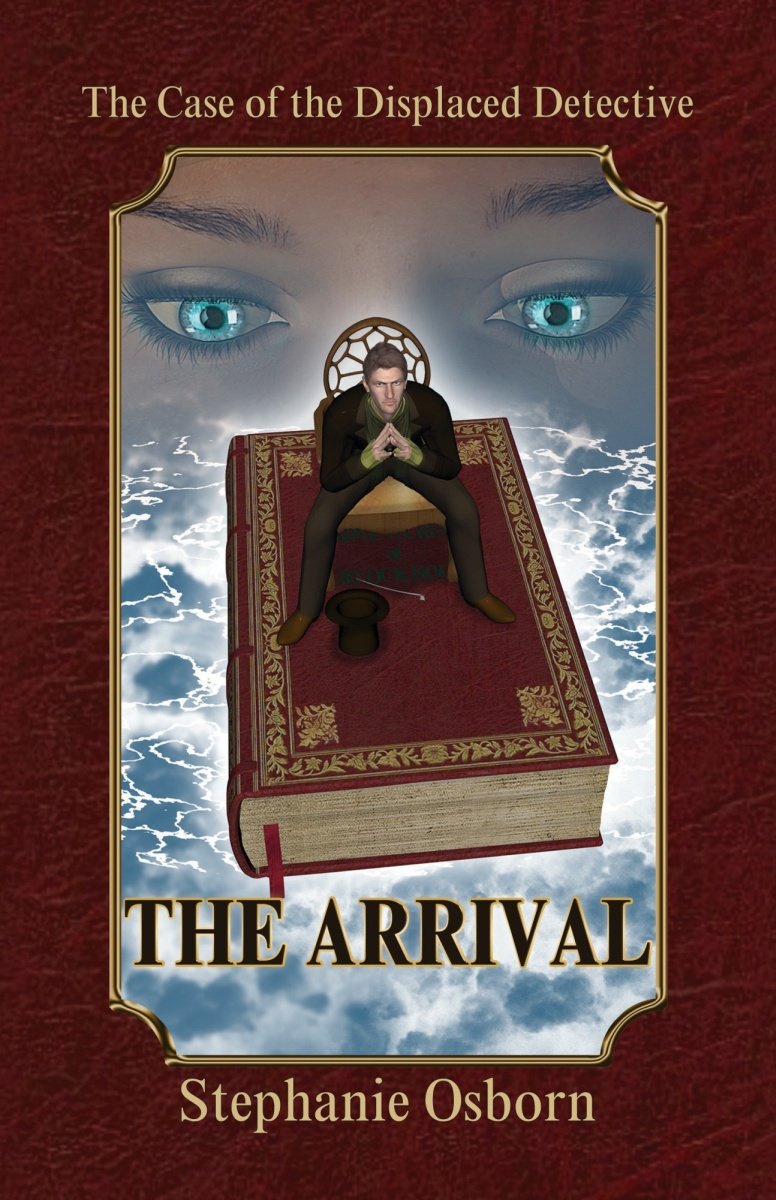
Now, as to how I build my characters, it's actually fairly simple. The great actor and portrayer of Holmes, Jeremy Brett, was fond of referring to his process of disappearing into the character as "becoming." And as I've trod the boards of the stage some little bit myself, and use a similar technique, so I modified it for use in my writing. I search within myself, my personality, for some facet that fits the type of character I am looking to create. Then I use that facet as the foundation for the character, and begin to add to it. A quirk here, an eccentricity there, a flaw, a virtue, on and on. I weight the types of "bricks" according to what sort of character I'm building: a villain will have more flaws than virtues, and a hero vice versa. Experiences in their backgrounds (and yes, I tend to fully flesh out their personal histories, even if I never use them, at least for main characters -- because you never know when something in that history will be useful in a future book) may be imagined, or may be pulled from my own experience and modified, as appropriate. Intellect, etiquette, education, family, all are taken into consideration. And by the time I'm done, I have a character. 

But the character isn't really fully developed until I write him/her. There's something about recording a character's behavior that brings it alive in the mind's eye.
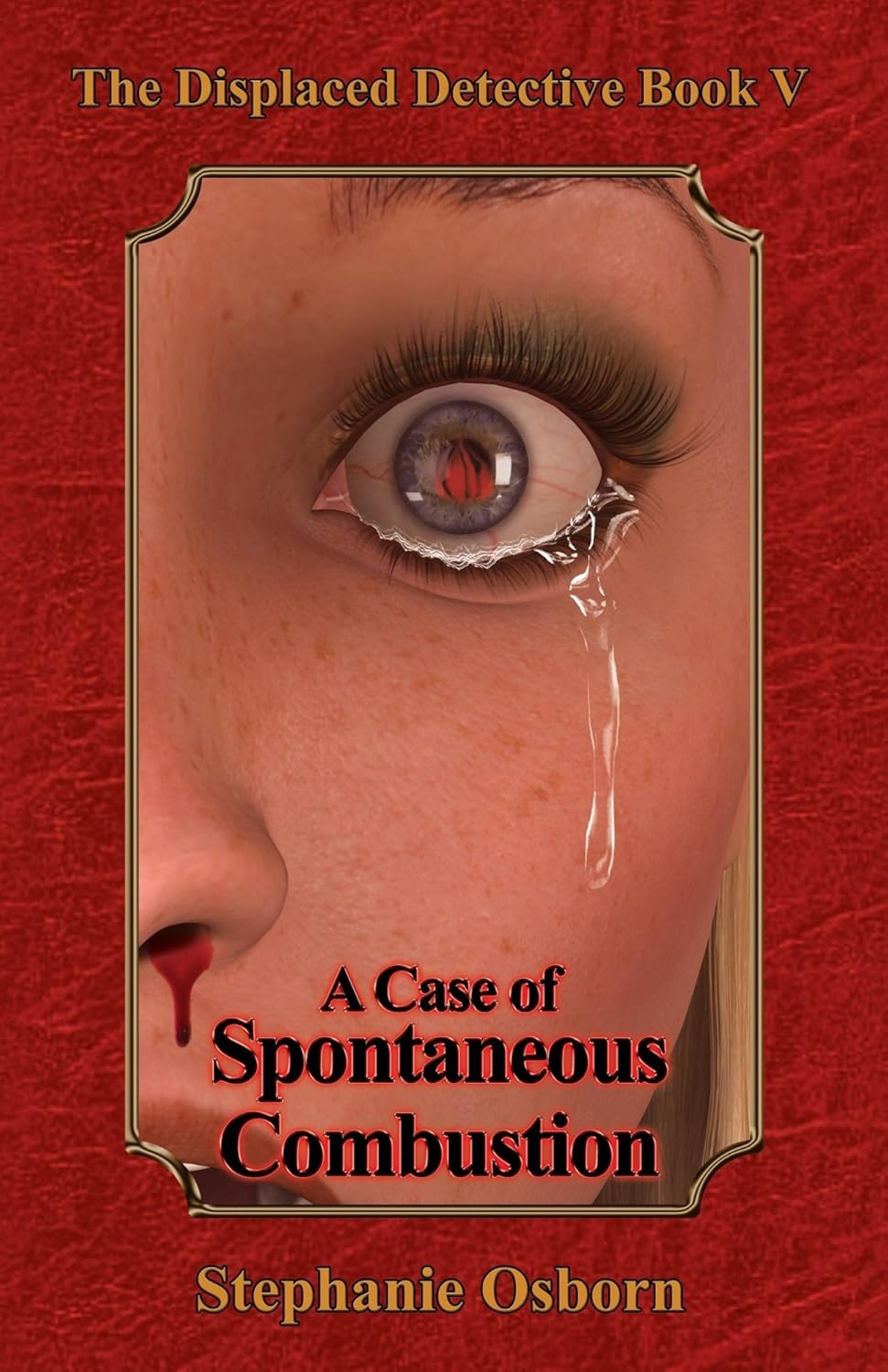


Now, you'll notice that I draw a lot on myself. But I should note that that's how I relate to the characters, just as we usually make friends of people that have something in common with ourselves. Even Holmes, who was created by a man who lived and died long before I was born -- because I recognize facets of myself, my psyche, the way I think, in the great detective. Pecadilloes we share, and the like. And I think this is what enables me to render him as a living, breathing human. It can be useful, in the circumstances, to simply think, "What would I do in this situation?"


"In this case the matter was simplified by Brunton's intelligence being quite first-rate, so that it was unnecessary to make any allowance for the personal equation, as the astronomers have dubbed it."~~Sherlock Holmes, The Musgrave Ritual

And so it is. Not that I mean it in an egotistical fashion; rather, I am trying to say that an ability to relate to the character in some way better enables me to adjudge what that character would do, say, or think.

I find it interesting to note that I have been accused of writing a "Mary Sue" in the character of Dr. Skye Chadwick. But in point of fact I drew no more on myself for her than I did for Holmes, and no one has ever called Holmes my Mary Sue. (It could be argued, in any case, that Watson was Doyle's "Mary Sue," if one really wanted to go there.) 

If there were ever a Mary Sue for me in my writing, it would have to be in my very first book, Burnout: The mystery of Space Shuttle STS-281. This book has two main characters, "Crash" Murphy and Mike Anders. Crash is a retired NASA flight controller turned author, and Mike is an astronomer. Sound familiar? It should, if you've read my bio. In fact if you were to take these two characters, merge them into one, and flip the gender, you would have a very close approximation to myself, saving only Crash's military experience. And in this case it was quite deliberate. That book hits very close to home for me in many respects, and even more so after the Columbia disaster occurred. Why should anyone be surprised to find that I based the main characters upon myself?

They grew beyond that, of course. I think if you are a halfway decent writer and have done your proper work, then that will happen. And at some point they become real to me, so real that it might as well be that they exist in another spacetime continuum. And for all I know, they do. 

So when I come back to a new book in the series, it's like going to visit an old friend. I delight in it, and hate it when I finish the book -- because that means the current visit has ended, and I have to go home. 

If I've done my job properly, when you read it, you'll feel the same way.

-Stephanie Osborn
http://www.stephanie-osborn.com

Wednesday, October 8, 2014

Elements of Modern Storytelling: Character Development, A Guest Blog by Patricia Burroughs

By Stephanie Osborn
http://www.stephanie-osborn.com

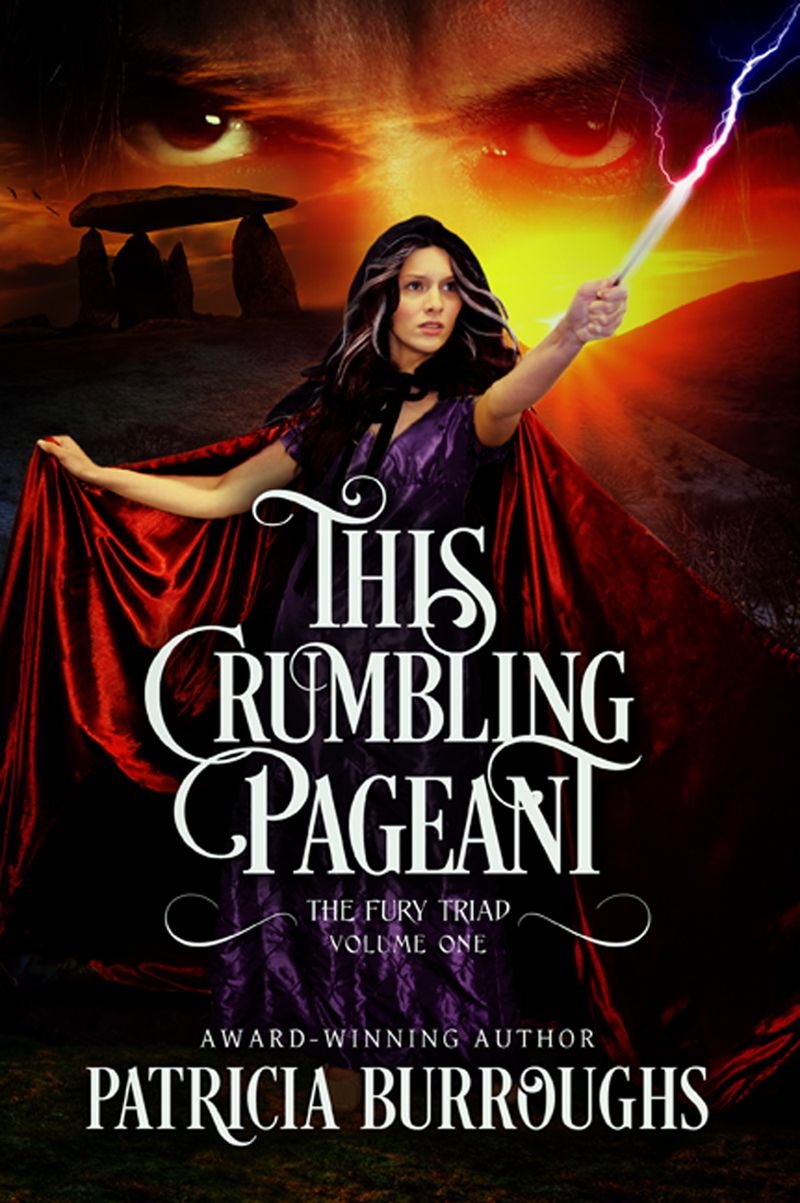
Here is a very cool article by Patricia "Pooks" Burroughs about how her very choice of name defined her character and their world. It was originally published on magicalwords.net, on May 23rd of this year.

"What's in a name?" Sometimes, quite a lot...
~~~
Patricia:


How a Name Defined a Character and a History

I can’t remember how I chose the surname Fury. I liked it because sounded cool with Persephone, and had a power of its own. There was the concern of it being so closely aligned with a mythos of its own that I might be making a mistake to use it, but I loved the name and decided, done!

My idea for the Fury family was that they were part of the Norman invasion, aristocrats back to the year dot, so to speak. Persephone was a daughter of privilege, raised in luxury, a part of the magical Regency Society. I assumed that Fury was probably a French name, which supported the Norman invasion bit.

But research showed me that I was sadly mistaken. That instead of Norman, my Fury family would be… Irish?

Wait. How could my aristocratic family in the early 1800s be Irish?

If you’re not familiar with this aspect of history, the Irish were pretty much under British thumbs for centuries, were looked down on with great disdain. It was fairly unlikely that any Irish family would be living in England with a position of wealth and prestige unless—

Well, let this adage of the Magi in my books give you a hint:
“In England it is said that the Furys have a gift of pleasing kings.“In Ireland ‘tis said, never trust a Fury.”

Enter: Bardán Fury.

Bardán Fury is my Fury family’s ancestor. He has been dead for centuries when my book starts. Why would he have characterization issues, and why would it matter to me writing a book about his descendants? Well, that’s what I got for choosing an Irish name, and his characterization did end up mattering.

A lot.

When Henry VIII made his move on Ireland, my Bardán was quick to side with power. By betting on the right side to win, he ended up in the English Court as bard and advisor, without Henry or anyone else ever the wiser that they had a magical person amongst their numbers. He even received a lovely manor house as a boon for his services.  You can read more about that here, because that presented its own set of plot twists and rich historical irony.

But Bardán read the writing on the wall and saw that if Christian vs Christian could result in forced conversions, executions and even war, the Magi were in deep trouble if the Ordinary people ever figured out that magical people walked amongst them. He turned the silver tongued charms, political savvy and power of persuasion he’d honed in Henry’s court toward the Magi, and convinced them to withdraw from the Ordinary world completely and form their own society, their own world, right down to establishing (with Bardán’s careful guidance) their own king and court—the House of Pendragon. Of course there was no claim to a true connection between Arthur Pendragon and the first Magi king, but they didn’t let that stop them from usurping the name.

Thus, the idea that the Furys not only pleased kings, but were king-makers.

And again, being no fool, Bardán established the ideas and ideals of a new society, and left the politics and hard work of making it all happen to all the new Magi lords jockeying for favor. He took his own family, retired to his manor house with his music and his stories and a future unfettered by politics and world wide open for exploration.
But he also made certain that none forgot his role, his power, and his family’s importance

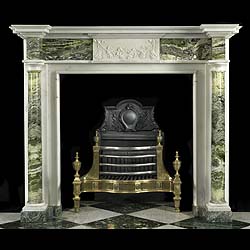
When they reached the fireplace, all other thoughts fell away. The Fury marble, the warm, dark green of a forest glade touched by sunlight. The gift of Bardán Fury to King Constantine, it was a miracle of art and magic and skulduggery, an emblem of his support and a reminder for the ages that it was Bardán Fury who had made this king a king. Carved into its surface high on the wall was the handsome countenance of the king in all his splendour, but the mantle itself was supported by the exquisite nude carvings of an unnamed god and goddess, physically and symbolically supporting the king and his progeny. All knew that the god, his tightly curling crown of hair and classically perfect body with strong shoulders and long-fingered hands carrying the weight above, was patterned after Bardán Fury himself, his eyes cast at the floor in all modesty.

Persephone stepped forward and laid her hand against his shoulder and gasped at the contact. It was warm, despite the fact that the fireplace itself was cold and empty. Her eyes closed, and she felt the marble beneath her palm throb in recognition. She reached deep for some inkling of that first Fury, some bit of magic to soothe her, to resonate, and felt nothing more, after that first quick pulse. Finally, regretfully, she let go and found Lord Greylund’s eyes upon her.

Fast forward two-and-a-half centuries and we find the Fury legend and reputation of king-makers is alive and well, as various factions begin circling in an effort to get close to the Furys, to form alliances by friendship, marriage or even abduction.

Suddenly, I had the beginning of a premise, the presence of a threat.

Just as Bardán Fury’s image supports the weight of the vast marble carving of the first magical king, his history and his character support the weight of the story I built.


All because I chose the name Fury.


~~~
The blurb for the first book:

Persephone Fury is the Dark daughter, the one they hide.

England, 1811. Few are aware of a hidden magical England, a people not ruled by poor mad George, but the dying King Pellinore of the House of Pendragon.

The Furys are known for their music, their magic, and their historic role as kingmakers. When Fury ambitions demand a political marriage, Persephone is drugged and presented to Society–

Only to be abducted from the man she loves by the man she loathes.

But devious and ruthless, Persephone must defy ancient prophecy, embrace her Dark magic, and seize her own fate.


Be swept away into the first book of a dark fantasy series combining swashbuckling adventure, heart-pounding romance, and plot-twisting suspense.

-Stephanie Osborn
http://www.stephanie-osborn.com
Wednesday, October 1, 2014

Elements of Modern Storytelling: Character Development, A Guest Blog by Sara Stamey

By Stephanie Osborn
http://www.stephanie-osborn.com

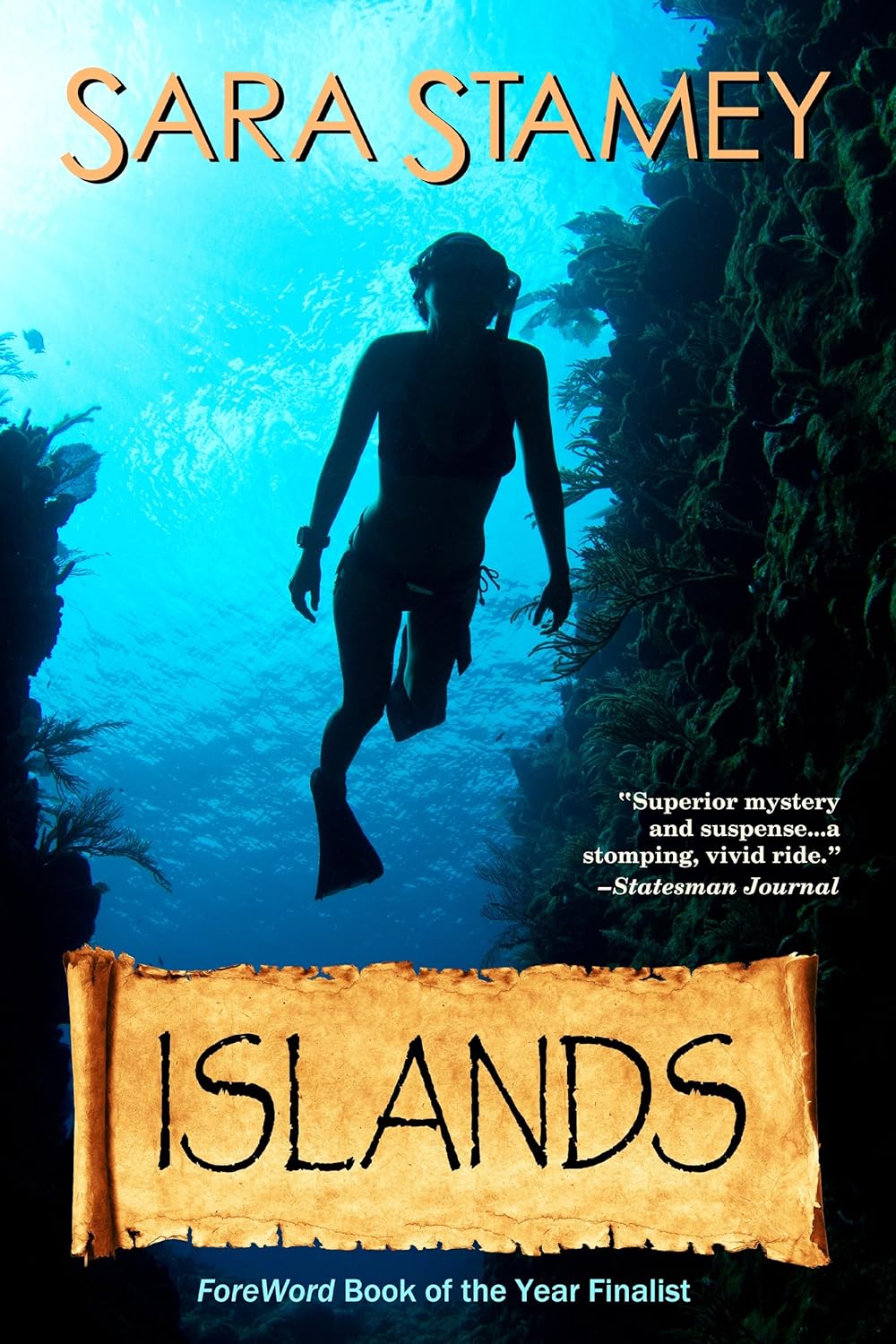
Sara Stamey’s extended travels in out-of-the-way corners of the globe include treasure hunting and teaching scuba in the Caribbean and Honduras, operating a nuclear reactor, and owning a farm in Southern Chile. Now resettled in her native Northwest Washington, she teaches creative writing at Western Washington University and offers editing services as a “book doctor.” She shares her Squalicum Creek backyard with wild critters and her cats, dog, and very tall husband Thor.


Her romantic suspense novel Islands is described by reviewers as “an intellectual thriller” and "a superior suspense novel….a stomping vivid ride.” A new eBook edition is available from Book View Café. BVC will also release her new metaphysical thriller set in Greece, The Ariadne Connection, in October 2014.


~~~

Sara:


“How do you come up with the characters in your novels? Are they based on real people? Do you make lists of their work, family, education, hobbies? Is it better to describe them in detail, or let readers flesh them out in their minds?”

These are questions novelists hear from readers eager to understand the mysterious workings of a writer’s mind. I’ve heard all kinds of advice about how fiction-writers “should” create fully dimensional characters, but I think every writer finds her own ways.

I confess that I have based several characters on people I know (or knew), and have found “seeds” in characters in films or even music videos. It’s a boost to start with appearance, speech, or personality tics you’ve already observed, then go on to morph that seed into your own character. Most of the time, my models never recognize themselves in the transformed character, which is the way it should go.

Take Heinck, the creepy ringleader of a criminal gang in my second science fiction novel, Win, Lose, Draw. (I hate that title my publisher chose instead of my original Resistance Coil, but that’s another story!) He’s whippy, with slicked-back dark hair and a lot of “pain-dure” tattoos that advertise how tough he is, a sadomasochist who has absolutely no morals. The man I took as my initial model probably never reads, so I don’t have to worry that he’ll recognize himself – besides, Heinck is probably smarter.

Years ago, when I was working as a scuba guide and instructor in the Bay Islands of Honduras at an isolated inn reachable only by boat or rough trails, I was pretty much held hostage by the lowlife temporary manager who was driving away the few tourists and making life miserable for everyone else. He waved around an arsenal of guns, bragged about his previous scams, and kept me and the other employees from taking a boat to the only distant town to radio the absent owner back in the States about the state of crisis at his inn. When the owner finally arrived to fire the manager, he skulked away to the relief of everyone. (spoiler alert) And later, I took secret pleasure in killing him off as my fictional villain. One perk of acting Deity in our own invented worlds!

Flipping the coin, I created a modest tribute to my original writing mentor by making him a minor, helpful character in my Caribbean suspense novel Islands. My mentor was R.D. Brown, a source of inspiration to his many students at Western Washington University. He was a very tall man, with a slouch perhaps as the result of ducking through doorways, a bald head, a jowly face, and an incisive wit animating his eyes. When I created Captain Wilkes, a native police chief who aids my archeologist/sleuth Susan Dunne, I called on images of R.D.: 
A big native man was unfolding his height from a dusty compact. He slouched over to me in rumpled slacks and a linen dress shirt, dark scalp gleaming above a graying frizz, face drooping in folds like an intelligent basset hound.
You’ll see that I’m in favor of providing appearance details of my characters. I feel that leaving them a blank slate makes it hard for readers to invest or even keep track of who’s who.  BTW, Captain Wilkes is my only character-based-on-real where I’ve been caught out: When his partner read the novel, she immediately recognized R.D. as the model, and we all got a chuckle out of it.

Of course, there’s a lot of work to do once the original image and basic personality forms. Voice is perhaps the biggest challenge for me: What kind of diction would this person use, and does it fit his background and upbringing? Or deliberately contrast with it, for plausible reasons of education or choice? Is each character meant to be sympathetic or not? Even if she’s “the bad gal,” does she embody at least a little ambiguity as a complex person? When I teach fiction-writing at the university, I point my students toward good advice from writing guru Janet Burroway: “Give your character a consistent inconsistency.” In other words, some habit or preference that seems at odds with the initial presentation or “type,” so he has a realistic individuality.

I do depart from some writerly advice (including Burroway’s) to create a detailed summary about every character, including history, family, hobbies, etc. I feel that it constrains the characters if everything about them is pinned down at the start, and prevents them from “acting out” to inform me that they would do this or wouldn’t do that. But I do have to work during revision to make sure they “add up” to realistic personalities.

#

Because my novels are often set in foreign countries where I’ve lived or travelled, I face a special challenge in creating characters from different cultures, working to present them as authentic, with believable voices that might mirror their different diction or accents from English/American speech. I usually present these characters through the observations of an American point-of-view character, hoping to avoid “cultural appropriation” or just plain blunders in accuracy.  The more you experience and observe people in actual life, the closer you’ll come to capturing the essence of characters, whether from familiar cultures or foreign. In my travels, I’ve found that there are definitely cultural variations in beliefs and social interactions, but also that most humans at heart have much in common and are willing to make a connection.

One more example from my latest novel set in Greece, The Ariadne Connection, to be released in October 2014 from Book View Café. My heroine’s uncle Demetrios has retired to a mountain village on the southern coast of Crete. In real life, I was backpacking in this region with my former partner, when we found ourselves stranded in a remote, rocky village without a place to stay during the Easter holidays when all the busses stopped running.  We were trying to find a level, unrocky spot (not likely!) to pitch our tent, when we were befriended by a local dignitary, Stelios Mamalakis, who offered us the famous Greek hospitality of a place to stay and a tour of the local landscape. Here is a bit I borrowed from him for my character Demetrios:

Wild asparagus. Ariadne touched the slender soft buds Uncle Demetrios had always favored. She could still see him, all those years ago, climbing ahead of her up a narrow ravine beside a rain-swollen stream, pushing through thorn thickets to find the new asparagus shoots, tearing his trousers to get the last one. 
“But I can’t resist it! This one is the best, Kri-Kri, just look at it. Tender youthful perfection, the most sublime Platonic ideal of a sprout. Now this is beauty. We will eat it tonight and be strong and beautiful, too.” His white teeth flashed beneath the long pirate mustache.
I will leave you with this thought: We writers have to love our characters, even the villains. With love, and patience, they will live and breathe.


~~~

All I can say, Sara, is that you're a woman after my own heart.

-Stephanie Osborn
http://www.stephanie-osborn.com

Wednesday, July 16, 2014

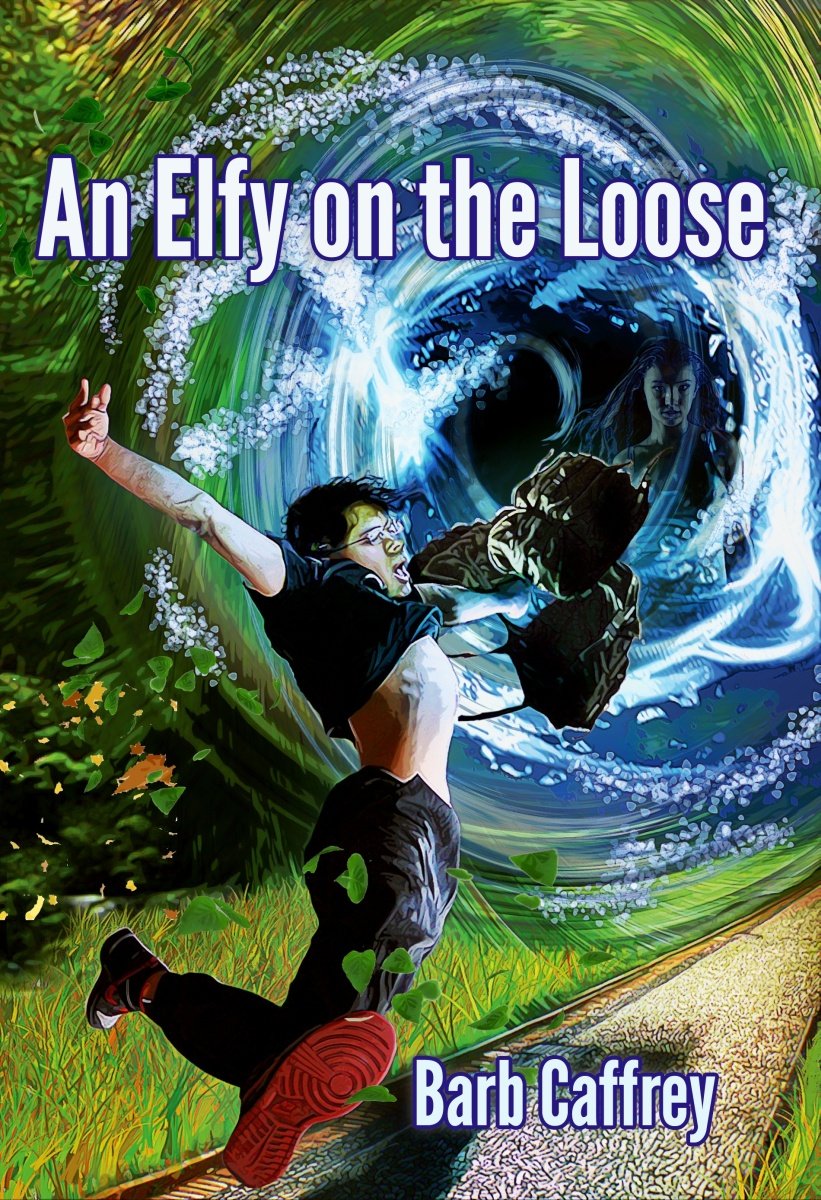
Characterization in AN ELFY ON THE LOOSE, A Guest Blog by Barb Caffrey

By Stephanie Osborn
http://www.stephanie-osborn.com
We're getting ready to start talking about a different element of modern storytelling: character. As she has a new book out, a book with strong characters and more than a hint of romance, I asked Barb Caffrey to write an additional blog article -- not just about how characters work in telling stories, but specifically about how HER characters were designed to interact in her new book, An Elfy On The Loose. Consider this as a kind of segue from Romance to Character Development in our Elements of Modern Storytelling series.

~~~

Characterization in AN ELFY ON THE LOOSE
Or, Why Bruno the Elfy Is So Much Fun to Write
By Barb Caffrey 
If you've read my novel AN ELFY ON THE LOOSE – or even if you've only heard about it a little – you probably are aware that my main character, Bruno the Elfy, is quite an intriguing character to wrap a book around.
Why? Well, Bruno didn't exactly start out as a hero-type. He's short: he's only three feet tall. He doesn't think he has any appreciable magical skills at the start of AN ELFY ON THE LOOSE, either, and this is a problem considering he comes from the magical race of Elfys – and all of them seem to have at least some magic. (Bruno doesn't realize the reason he doesn't seem to have magical talent is because he's been intentionally mistrained by the orders of the Elfy High Council.) And while he's young – the equivalent of a teenager in human terms – he thinks of himself as jaded, worldly-wise, and experienced.
Of course, many teens do the latter. And it's because of their lack of experience when teens think they already have experience that the story of AN ELFY ON THE LOOSE originally came to me.
But I'm getting ahead of myself.
Actually, Bruno the Elfy came to me in a dream. I had just read an anthology about Elves, where the editor – whose name escapes me – said (my best paraphrase here), "These aren't your typical Elfie-welfie types of Elves. They actually do things."
And Bruno piped up with, "It's not like that!"
I noticed that Bruno was dressed all in black. And he proceeded to tell me earnestly that while the Elfys in his culture liked to rhyme (thus the nonsense term "Elfy-welfy), he, himself, did not. And while the Elfys in his culture liked loud clothing – the louder, the better – he, himself, obviously did not.
Then I found out he was trapped in a haunted house in California. He'd been sent there by the Elfy High Council, a rather mysterious bunch of people from another dimension I'd get to know (and mostly dislike). His teacher, Roberto the Wise, did not agree with the decision to maroon Bruno on our Earth, and was trying to get him back...but Bruno had met Sarah – a young, Human girl, and his eventual love interest – and Bruno didn't want to leave her behind.
Just knowing that much gave me an insight into Bruno's character. He's loyal, almost to a fault. He is a good judge of character. He doesn't know much about himself (as most teens or teen-equivalents truly don't), but he does know this: He believes in good things – love, friendship, and ideals.
And as I went on, I learned that Bruno is also a scholar – as Roberto's one of the foremost scholars in the Elfy Realm, that's no surprise. Bruno has a lot more magic than he thinks, something Roberto knew but couldn't directly tell him due to the wishes of the High Council. And there truly is a conspiracy against Bruno.
All of that helped me as I tried to figure out more about what Bruno's doing in that haunted house. Much less more about the diminutive and enigmatic Sarah, who surely must be a whole lot older than she seems – but why? And again, what's she doing there at all?
Many young men of whatever species would probably run away from Sarah, no matter how attractive she is and no matter how short she is – which has to be an attraction for Bruno, no matter how much he denies it – because there's something obviously wrong there. Sarah's parents are awful, and not just to her. They have trapped Bruno for no reason except that he's an Elfy and they apparently don't care much for Elfys. So you'd think Bruno would just want to get away from that whole situation, run to Roberto, and forget about Sarah, her dastardly parents, and that whole, strange, screwed-up house…
But Bruno doesn't do that.
Even though he's not a prototypical hero-type, Bruno believes in fairness. As Sarah has been kind to him, he judges her for what she is along with what she's done – and after Roberto's attempt to rescue him goes horribly wrong, Sarah does her best to hide Bruno from her family. That, too, works in her favor.
And as they get to know each other during this desperate crisis, they realize they have a lot in common. They both have magic. They're both a wee bit older than they thought. And they both believe in the same things – love matters. Family, no matter how screwed up, matters. (Though no one should suffer abuse. Ever.) And good can indeed win over evil, providing you're careful, smart and willing to work with others for the benefit of all.
But none of it – not one blessed thing – would work without Bruno. He is a fully realized, multidimensional character with likes and dislikes, strengths and weaknesses, and seems like someone you might just know...that is, if he weren't so short. And it's because of this that you can buy into his adventures, you can buy into his romance, and you can buy into the fact that this young Elfy just might be able to save everyone if he just can figure it out in time.
That, to my mind, is why Bruno is so much fun to write.
~~~

Interesting, every bit of that, Barb. In fact, Bruno rather reminds me of one of the main characters from a true fantasy classic -- Frodo Baggins, of J. R. R. Tolkien's Lord of the Rings trilogy. Short, diminutive male of a non-human race; not possessed of great magical powers, or really, great powers in general; trapped in a situation for which he didn't ask; yet responsible, loyal, and determined.

Folks, be sure to check out An Elfy On The Loose.

-Stephanie Osborn
http://www.stephanie-osborn.com
Wednesday, February 12, 2014

A Writer’s Responsibility

by Stephanie Osborn
http://www.stephanie-osborn.com
There’s been a lot of talk in the science fiction community as a whole about...stuff. About what should go into our writing: morals, “agendas,” ethics, world views, theology, prejudice, all kinds of stuff like that. The gist of the argument is about whether or not we as writers are responsible for...teaching, I suppose...our readers. There have been very...forceful...words...said by a lot of people, some of which I agree with, and some of which I don’t. Some of it has been civil, and some of it hasn’t.

What I want to do in this blog entry is to put in my $0.02 worth on what I think we, as writers, should be writing, fully recognizing that that, and about five bucks, might get you a cuppa Starbux. I also want to do it in a civil, peaceful fashion, with no insult or denigration intended to anybody. I recognize that that’s very hard to do, and I also recognize that there are those who will accuse me of being milquetoast or too cowardly to take a stand. But I am the sort that prefers just to get along with folks, and I find I simply don’t enjoy argument for the sake of argument. If anyone takes offense at what I’m about to say, it is purely accidental. It’s also based on a post I made on the subject in a LinkedIn group conversation, so those of you who are in that group will have already read some of what I’m about to say.

Geronimo.

Basically and very simply, I write stories I would enjoy reading myself. If it’s not something I would want to read, chances are that I won’t maintain sufficient interest and drive to finish it, anyway. It is also a true statement that there have been times when I wanted to read a certain thing in a certain sub-genre, and upon finding that it didn’t exist (or was so hard to find that it might as well have not existed), I sat down and wrote it myself.

And I try to stay true to myself in the doing, which means, while I want it to sell well, I'm not willing to throw out my personal morality, nor to hop on the latest bandwagon for the sake of hopping on. (For example, I refuse to write about a sparkly werewolf/vampire hybrid Elf Victorian angsty gay warlock with a disability.) [insert laugh here]  In other words, don't expect me to go along with the latest fad. In turn, that means that my personal morals and beliefs tend to slip in (which I think is probably true of 99.99% of writers, unless they are trying hard and actively to prevent it -- which I do try to do, sometimes, when it’s appropriate). It’s also true that the subconscious things to which we each tend to default will creep in, as well. And as far as I'm concerned, in general, that's okay. 

That doesn't mean I don't try to do things that shake people up, things that make readers think. I try hard to do that. (Heck, in my first novel I destroyed a frakkin' Space Shuttle, for pity's sake.) Sometimes that means having a plot twist that makes ME uncomfortable, but which makes sense in context, and if it does, I do it -- because what's most important to me about the characters I write is making them come alive to the reader -- so no cookie-cutter characters/beliefs/personalities/morals. 

In fact, one of the two most important aspects of writing is, in my opinion, the ability to create a character that comes alive for the reader (and usually for me, too). I have had male fans meeting me for the first time find themselves mildly surprised to be meeting a woman -- because, they said, the male characters I write are so spot-on to how men think that they thought a guy surely must have written it. And I have had other fans contact me to find out how a particular character was reacting to a big news event that happened near where the character “lives.” (I use that choice of wording deliberately.)

I delight in these things, these responses. It means I have done what I set out to do: I have created a PERSON. I have created someone who lives in your mind so strongly that it is entirely possible to forget that s/he is NOT real. Because it is the characters who make you care about them, who make you want to know what happens to them.

The other most-important aspect is, of course, the story itself. This is, simply put, the tale of what happens to those characters that I’ve just made you care about. Because even if a real person has the potential, if his/her life is boring, you never hear about ‘em on the evening news.

What's that old saying? "Well-behaved women rarely make history." I'd paraphrase that to read, "People who don't take chances rarely make history."

If the character is what makes you care, their stories are what get your attention. Combined, the two are what keep you reading.

And I'm not really observant of genre boundaries: I tend to cross over, a lot, and by design. I mostly write science fiction mysteries with elements of romance, suspense, and thriller. Consequently I'm a member of several different writers' groups, and the bane of my publisher when she tries to figure out what TWO categories in which to enter my latest book on Amazon. (Yes, you read that right: Amazon only allows two categories for any given book.) And it's why my fans in a podcast chat, and the host of the podcast, together devised the title, "The Interstellar Woman of Mystery," for me. (I thought it was hilariously good fun, and very apt when you got down to it, so I had my publicist incorporate that title in my bio, and put it in the title of my website, on my email sig file, etc. Yes, I have a d@#^ inconvenient, and very warped, sense of humor at times.) 

And I'm doing well for myself with this approach. I'm not a NYT best-seller...yet. But I do have a couple of ebook best-sellers to my credit, and a burgeoning fandom. 

And frankly, trying to layer a given belief, morality or "lecture" (because that's really what it is) on top of the story tends to backfire in general, because it usually ends up too heavy-handed, and the reader feels like they're being beat about the head and shoulders with it. Ultimately, we writers are the intellectual descendants of the storytellers of old, the bards, the shamans sitting around a fire. Can there be a moral to the story? Sure. “Aesop” did that, a loooong time ago. But the moral always comes AFTER. The STORY-- and the character -- comes first.

Hope all that makes sense.

-Stephanie Osborn

http://www.stephanie-osborn.com