Banner

Banner
Showing posts with label Sherlock. Show all posts

Wednesday, November 26, 2014

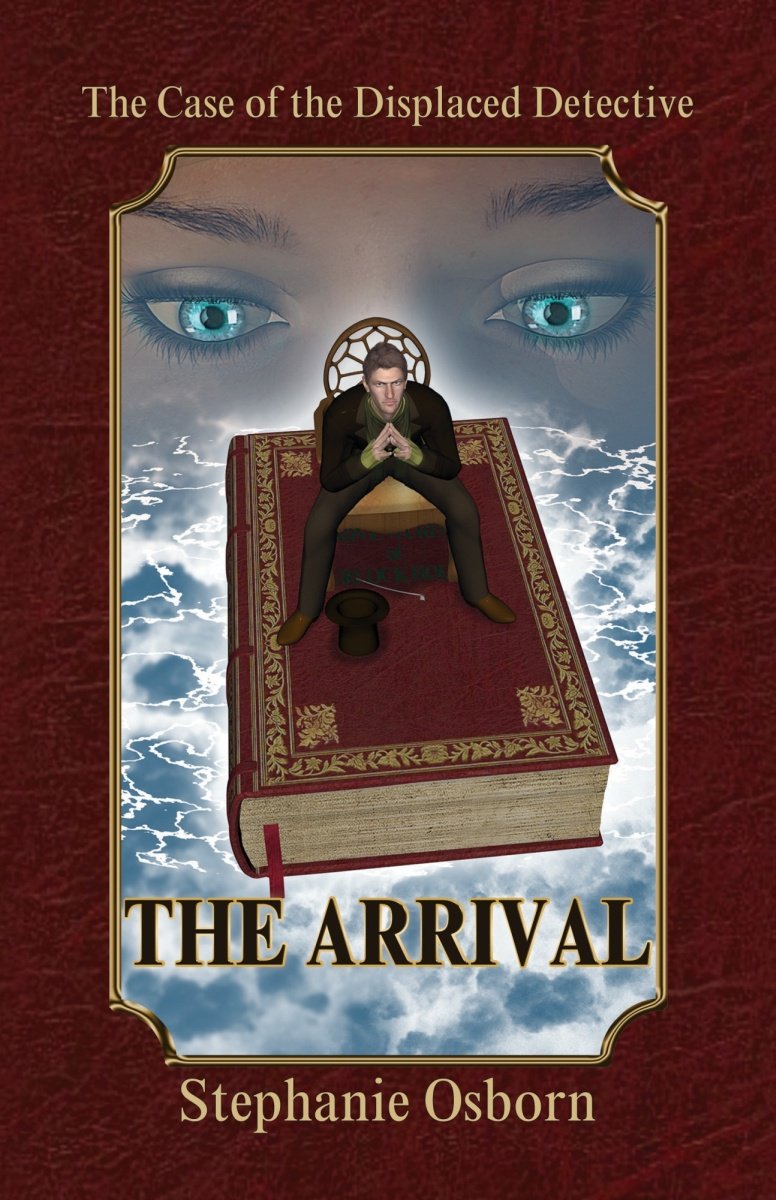
Interlude: The Case of the Displaced Detective: The Arrival by Stephanie Osborn

by Stephanie Osborn
http://www.stephanie-osborn.com

This is not your father's Sherlock Holmes...

The Case of the Displaced Detective: The Arrival is a science fiction mystery in which brilliant hyperspatial physicist, Dr. Skye Chadwick, discovers there are alternate realities, often populated by those we consider only literary characters. Her pet research, Project: Tesseract, hidden deep under Schriever AFB, finds Continuum 114, where Sherlock Holmes was to have died along with Moriarty at the Reichenbach Falls. In a Knee-jerk reaction, Skye rescues Holmes, who inadvertently flies through the wormhole to our universe, while his enemy plunges to his death. Unable to go back without causing devastating continuum collapse, Holmes must stay in our world and adapt. Meanwhile, the Schriever AFB Dept of Security discovers a spy ring working to dig out the details of - and possibly sabotage - Project: Tesseract. Can Chadwick help Holmes come up to speed in modern investigative techniques in time to stop the spies? Will Holmes be able to thrive in our modern world? Is Chadwick now Holmes' new "Watson" - or more? And what happens next?

~~~


"...This is a really bad time for me to leave console at the moment, hon.”

Caitlin shot her a hard, annoyed look.

“You can’t be considering it,” she said flatly. “All hell is breaking loose here. I don’t care if the President needed you five minutes ago! You have to stay here!”

“Chill, Cait,” Skye tossed an aside to her friend, phone held absently to the side of her face with her shoulder as she tried to read the scribbled note Timelines handed her, around annotating her clipboard. “I’ve got more to do than I can shake a stick at now. I’m…what?” she said, staring at the note. “Software! Check the focus subroutine! Make sure it’s initiating at the correct point in the program! The last thing we need now is a software glitch causing a delay in timing. If that’s happening, no wonder the induction element’s hosed! Hardware, make sure the circuit’s clear! Holmes, I’m sorry, I can’t make it right now. I don’t have time to catch my breath down here.”

* * *

Holmes listened closely, not only to Skye’s direct comments, but also to her asides and commands, and to what he could hear of the remarks made to her. He covered the mouthpiece with his hand and informed Jones and Smith.

“It appears matters are not going well in the Chamber.” He punched the speaker button on the phone so the other men could hear. Then he returned his attention to the sounds coming from the phone. “Skye, what is happening?”

* * *

Skye watched as her teammates fought with the recalcitrant apparatus. One of the Hardware console members, Chad Swann by name and a longstanding friend of Skye’s, moved into the center of the room to check the circuitry of the monoliths. Skye grabbed her clipboard, flipping to the malfunction shutdown checklist, where she scanned the list, trying to determine the seriousness of their
situation.

Vaguely she heard Holmes’ query, but didn’t have time to devote to it. Still, she managed to find two spare brain cells to rub together, and replied abstractedly, “We’re having a malfunction in the induction element system. We can’t keep it focused…”

“Skye, we need you to make a call! Shut down, or put it in a holding pattern and troubleshoot?” Caitlin interrupted. Skye juggled phone and clipboard, trying to assess the checklist for priority red malfunction modes.

“Holmes, I’ve gotta go,” she said into the phone. “I need to figure out how serious this is—”

“DR. CHADWICK! We’ve got a GRAVITON SPIKE!” Sequencing shouted.

* * *

Smith and Jones watched as Holmes’ expression grew more and more grave as he listened to the sounds on the other end of the line. They heard Skye’s attempt to break the conversation, and Holmes was about to answer in the affirmative when they overheard the exclamation from Sequencing.

Holmes paled as they heard Skye shout, “Chad!! Get out of there! NO! EMERGENCY SHUTDO—”

The line went dead.

Instantly the entire building shuddered hard enough to knock books off shelves and send Skye’s chalk tumbling from its rack on the blackboard, smashing into dusty white shards on the tile. The three men grabbed for heavy furniture to avoid being flung to the floor.

* * *

When the quake subsided, the three men sat staring at each other, shaken. Holmes felt almost lightheaded, his grey eyes wide.

“What happened?” Jones demanded. “Did that earthquake have anything to do with Project: Tesser—”

“Emergency shutdown,” Holmes snapped out, leaping to his feet. “Graviton spike.” He didn’t fully understand the significance of the graviton spike, but from his reading of Skye’s quantum mechanics text, which perforce contained a significant amount of particle physics, he knew what a graviton was, and strongly suspected it was connected to the quake. “I am going down to the Chamber,” he declared in a tone brooking no argument. “The two of you may come, or stay.”

* * *

“Is your authorization in?” Jones turned to Smith.

“Your duty officer entered it into the system when I arrived this morning,” Smith observed.

“Good. We’re coming, Holmes,” Jones declared.

But Holmes was already out the door and down the hall, headed for the elevators at a dead run.

Jones and Smith sprinted behind.

~~~

The Case of the Displaced Detective: The Arrival is available in print and ebook (all formats), and the first four books of the series have been released in a collected ebook edition, The Case of the Displaced Detective Omnibus. Book 5, A Case of Spontaneous Combustion, is a 2014 new release. All of them are suitable for gift-giving!


-Stephanie Osborn
http://www.stephanie-osborn.com

Wednesday, March 12, 2014

Elements of Modern Storytelling: Romance

by Stephanie Osborn
http://www.stephanie-osborn.com

Last week I promised you a new series of blogs, to include many guest authors, on The Elements of Modern Storytelling. This week we start the first element, which I have chosen to be Romance. The plan is for me to lead off each new element with my own blog post, followed by views from other authors. Some elements may have more posts, some less, depending entirely on the inspiration of my guest authors, and it's entirely possible that my own schedule could get wonky, in which case someone else may lead off on an element. But that's the plan. And we all know that a good plan never survives first engagement with the enemy (Time, in this case), so we'll see. Anyway. On to the disccussion.

~~~


I write, as most of you know, principally science fiction mysteries. It's a deliberate cross-genre blend. But I also usually have some element of romance in my stories as well. I even (GASP!) allowed Sherlock Holmes to fall in love in my Displaced Detective series. That in itself has created a lot of stir. And a significant number of science fiction fans (mostly male per my observations, interestingly enough) think that romance has no place in sci-fi.

I beg to differ.

Few things are so revealing of one's character as one's behavior when falling, or fully, in love. This is as true in real life as it is in fiction. Granted, it is possible for some to hide their true natures; it's why people get immersed into a relationship only to discover that the partner is abusive, and the like. But in general, I think it's so. When we were dating, my funny, impetuous, spontaneous now-husband grew a serious, gentle side, a courtly side, and he's never lost those things. Meanwhile, curious, serious, reserved me, always with a plan, discovered that spontaneity could be fun. We learned something new about ourselves. It wasn't so much that those things were never in us to begin with as it was that each helped the other discover it in themselves.

This is why I use romance as a tool in my writer's kit. Romance enables me to more fully flesh out the character. To me, it is one of the things that helps bring a character to life in the mind of the reader. And if you'll recall some of my recent posts, that's my ultimate goal in creating a character: bringing him/her/it to life in your imagination. I used it on both protagonists in Burnout: The mystery of Space Shuttle STS-281, in different ways, to pretty good effect, I think.

So if watching the internal struggle, the anxieties, fears, joys and triumphs of a person in love cannot bring that character to life in the reader's mind, frankly, nothing can. It is a microcosm of life.

Okay, fine, so why the [expletive redacted] did you make Sherlock Holmes, of all people, fall in love?

Well, I didn't. That was sort of his idea. And once he explained it to me, it made sense. He's also stubborn enough to insist on it anyway, whether I liked it or not -- which he did, but initially I didn't.

[See, the characters, on some level, become real to me, too. I have yet to decide if the theory of alternate universes where literary characters exist as actual people might be real, or not. But sometimes it surely seems as if the ideas come from somewhere Out There.]

Now, I'll admit that I deliberately challenged him with a brilliant, genius-intellect modern woman. Mostly because I wanted to see if this was a stressor to him. The whole point behind the first Displaced Detective story (which takes place across two volumes, The Case of the Displaced Detective: The Arrival and The Case of the Displaced Detective: At Speed) was to take the great intelligence of the Great Detective, along with all his imagination, creativity, strengths, foibles, preconceptions, and faults, and plop him down in a situation that was so outre that a lesser man would have gone mad. And then I wanted to see what he'd do. This was an experiment on my part, because I didn't have any particular clear plan for what would happen, save that I knew major plot events and I knew who the antagonists were. I set the initial conditions and let it run, following what was in character for the various personae dramatis.

There is also one other thing that I added to the mix as a running theme, and that was the concept of parallelism. If we are going to discuss parallel worlds, universes, then we might as well look at how they are similar -- or not -- across multiple continua. And so I introduced the idea that there were parallels to Holmes' native continuum in Skye Chadwick's, and one of those...was her.

You see, in her own continuum, the one to which Holmes moves, at least until his advent she WAS him. She was her world's Sherlock Holmes. Only, just as other, more direct, versions of Holmes didn't all become detectives (this is mentioned in some of the later books, which haven't come out yet), so too did Chadwick fall into another field of endeavor, namely hyperspatial physics. She is (in her universe) to hyperspatial physics what Albert Einstein was to relativity. (No, not really another parallel. Just a metaphor.)

Well, I mean really. Holmes has been accused of being narcissistic. So doesn't it stand to reason that, when presented with a version of himself in reasonably attractive female form, he might fall? Especially if he's in a highly charged emotional situation such as being yanked to a freakin' different spacetime? He thought so, and when once he had laid out his logic, I did, too.

"I have never loved, Watson, but if I did and if the woman I loved had met such an end, I might act even as our lawless lion-hunter has done."
~Sherlock Holmes, The Adventure of the Devil's Foot

Right here, in Arthur Conan Doyle's own story, he admits that he knows his own emotions would be powerful, in the circumstance. So what if...?

And once again, romance proved a useful tool. Because we -- "we" being Holmes and me -- were able to demonstrate that the great intellect still functions well even through the throes of a tumultuous beginning love affair. And, that relationship having been firmly established, he reverts even more to the Victorian gentleman he always was. And Doyle was right -- the powerful intellect has powerful emotions, even if he does keep them largely hidden from the rest of the world. ("Still waters run deep," and all that.) And such a relationship is capable of being to him the distraction, the divertissement, that an active mind sometimes needs to be able to see the forest through the trees.

I always knew Holmes was a strong character. My intent was to make Chadwick a strong character as well, a strong woman to Holmes' strong man, an equal. How much the more, then, when they have formed such a strong attachment to one another, yet each must still let the other go marching into danger? I've found the arrangement to be ripe for displaying their strengths and weaknesses.

I think it is, also, one of the reasons why the series has a strong fan following.

Romance. It's good for way more than just a fling.

~~~

Next week, Christine Amsden's take on The Elements of Modern Storytelling: Romance.

-Stephanie Osborn
http://www.stephanie-osborn.com

Wednesday, January 22, 2014

Guest Post: Amy Thomas of Girl Meets Sherlock

-Stephanie Osborn
http://www.stephanie-osborn.com

Like me, Amy Thomas is a writer of Holmesian pastiche, and like me, she keeps up with the media portrayals of Sherlock Holmes. She recently wrote a powerful blog article in defense of the notion that the Great Detective is NOT the inhuman, unfeeling thinking machine that many -- Watson included -- would have us believe. With her permission, I reprint that article here. Note that I have delayed its release by a couple of weeks over her release; she watches BBC America and gets the BBC Sherlock episodes at the same time as the UK, but I wanted to wait a bit until after the referenced episode airs on PBS here in the States. My reason for cross-posting her blog article is because I too have been criticized for daring to "humanize" Holmes, let alone allow him to feel, and I think she makes an excellent case for the notion that Holmes is not the stereotype he has come to appear to be.


~~~
by Amy Thomas

This post will contain spoilers for the first two episodes of Sherlock Series 3.
Sherlock - Series 2
Let's get one thing out of the way at the outset, namely, what this post is not intended to do: This post is not intended to convince anyone to like "The Sign of Three," Sherlock the show, or anything else. Liking is a matter of taste, and no one should be bullied because their taste is different from someone else's.
That aside, what is the purpose of this? Well, it's pretty obvious by now that this series of Sherlock has been polarizing from the get-go, particularly "The Sign of Three," which aired January 5th and has been the source of debate ever since. Some people loved it; some people hated it--I've seen very few opinions in between. The specific criticism I'm addressing in this post is the idea that the level of emotion, sentiment, and overall warm-fuzzies in "The Sign of Three" was somehow anti-traditional, in opposition to, or different from the Sherlock Holmes stories by Sir Arthur Conan Doyle.
I've now written two posts outlining canonical references in "The Empty Hearse" and "The Sign of Three." What I'm doing now is mounting a more in-depth canonical defense of "Sign," using specific ideas and quotes originated by Sir Arthur Conan Doyle.
I'm going to do this three ways: Holmes’s character arc, story themes, and direct quotes. By no means is this intended to be an exhaustive survey of the whole canon; we could be here all day. I'm simply providing a jumping-off point to remind us all what Sir Arthur, surely the ultimate authority on the character of Sherlock Holmes, actually had his character do and say and how that relates to "The Sign of Three." After all, if we’re going to throw around comparisons to the canon, we want to know what it actually says, right? Let’s get into it.
sherlock22
Part I: Holmes’s Character Arc
Sir Arthur Conan Doyle was in his 20s when A Study in Scarlet, the introductory Sherlock Holmes story, was first published. He was nearly seventy when The Case-Book of Sherlock Holmes was published. In the intervening years between the two, he published over forty stories about Holmes, and those stories, contrary to cultural perceptions of Sherlock Holmes, do not paint a picture of a static character who remains entirely the same.
The protagonist of A Study in Scarlet is very young (only a few years out of university, Watson tells us) and certainly the seemingly cold, calculating, socially awkward Sherlock we meet in “A Study in Pink.” He continues that way for some time, leading Watson to say of him in one of the earliest stories, “A Scandal in Bohemia,” that, “All emotions, and that one particularly, were abhorrent to his cold, precise but admirably balanced mind.”
Lots of entertaining adventures and comradeship ensues, and then something big happens, something huge, in fact. In “The Final Problem,” Sherlock Holmes decides that giving his life is worth saving his friends. He leaves a note. Let’s talk about it. In this short death-note to Watson, Sherlock Holmes calls him “dear” no less than three times, and states, “I fear that it is at a cost which will give pain to my friends, and especially, my dear Watson, to you.” This is a man who has friends and acknowledges them and regrets giving pain to the one he cares most about. It’s not a stretch to imagine the man who penned these words penning a speech that calls John Watson, “the bravest and kindest and wisest human being I have ever had the good fortune of knowing,” as Sherlock did in “The Sign of Three.”
Moreover, in the canon of BBC Sherlock, all of series three is taking place post-hiatus, when Sherlock is back from the dead. Most scholars of Doyle would, I believe, agree that there are some general differences in the canonical Holmes stories pre- and post-hiatus. One of the most notable, in my opinion, is a believable softening of Holmes’s character as he ages. In his first return story, The Empty House, he says, “So it was, my dear Watson that at two o'clock to-day I found myself in my old armchair in my own old room, and only wishing that I could have seen my old friend Watson in the other chair which he has so often adorned.” This is hardly a man who shies away from stating his obvious affection for his best friend.
As the stories continue, so continues the increasing warmth. Famously, in “The Three Garridebs,” Holmes says to a criminal, “By the Lord, it is as well for you. If you had killed Watson, you would not have got out of this room alive. Now, sir, what have you to say for yourself?” The idea of Holmes making his first and last vow to protect his friend and family in “The Sign of Three” mirrors this quote closely.
In the interest of brevity, I’ll stop here, but an examination of Holmes’s character from the beginning to the end of the canon reveals subtle changes. A young man becomes an old one, and a mind that begins by valuing everything else above friendship is ultimately unafraid to acknowledge his warm attachment. For maximum evidence of the character’s progress, pick a story from The Adventures of Sherlock Holmes and a story from The Case-Book of Sherlock Holmes and read them in immediate succession.
Now that we’ve discussed the changes in canonical character of Sherlock Holmes, let’s move on to the pride of place that sentiment has in many stories from the canon.
SignofThree2
Part II: Story Themes
This is the section that threatens to get away from me with respect to length, because the idea that the level of sentiment inherent in the execution of the wedding theme in “The Sign of Three” is somehow in opposition to the canon of Sherlock Holmes is so erroneous that almost every story disproves it somehow. Nevertheless, I’ll try to hit some of the high points, while strongly encouraging those in doubt to go back to canon for themselves.
First, the mother of them all, A Study in Scarlet. For those who are unaware, the plot of Holmes’s first story is entirely based on romantic passion. It’s about a man named Jefferson Hope exacting revenge against those responsible for the death of the woman he loved. The section of this novel that concerns their love story (“The Country of the Saints”) has some of the purplest prose anyone could ever wish to find. For example, this description of Hope’s beloved,
“Many a wayfarer upon the high road which ran by Ferrier's farm felt long-forgotten thoughts revive in his mind as he watched her lithe, girlish figure tripping through the wheat fields, or met her mounted upon her father's mustang, and managing it with all the ease and grace of a true child of the West. So the bud blossomed into a flower, and the year which saw her father the richest of the farmers left her as fair a specimen of American girlhood as could be found in the whole Pacific slope."
Suddenly, Sherlock’s gentle assertion that Mary is worthy of John in “The Sign of Three” barely seems to register on the sentimentality scale, and this is but one quote from a novel filled with such passages.
Let’s continue. Several Holmes stories contain weddings and wedding themes. Off the top of my head, I can think of “The Noble Bachelor,” “A Case of Identity,” and “A Scandal in Bohemia,” in which Holmes ends up being part of the ceremony.
Other stories are sentimental in other ways. “The Yellow Face,” which is notable for Holmes making a mistake in it as well as its intense lack of modern political correctness, is centered around a family melodrama, the climax of which is as follows:
“’And now to-night you at last know all, and I ask you what is to become of us, my child and me?’ She clasped her hands and waited for an answer.
"It was a long ten minutes before Grant Munro broke the silence, and when his   answer came it was one of which I love to think. He lifted the little child, kissed her, and then, still carrying her, he held his other hand out to his wife and turned towards the door.”
Such emotional scenes are never far from Doyle’s pen, and several stories contain them. Additionally, “The Dying Detective” has a plot that almost entirely centers around Watson’s ever-increasing emotional desperation over the fact that he thinks Holmes is dying. It’s hardly a cracking caper; it consists of a middle-aged man trying to save his friend while experiencing utmost distress.
Yet another aspect of the canon, seen in The Sign of Four in particular, is the Baker Street Irregulars, the network of children Holmes employs to prowl the London streets looking for clues. Holmes fondly calls them, “the unofficial force,” and Doyle pens them with equal parts humor and sentiment. Those who found either the sentiment of “The Sign of Three” or the humor found in sections like Holmes’s encounter with the little boy named Archie anti-traditional would do well to re-read the chapter Doyle named for the Irregulars.
Now that we’ve looked at some (though far from all) of the sentimental themes in the canon, let’s look at specific Doyle quotes that echo the tone of “The Sign of Three.”
Sherlock_Darling
Part III: Direct Quotes
Again, we would be hear all day if I reproduced every single sentimental quote from the canon, so I’ll limit myself to a few meaningful ones:
“I think she is one of the most charming young ladies I ever met and might have been most useful in such work as we have been doing.” (Holmes on Mary Morstan in The Sign of Four)
“MY DEAR WATSON
[ it said ]:I write these few lines through the courtesy of Mr. Moriarty, who awaits my convenience for the final discussion of those questions which lie between us. He has been giving me a sketch of the methods by which he avoided the English police and kept himself informed of our movements. They certainly confirm the very high opinion which I had formed of his abilities. I am pleased to think that I shall be able to free society from any further effects of his presence, though I fear that it is at a cost which will give pain to my friends, and especially, my dear Watson, to you. I have already explained to you, however, that my career had in any case reached its crisis, and that no possible conclusion to it could be more congenial to me than this. Indeed, if I may make a full confession to you, I was quite convinced that the letter from Meiringen was a hoax, and I allowed you to depart on that errand under the persuasion that some development of this sort would follow. Tell Inspector Patterson that the papers which he needs to convict the gang are in pigeonhole M., done up in a blue envelope and inscribed "Moriarty." I made every disposition of my property before leaving England and handed it to my brother Mycroft. Pray give my greetings to Mrs. Watson, and believe me to be, my dear fellow
Very sincerely yours, SHERLOCK HOLMES.” (Holmes’s farewell note in “The Final Problem”)
"Then my friend's wiry arms were round me, and he was leading me to a chair.
"’You're not hurt, Watson? For God's sake, say that you are not hurt!’
"It was worth a wound -- it was worth many wounds -- to know the depth of loyalty and love which lay behind that cold mask. The clear, hard eyes were dimmed for a moment, and the firm lips were shaking. For the one and only time I caught a glimpse of a great heart as well as of a great brain. All my years of humble but single-minded service culminated in that moment of revelation.” (“The Three Garridebs”)
Many, many more such quotes pepper the canon, and I cannot recommend discovering them for yourself highly enough.
signofthree3
Conclusion:
The Doyle canon spans years of a writer’s life and a character’s soul. It is filled with the entire range of human existence. Yes, there is murder and mayhem, but there is also a bevy of weddings and romances and embraces.
It is Doyle’s Watson himself who goes from telling us in “A Scandal in Bohemia” that love and emotion are abhorrent to the mind of Sherlock Holmes to telling us that the detective loves deeply is in possession of “a great heart as well as of a great brain.” Similarly, the creators of BBC Sherlock introduced us to a man who believed the only reason he needed a friend is because genius must have an audience and proceeded to develop that man, through trial and experience, into someone who understands the value of companionship and love, to the point of recommending it to his own brother.
Doyle was a writer who understood that reason and emotion are both necessary parts of human existence, and he peppered the canon with both, through his characters, his themes, and his plots. In its first two series, Sherlock showed us a great brain. In “The Sign of Three,” it gave us a great heart. I believe Sir Arthur Conan Doyle would approve.
~~~

So do I, Amy, so do I! Do be sure to check out her blog, Girl Meets Sherlock: A Holmesian Blog, and check out her book, The Detective, The Woman, and the Winking Tree!

Also I'm proud to note that I appeared on national television this past Sunday morning. CBS Sunday Morning filmed numerous items at 221B Con last April in Atlanta. Some of it focuses on me for a short bit, and I'm in the background of several interviews at the convention (though never interviewed myself) because they liked the scenery, so they told me. If you want to watch the whole thing, it's here. Not a big deal where I'm concerned, and never was, but hey. It's still cool.

-Stephanie Osborn
http://www.stephanie-osborn.com

Wednesday, January 8, 2014

Taking a short break

by Stephanie Osborn
http://www.stephanie-osborn.com

Hi guys! I'm sorry to disappoint you today, but I've just come off a very busy holiday season, I'm working on three different books, and I just haven't had a chance to devote time and grey matter to a blog article for today.

We have family scattered over three states, and everybody does stuff at different times, beginning at Thanksgiving. See, there's my in-laws, who do lunch. My family, who does dinner. Oh, and my sister's birthday is Thanksgiving weekend, so we have to celebrate her birthday while everyone's in one spot. And traditionally we all decorate my parents' Christmas tree too, because again, all in one spot. All that makes for one very long, very eventful, very fun day.

Plus my husband, graphic artist and award-winning magician Darrell Osborn, scheduled several really cool shows for us to attend -- such as the Radio City Christmas Spectacular at the Opryhouse in Nashville TN. And the Mythbusters Behind the Myths Tour.

So we did a lot -- a LOT -- of traveling. Pretty much all day trips, but still. It was a good holiday season.

Meanwhile, I'm working on, like I said, three different books. Four really, if you count the one I'm editing. Okay, there's five I really need to work on. Six, if you count the one that's at the publisher's editor right now. (Yeah, I am a busy little -- LOOK! SQUIRREL!)

I'm working on the Cresperian Saga book #4, which will be titled Heritage. I've kind of decided that, well, I'm already the THIRD author to have worked on the series, maybe it should be one of those "shared universes" things, like the 1632 Series (into which I've been invited to venture, by the by, just as soon as I can dig out from under). So I've invited another author to come in and co-author with me, and he's agreed. More about that at a later date, but it'll be fun, and it'll help provide my co-author with some good experience and training, and most importantly we will get the current Cresperian War story arc tied up. I don't plan on closing off the book with a hard series ending, because I think this might be a fun series, like I said, to be a shared universe, and just maybe my co-author and others might want to kick up their heels in it.

The book at the publisher's editor is the fifth Displaced Detective book, entitled A Case of Spontaneous Combustion. I swear to you that the story is contained in one volume this time! I'm currently waiting for edits to come back from the publisher, then I'll have to review them and incorporate them. The core of the mystery involves a tiny village in England, on the Salisbury Plain, which is wiped out in an apparent mass spontaneous combustion. Holmes is, naturally, brought in to investigate, and hijinks ensue.

I'm writing book 6 in the same series, and it's going to be called Fear in the French Quarter. I'd had an idea for a story in the series, but I was going to set it in a castle in Europe someplace, much later on in the series sequence. But back in October I was a special guest at a science fiction convention in greater New Orleans, called CONtraflow. It was HUGE fun, made more so by getting to play tourist while we were there. I got to try alligator (I love it!) and visit Cafe du Monde, and prowl the French Quarter with friends (one of which had been a Tulane student, so knew the area well), and generally enjoy myself. (I already knew I liked crawdads, gumbo, jumbalaya, and beignets.) So I'm walking through the French Quarter at night and suddenly in my head I start hearing Holmes and Skye talking, making comments about the place, and I realize they're having their own adventure -- someplace out there in the multiverse where they exist and are real!

I started writing that story the next day.

It's already completely plotted out; I just need to get it into the computer in readable form. It's basically a ghost story -- since NOLA is rumored to be the most haunted city in the world, it seemed an even more natural setting than an ancient castle, for that sort of thing.

Book 7 in that same series was originally going to be book 6, until the plot bunny of Fear in the French Quarter hit. So I just slid it on back -- it works even better that way, I think -- and so I've started A Little Matter of Earthquakes. Actually had started it early in 2013, but I'm still working on the science to make the central concept doable, aided by my friend and grad school mate, physicist Dr. James K. Woosley. (He makes a great partner to brainstorm scientific concepts, being a huge SF fan himself.) So sliding it back a bit, like I said, works well, not only in terms of my work load, but in terms of the flow from book to book of the series. What's it about? Eh, just what it sounds like: seismic activity is ramping up in the Pacific Northwest. The problem is that it's even occurring in places that, geologically speaking, it shouldn't. When an old friend of Skye's from their graduate school days is killed in a phreatic eruption, the Holmeses attend the funeral, and discover the unusual nature of the seismic activity.

And Book 8 is that book I told you I was editing on, but haven't submitted yet. The Adventure of Shining Mountain Lodge was written before I even finished Book 5, but it requires some building of history among the characters. It's finished, I just have to tweak it periodically to account for things that get included in 5, 6, and 7. A wetback is found in the middle of a snowdrift in January in Rocky Mountain National Park, half-starved, barely dressed, filthy and battered...and dies almost before they can get him to the hospital. Of radiation exposure.

The book that I need to be working on is the sequel to Burnout: The mystery of Space Shuttle STS-281. It's in work...slowly. It's called Escape Velocity. And it picks up pretty much where Burnout left off.

But you're going to have to be very very patient with me for this one. It took me over a decade just to write Burnout, because it hit so close to home. I spent over two decades working console for space missions of one sort or another, much of it for Shuttle and Station, and my main focus was getting the science while protecting the astronauts. When I lost a friend aboard the Columbia disaster, it devastated me. It was all I could do to keep working on Burnout. It was written, but it needed polishing, see. And I find that Escape Velocity is just as hard to write, and for the same reasons. So it comes in fits and spurts. I plan to try to get it completed in 2014 though. Because I've also developed a concept that my partners and I believe will ensure that no one else has to die like KC did.

I'll tell you about SPEARED next week, if y'all are interested.


-Stephanie Osborn
http://www.stephanie-osborn.com

Friday, November 22, 2013

Fantastic Blog Hop!

I'm joining the Fantastic Blog Hop! The Cereal Authors group is doing a blog hop, with events and giveaways on Facebook at the Fantastic Blog Party! The party runs today and tomorrow, and we're supposed to answer some trivia questions about ourselves, so hang on!

-Stephanie Osborn
http://www.stephanie-osborn.com

Name a famous author you've met, nearly met or wish you'd met.
   I met Ray Bradbury briefly at the World Science Fiction Convention in Atlanta in 1986. I had just bought a large plush stegosaurus in the dealer’s room and was carrying it under one arm through the room, when Mr. Bradbury, with his handler, came down the aisle from the other direction. He halted his handler in mid-sentence, left his side and made a beeline for me, when he started petting my stuffed dinosaur and discussing the creatures with me! Turns out he loved dinos. It was very cool.
   At that time, I wasn’t a writer. Since becoming a writer, I’ve met numerous authors, including New York Times bestsellers, like Jerry Pournelle, Larry Niven, Larry Correia, Eric Flint, John Ringo, Travis S. Taylor, Sarah Hoyt, and more.

What are the weirdest things a character ever did in a book?
   Oh me. I suppose it depends on your definition of weird. I write science fiction; in the regular world, most of it would be weird!
   Falling in love with and marrying an alien, maybe? That happened several times in the Cresperian Saga
   Then there’s always deciding you’re going to infiltrate Area 51 while being a fugitive yourself, which happened in Burnout.

Who really wrote the book, you or your characters?
   Initially it was, more or less, the characters. It’s been said that I write very cinematically; well, that’s because I watch the events play out on this little screen inside my eyelids, and I just write down what I see, hear, and otherwise observe. But as I’ve gained more writing experience, I have gotten rather more control over the plot, at least. Now I tell the characters what I want them to do, and they tell me how they’d do it!

How many books have you started and how many have you finished?
   There isn’t a book that I’ve started that I haven’t finished, sooner or later. Some are currently in work; there’s 4 of those. There’s a couple of things that I wrote some years ago that are derivative works, and I’m dinking around with “filing off the serial numbers,” as Sarah Hoyt puts it, and making it fully my own original work. But I do that around working on other stuff, because I don’t know if it’ll work or not, so I don’t want to waste a bunch of time and energy on it, when I have other stuff I know I need to do.

What's the hardest part with writing: the writing of the story or the editing?
   Oh, the writing, by far. In general editing is fairly easy for me. I’ve done so much editing over the years – theses, government papers, reports, etc. – I actually free-lance as an editor and like it. I love writing too, but the creative energy that I have to pour into it renders it much harder than editing.

If one of your books could be made into a movie, which would you choose and who would you cast?
   Do I have to choose?
   Well, my first book, Burnout: The mystery of Space Shuttle STS-281, was a film in my head, no lie. And there have been numerous attempts to translate it to film, but so far it hasn’t gone through. We do keep trying.
   But when I first wrote it, I could see actors playing the roles. Tommy Lee Jones was Crash Murphy; Hugo Weaving was Dr. Michael Anders. Hugh Jackman was Steve Blake, Harrison Ford was Jet Jackson, James Cromwell a NASA manager…on and on. I had every major character cast in my head. It’d never get made like that; too many stars, too many schedules to coordinate, too much money. But in my head, that’s what they look like.

How many books have you written in total?
   Well, back when I was first trying to get published, I wrote an entire series that was intended to become a movie-to-novel franchise. Unfortunately I was never able to sell it due to the issue of rights being tied up. I currently have 22 books (some contributions to anthologies and the like) in print, with a 23rd coming soon. If I add in that unpublished series and a few other novella-to-novel-length stories I wrote but never published, I’ve probably written close to 40 books.

Where did the last one take place?
   The one that’s just gone under contract is Displaced Detective book 5, A Case of Spontaneous Combustion, and it takes place in London. The one I’m working on now, Displaced Detective number 6, is called Fear in the French Quarter and takes place in New Orleans.
   Then there’s the sequel to Burnout, called Escape Velocity. It, like its predecessor, roams over half the planet.
   And the fourth Cresperian Saga book, Heritage, takes place partly on Earth, partly in space, and partly in the Cresperian system.

Besides writing, what’s your favorite hobby?
   Oh um, that’s a hard one. I read – a LOT – and I like to shop. I like researching stuff – yeah, I really do. I can lose hours to the search for information, learning new stuff the whole time. But then, what does one expect of a scientist, I suppose. I used to do a good bit of live theatre, but that requires a bigger block of time than I have to give these days. Still, it’s how I met my husband: we both auditioned for and were cast in a play in college.

What is your genre?
   Well, I tend to cross genres a lot.  Science fiction mystery, for the most part, I’d say. I usually throw in some romance (because romance occurs in real life – people do fall in love, and I want my characters to be as realistic as possible), and a judicious dash of suspense/thriller.

What’s your Country of Origin?
   Born and reared in the good ol’ USA.

What are the names of your two leads?
   For which books?

   For Burnout, it’s “Crash” Murphy and Mike Anders. For the Point series, it’s Ray and Samantha Brady. For the Cresperian Saga, it changes from book to book. For the Displaced Detective series, it’s Sherlock Holmes and Skye Chadwick.

Don't forget to stop by The Fantastic Blog Party and enter to win a free book!

-Stephanie Osborn
http://www.stephanie-osborn.com

Wednesday, October 23, 2013

SURPRISE!

by Stephanie Osborn
http://www.stephanie-osborn.com


Twilight Times Books announces the release of The Case of the Displaced Detective Omnibus! This ebook collects the first four books of the series, The Case of the Displaced Detective: The Arrival, The Case of the Displaced Detective: At Speed, The Case of the Cosmological Killer: The Rendlesham Incident, and The Case of the Cosmological Killer: Endings and Beginnings, into one electronic book


 The Displaced Detective Series is a science fiction mystery series in which the brilliant hyperspatial physicist, Dr. Skye Chadwick, discovers that there are alternate realities, and said alternates are often populated by those we consider only literary characters. Her pet research, Project: Tesseract, hidden deep under Schriever AFB, is her means of looking in on these continua. In one particular reality, continuum 114, a certain Victorian detective (who, in fact, exists in several continua) was to have died along with his arch-nemesis at the Reichenbach Falls. Knee-jerking, Skye intervenes, rescuing her hero, who inadvertently flies through the tesseract wormhole connecting his universe with ours, while his enemy plunges to his death. Unable to send Sherlock Holmes back without causing devastating continuum collapse due to non-uniqueness, he must stay in our world and learn to adapt to the 21st century.


As Holmes comes up to speed in the modern world, he and Dr. Chadwick team up to solve abstruse, technological mysteries. The series has been aptly described as, "Sherlock Holmes meets the X-Files."


"…These books are like literary crack. I fell in love with her characters and her world so completely that I’ve been telling all my friends ‘YOU MUST READ THESE!’ And yes, I’ve been doing so in all caps."
~~Melissa A. Bartell,

Bibliotica

 
To pick your ebook format and purchase, go to my website here. To purchase an Amazon Kindle version, go here.


--Stephanie Osborn
http://www.stephanie-osborn.com

Wednesday, October 16, 2013

Excerpt - The Case of the Cosmological Killer: Endings and Beginnings

Now we come to book 4 of the Displaced Detective series, The Case of the Cosmological Killer: Endings and Beginnings! Enjoy a sneak peek inside!
 
-Stephanie Osborn
 
 
~~~
 
Chapter 1
 
Skye was sleeping peacefully in their bed in Gibson House, and Sherlock was deep in her hyperdimensional equations, reviewing them with all the grey matter he possessed, when a whiff of ozone reached his nostrils.

 
“Good day to you both,” he said into the air without raising his head. “How are matters progressing?”


“We have hopes,” his own voice came back to him. “The experiment devised by the firm of Chadwick & Chadwick, Limited, looks to prove successful.” Holmes’ voice was tinged with humor. “Or perhaps I should say, Chadwick & Chadwick-Holmes, Limited.”


“I am glad to hear it,” Sherlock said softly.


“Speaking of Skye, where is she?” Chadwick wondered. “I wanted to give her the experimental setup and double-check for updates. We told her we’d come back at this time.”


“Oh, I am sorry. I am afraid she did not mention that,” Sherlock raised his head and shot a regretful but firm glance in the direction of the voices, knowing that the other Holmes would read his thought in his expression. “She is in bed, soundly asleep. She worked most of the night and barely ate at all today. I finally convinced her to take tea with me, and then discovered she was too inflexible to even stand upright. She permitted me to manipulate her musculature sufficient to release the kinks, but by the time I had done so, she was in a deep sleep. She is nigh exhausted.”

* * *
 
“Damn,” Chadwick breathed.
 
 
“He has a point, Chadwick,” Holmes observed quietly, referring to the refusal to awaken Skye he had noted in the other man’s face. “It does us
no good if she exhausts herself on our behalf, and falls short of the mark when her body and mind cannot take any more.”
 
 
“I know,” Chadwick agreed. “That’s what I meant, not, ‘damn, she didn’t get the work done.’ She’s me, remember? And she’s pushing herself as hard as I do.”
 
 
“It appears so,” Holmes agreed. “And that is saying quite a bit.”

 
* * *


“Is that her work you were looking over?” Chadwick asked Sherlock.


“It is,” Sherlock admitted.


“Can you make anything of it?” Holmes wondered.


“I can,” Sherlock confirmed. “And it looks good, insofar as it goes. But it is incomplete. And as I have not been in this continuum as long as you have been in yours, I do not have sufficient knowledge of the science as yet to consider even attempting to complete it for her.”


“You are the expert here, Chadwick,” Holmes admitted somewhat grudgingly. “What do you wish to do?”


“Might I make a suggestion?” Sherlock offered.


“Please,” Chadwick said.


“Dial back in around noon tomorrow,” Sherlock advised. “It will not delay your experiment overmuch; for you, it is a matter of minutes. And this will give Skye time to ‘catch up’ her sleep—she has slept scarcely more than ten or twelve hours total in some three days—and I will see to it that she eats properly whenever she awakens. Then she will have the morning to complete her calculations here,” he waved the notebook at them, “and she can give them to you at noon, then eat lunch.”


“Ha! I know what you are doing,” Holmes discerned with amusement. “Just as I—just as we—once managed Watson’s finances to ensure he did not come to ruin, you are taking control of her schedule to ensure she obtains adequate rest and nourishment. I have been known to do that once or twice with Chadwick, here.”
 
 
“And, I would suspect,” Sherlock retorted with the faintest hint of a smile, “she has likely done the same with you, on more than one occasion.”
 
 
“She has,” Holmes admitted, and this time Sherlock did not hear begrudging in the other man’s tone. “We four can become amazingly single-minded when need drives us.”
 
 
“Indeed,” Sherlock nodded.
 
 
There was a brief silence, and Sherlock could picture Chadwick gazing at Holmes with a sort of grateful, wistful expression.
Open your eyes, man, and see the treasure you have in front of you, before it is too late, he thought with some vehemence.
 

Eventually Chadwick spoke again, and this time there was a soft smile in her voice.
 
 
“That sounds like a plan, Mr. Holmes, and we’ll follow it. Tell Skye we’ll see her at noon tomorrow. Meanwhile, you take good care of her, okay?”
 
 
“As much as in me lies,” Sherlock nodded.
 
 
“Which is considerable,” Chadwick chuckled.
 
 
The air crackled, another surge of ozone wafted through the room, and they were gone.
 
~~~
 
 
If you enjoyed it, or if you've been reading the previous books in the series, you can buy Endings and Beginnings here!
 
 
-Stephanie Osborn

Wednesday, October 9, 2013

by Stephanie Osborn
The Interstellar Woman of Mystery
 
And now we come to the last volume of the Displaced Detective series currently in print; don't worry! There will be more! The Case of the Cosmological Killer: Endings and Beginnings finishes the story that The Rendlesham Incident began. Holmes and Skye find they have not one, but two, very serious problems facing them. Not only did their “UFO victim” most emphatically NOT die from a close encounter, he was dying twice over – from completely unrelated causes. Holmes must now find the murderers before they find the secret of the McFarlane farm. And to add to their problems, another continuum – containing another Skye and Holmes – has approached Skye for help to stop the collapse of their own spacetime, a collapse that could take Skye with it, should she happen to be in their tesseract core when it occurs.
 
 
~~~
 
~~~
 
Chapter 1
 
Skye was sleeping peacefully in their bed in Gibson House, and Sherlock was deep in her hyperdimensional equations, reviewing them with all the grey matter he possessed, when a whiff of ozone reached his nostrils.


“Good day to you both,” he said into the air without raising his head. “How are matters progressing?”


“We have hopes,” his own voice came back to him. “The experiment devised by the firm of Chadwick & Chadwick, Limited, looks to prove successful.” Holmes’ voice was tinged with humor. “Or perhaps I should say, Chadwick & Chadwick-Holmes, Limited.”


“I am glad to hear it,” Sherlock said softly.


“Speaking of Skye, where is she?” Chadwick wondered. “I wanted to give her the experimental setup and double-check for updates. We told her we’d come back at this time.”


“Oh, I am sorry. I am afraid she did not mention that,” Sherlock raised his head and shot a regretful but firm glance in the direction of the voices, knowing that the other Holmes would read his thought in his expression. “She is in bed, soundly asleep. She worked most of the night and barely ate at all today. I finally convinced her to take tea with me, and then discovered she was too inflexible to even stand upright. She permitted me to manipulate her musculature sufficient to release the kinks, but by the time I had done so, she was in a deep sleep. She is nigh exhausted.”


* * *
 
“Damn,” Chadwick breathed.
 
 
“He has a point, Chadwick,” Holmes observed quietly, referring to the refusal to awaken Skye he had noted in the other man’s face. “It does us
no good if she exhausts herself on our behalf, and falls short of the mark when her body and mind cannot take any more.”
 
 
“I know,” Chadwick agreed. “That’s what I meant, not, ‘damn, she didn’t get the work done.’ She’s me, remember? And she’s pushing herself as hard as I do.”
 
 
“It appears so,” Holmes agreed. “And that is saying quite a bit.”

 
* * *


“Is that her work you were looking over?” Chadwick asked Sherlock.


“It is,” Sherlock admitted.


“Can you make anything of it?” Holmes wondered.


“I can,” Sherlock confirmed. “And it looks good, insofar as it goes. But it is incomplete. And as I have not been in this continuum as long as you have been in yours, I do not have sufficient knowledge of the science as yet to consider even attempting to complete it for her.”


“You are the expert here, Chadwick,” Holmes admitted somewhat grudgingly. “What do you wish to do?”


“Might I make a suggestion?” Sherlock offered.


“Please,” Chadwick said.


“Dial back in around noon tomorrow,” Sherlock advised. “It will not delay your experiment overmuch; for you, it is a matter of minutes. And this will give Skye time to ‘catch up’ her sleep—she has slept scarcely more than ten or twelve hours total in some three days—and I will see to it that she eats properly whenever she awakens. Then she will have the morning to complete her calculations here,” he waved the notebook at them, “and she can give them to you at noon, then eat lunch.”


“Ha! I know what you are doing,” Holmes discerned with amusement. “Just as I—just as we—once managed Watson’s finances to ensure he did not come to ruin, you are taking control of her schedule to ensure she obtains adequate rest and nourishment. I have been known to do that once or twice with Chadwick, here.”
 
 
“And, I would suspect,” Sherlock retorted with the faintest hint of a smile, “she has likely done the same with you, on more than one occasion.”
 
 
“She has,” Holmes admitted, and this time Sherlock did not hear begrudging in the other man’s tone. “We four can become amazingly single-minded when need drives us.”
 
 
“Indeed,” Sherlock nodded.
 
 
There was a brief silence, and Sherlock could picture Chadwick gazing at Holmes with a sort of grateful, wistful expression.
 
 
Open your eyes, man, and see the treasure you have in front of you, before it is too late, he thought with some vehemence.


Eventually Chadwick spoke again, and this time there was a soft smile in her voice.
 
 
“That sounds like a plan, Mr. Holmes, and we’ll follow it. Tell Skye we’ll see her at noon tomorrow. Meanwhile, you take good care of her, okay?”
 
 
“As much as in me lies,” Sherlock nodded.
 
 
“Which is considerable,” Chadwick chuckled.
 
 
The air crackled, another surge of ozone wafted through the room, and they were gone.
 
~~~
 
 
Hope you enjoyed it, and check out my website for purchase links, or go directly to Amazon!
 
-Stephanie Osborn