by Stephanie Osborn
http://www.stephanie-osborn.com
Just a quick note: Upon request (both from readers and Sarah), I have begun a series on solar, space, and geomagnetic weather on According to Hoyt. The first installment posted today. Future installments should post every Thursday for the next couple of months. I'll try to ensure that a new post goes up here to link my blog readers to it, also.
Here's the link:
https://accordingtohoyt.com/2016/08/18/solar-space-and-geomagnetic-weather-part-i-an-introduction-by-stephanie-osborn/
Banner

Showing posts with label guest post. Show all posts
Showing posts with label guest post. Show all posts
Thursday, August 18, 2016


Tuesday, August 16, 2016
An Op-Ed Guest Post
Today, please welcome my old NASA colleague, Larry Bauer. Currently retired, he and I worked numerous Shuttle missions together as payload flight controllers.
~Stephanie Osborn
http://www.stephanie-osborn.com


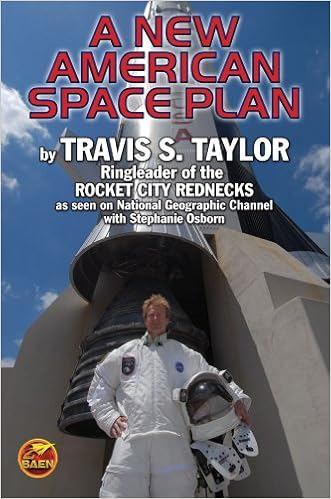 BOOK RECOMMENDATION:
~Stephanie Osborn
http://www.stephanie-osborn.com
~Stephanie Osborn
http://www.stephanie-osborn.com
* * *
A Few Observations on
Reusable Space Hardware,
or Why the Space Shuttle was
an engineering masterpiece and a logistical nightmare.
by Larry Bauer
The National Space
Transportation System, or what people commonly refer to as the Space Shuttle, was
composed of four parts: the Shuttle itself, the three Shuttle main engines, the
External Tank, and two Solid Rocket Boosters. In theory everything but the tank
and its fuel were recoverable.
I was reminded of this when I
saw an article noting the sixth successful landing of a SpaceX Falcon 9 rocket
after the successful launch of the JCSAT-16 commercial communications
satellite.

From a purely economical
aspect it all comes down to what is the cheapest means to launch a payload into
a desired orbit. On the face of it reusing hardware only makes sense. However
there are a good many factors that mitigate against such as assumption.
With NSTS we salvaged
everything except the ET. The Shuttle and engines landed and the SRB shells
parachuted back into the sea for recovery. In theory maximum reuse of critical
hardware. But let's look first at those boosters. They were made in sections
far from the launch site, built and filled in sections so they could be
transported by barge to Kennedy Space Center. From a logistics standpoint it
would have made much more sense to build them as a single tube and fill them
with solid propellant right there at the launch site. However that was not an
option. The state of Florida would allow launches from KSC, but they refused
permission to build the SRBs there. The solid propellant is nasty stuff and the
process of filling the boosters violated too many state pollution restrictions.
So the SRBs were built and filled originally by Thiokol of Brigham City, Utah,
later bought out by ATK.
I will note that the recovery
and remanufacture of the boosters was very cost- and labor-intensive, and there
was always a debate over whether a cheaper throw-away design might have been
more cost effective. I will also point out that a design incorporating a single
continuous tube would have made the failure that caused the Challenger disaster
impossible. Which does not mean something equally tragic might not have
happened, but you cannot have a joint failure if there are no joints.

The high-performance Space
Shuttle Main Engines, known as SSMEs or the Aerojet Rocketdyne RS-25, are an
example where reuse of hardware only makes good sense. These are the pinnacle
of the state of the art for liquid fuel rocket engines. With the help of the
solid boosters, these engines, sucking immense quantities of liquid hydrogen and
oxygen from the External Tank, could lift a combined vehicle and payload weight
of roughly 2060 tons. Bringing these highly intricate and fine-tuned engines
back for reuse only made sense.
And that does lead me to the
subject of a rather controversial opinion of mine. As magnificent an
engineering achievement as the NSTS was — and I spent the majority of my career
at NASA doing ground support to on-orbit experiment operations so I have a
great fondness for the beastie — the reason why it was a huge logistics failure
rests in the numbers. The shuttle itself weighed in at 2030 tons. Its payload
was 30 tons. The NSTS was a true heavy lift rocket, but most of what should
have been useful payload mass to orbit was spent instead on creating the ability
to land sort of like an airplane. A requirement imposed, by the way, by the Air
Force — who withdrew from the project between the time the design was firmed up
and the first launch. I will also observe that every astronaut pilot I've ever
spoken with all described the shuttle as “that flying brick.” [I can confirm
that astronaut description. —Steph]
And all of the above is
explanation as to why we don't see any shuttle-like designs these days. It is ever
so much more efficient to make as much of the upmass be useful payload as
possible, with the crew compartment just sufficiently robust to carry the
astronauts up and get them back to Earth safely.
* * *
Thanks much for that information, Larry! It squares pretty nicely with what I know of the various programs, as well.
BOOK RECOMMENDATION:
A New American Space Plan, by Travis S. Taylor with Stephanie Osborn, available in print and ebook, discusses the history of space exploration, where we are, how we got there, and where we ought to be and be going. You can find a lot more detail on the Space Shuttle, how it worked, the main engines and how the whole system was designed, right in this book. There's also a good bit about the recent efforts to develop commercial space launch systems and why the epithet "commercial" is often a misnomer.
http://www.stephanie-osborn.com
Wednesday, June 25, 2014
Elements of Modern Storytelling: Romance, A Guest Blog by Mindy Klasky
By Stephanie Osborn
http://www.stephanie-osborn.com
[Today is a special day for me -- it so happens that we are discussing romance on my wedding anniversary. GO US! Ahem...now on to the regular blog.]
Today's guest in our ongoing series of elements of storytelling is Mindy Klasky!
Mindy Klasky learned to read when her parents shoved a book in her hands and told her she could travel anywhere through stories. As a writer, Mindy has traveled through various genres, including hot contemporary romance. In her spare time, Mindy knits, quilts, and tries to tame her to-be-read shelf.

Mindy:
.jpg) Most readers are completely familiar with the mechanics of sex, both the basic physical function and its most common variants. If the only purpose of a sex scene were to describe that relatively limited range of physical activity, our books would get boring almost immediately.
Most readers are completely familiar with the mechanics of sex, both the basic physical function and its most common variants. If the only purpose of a sex scene were to describe that relatively limited range of physical activity, our books would get boring almost immediately.
Nicely done, Mindy! Yes, I must agree -- a well-done love/sex scene is a powerful way of depicting the inner lives of the characters involved!
So, Gentle Readers, care to answer her closing question in the comments? What books can you think of that have love scenes that advance the story AND tell you more about the characters?
-Stephanie Osborn
http://www.stephanie-osborn.com
http://www.stephanie-osborn.com
[Today is a special day for me -- it so happens that we are discussing romance on my wedding anniversary. GO US! Ahem...now on to the regular blog.]
Today's guest in our ongoing series of elements of storytelling is Mindy Klasky!
Mindy Klasky learned to read when her parents shoved a book in her hands and told her she could travel anywhere through stories. As a writer, Mindy has traveled through various genres, including hot contemporary romance. In her spare time, Mindy knits, quilts, and tries to tame her to-be-read shelf.
~~~
Mindy:
I've been following the various guest posts about Elements of Storytelling with great interest, especially the posts about romance. Over the years, my own writing has transitioned from traditional fantasy to humorous paranormal romance to contemporary romance (with no magical or fantasy element.) My writing has also become a great deal "spicier" than it was in my early books. Therefore, I'm looking forward to chatting about an important Element of Storytelling: The Love Scene.
Okay. Not everyone is going to call this subject matter a love scene. A lot of people will say that I'm talking about sex scenes. I used to think the difference was academic – a discussion point used by romance writers to remind the world that their work isn't just about sex; rather, we write about real emotions with real personal stakes.
I've come to realize, though, that the nomenclature does matter. Because when a scene-with-sex is done right, it becomes much more. It becomes a scene about characters, a scene about emotions.
Most readers are completely familiar with the mechanics of sex, both the basic physical function and its most common variants. If the only purpose of a sex scene were to describe that relatively limited range of physical activity, our books would get boring almost immediately.
But a well-written love scene does more than describe the mechanics of sex. A proper love scene informs the readers of the emotions of the characters before, during, and after their physical interaction. Those emotions become the engines of the scene, providing the layers that keep readers from skimming and yawning (or, occasionally, laughing uproariously at physically impossible actions).
Imagine these scenes:
- An imaginative woman seducing a willing man, making love for the first time and discovering each other's preferences and reactions to assorted stimuli (for example, a key love scene in my novel PERFECT PITCH)
.jpg) A couple who have known each other for decades, never acting on their mutual attraction because of society's condemnation of May/December relationships (the background for CATCHING HELL)
A couple who have known each other for decades, never acting on their mutual attraction because of society's condemnation of May/December relationships (the background for CATCHING HELL) - An experienced lover with extensive knowledge of sexual stimuli seducing a willing but inexperienced and partner for the first time (the setup for REACHING FIRST [coming soon])
The mechanics can be identical in each of these scenarios – naughty bits will rub against naughty bits. But the weight of the scene, the meaning of the actions, will vary vastly depending on the underlying emotional gloss. Therefore, as an author of love scenes, I need to focus on the emotional words in the scene. I need to pay especially close attention to my action verbs, to my adjectives, to my adverbs.
Love scenes have a lot in common with action scenes in a novel. Sure, it's great to know my hero is the greatest broadswordsman in the history of broadswordsmen. But a truly great fight scene will show me what it costs him to use his weapon – how he needs to harness all his strength, what it takes for him to heft the blade after his ribs are broken by his opponent, how the bones of his arm jangle after each clash. He must be aware of each cost of every action (and inaction) in every second of his battle – his deeds may result in his own injury or death and/or in the injury or death of all his allies.
Violence. Sex. When written well, they both allow an author to reveal depths of a character.
What books have you read that have effective love scenes – scenes that divulge information about the characters, even as they advance the story with the sexual activity they present?
~~~
Nicely done, Mindy! Yes, I must agree -- a well-done love/sex scene is a powerful way of depicting the inner lives of the characters involved!
So, Gentle Readers, care to answer her closing question in the comments? What books can you think of that have love scenes that advance the story AND tell you more about the characters?
-Stephanie Osborn
http://www.stephanie-osborn.com
Wednesday, March 26, 2014
Elements of Modern Storytelling: Romance, A Guest Blog by Kenneth Johnson
by Stephanie Osborn
http://www.stephanie-osborn.com
Today's guest blog on Romance as an element of modern storytelling is by Kenneth Johnson. Ken is an interesting individual. Principal Chief of the Florida Tribe of Cherokee Indians, Ken is also a polymath, a social scientist and culturalist. (J.R.R. Tolkien would have called him a "loremaster.") Ken Johnson is better known as "America's Culturalist." He writes primarily on issues of culture, conflict, and literary allegory. He is rather widely published in various magazines and webzines, and I thought his take on elements of modern storytelling would be intriguing and a bit different. I first "e-met" him after he read a couple of my books and contacted me; we met in person a few weeks later when I appeared at a convention local to him.
So let's sit back and see what Ken has to say.

Kenneth:
 But, by far, my greatest love of romance storylines is the
golden romance where love did not fade and a couple has held on to each other
through the years to the point that it has blossomed into something that few
people ever experience. Using a real
world example, I remember hearing a story of the late President Reagan. He was in the final stages of Alzheimer’s disease
and he decided to go on a routine walk with his Secret Service detail. Walking past a person’s yard, he saw a
beautiful rose. When he tried to pick
it, a Secret Service agent politely grabbed his hand and said, “Mr. President,
this is not your home.” To that,
President Reagan replied, “I know, I am just getting this for my sweetie.” For me, this is real romance. I cannot imagine the horror of losing my
mind. It would devastate me. Yet, through it all, he still wanted to show
his wife love and affection with everyday simple gestures that contemporary
society seemingly finds no value in anymore.
For this reason, golden romance is, in a way, much like puppy love –
only matured.
But, by far, my greatest love of romance storylines is the
golden romance where love did not fade and a couple has held on to each other
through the years to the point that it has blossomed into something that few
people ever experience. Using a real
world example, I remember hearing a story of the late President Reagan. He was in the final stages of Alzheimer’s disease
and he decided to go on a routine walk with his Secret Service detail. Walking past a person’s yard, he saw a
beautiful rose. When he tried to pick
it, a Secret Service agent politely grabbed his hand and said, “Mr. President,
this is not your home.” To that,
President Reagan replied, “I know, I am just getting this for my sweetie.” For me, this is real romance. I cannot imagine the horror of losing my
mind. It would devastate me. Yet, through it all, he still wanted to show
his wife love and affection with everyday simple gestures that contemporary
society seemingly finds no value in anymore.
For this reason, golden romance is, in a way, much like puppy love –
only matured.
 For this reason, the writer had better put serious thought
into what type of romance takes what type of timing. In the case of the Displaced Detective series, a lot of time had to expire for the two
main characters, Sherlock and Skye, to get to know each other. Even then, Sherlock had an inward battle he
had to fight where he was nothing short of a cultural fossil trying to live in
a new era with new norms. This all had
to play out. Indeed, it was not until
Skye nearly died that Sherlock had the emotional and traumatic stimulation
needed for him to uncharacteristically break out of his cultural shell and
engage in an atypical, erotic fashion.
Because both were older individuals, this type of romance had to quickly
crescendo and move on to a more stable type of romance more fitting of their age
and circumstance.
For this reason, the writer had better put serious thought
into what type of romance takes what type of timing. In the case of the Displaced Detective series, a lot of time had to expire for the two
main characters, Sherlock and Skye, to get to know each other. Even then, Sherlock had an inward battle he
had to fight where he was nothing short of a cultural fossil trying to live in
a new era with new norms. This all had
to play out. Indeed, it was not until
Skye nearly died that Sherlock had the emotional and traumatic stimulation
needed for him to uncharacteristically break out of his cultural shell and
engage in an atypical, erotic fashion.
Because both were older individuals, this type of romance had to quickly
crescendo and move on to a more stable type of romance more fitting of their age
and circumstance.
http://www.stephanie-osborn.com
Today's guest blog on Romance as an element of modern storytelling is by Kenneth Johnson. Ken is an interesting individual. Principal Chief of the Florida Tribe of Cherokee Indians, Ken is also a polymath, a social scientist and culturalist. (J.R.R. Tolkien would have called him a "loremaster.") Ken Johnson is better known as "America's Culturalist." He writes primarily on issues of culture, conflict, and literary allegory. He is rather widely published in various magazines and webzines, and I thought his take on elements of modern storytelling would be intriguing and a bit different. I first "e-met" him after he read a couple of my books and contacted me; we met in person a few weeks later when I appeared at a convention local to him.
So let's sit back and see what Ken has to say.
~~~

Kenneth:
As a reader, the greatest feat that a writer can accomplish
is maintaining a point of view that captures, and retains, my interest
throughout a storyline. I am extremely
particular when it comes to emotional vs. sensual writing. Oft times, I could care less what the
character is feeling emotionally and instead I want the writer to be talking
about the textures, smells, sensations, etc. of the moment. As a reader, romance therefore messes things
up for me when it is employed. By this I
mean that romance tends to blur the lines and therefore it is very much like
dropping a flash bomb in a room. When
done right, it re-grabs the attention of the reader, re-focuses it, and uses
the romance as a carrier to a much more elevated storyline. However, there is far too much bad writing
out there and thus the romantic twist just ends up twisting the story so far
out of whack that the reader gives up on the book altogether.
Indeed, in many ways, romance is to a story what salt is
like to food. Too little can make for a
bland story. Too much can kill a
story. So, the writer has to get that
Goldilocks scenario of getting things “just right” – which can become a
daunting challenge.
Initially, the writer should spend a great deal of time contemplating
both the correct timing as well as the correct type of romance to use. The writer also needs to take into
consideration the culture of the reader as well as the culture that the
character represents. Finally, the
writer has a professional duty to contemplate and account for the impact that
said romantic twist will have on the reader.
It is on this latter concept of professional responsibility
to the impact of romance that I first want to address. Social scientists have well established a link
between visual and actual responses to both romantic and carnal/lustful
situations. Researchers have concluded
that the subconscious brain cannot distinguish between actually seeing
something happen and seeing something depicted in an audio-visual format on
television or in the movies. That is to
say, “You know, but you don’t know,” because your conscious brain is saying, “This
is a television show,” while your subconscious is like some teenager yelling
out, “They’re really getting it on!” Some
researchers are now beginning to hypothesize that this response to stimuli also
applies to the written word. A select
few are now going so far as to say that the written word may be even more
sensual than real life, meaning that the subconscious brain would be even less
likely to differentiate between writing and the real thing. This hypothesis takes into account the power
of human imagination. Thus, a literary
tryst may have a more physio-emotional impact on the reader than them seeing
the real thing. Such arguments have
specifically centered around juvenile-based comics, teen fiction, and even
young adult fiction due to the added issue of hormones which can potentially,
and adversely, “color” feelings and perceptions.
Of course, all of this is all well and good but it is still
just theory. Quite possibly the greatest
impact concern that a writer should have is the reader’s expectations. For instance, if one is reading a story
about an Amish farm, one really would not expect to read about how Helga got
ravished by Jacob and ended up covered in chocolate sauce in some barn. However, by the same token, Jacob taking
Helga by the hand, courting her, and stealing a kiss might be something that
the reader would more likely expect.
Therefore, the writer not only has to ask, “Would the character do
this?” but the writer should also consider, “How will my readers react if this
romantic twist plays out this specific way?”
Verily, it is the romantic type that matters as much, if not
more, than anything else. Ultimately,
all romance can be broken down into six types or categories: puppy love, teenage drama, young adult
passion, erotica, secondary romance, and golden romance.
By far the simplest concept to understand is the “puppy
love” concept where intentions are pure even though comprehension and motives
are likely underdeveloped in the plot line.
While it is the simplest to understand, this type of romance can be the
hardest to write because it is so underdeveloped in its motives, rationale,
etc. For this reason, most writers never
touch the topic unless in brief to provide a background story or some other
accentual element to a much greater storyline.
Teenage drama is a hot button issue now. Like puppy love, it lacks rationale – but
that is what makes it so great to use!
You can have love, hate, sorrow, etc. all tied in together because the
readers are teenagers and they are feeling the ravages of hormonal
changes.
Young adult passion is becoming a more popular segment these
days. Indeed, a number of young readers
are tired of carnal-focused romance stories and instead they want to experience
the more sophisticated nuances of genuine love between two people who are now
more mature and contemplating what to do with their lives.
By far the greatest bulk of American romance is almost
erotica based. Some of the storylines
being developed today are nothing short of something one would have expected
from historical erotica writers like Anais Nin.
Such stories hone in on the frustrations of life and provide a release
by one giving themselves over to cultural taboos. But, again, audience and character background
means everything. As a Native American,
I am used to intimate body parts being talked about in the casual. However, the talk of breasts and such, in
contemporary society, is deemed “intimate” and so this genre style can be
fickle – especially if the writer has a diverse readership or only typically
writes from one cultural vantage point.
Of course, after a while, love oft-times will start to fade. A growing trend in America is for middle-aged
people to have two or more previous marriages in their histories. So, romance writers have begun to focus on
trying to write about reigniting flames in old relationships, finding the right
relationship after a long-dead one has failed, etc.
.jpg) But, by far, my greatest love of romance storylines is the
golden romance where love did not fade and a couple has held on to each other
through the years to the point that it has blossomed into something that few
people ever experience. Using a real
world example, I remember hearing a story of the late President Reagan. He was in the final stages of Alzheimer’s disease
and he decided to go on a routine walk with his Secret Service detail. Walking past a person’s yard, he saw a
beautiful rose. When he tried to pick
it, a Secret Service agent politely grabbed his hand and said, “Mr. President,
this is not your home.” To that,
President Reagan replied, “I know, I am just getting this for my sweetie.” For me, this is real romance. I cannot imagine the horror of losing my
mind. It would devastate me. Yet, through it all, he still wanted to show
his wife love and affection with everyday simple gestures that contemporary
society seemingly finds no value in anymore.
For this reason, golden romance is, in a way, much like puppy love –
only matured.
But, by far, my greatest love of romance storylines is the
golden romance where love did not fade and a couple has held on to each other
through the years to the point that it has blossomed into something that few
people ever experience. Using a real
world example, I remember hearing a story of the late President Reagan. He was in the final stages of Alzheimer’s disease
and he decided to go on a routine walk with his Secret Service detail. Walking past a person’s yard, he saw a
beautiful rose. When he tried to pick
it, a Secret Service agent politely grabbed his hand and said, “Mr. President,
this is not your home.” To that,
President Reagan replied, “I know, I am just getting this for my sweetie.” For me, this is real romance. I cannot imagine the horror of losing my
mind. It would devastate me. Yet, through it all, he still wanted to show
his wife love and affection with everyday simple gestures that contemporary
society seemingly finds no value in anymore.
For this reason, golden romance is, in a way, much like puppy love –
only matured.
Naturally, nothing matters more than timing. You can have everything picked out and
properly accounted for with the readers and characters and still mess up a good
story with improper timing. Simply put,
you cannot have someone talking about Prussian military tactics one minute, and
then having them in a loving embrace the second, without first properly setting
the stage. This is to say that romance
happens on a very specific schedule.
Case in point, golden romance can never happen between two
teenagers because they are too young to understand it and appreciate it for
what it is. By the same token, two
middle-aged individuals cannot suddenly break out in teenage romance because
they should be old enough, and stable enough, that all of the, “I love you, I
hate you, let’s make out, oh I feel so ashamed, let’s do it again,” erratic
melodrama is well behind them.
For this reason, the writer had better put serious thought
into what type of romance takes what type of timing. In the case of the Displaced Detective series, a lot of time had to expire for the two
main characters, Sherlock and Skye, to get to know each other. Even then, Sherlock had an inward battle he
had to fight where he was nothing short of a cultural fossil trying to live in
a new era with new norms. This all had
to play out. Indeed, it was not until
Skye nearly died that Sherlock had the emotional and traumatic stimulation
needed for him to uncharacteristically break out of his cultural shell and
engage in an atypical, erotic fashion.
Because both were older individuals, this type of romance had to quickly
crescendo and move on to a more stable type of romance more fitting of their age
and circumstance.
Verily, when done right, there is no greater way for a
writer to develop a storyline than by way of romance. By its very essence, it is
transcendental. However, more so than with
any other element, it has to be used in the appropriate amount, in the correct
manner, and at the optimal point in time to give the story the most bang for
the readers’ buck. Some of the greatest
stories of our era are won and lost in how the author handles romantic twists.
~~~
Interesting point of view, and I had not thought of dividing up the different "types" of love before, nor of how they necessarily provide for different timing!
If you'd like to read more of Ken's work, you can find a lot linked to his website:
-Stephanie Osborn
http://www.stephanie-osborn.com
Wednesday, March 5, 2014
A New Idea for an Old Blog
by Stephanie Osborn
http://www.stephanie-osborn.com
I've been trying to figure out some interesting options for this blog. It's been around a few years now, and I wanted to do something different for my readers. An online chat with a friend and fellow author generated a spark, and I have that idea, and more, agreement from the appropriate people to help me pull it off.
So, starting next week, I'm going to have a running series of posts -- some guest, some my own -- that answer the question,
Where does [insert element here] fit as an element of modern storytelling?
Hopefully this will result in some interesting dialogue between authors and readers, hopefully in the comments of this blog (which for some reason, people seem to be shy about commenting upon, despite the fact that I have a goodly international readership), and elsewhere. So please stick around while anywhere from 8-12 authors discuss the elements of telling stories and how each one personally incorporates them. And by all means, post your thoughts and reactions in the comments.
I think it will be worth your while. And I think we're all about to learn some stuff.
Heads up: Next week we begin...
Where does ROMANCE fit as an element of modern storytelling?
-Stephanie Osborn
http://www.stephanie-osborn.com
http://www.stephanie-osborn.com
I've been trying to figure out some interesting options for this blog. It's been around a few years now, and I wanted to do something different for my readers. An online chat with a friend and fellow author generated a spark, and I have that idea, and more, agreement from the appropriate people to help me pull it off.
So, starting next week, I'm going to have a running series of posts -- some guest, some my own -- that answer the question,
Where does [insert element here] fit as an element of modern storytelling?
Hopefully this will result in some interesting dialogue between authors and readers, hopefully in the comments of this blog (which for some reason, people seem to be shy about commenting upon, despite the fact that I have a goodly international readership), and elsewhere. So please stick around while anywhere from 8-12 authors discuss the elements of telling stories and how each one personally incorporates them. And by all means, post your thoughts and reactions in the comments.
I think it will be worth your while. And I think we're all about to learn some stuff.
Heads up: Next week we begin...
Where does ROMANCE fit as an element of modern storytelling?
-Stephanie Osborn
http://www.stephanie-osborn.com
Wednesday, February 5, 2014
Surprise! Cover Reveal for Joann H. Buchanan's New Book!
by Stephanie Osborn
http://www.stephanie-osborn.com
Joann is a fellow author and friend on social media! She's having a book cover reveal today and I offered to take part! Enjoy!
~~~

The Hunter is scheduled to be released on January
31st 2014
http://www.stephanie-osborn.com
Joann is a fellow author and friend on social media! She's having a book cover reveal today and I offered to take part! Enjoy!
~~~
Click on the image to enlarge.
Destiny
chose her, vengeance drove her. Seventeen year old Carly was born to be a hunter, a destiny she rejected until
one fateful night when the only person she had in the world was taken, her
mom. Now Carly is on a mission to hunt down the entity that destroyed her world.
Excerpt:
My name is Carly. I belong to The Order of the Hunters—a group of chosen who are given
the gift to track and kill those beings that go bump in the night. Oh yes,
they are real, the monsters that creep in the darkness. They hide in the
gardens of our own minds by making us believe they are nothing more than myths and
legends. I’ve traveled this road for two years now. It’s not the same
highway, but at times, when the sun is high in the sky and the road sweats from the
heat, it feels like it. I wish I could say what brought me to this point
was a sense of honor and nobility. In reality it was much simpler, it was
revenge. Mom was taken by Shai, the weigher of souls.
~~~
Congratulations, Joann!
And readers, make sure you check out The Hunter!
-Stephanie Osborn
http://www.stephanie-osborn.com
Subscribe to:
Posts (Atom)