Banner

Banner
Showing posts with label Challenger. Show all posts

Tuesday, August 16, 2016

An Op-Ed Guest Post

Today, please welcome my old NASA colleague, Larry Bauer. Currently retired, he and I worked numerous Shuttle missions together as payload flight controllers.
~Stephanie Osborn
http://www.stephanie-osborn.com


* * *


A Few Observations on Reusable Space Hardware,
or Why the Space Shuttle was an engineering masterpiece and a logistical nightmare.
by Larry Bauer

The National Space Transportation System, or what people commonly refer to as the Space Shuttle, was composed of four parts: the Shuttle itself, the three Shuttle main engines, the External Tank, and two Solid Rocket Boosters. In theory everything but the tank and its fuel were recoverable.

I was reminded of this when I saw an article noting the sixth successful landing of a SpaceX Falcon 9 rocket after the successful launch of the JCSAT-16 commercial communications satellite.


From a purely economical aspect it all comes down to what is the cheapest means to launch a payload into a desired orbit. On the face of it reusing hardware only makes sense. However there are a good many factors that mitigate against such as assumption.

With NSTS we salvaged everything except the ET. The Shuttle and engines landed and the SRB shells parachuted back into the sea for recovery. In theory maximum reuse of critical hardware. But let's look first at those boosters. They were made in sections far from the launch site, built and filled in sections so they could be transported by barge to Kennedy Space Center. From a logistics standpoint it would have made much more sense to build them as a single tube and fill them with solid propellant right there at the launch site. However that was not an option. The state of Florida would allow launches from KSC, but they refused permission to build the SRBs there. The solid propellant is nasty stuff and the process of filling the boosters violated too many state pollution restrictions. So the SRBs were built and filled originally by Thiokol of Brigham City, Utah, later bought out by ATK.

I will note that the recovery and remanufacture of the boosters was very cost- and labor-intensive, and there was always a debate over whether a cheaper throw-away design might have been more cost effective. I will also point out that a design incorporating a single continuous tube would have made the failure that caused the Challenger disaster impossible. Which does not mean something equally tragic might not have happened, but you cannot have a joint failure if there are no joints.


The high-performance Space Shuttle Main Engines, known as SSMEs or the Aerojet Rocketdyne RS-25, are an example where reuse of hardware only makes good sense. These are the pinnacle of the state of the art for liquid fuel rocket engines. With the help of the solid boosters, these engines, sucking immense quantities of liquid hydrogen and oxygen from the External Tank, could lift a combined vehicle and payload weight of roughly 2060 tons. Bringing these highly intricate and fine-tuned engines back for reuse only made sense.


And that does lead me to the subject of a rather controversial opinion of mine. As magnificent an engineering achievement as the NSTS was — and I spent the majority of my career at NASA doing ground support to on-orbit experiment operations so I have a great fondness for the beastie — the reason why it was a huge logistics failure rests in the numbers. The shuttle itself weighed in at 2030 tons. Its payload was 30 tons. The NSTS was a true heavy lift rocket, but most of what should have been useful payload mass to orbit was spent instead on creating the ability to land sort of like an airplane. A requirement imposed, by the way, by the Air Force — who withdrew from the project between the time the design was firmed up and the first launch. I will also observe that every astronaut pilot I've ever spoken with all described the shuttle as “that flying brick.” [I can confirm that astronaut description. —Steph]


And all of the above is explanation as to why we don't see any shuttle-like designs these days. It is ever so much more efficient to make as much of the upmass be useful payload as possible, with the crew compartment just sufficiently robust to carry the astronauts up and get them back to Earth safely.

* * *

Thanks much for that information, Larry! It squares pretty nicely with what I know of the various programs, as well.

BOOK RECOMMENDATION:

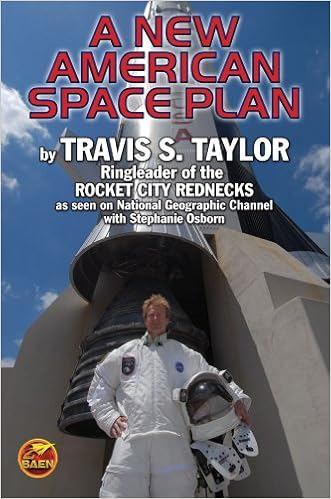
A New American Space Plan, by Travis S. Taylor with Stephanie Osborn, available in print and ebook, discusses the history of space exploration, where we are, how we got there, and where we ought to be and be going. You can find a lot more detail on the Space Shuttle, how it worked, the main engines and how the whole system was designed, right in this book. There's also a good bit about the recent efforts to develop commercial space launch systems and why the epithet "commercial" is often a misnomer.

~Stephanie Osborn
http://www.stephanie-osborn.com

Wednesday, February 19, 2014

Fulfilling A Promise To You -- SPEARED

by Stephanie Osborn
http://www.stephanie-osborn.com

I suppose it's appropriate to discuss this at this time of the year. You see, as it turns out, all three of the major catastrophes in our national space program landed in the same week of the calendar. The Apollo 1 fire occurred on January 27. The Challenger disaster took place on January 28. The Columbia disaster occurred on February 1. The dates spread over a scant six days. Friends have told me that NASA should shut down that week, from now on. I try to explain that need for supplies, and orbital mechanics, doesn't work like that.

I'm old enough to remember all three disasters, though the Apollo 1 fire, well, I was SO small I really didn't quite get it. (It helps, I suppose, that my memory goes back an astounding way, at least according to my mom, back into infancy, it seems.) But it was what first drew my attention to NASA and the space program. I'd just moved to Huntsville not a full two months before the Challenger disaster, and I managed to cram an entire career in the space program in between the Challenger and Columbia disasters. And had a friend aboard Columbia's final flight. (For details of these disasters, see my blog posts: Apollo 1, Challenger, Columbia part 1, part 2.)


The gist of it is that my friend, Kalpana Chawla, was aboard. And Columbia was the bird I'd worked with the most. AND...I'd just finished the first draft of Burnout: The mystery of Space Shuttle STS-281, which featured a Shuttle disaster that very nearly perfectly mimics what happened to Columbia, with the few minor differences caused by the fact my fictional scenario was due to sabotage. To say I was devastated would be putting it mildly. And the more I found out, the more upset I got. And I found out a lot, what with reading the reports as they came out, and even getting a chance to chat with one of the field coroners. Without putting too fine a point on it, or telling my readers details that, frankly, contain images that nobody needs in their heads, suffice it that if I could find a way to prevent such a thing ever happening again, while still permitting space flight, I'd consider my life had been worthwhile.


In the same year I talked to the field coroner, Felix Baumgartner made his historic "jump from the edge of space." And something in my head clicked. I contacted my colleagues in SIGMA, the science fiction think tank, and founder Arlan Andrews and Dr. Tom Ligon signed on for the duration.

And SPEARED was born.

SPEARED is an acronym that stands for Single-Person Emergency Atmospheric Re-Entry Device. Cool name, huh? What we're trying to do is to develop what is essentially an ejection seat/escape pod combo for astronauts (or cosmonauts, taikonauts, whoever wants to go into space that might have issues coming home again). We're still in early stages yet, just very basic R&D (research & development), working on what materials we can use, and what shape things need to be in -- no, I mean literally, what geometric shapes this stuff needs to have to protect the space travelers in an emergency atmospheric entry.

We already have a preliminary patent, have done some materials testing that indicate that we are headed in the right direction, and have presented the concept at a couple of professional conferences, to interested audiences. What we don't got is funding...yet.

We've been doing this all with our own money, see -- that's how strongly we feel about it, and how sure we are that we can find a way to make it work. But we can't afford to keep pouring our own funds into it indefinitely, and there are starting to be things that we need done that all three of us together don't have the funds to do -- like have some very sophisticated computer modeling run, to help us determine what the best shape for the pod is (we're divided between spherical and aerobrake shapes). It needs to be as simple as possible to follow the adage of K.I.S.S. (Keep It Simple, Stupid -- the simpler a device, the fewer things there are to go wrong), yet sophisticated enough to accomplish several functions, including:
1) protecting the astronaut from the heat of re-entry,
2) protecting the astronaut from impact,
3) preferentially having some degree of steering/guidance so that the landing point is not too inimical an environment,
4) notifying rescuers of the astronaut's location,
among other things.

So it isn't a simplistic problem, even if our final design proves to be relatively simple.

I can't go into a whole lot of detail yet. We just finished and submitted an article on SPEARED to Analog magazine, and Analog only publishes first-run stuff -- it can't have been in print before. So if and when the article gets published, I'll be sure to note it here, so you can all go get copies and read it. It'll have a lot more detail in it than I could put in here, anyway, and it tells the story of SPEARED's development from the points of view of all three SPEARED researchers -- myself, Arlan, and Tom.

I'm really hoping that we'll get some serious interest in it -- from NASA, from ESA, from the various commercial space leaders -- because I am passionate about this system, about seeing it developed, about seeing it put into place as a standard emergency system. I worked for a couple decades in the civilian and military space industries. I know my stuff. I know what my friend KC went through. And if I can help prevent that from happening to any other space explorer, then it can never be said that I lived my life in vain.

-Stephanie Osborn
http://www.stephanie-osborn.com

Monday, February 18, 2013

Remembrance: Challenger

by Stephanie Osborn
http://www.stephanie-osborn.com

You may remember that I started my career as a payload flight controller for first Shuttle, and then Station. And that I had a friend aboard Columbia during her final flight. For those who have read my all-too-painfully prescient book, Burnout: The mystery of Space Shuttle STS-281, you know I dedicated that book to my friend Kalpana Chawla, her crewmates, and all those who have died in pursuit of space. "Ad astra, per ardua." ("To the stars, through struggle/adversity.")

We've just passed through a period of time of which most people are unaware. You see, all of the major space disasters that America has experienced all occurred within a 2-3 week span on the calendar. And interestingly, they occurred in chronological order on the calendar.

Apollo 1 Fire - January 27

Space Shuttle Challenger disaster - January 28

Space Shuttle Columbia disaster - February 1

~~~
Challenger - What Happened?

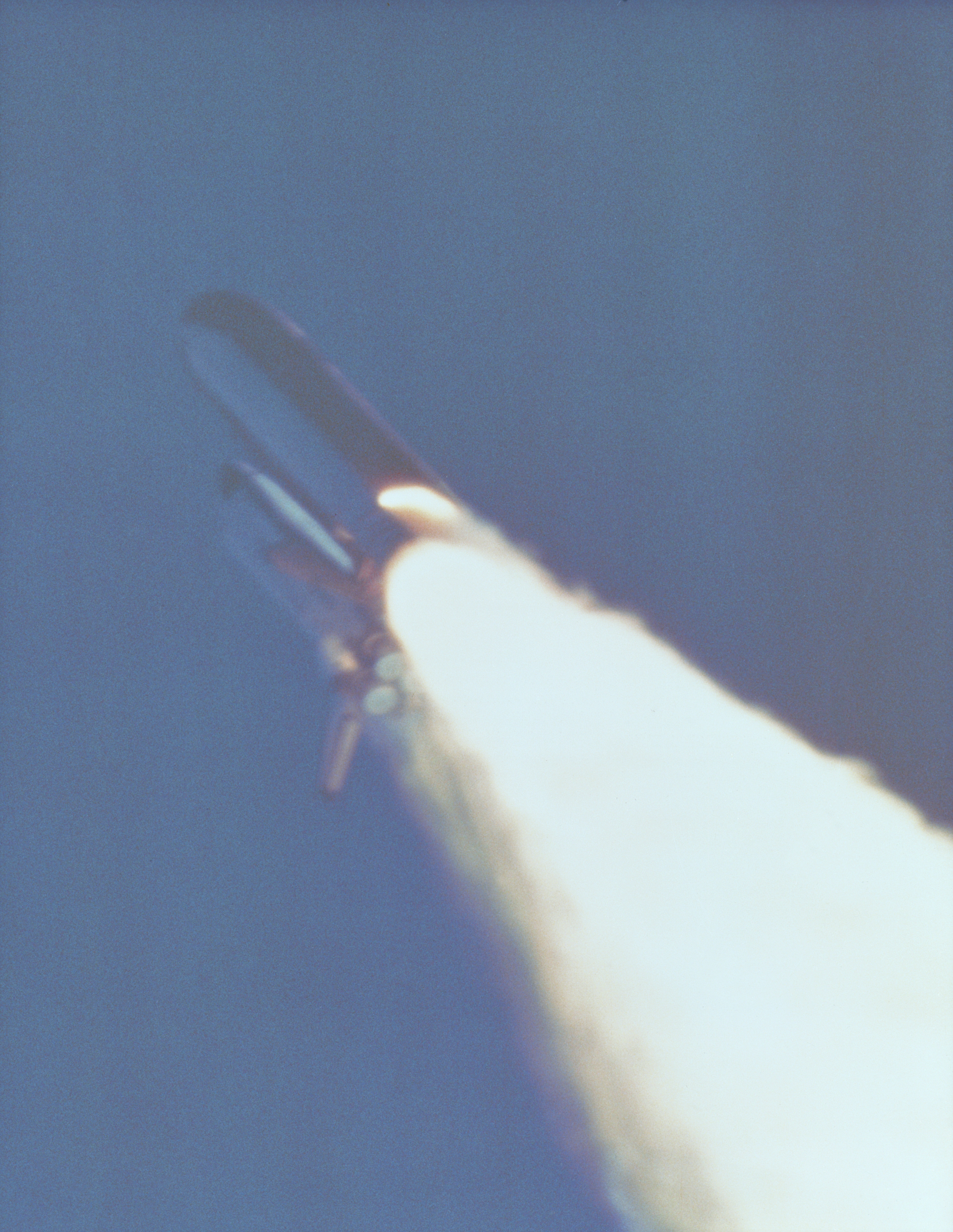
On January 28, 1986, Space Shuttle Challenger launched on mission STS-51L. It carried the first teacher in space, Christa McAuliffe, as well as astronauts Mike Smith, Dick Scobee, Ron McNair, Ellison Onizuka, Greg Jarvis, and Judy Resnick. At MET (Mission Elapsed Time) 00/00:01:13 (T+73sec), Challenger exploded. There were no survivors.


Some personal background

On January 28, 1986, I was about a month and a half into my first full-time job post-graduate school. I was the resident astronomer on a defense project that was in Phase 1 R&D. (I can't tell you much more than that, 'cuz then I'd have to kill ya. *jk* But you get the picture.) Phase 2 was to have been prototype development and testing, including prototype flight and testing aboard the Shuttle. They needed a payload specialist for that flight. My hat was in the ring and I was a likely candidate.

The Challenger disaster grounded the fleet indefinitely. This was a factor in the cancellation of Phase 2 of my project. So my PS candidacy dream exploded with that shuttle.

I ended up transferring over to the space programs division of my company and working for many years as a payload flight controller, scheduling activities for Shuttle missions, and even training astronauts (more about that next week). I fit in an entire career between two of only three major space disasters that NASA has had in its existence.

I remember the day clearly. I was sitting in my cubicle working when my friend from grad school and coworker, Jim, leaned over the top of the partition (Jim is really tall).

"Steph? Steph!"

"Yeah, Jim? What's up?"

"The Shuttle just blew up."

"Ha. Ha. Very funny."

"I'm serious."

It wasn't until he said that, that I truly diverted my full attention from my work and looked him in the face. And I knew. He really WAS serious.

I flung my pen at the desk, shoved my chair back, and rounded the cubicle partitions at a full sprint. Our boss had a small TV in his office, and when I got there, most of the branch was crammed in his office watching. There was nothing else on - everyone was covering it. We all sat in silence and watched the reports come in, and the replays of the explosion. To this day I can't stand to watch footage of that explosion anymore.

Later I went down the hall on some errand, and across the building to the cafeteria for lunch. All the halls were empty except for offices that had TVs, where people spilled out into the hall trying to watch said TV. One or two doors were closed and I thought I heard the sounds of weeping from behind them - or else similar sounds from behind restroom doors. It was not something I'll ever forget. Sometimes I wish I could.

So what happened?

This is something I know a fair amount about, because I used the Challenger disaster information as part of my research for writing my first book, Burnout: The mystery of Space Shuttle STS-281.

The gist of it is that the entire vehicle is only certified to to 40F, and they launched in 18F temperatures. Management felt it was a high profile mission with McAuliffe aboard, and ignored all warnings from the scientists and engineers who knew better.

What many do not know is that equipment on the launch pad also failed, possibly due to the cold. In the end, those were ruled out as part of the cause of the accident, but they so easily COULD have been, that it is worth mentioning. Now, on to what actually happened.

It had been discovered in previous flights that SRB ignition caused the first segment of the SRBs to warp, the casings ballooning out from the stress, and opening the joint between it and the next segment.

Wait. Back up, I hear you say. Why is the SRB in segments in the first place? Because the solid propellant has to be poured, cast, and cured like concrete. And just like concrete, if you pour too big a slab, it will crack during the curing process. This crack will act as a fuse for the fuel burn to travel along, and cause not only uneven thrust (a significant danger in a craft whose thrust must remain balanced on each side), but also a burn-through of the casing. So it's cast in segments, and those segments stacked.

Ok. So the joint opened up. Regularly. It was found, however, that the primary O-ring tended to shift, compensating for the warp and sealing the opening. This took a certain amount of time, but it was generally short enough to prevent anything but hot gases from escaping - no actual flame ever got past. Now granted, the hot gas was around 5000F, but it still wasn't flame, and it was only for fractions of a second, maybe a half-second at most, and all within 3-4 seconds of liftoff, so that was considered more or less okay. This behavior actually ended up being retroactively added into the specs.

However, the flexibility of the O-rings, as we all know now, is temperature-dependent. The colder the temperature, the less flexible the rings, and the longer it takes for them to shift into position to block the blow-by, as the escaping gas was termed. Turns out that 18F pretty much "de-flexed" the O-rings into rigidity. The primary O-ring didn't flex into the "new" position - evidently at all - and the secondary O-ring was unseated by the warping of the casing. There was nothing to stop the blow-by until the aluminum oxide components from the solid propellant essentially clogged the opening. By that time the O-rings had been burned away for nearly a quarter of the circumference of the starboard SRB. But the metal oxides had sealed the hole. No problem.

Not quite.

From approximately T+37sec (launch plus 37 sec) to T+74sec, the Shuttle encountered a layer of heavy wind shear, stronger than ever encountered before. This wind shear broke open the aluminum oxide seal that was holding the starboard SRB closed. A plume of exhaust immediately formed and became well defined as blow-by resumed. This in turn ate away at the casing, enlarging the hole and allowing for more and more blow-by. The thrust of the SRB began to drop, as part of it was being redirected out the hole in the side.
A recovered piece of the starboard SRB, showing the hole and blow-by scorching.


Soon the plume struck the external tank (ET) and began eating into it. (Hot gas and plasma has a way of doing that.)

The plume develops on the side of the SRB, near the ET.

It didn't take long (~T+66sec, two seconds after the ET plume formed) before the liquid hydrogen tank began leaking fuel, adding to the whole mess by burning as it entered the plasma exhaust stream. This led to two additional problems. One, the pressure in the LH2 tank was dropping steadily, which would cause problems in operation of the Shuttle main engines (SSMEs or Space Shuttle Main Engines). Two, this would cause an additional thrust vector - and remember what I said earlier about needing to have balanced thrust? Different thrust angles means that there are now torques (twisting forces) being applied to the Shuttle "stack" that it's never experienced, and is not designed to experience.

At this point neither the crew nor the flight controllers have registered that the drops in pressure are due to something other than normal ascent; the Shuttle is passing through "Max Q," the segment of the trajectory that experiences the maximum stress from the atmosphere, and breaks Mach 1. Once it has done this, the aerodynamic forces drop (the SSMEs have throttled back to about 65% for this, to minimize stress), and at T+68, CapCom Dick Covey called, "Challenger, you are go at throttle-up."

Commander Dick Scobee replied, "Roger, go at throttle-up," indicating that they would increase the SSME operations back to 104%. It would be the last words heard on the Air-to-Ground loop from Challenger.

At ~T+72, the rear strut attaching the starboard SRB to the ET... broke, pulled loose, whatever...and the inevitable accelerated into its awful climax. The craft slammed to the right, and the onboard black box recorder caught Pilot Mike Smith remarking, "Uh-oh." This appears to have been the first indication the crew had that anything was amiss. It was far too late.

At fractions of a second past T+73, the rear of the LH2 tank ruptured and the spilling LH2 apparently ignited, causing the tank to act like a rocket. It slammed forward into the rear of the liquid oxygen (LOX) tank. At the same time the starboard SRB pivoted on its remaining strut, slamming into the ET. The ET failed (aka "busted open") and the LH2 and LOX mingled, igniting and producing a huge cloud of water vapor. Everything went to hell in a handbasket as the Shuttle veered off course, experiencing forces far beyond its specs (20G as opposed to 5G), and it essentially shattered.

Interestingly, this did not indicate demise of the crew, only the Orbiter and stack. (The ET had already broken up, and once the Range Safety Officer determined the SRBs were in free, uncontrolled flight, he initiated detonation to protect ocean vessels and land inhabitants.) There is some debate about whether or not the mid-deck crew survived the breakup, as that area caught a considerable amount of force during the devastating disintegration. It is beyond doubt, however, that the flight deck did in fact emerge intact. Three of the four emergency oxygen systems for the flight crew were found activated, with sufficient oxygen used to just equate to the free fall. For the commander and pilot to be wearing them, it was necessary for the mission specialists to don theirs, unstrap, put on the masks for the CDR and PLT, then sit back down and strap in - they were found masked and strapped in. Also instrument settings on the console had been changed, and could only have been changed by the pilot in an effort to reaquire cabin electricity.

The crew cabin during free-fall.

However, the emergency oxygen system was not pressurized, and at that altitude unconsciousness would have occurred quickly. This is probably merciful because the impact on the ocean surface generated forces in excess of 200G, which neither the crew nor the remains of the cabin could survive.

Aftermath

The Shuttle Fleet was grounded for a significant period of time, approximately three years. During this time, investigations into exactly what happened and why were extensive. So were redesigns, including a new joint design for the SRB segments, which included a mortise and tang design that was significantly reinforced with thick layers of steel. A new bailout procedure and equipment was developed; this was actually depicted in the movie, Space Cowboys (but it would not have saved the crew of Challenger). A new abort procedure was developed, known as Return To Launch Site, or RTLS (which would also not have saved the Challenger crew). The Office of Safety, Reliability, and Quality Assurance was created within NASA. The crew returned to wearing pressure suits for ascent and re-entry. Numerous other changes were made within the organization of NASA, to foster a different attitude in the management. Those of us who worked the actual missions took it very seriously.

Unfortunately, as we'll see next week, NASA management failed to remember the lesssons learned from this catastrophe.

-Stephanie Osborn
http://www.stephanie-osborn.com

Monday, February 11, 2013

Remembrance: Apollo 1

by Stephanie Osborn
http://www.stephanie-osborn.com

You may remember that I started my career as a payload flight controller for first Shuttle, and then Station. And that I had a friend aboard Columbia during her final flight. For those who have read my all-too-painfully prescient book, Burnout: The mystery of Space Shuttle STS-281, you know I dedicated that book to my friend Kalpana Chawla, her crewmates, and all those who have died in pursuit of space. "Ad astra, per ardua." ("To the stars, through struggle/adversity.")

We've just passed through a period of time of which most people are unaware. You see, all of the major space disasters that America has experienced all occurred within a 2-3 week span on the calendar. And interestingly, they occurred in chronological order on the calendar.

Apollo 1 Fire - January 27

Space Shuttle Challenger disaster - January 28

Space Shuttle Columbia disaster - February 1

~~~

So what happened?

The Apollo 1 Fire

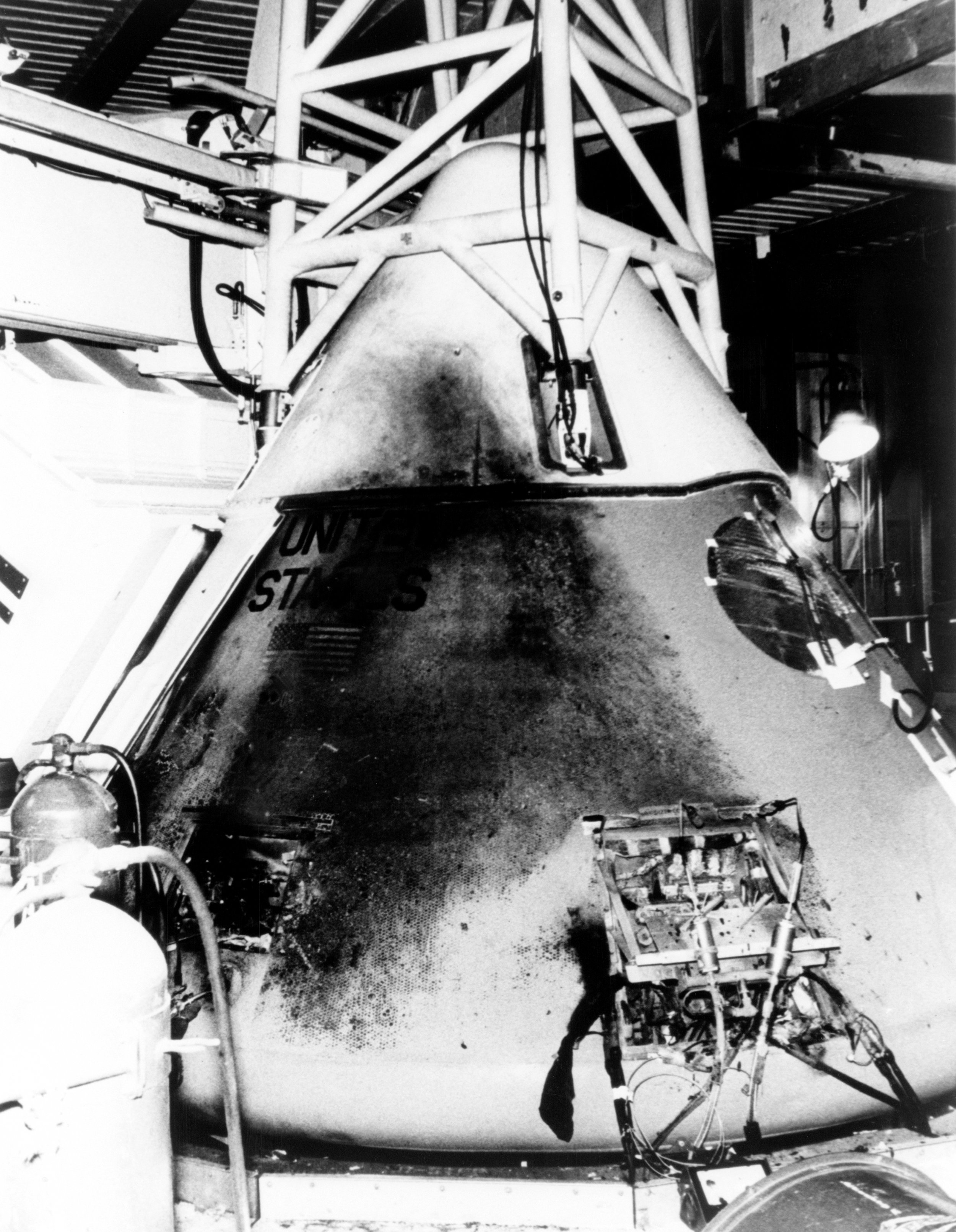
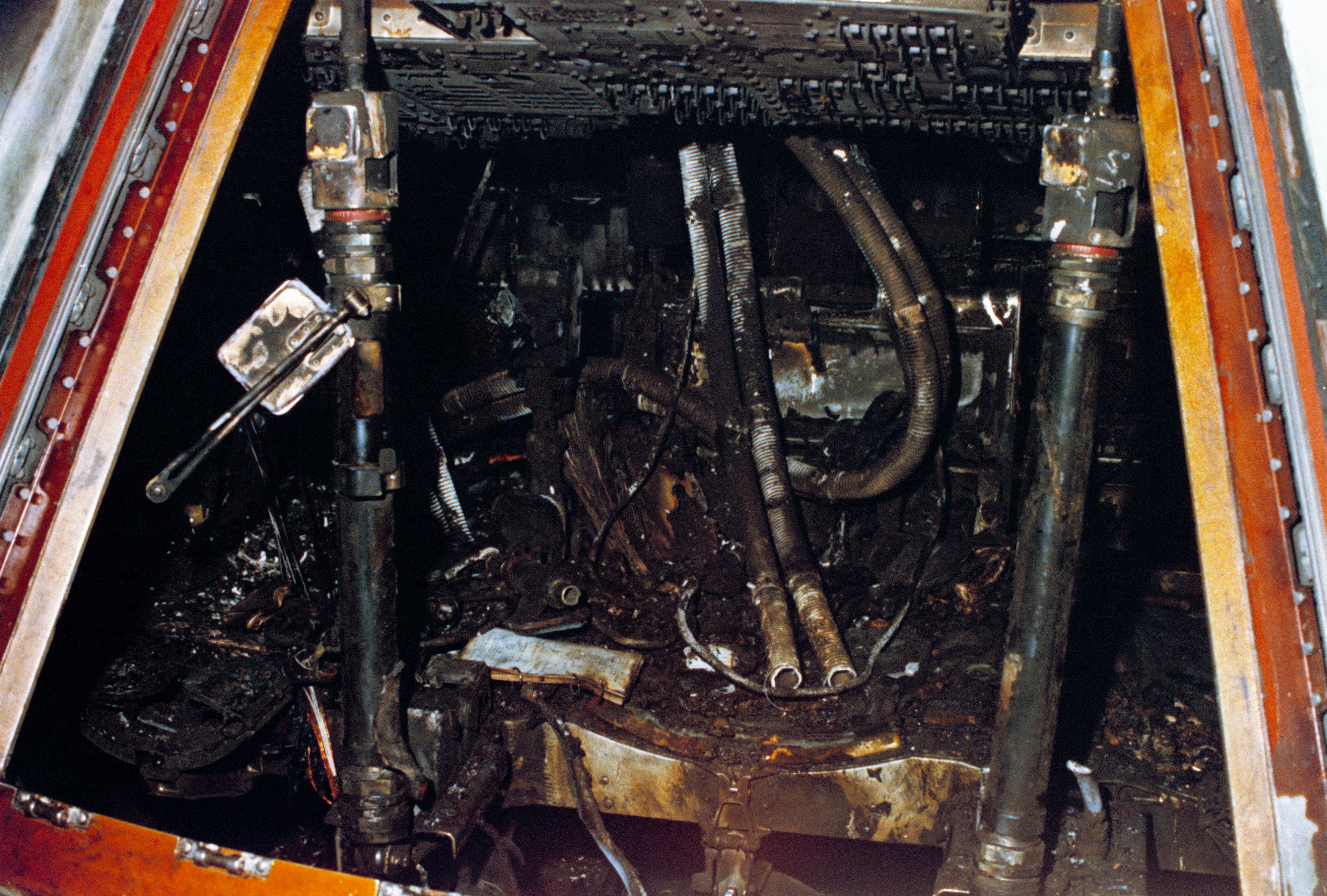
Apollo 1, originally designated Apollo/Saturn-204, was to have been the first manned mission of the Apollo program. It was scheduled to launch on February 21, 1967 with the crew component of Gus Grissom, Ed White, and Roger Chaffee. Frayed insulation allowed a spark from a cable to jump to flammable material in the cabin's pure oxygen atmosphere during a countdown checklist test. Velcro was a new product and the crew and especially the ground crew it seems, went crazy in using it inside the cabin to place things within easy reach. Unfortunately it is highly flammable, and in the pure oxygen atmosphere, went up like a blowtorch. The additional design modification of having an inward-opening inner hatch after the near-catastrophe of Gus Grissom's Liberty Bell 7 flight, rendered it impossible to open the hatch for escape. The crew was trapped inside and died in the fire, which created interior pressures so great that the capsule ruptured, sending flames outward and igniting part of the surrounding superstructure.

The timeline: at 6:30:54 (23:30:54 GMT) during a T-10min hold, a voltage transient was recorded. This was likely the initiating spark. At 6:31:04 (ten seconds later), Chaffee exclaimed, "Hey." The voice recorder picked up scuffling sounds, then Commander Grissom reported the fire. At 6:31:12 Chaffee officially reported, "We've got a fire in the cockpit." White responded. Twelve seconds later, Chaffee began urging his colleagues to get out.

Per Wikipedia's entry, "Some witnesses said they saw White on the television monitors, reaching for the inner hatch release handle as flames in the cabin spread from left to right and licked the window." There was also this official report: "Witnesses monitoring the television showing the hatch window reported that flames spread from the left to the right side of the command module and shortly thereafter covered the entire visible area." [Apollo 1: The Fire, http://history.nasa.gov/SP-4029/Apollo_01a_Summary.htm]

The last voice transmission was garbled and was variously interpreted by flight control witnesses to be, "They’re fighting a bad fire—let's get out. Open 'er up," "I'm reporting a bad fire. I'm getting out," or possibly, "We've got a bad fire—let's get out. We're burning up."

Transmission ceased suddenly at 6:31:21. Some witnesses "believe there was one sharp cry of pain. Loss of radio signal occurred a few seconds later." [NASA Memorandum, Report on Apollo 204 Review Board Discussions, http://www.hq.nasa.gov/pao/History/Apollo204/seamans.html]

"The oxygen supply to the astronaut suits, which had been holding nearly constant pressure and temperature, started to fluctuate at the time of signal loss. At 6:31:17 or 14 seconds after the fire was first detected, the cabin pressure reached a level of approximately 29 psi and the cabin ruptured." [NASA Memorandum, Report on Apollo 204 Review Board Discussions, http://www.hq.nasa.gov/pao/History/Apollo204/seamans.html]

Once the capsule ruptured, a kind of backdraft ensued and the fire expanded outside the cabin, setting various components of the superstructure afire. "Throughout this period, other pad personnel were fighting secondary fires on level A-8. There was considerable fear that the launch escape tower, mounted above the command module, would be ignited by the fires below and destroy much of the launch complex." [Apollo 1: The Fire, http://history.nasa.gov/SP-4029/Apollo_01a_Summary.htm] By the time the interior cabin could be safely reached, there was nothing that could be done to save the crew.

"The official death certificates for all three crew members list the cause of death as asphyxiation due to smoke inhalation due to the fire." [NASA Memorandum, Report on Apollo 204 Review Board Discussions, http://www.hq.nasa.gov/pao/History/Apollo204/seamans.html]

Recovery

"Three hatches were installed on the command module. The outermost hatch, called the boost protective cover (BPC) hatch, was part of the cover which shielded the command module during launch and was jettisoned prior to orbital operation. The middle hatch was termed the ablative hatch and became the outer hatch when the BPC was jettisoned after launch. The inner hatch closed the pressure vessel wall of the command module and was the first hatch to be opened by the crew in an unaided crew egress.

"On the day of the fire, the outer or BPC hatch was in place but not fully latched because of distortion in the BPC caused by wire bundles temporarily installed for the test. The middle hatch and inner hatch were in place and latched after crew ingress. Although the BPC hatch was not fully latched, it was necessary to insert a specially-designed tool into the hatch in order to provide a hand-hold for lifting it from the command module. By this time the White Room was filling with dense, dark smoke from the command module interior and from secondary fires throughout level A-8. While some personnel were able to locate and don operable gas masks, others were not. Some proceeded without masks while others attempted without success to render masks operable. Even operable masks were unable to cope with the dense smoke present because they were designed for use in toxic rather than dense smoke atmospheres.

"Visibility in the White Room was virtually nonexistent. It was necessary to work essentially by touch since visual observation was limited to a few inches at best. A hatch removal tool was in the White Room. Once the small fire near the BPC hatch had been extinguished and the tool located, the pad leader and an assistant removed the BPC hatch. Although the hatch was not latched, removal was difficult.

"The personnel who removed the BPC hatch could not remain in the White Room because of the smoke. They left the White Room and passed the tool required to open each hatch to other individuals. A total of five individuals took part in opening the three hatches. Each were forced to make several trips to and from the White Room in order to reach breathable air." [Apollo 1: The Fire, http://history.nasa.gov/SP-4029/Apollo_01a_Summary.htm]
 
Moreover,
 
"When the firefighters arrived, the positions of the crew couches and crew could be perceived through the smoke but only with difficulty. An unsuccessful attempt was made to remove the senior pilot from the command module.
 "Initial observations and subsequent inspection revealed the following facts. The command pilot’s couch (the left couch) was in the “170 degree” position, in which it was essentially horizontal throughout its length. The foot restraints and harness were released and the inlet and outlet oxygen hoses were connected to the suit. The electrical adapter cable was disconnected from the communications cable. The command pilot was lying supine on the aft bulkhead or floor of the command module, with his helmet visor closed and locked and with his head beneath the pilot’s head rest and his feet on his own couch. A fragment of his suit material was found outside the command module pressure vessel five feet from the point of rupture. This indicated that his suit had failed prior to the time of rupture (23:31:19.4 GMT), allowing convection currents to carry the suit fragment through the rupture.
 "The senior pilot’s couch (the center couch) was in the “96 degree” position in which the back portion was horizontal and the lower portion was raised. The buckle releasing the shoulder straps and lap belts was not opened. The straps and belts were burned through. The suit oxygen outlet hose was connected but the inlet hose was disconnected. The helmet visor was closed and locked and all electrical connections were intact. The senior pilot was lying transversely across the command module just below the level of the hatchway.
 "The pilot’s couch (the couch on the right) was in the “264 degree” position in which the back portion was horizontal and the lower portion dropped toward the floor. All restraints were disconnected, all hoses and electrical connections were intact and the helmet visor was closed and locked. The pilot was supine on his couch.
"From the foregoing, it was determined that the command pilot probably left his couch to avoid the initial fire, the senior pilot remained in his couch as planned for emergency egress, attempting to open the hatch until his restraints burned through. The pilot remained in his couch to maintain communications until the hatch could be opened by the senior pilot as planned. With a slightly higher pressure inside the command module than outside, opening the inner hatch was impossible because of the resulting force on the hatch. Thus the inability of the pressure relief system to cope with the pressure increase due to the fire made opening the inner hatch impossible until after cabin rupture. Following rupture, the intense and widespread fire, together with rapidly increasing carbon monoxide concentrations, further prevented egress." [Apollo 1: The Fire, http://history.nasa.gov/SP-4029/Apollo_01a_Summary.htm]
Grissom was the command pilot, White the senior pilot, and Chaffee the pilot.

Also, "When the command module had been adequately ventilated, the doctors returned to the White Room with equipment for crew removal. It became apparent that extensive fusion of suit material to melted nylon from the spacecraft would make removal very difficult. For this reason it was decided to discontinue removal efforts in the interest of accident investigation and to photograph the command module with the crew in place before evidence was disarranged.

"Photographs were taken and the removal efforts resumed at approximately 00:30 GMT, 28 January. Removal of the crew took approximately 90 minutes and was completed about seven and one-half hours after the accident." [Apollo 1: The Fire, http://history.nasa.gov/SP-4029/Apollo_01a_Summary.htm]


Translated, Grissom's body was found, unstrapped and out of his couch, collapsed on the deck. White was found, per his training, lying sideways on the deck next to the hatch; he had evidently tried valiantly to open it but failed. Chaffee was still strapped in, maintaining comm per his responsibility until White got the hatch open or the fire took him. All three were effectively welded into the interior by the melting of their nylon suits and umbilicals. It took nearly an hour and a half just to cut the bodies free and remove them.

Aftermath

Needless to say, the Apollo program went on hold while a complete redesign was performed on the Apollo capsule. This included a change to a 60/40 oxygen/nitrogen atmosphere for launch, increased safety procedures for construction, a complete change in material construction of the flight suits, and a completely redesigned hatch (already intended to be flown) which opened outward and took 10 seconds or less to open. Ironically, however, the very hatch design which nearly claimed Gus Grissom's life on the Liberty Bell 7 flight was the cause of the newer hatch design which sealed his fate in the Apollo 1 catastrophe.

Sometimes real life is stranger than anything we writers could possibly dream up.

Next week, the Challenger disaster.

-Stephanie Osborn
http://www.stephanie-osborn.com

Monday, September 24, 2012

And The Last Goes Home

by Stephanie Osborn
http://www.stephanie-osborn.com


Endeavor was the replacement orbiter for the lost Challenger. Many of us in the program (at least in my area of payload flight control) were in favor of naming it Phoenix, “out of the ashes,” but either that was not submitted in the school naming contest, or NASA headquarters was in favor of staying away from references to the lost orbiter and its crew, and the name Endeavor was selected. Endeavor was somewhat different from the other shuttles in the fleet, since previous experience in constructing the others enabled some “lessons learned” to be incorporated into its design, most notably a difference in the shape and application of the heat shielding tiles.


I worked payload control for STS-47, which was Endeavor's second mission and the 50th mission of the program (flight numbers notwithstanding; launch delays often scrambled the number sequencing, so eventually the numbers became more about the order of manifesting rather than launch). It carried the Spacelab Japan payload, an all-NASDA payload, as well as the first Japanese astronaut, Mamoru Mohri, the first black astronaut, Mae Jemison, and the first husband/wife astronaut team, Mark Lee and Jan Davis. Ground-breaking life- and materials-sciences experiments were performed aboard, and considerable information was gleaned about extremely long duration space flights upon organisms as well as details of materials manufacturing in the microgravity environment.


It was a good bird. It performed well and reliably.


Each final flight of a given Shuttle pained me considerably. Somewhere along the way, I started personifying them. They were almost as much old friends as some of the astronauts were to me. Once they were decommissioned, the process began of stripping them of internal components, preparatory to being sent to their respective sites. Someone sent me newspaper clippings of the process, and others emailed photos, which I have filed for historical purposes, but truthfully I could hardly stand to look at the imagery. It was, for me, something akin to watching a friend's autopsy.


And above all, it was the end of an era. The end of MY era.

Stephanie Osborn
http://www.stephanie-osborn.com