Banner

Banner

Wednesday, June 11, 2014

Elements of Modern Storytelling: Romance, A Guest Blog by Scott Eder

By Stephanie Osborn
http://www.stephanie-osborn.com

Scott is a fellow Twilight Times author, a successful writer of excellent fantasy books. Today he gives us his perspective on romance as a tool in the modern author's kit.

Welcome, Scott!


~~~


Scott:


The Three Great Laws

I'm a Fantasy guy, both as a reader and a writer. The reading came first, of course. I started with Tolkein, Brooks, Hickman, McKiernan, and Eddings back in the day, gobbling up epic tales of elves and dwarves and dragons, magic and mysticism, and good versus evil on a planetary scale. Man, I loved that stuff. Still do, actually. Over the years I've read a gazillion books, but the stories that stick with me, the ones that hold a piece of my soul, are those that not only satisfied my need for the magic, but also spoke to my romantic side.

At heart I'm a romantic, and I love stories that explore the spark, the attraction, between two characters. I'm not one to wander into the Romance section and pick the current best-seller or comb through the shelves overflowing with bare-chested Adonises (Adoni?); but combine a romantic plotline with a big ol' sword and sorcery slobberknocker and I'm done for. I'm not too proud to admit that I cried at the end of Terry Brooks' The Elfstones of Shannara. Actually, I threw the book across the room, and then I cried because the boy did not get the girl. She turned into a tree, damn it. Freakin' authors and their twists.


Anyway…Elfstones came out in 1983, and I remember well the feelings it engendered. And that's the point really. A strong romantic storyline, carefully fed and nurtured, can turn a good story into a magnificent tale that brushes against the reader's soul. And what writer doesn't strive for that each and every time he puts words to paper?

Now, Elfstones is considered Epic Fantasy, not a Romance or even a Fantasy Romance. While it contains strong romantic elements, it does not follow the rules. Turning a girl into a tree…really? For a story to be considered a capital 'R' Romance, it must abide by three Great Laws:
·         First Law of Romance – HEA– the story must have a "Happily Ever After" (HEA) ending.
·         Second Law of Romance – Astronomical Odds – the odds against the characters realizing their HEA must be so astronomical, the reader cannot possibly foresee how they could ever get together.
·         Third Law of Romance – Forever Apart – keep the budding lovers apart for as long as possible.
I'm sure there are a host of minor laws too, but let’s focus on these big ones.  

The HEA  Remember the fairy tales where the prince and princess got together at the end and "lived happily ever after?" Remember how great those endings made us feel? The bad guy/gal was defeated, the boy and girl walked into the sunset hand in hand, and all was righteous in the universe. Hazzah! Well, guess what? Just because we grow up doesn't mean we lose the desire to feel that way. When a reader opens the cover of a Romance novel, she already knows the ending will be, "And they lived happily ever after." Well, maybe not those exact words, but some collection of sentences that communicate the same sentiment, leaving the reader fulfilled, happy, and ready for the next book. One caveat to the HEA law is the "for now" clause. Readers know the score, they realize times have changed and not every great courtship will blossom into an enduring relationship. A story ending with the characters living "Happily Ever After…For Now" can work just fine.

Astronomical Odds – Since the reader expects the HEA, the writer's challenge is to create interesting, relatable characters separated by nearly impossible obstacles that keep them apart until the climax. The writer wants the reader wondering how on Earth air-breathing Jake and water-breathing Sarah could possibly overcome the physical challenges and societal pressures to realize their own HEA, and eagerly turning the pages to find out.

Forever Apart – in a Romance, the rising tension in the story comes from the near misses – the episodes in the story where just when it seems the characters are going to get together, something swoops in and drags them even further apart. The more widely impacted the relationship with each near miss, the more satisfying the HEA. Having the HEA too soon deprives the reader of the vicarious relationship experience. S/he wants to be swept away, to fall in love right along with the characters. If that HEA happens in the second chapter of a twenty chapter novel, what the heck is the rest of the novel about?

Regardless of whether Romance is the backbone of the plot, or a subplot in a greater story, the Laws must be followed. Certain expectations must be met. Readers are the street judges in this literary Megacity, and if the story doesn't measure up…

My Chronicles of the Knights Elementalis series [Book 1, Knight of Flame, is available in the usual places --Steph] is Fantasy with strong romantic elements, no big 'R' romance. And so, like Mr. Brooks, I have the freedom to turn any of my characters into trees before the romance plotline comes to fruition without violating any of the Great Laws. Not that I would do that, of course. I have a heart. I remember how it felt.


BUT…the story ends as the story ends. Mwahahaaaaa.

~~~

Gotta love Scott's sense of humor! And I learned something: I had an intuitive grasp of the Three Laws, but had not seen them set forth before. Thanks, Scott!

-Stephanie Osborn
http://www.stephanie-osborn.com

Monday, June 9, 2014

Special Guest Blog: Parallel Universes, by Barb Caffrey

by Stephanie Osborn
http://www.stephanie-osborn.com

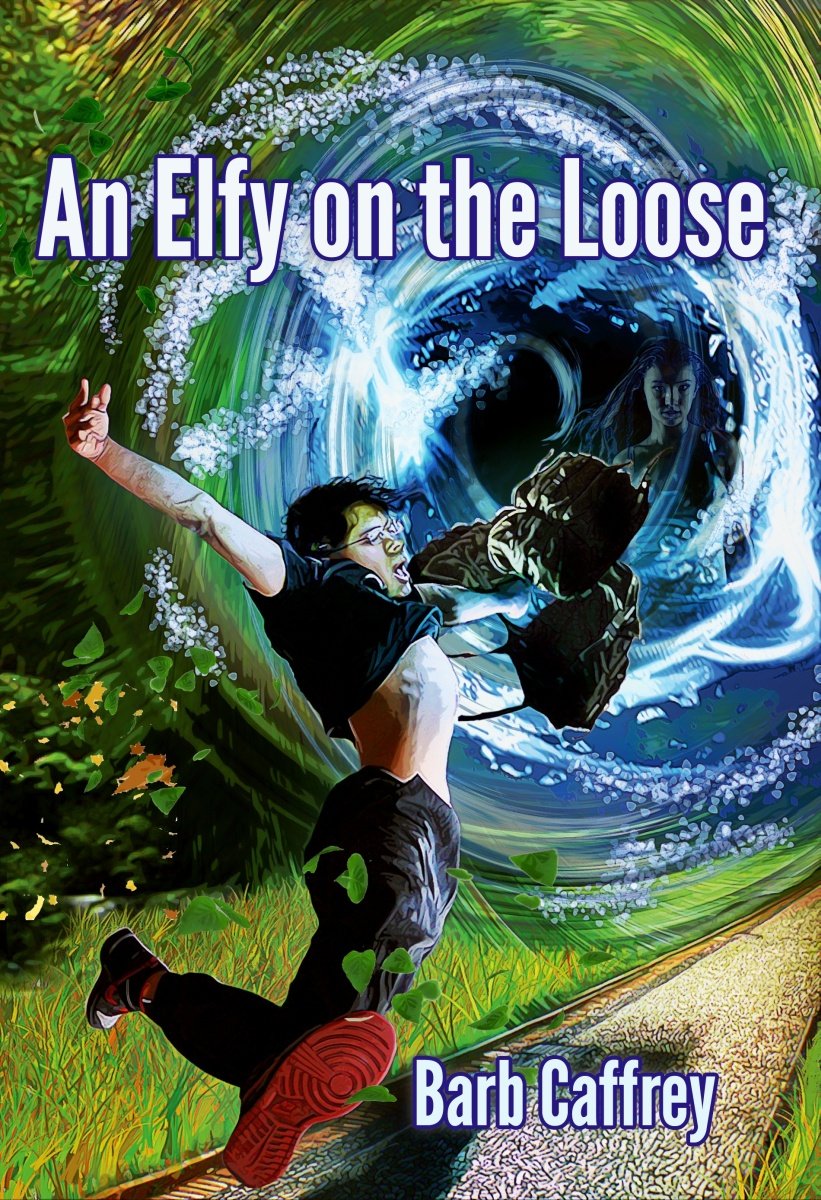
Barb has been participating in the Elements of Modern Storytelling series of blog articles. She is a professional book and music reviewer, as well as recently having her first book published, An Elfy On The Loose. She pitched an interesting guest blog at me and I liked it -- a lot! So here it is for your enjoyment.

~~~

"Why Use Parallel Universes in Fantasy?"
by Barb Caffrey

Some readers of my debut YA urban fantasy/romance novel, AN ELFY ON THE LOOSE, have had one question: Why did you use the parallel universe theory for the location of the Elfy Realm?


But first, you need to know what the parallel universe theory is.

The parallel universe theory – that there are universes like our own, that developed much like our own, but history went differently there so it's possible to have different versions of the same person, perhaps, or different races emerging from what is substantially the same world – has been used to great effect by many science fiction novelists in the past, including Stephanie Osborn herself in her Displaced Detective series.

But fantasy novelists have not used it very often.

Instead, novelists such as L.E. Modesitt, Jr., Alan Dean Foster, Barbara Hambly, and more recently, Christopher Nuttall, have sent people from our world into a completely different fantasy world, one where the rules are completely different. That allows for magic. It also allows for science, too, as brought in by the protagonist – most particularly by Modesitt, Jr. and Nuttall. But primarily, this is to account for the alienness of the world and everything within it.

As a plot device, that's fine. But it's not the one I came up with.

Why? Well, I gravitated far more toward the theory that eldritch beings have always been a part of our world. (Hence the Bedlam's Bard universe as conceived of by Mercedes Lackey, Ellen Guon and Rosemary Edghill.) But I didn't think the idea of Underhill would work for me…and besides, the idea had already been done very well.

So I decided that each race would have its own Realm, which is all a version of Earth. In addition to the Elfys and the Elfs (do not call them Elves in the Elfyverse, or that will get you killed most unpleasantly), there's the Trolls, the Dwarves, the Orcs, and many, many more, all living on various parallel dimensions of Earth and going by these names: The Elfy Realm. The Elf Realm(s). The Dwarven Realm. And so on.

I figured it's much easier to have one world that's split via the parallel universe theory than it is to send someone somewhere else where nothing is familiar whatsoever. I liked the idea that the supposedly familiar could also be intensely strange – as the Elfys, at first, know very little about us, the Humans, and we definitely know even less about them. And I really liked the idea that a magical being like a Dark Elf – that is, a being committed to violence and darkness and death for its own sake – would "pass" as Human because we've forgotten that Dark Elfs exist.

As to how I got around the magic part, considering our world does not seem to be magical? Well, as many other novelists have done, I said that magic exists, but our world has mostly forgotten about it.

The theory of parallel universes, in short, enhances my story because it gives me a huge canvas to play with. Bruno's upcoming adventures include a trip to the Elfy Realm (he must tell off those twits comprising the Elfy High Council somehow), and future novels have adventures in the Troll Realm, more in-depth looks at the Elfy Realm, and of course a great deal continues to go on in our own world, the Human Realm…

So despite there being much magic and mystery involved in the creation of AN ELFY ON THE LOOSE, underneath it all lies a solid principle of physics – even if it's not used exactly as most physicists would probably approve. And yes, I did it deliberately, because it fit the story and worked as a plot device and gave me a great deal to work with.

My view of the question I started with is simple: Rather than asking, "Why did you use the parallel universe theory," why not ask why other fantasy novelists haven't used the parallel universe theory?

That question is exactly why I used it.

 ~~~

And that's also why I liked it so much. The universe Barb created is different, and unique, and that's fascinating...as well as darn good writing. An Elfy On The Loose is a great book, guys. Give it a try and you'll see what I mean.

-Stephanie Osborn
http://www.stephanie-osborn.com
Wednesday, June 4, 2014

Elements of Modern Storytelling: Romance, Part 2 of 2 by Christopher Nuttall

By Stephanie Osborn
http://www.stephanie-osborn.com

Last week best-selling author Christopher Nuttall discussed the historicity of the concepts of love, romance, sex, and marriage, presenting information important to the modern reader (or writer!) of historical fiction, with a special emphasis on the Regency period. But Chris writes science fiction and fantasy, and does so quite well, both self-published and through presses like Twilight Times Books and Elsewhen Press.

So let's pick up where we left off, and let Chris tell us how he wielded the element of romance in his own books.


~~~


Chris:

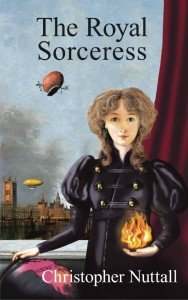
...And now I come to talk about one of my characters and her first true romance. [The Royal Sorceress]

Lady Gwen was born in a world where the principles of ‘sorcery’ – actually, mental powers – were discovered prior to the American Revolution.  This caused a flowering of technology, but it also caused major social problems, particularly as magic helped the British Empire defeat the American rebels and crush the American Revolution.  By the time of the first story, the British aristocracy is firmly in control, but unrest simmers under the surface of Britain. 

Gwen developed magic – powerful magic – fairly early in life.  This became public very quickly, making it impossible for Gwen’s parents to arrange a marriage for her.  (What man wants a wife who can kill him with a thought?)  In a world where noblewomen were expected to be decorative, go to balls and marry someone their parents chose, Gwen lived a fairly isolated life, seething with frustration at not being able to do anything with herself.  By the time she was recruited for the Royal Sorcerers Corps (in the absence of a suitable man) she wanted desperately to prove herself.  But she could also be largely unaware of the dangers of the world.

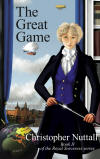
In her second book, The Great Game, Gwen was courted by a man who came into her life as part of a murder investigation.  Sir Charles seemed, in every aspect, the perfect regency hero; brave, handsome, noble and true.  But how was he to court her?  Normally, any man interested in courting a girl in the era would invite her to a dance, then declare his intentions to her parents.  And yet, Gwen was as independent as any woman could hope to be – perhaps more so – in that time and place.  To approach her parents would have been disastrous.
 
Sir Charles understood his prey (and he was hunting her) very well.  He approached her openly, made himself useful, and invited her to ride with him.  By showing no fear (because of her magic) or contempt (because of her sex) he made a very good impression on someone who had spent little time with men, socially.  Gwen reacted well, perhaps better than he had hoped, and they kissed.  But they went no further.  By refraining from pushing her, Sir Charles earned her respect.  Perhaps he even earned her love.

But his very approach should have been a warning that he had something else in mind.  An honourable man would, perhaps, have approached her parents, even though it would have annoyed Gwen.  A marriage in those days wasn't just a match between a boy and a girl; it was a match between two families.  If they had married, Gwen’s family would have been tangled with Sir Charles’s family.  The consequences of their relationship would have spread further than just the two of them.

Gwen didn't realise, until it was almost too late, just how badly he was playing her.  He wasn't interested in luring her into bed, but in manipulating the outcome of the investigation and – if necessary – betraying her.  In hindsight, the signs were all too clear. 

This shouldn't have been surprising.  Georgian and Victorian noblewomen lived a very sheltered life.   They were coddled and protected from the worst of the world outside their walls.  Those women that might have served as examples of the dangers were often driven into social obscurity or death.  Indeed, medical textbooks of that period often concealed details concerning sex and women’s bodies, even though many details were blindingly obvious.  (A quick look in the mirror would have shown the curious woman that some of the details were wrong.)  But they were not encouraged to develop any form of curiosity.  A wedding night could be a frightening introduction to the world of sex.

There were fewer restrictions on men.  Men were expected to sow their oats in brothels, which were populated by women of the lower classes (and thus not considered completely human.)   A woman who disliked her husband had no easy way to leave him (to some extent, she was his property), while the husband could find solace in the arms of a mistress – or a whore.  Female adultery, on the other hand, would face significant punishment.  A husband could even sue his wife’s lover, on the grounds that his property had been damaged.  It is surprising that there were any cases of adultery at all.

Depicting a romance – or a cold and calculating attempt at seduction – in such a society can be tricky.  Will the author, depicting a world where women are expected to be subordinate (at least in public) be accused of sexism?  Or will the author, showing an underage marriage (by our standards), be accused of condoning paedophilia?  Or will the author, showing a mixed-race marriage in 1900, be accused of racism if he depicts the likely reaction of most contemporaries to such a relationship?

And yet, the alternative – transplanting modern values into the past – is worse.  It becomes laughable to see the past’s heroes and villains mouthing politically-correct phrases, particularly when our social attitudes wouldn't permit many features of life in the past. 

Hollywood History is not real history.  When it comes to setting books in the past, and discussing touchy subjects like romance, it behooves us to remember that.


~~~

Well said, Chris. I find the current tendency to misunderstanding the mores of the time, and the trend toward revisionist history, disturbing. I am even aware of classics of literature which have been "revised" in the name of suiting some modern standard of proper behavior and speech. To me, this is an abomination – if we erase the traces of what those eras were really like, and do not teach them to our children, how can we hope to learn from our own history...which we have consequently forgotten?

And for any writer worth his/her salt, it can be a minefield to traverse the fine line between historical accuracy and not offending readers.

-Stephanie Osborn
http://www.stephanie-osborn.com
Wednesday, May 28, 2014

Elements of Modern Storytelling: Romance, Part 1 of 2 by Christopher Nuttall

by Stephanie Osborn
http://www.stephanie-osborn.com
Starting today, and for the next two weeks, I'd like to welcome indie best-selling author Christopher Nuttall to Comet Tales! He sent me some wonderful stuff, enough for two whole blogs, and so I decided not to overwhelm my readers by cramming it all into one. Part One goes live this week, and Part Two, next week.

Chris is a very successful writer of indie (aka "self-published") books in the science fiction and fantasy genres. He has also written for Twilight Times Books, where I believe a book is shortly forthcoming, and Elsewhen Press. Born in Edinburgh, Scotland, he now resides in Malaysia, so contacting him is occasionally interesting!

[ALERT: The following is a very frank, straightforward discussion of historical attitudes
toward sex and marriage, which were not necessarily considered interchangeable "back in the day." This includes consideration of modern taboos and references (but not obvious descriptions) to dominant positions during sex. It is extremely enlightening, and you will learn something. But if said frankness causes offense, then this particular article is probably not for you. My younger fans may want to skip over it also, as this is probably PG-13 or slightly above. --S.O.]

Welcome, Chris!

~~~


Chris:

Thoughts on a Regency Romance

The past is a foreign country, as the old saying goes.  They do things differently there.

I mean it.  It always surprises me how many people look at the past and ask, quite reasonably, why modern values weren't considered by the denizens of the past?  Why couldn't Queen Elizabeth marry when her father had six wives?  Didn’t she need to have an heir?  But if Elizabeth had married, she would have conceded a great deal of power to her husband, as both Mary Tudor and Mary Queen of Scots found out to their cost.

To us, this seems absurd.  We live in a world where a woman has held the highest elective position in Britain and Germany, while another woman made a determined run for the White House.  A married woman in the West doesn't have to give up her name, share her property  or accept her husband’s every wish as a command.  But that wasn't true, even for noblewomen and princesses.  To marry was to concede independence.

Indeed, the very idea of marrying for love would have seemed strange to our ancestors.  How selfish, they would say, for someone to marry for love!  They would have condemned emotion as a driving force, insisted that their children marry someone suitable for them, someone who could  bring much to the family.   Who would want to marry a pauper, no matter how handsome, brave and kind, when there was a chance to marry the rich town miser, even if he was a jerk?

I first came across this when I read Romeo and Juliet at school.  My first thoughts, upon concluding the play, was that both Romero and Juliet were idiots.  Why didn't they just run off together or simply tell their parents that they were married?  But, if you look at the play through the attitudes of the time, that simply wasn't an option.  Juliet was semi-betrothed to Paris, her parents had certainly not consented to her marriage to Romeo ... and, in making love to Romeo, Juliet had defiled herself forever.  It would be quite easy for Juliet’s father to assume that Romeo had set out to damage his family (and succeeded magnificently) or that Juliet had shattered her family’s honour.  Of such viewpoints are honour killings made.

It actually grows worse when you realise that, in the original play, Romeo and Juliet would have been thirteen.

But this too wasn't uncommon.  Our time points to a certain age as the division between childhood and adulthood.  Their time decreed that a girl was marriageable as soon as she started her periods, when she was capable of bearing children.  Our time would see this as paedophilia, all the worse because the girls were not required to give their consent.  For an author, depicting this can be one hell of a challenge. 

This is not the only disconnect between our world and the attitudes of the past.  The Greeks had an open and semi-tolerant attitude to homosexuality.  The Romans, on the other hand, only considered homosexuality acceptable if the Roman Citizen was doing the penetrating, rather than being penetrated.  (The suggestion that he had been deflowered by a foreign king haunted Julius Caesar for his entire life.)  Later generations raged against homosexuality, while accepting childhood marriages and relationships we would probably consider incest.  Even today, sex and relationships can take very different forms around the world.


And now I come to talk about one of my characters and her first true romance...


~~~

To Be Continued next week!

-Stephanie Osborn
http://www.stephanie-osborn.com

Monday, May 26, 2014

Our Lives, Our Fortunes, and our Sacred Honor: Memorial Day 2014

by Stephanie Osborn
http://www.stephanie-osborn.com
Today is a day for remembering our honored dead, and our honored living. Today is Memorial Day.

This day was first set aside after the Civil War, in memoriam for the soldiers of both sides who fell in that dreadful war of brothers.

Since that time, the United States has been involved in numerous conflicts: The Spanish-American War. World War I. World War II. The Korean War. The Vietnam War. The First Gulf War. The Second Gulf War. Bosnia. Iraq. Afghanistan. Pakistan. Somalia. And more. With each successive conflict, the fallen have been remembered on this day. 

And, like Veterans' Day later in the year, on Memorial Day we also remember and honor those who returned. 

There was a gentleman named Francis Scott Key. He was a poet. He is best remembered for penning the words that later became our National Anthem. But he wrote much more. I use his words to honor those veterans who came home alive, though not necessarily whole; and for those who have yet to come home.


When The Warrior Returns
- Francis Scott Key
When the warrior returns, from the battle afar,
To the home and the country he nobly defended,
O! Warm be the welcome to gladden his ear,
And loud be the joy that his perils are ended:
In the full tide of song let his fame roll along,
To the feast-flowing board let us gratefully throng,
Where, mixed with the olive, the laurel shall wave,
And form a bright wreath for the brows of the brave.
Columbians! A band of your brothers behold,
Who claim the reward of your hearts' warm emotion,
When your cause, when your honor, urged onward the bold,
In vain frowned the desert, in vain raged the ocean:
To a far distant shore, to the battle's wild roar,
They rushed, your fair fame and your rights to secure:
Then, mixed with the olive, the laurel shall wave,
And form a bright wreath for the brows of the brave.
In the conflict resistless, each toil they endured,
'Till their foes fled dismayed from the war's desolation:
And pale beamed the Crescent, its splendor obscured
By the light of the Star Spangled flag of our nation.
Where each radiant star gleamed a meteor of war,
And the turbaned heads bowed to its terrible glare,
Now, mixed with the olive, the laurel shall wave,
And form a bright wreath for the brows of the brave.
Our fathers, who stand on the summit of fame,
Shall exultingly hear of their sons the proud story:
How their young bosoms glow'd with the patriot flame,
How they fought, how they fell, in the blaze of their glory.
How triumphant they rode o'er the wondering flood,
And stained the blue waters with infidel blood;
How, mixed with the olive, the laurel did wave,
And formed a bright wreath for the brows of the brave.
Then welcome the warrior returned from afar,
To the home and the country he nobly defended:
Let the thanks due to valor now gladden his ear,
And loud be the joy that his perils are ended.
In the full tide of song let his fame roll along,
To the feast-flowing board let us gratefully throng,
Where, mixed with the olive, the laurel shall wave,
And form a bright wreath for the brows of the brave.
And for those who went to a far better Home, we remember, and we honor. And we hear them speak, thus:

Do Not Stand At My Grave And Weep
- Mary Frye (1932)
Do not stand at my grave and weep,
I am not there, I do not sleep.
I am in a thousand winds that blow;
I am the softly falling snow.
I am the gentle showers of rain;
I am the fields of ripening grain.
I am in the morning hush;
I am in the graceful rush.
Of beautiful birds in circling flight,
I am the starshine of the night.
I am in the flowers that bloom,
I am in a quiet room.
I am the birds that sing,
I am in each lovely thing.
Do not stand at my grave and cry,
I am not there. I do not die.


On this day that, to most, marks the beginning of summer, on this day of cookouts and gatherings and baseball games and celebrations, let us not be so caught up in the celebrations that we forget those who enabled us to celebrate.

"And he will judge between the nations, and will decide concerning many peoples; and they shall beat their swords into plowshares, and their spears into pruning-hooks; nation shall not lift up sword against nation, neither shall they learn war any more." ~Isaiah 2:4, ASV

Amen. This can't come soon enough to suit me.

If you are a soldier, a veteran, or the family member of one who gave his or her all for this nation, for our liberties, I salute you. Stand tall this day. You have my eternal gratitude.

God bless you all.

-Stephanie Osborn
http://www.stephanie-osborn.com