Banner

Banner

Monday, March 18, 2013

We Aren't The Only Ones, Part 1

by Stephanie Osborn
http://www.stephanie-osborn.com


Just so you know, while NASA has had its horrible accidents, it is far from the only space program to have had them. And it IS the safest, hands down. There is nothing wrong with NASA that I have not seen in other big institutions, whether private enterprise or government agency. And while terrible, Apollo 1, Challenger, and Columbia all put together don't equal some of the space program disasters that other nations have had.

Travis S. Taylor and I wrote this book that came out in late 2012, called A New American Space Plan. It's about what we should be doing to get back on track for the stars. The reason I bring it up is because I already chronicled said disasters in it, and with the permission of Baen Books, the publisher, I'm going to excerpt Space Plan here with respect to those disasters.

First up, let's talk about the Soviet space program. Yes, I know the USSR doesn't exist any more, but the space program the Russians have is founded upon that started by the USSR. Here we go!

~~~


The Russian space program can be traced back to at least the early part of the twentieth century, when Konstantin Tsiolkovsky, a contemporary of America’s Robert Goddard, proposed the notion that space flight was possible and began developing the modern science of rocketry. This was furthered by the Group for the Study of Reactive Motion, or “GIRD,” as it worked out in Cyrillic. This group contained, among others, Sergei Korolev, who would eventually wind up becoming one of the Soviet’s premier rocket scientists. In 1933 this Soviet team launched their first liquid fueled rocket, the GIRD-09, and a few months later, the hybrid fueld GIRD-X. It seemed Soviet rocketry was off to a great start.

 
It received a grave setback during the Stalin era, however. Stalin’s Great Purge killed or imprisoned most rocket scientists of the day. It targeted the intelligentsia and professionals, among others, as presumably a threat to the Communist Party. Those who were not executed by firing squad were sent to the gulags. Many of the stories bear resemblances to atrocities being carried out at the same time but a little farther west. The only developments in the field of any significance occurred during World War II with the invention of the Katyusha multiple rocket launcher.

 
It was that “little farther west” that proved the reinvigoration of the Soviet space program, however. At the end of World War II, not all of Wernher von Braun’s team ended up in the United States. He had purposely split his team in hopes that one or the other might make it to a safe haven with the Allies. The other group ended up with the Soviets, who looked over what von Braun’s team had wrought at Peenemunde and were impressed.

 
Once in their new home in the Soviet Union, the German rocket scientists set to work helping the Soviets replicate the V-2. This Russian version was dubbed the R-1. But it was not powerful enough to carry the large, heavy nuclear warheads of the day—which was the principal Soviet concern at the time. What the Russians wanted was a true intercontinental ballistic missile. That was always the whole point of their rocket program, as it turned out.
 
Nevertheless, the dreamers still got the dregs of the military’s desire. Somehow having managed to survive internment in a gulag during the Purge, Korolev came out on top as one of the principal designers. But he had his enemies; the Soviet space program, unlike the American one, was not centralized, and there was much internal competition...In short order, the USSR began making reasonably regular launches. Oddly enough, it has in recent years been determined that Kruschev had no particular interest in the space program. It was not a high political priority, he did not desire to compete with the Americans to the moon, and he saw its only benefit as propagandistic. Nevertheless the “propagandistic” program kept bringing home world firsts. In 1959, no less than three lunar probes were launched: Luna I, II, and III. These were, respectively, a flyby, an impactor, and a single slingshot orbit around the moon that returned the first images of the lunar far side. And in 1960 they returned living dogs from Earth orbit.
 
But 1960 also saw possibly their greatest space disaster. It is commonly known as the Nedelin catastrophe after the manager who oversaw it. Some say he was cocky. Some say he ordered his subordinates into fatal position. It is likely that we will never know because there was only one survivor of this disaster.

In October 1960, a launch pad test for a prototype of the R-16 ICBM was in preparation. This test was overseen by Soviet Marshal Mitrofan Nedelin. The rocket was on the launch pad at the Baikonur Cosmodrome, and fully fueled with what they called “Devil’s Venom,” a particularly nasty hypergolic fuel system consisting of unsymmetrical dimethyhydrazine (UDMH) and nitric acid. The fuel mix is highly corrosive and toxic, but extremely powerful. However, even its exhaust is poisonous, and the nitric acid cannot be in the oxidizer tank for more than two days without eating through the tank.

It was the very nature of Devil’s Venom, it seems, that led to the disaster. Late on the day before the test, the technicians preparing the rocket accidentally breached a line from the fuel tank, allowing a small amount of fuel into the combustion chamber. This in itself was not dangerous. So rather than go through weeks of untanking, repair, rebuilding the engine, and refitting, the decision was made to move up the launch to the next day. Meanwhile Nedelin notified many military and political dignitaries of the upcoming launch, in case they wanted to watch—and who doesn’t want to watch a rocket launch?

Then on October 24th, engineers, scientists and technicians rushed to complete launch preparation, often performing tasks simultaneously rather than sequentially per checklist. The result was a delay. Nedelin, impatient and perhaps embarrassed, left the dignitaries at the observation stand and went to oversee the final preparation. Word has it he even brought a chair to sit down beside the launch pad.


For reasons unknown—or unreleased—the second stage engines fired prematurely. The flames acted as a blowtorch on the hypergolic tanks in the first stage, cutting through them. As soon as the UDMH and the nitric acid combined, as is the nature of hypergolic fuels, they self-ignited. The resulting explosion cremated everyone near the pad.


Those farther away were burned to death; those who had run away encountered the perimeter fence and were either burned or poisoned by the fumes. The entire horrific debacle was captured on film for posterity by automated cameras. Only one man survived—Mikhail Yangel, an associate (and competitor) of Korolev’s, and that only because he left the viewing area and went into a bunker to smoke a cigarette. He had been the military’s rocket engine designer and a proponent of hypergolic fuels. After this he was directed to concentrate strictly on ICBM design.
 
~~~
 
More next week.
 
-Stephanie Osborn
 

Monday, March 11, 2013

SFWA and the upcoming elections

by Stephanie Osborn
http://www.stephanie-osborn.com

I'm going to take a brief intermission from space disasters to talk about something important to writers, especially science fiction and fantasy writers. This is something I don't usually do, go semi-political on ya, but I've thought about this a lot, and I think I need to say my piece, just this once.

At Anachrocon in Atlanta about 2 weeks ago, I had the privilege of spending some time over drinks and dinner, chatting with the inimitable Lee Martindale. Now for those that might not know, Lee is the South/Central Regional Director for SFWA, the Science Fiction/Fantasy Writers of America. She is an amazing lady, all the more so for being wheelchair-bound after a very active youth. (I fuss because I got bad knees, and we do commiserate from time to time, she and I; but I am at least still mobile on my own two feet. This lady got guts.) And with elections coming up, Jim Hines, of book cover/comic pose parody fame, has decided to run against her for the position.

Now, don't get me wrong. I like Mr. Hines, though I've not met him personally. And I think that he is a very intelligent man. And I'm sure he'd make a good regional director.

But here's the thing. I've talked with Lee, and I know the plans she has, the things she is trying to do for authors in my area of the country. And they are long-range plans. She knows the ins and outs, the politics, who does what and who gets things done. They are plans that will help me in the long run; that will help many authors in the long run, especially the mid-listers and the "I'm just getting started good." The things she has planned, well they're too numerous for me to even list here. And probably too complicated, since I'm not in the heirarchy of SFWA and don't necessarily understand all the politics and policies involved.

But Jim Hines isn't, either. He isn't in the current heirarchy, and he isn't aware of the things that Lee already has in work. And all of that stuff will either be lost or set back by years if Lee doesn't return to the position. I sort of view it like Travis and I wrote in A New American Space Plan: if every incoming administration has its own agenda, and the current budget/plan/whatever is insufficient to accomplish the task during the current administration, it will never be done because it will be redirected when the NEXT administration comes into power.

Now again, this doesn't mean that Hines wouldn't be a good director or anything else. Nothing on Mr. Hines at all. It just means that the plans that Lee has, that would help me and others out, get thrown out with the bath water.

And so I'm coming down on behalf of Lee Martindale for SFWA South/Central Regional Director. If you are interested in knowing more, please ping me from the contact link at my website, or ping Lee from her website.

But above all, participate in the process. Go talk to both candidates and FIND OUT what they plan to do for you as a writer. Then decide. And VOTE.

I've made my decision.

-Stephanie Osborn
http://www.stephanie-osborn.com

Monday, March 4, 2013

Remembrance: Columbia (Part 2)

by Stephanie Osborn


It is perhaps best if I simply let the timeline of the catastrophe speak for itself. Due to my familiarity with the subject, one of the crewmembers, and the bird itself, perhaps my readers will forgive me if I pull from the Wikipedia article on the matter [http://en.wikipedia.org/wiki/Columbia_disaster]. Having read the CAIB (Columbia Accident Investigation Board) Report in some detail, I find it to be accurate in the essentials.

~~~

The following is a timeline of Columbia's re-entry. The shuttle was scheduled to land at 9:16 a.m. EST.

2:30 a.m. EST, February 1, 2003 – The Entry Flight Control Team began duty in the Mission Control Center.

The Flight Control Team had not been working on any issues or problems related to the planned de-orbit and re-entry of Columbia. In particular, the team had indicated no concerns about the debris impact to the left wing during ascent, and treated the re-entry like any other. The team worked through the de-orbit preparation checklist and re-entry checklist procedures. Weather forecasters, with the help of pilots in the Shuttle Training Aircraft, evaluated landing-site weather conditions at the Kennedy Space Center.

8:00 – Mission Control Center Entry Flight Director LeRoy Cain polled the Mission Control room for a GO/NO-GO decision for the de-orbit burn.

All weather observations and forecasts were within guidelines set by the flight rules, and all systems were normal.

8:10 – The Capsule Communicator (CAPCOM) notified the crew that they were GO for de-orbit burn.

8:15:30 (EI-1719) – Husband and McCool executed the de-orbit burn using Columbia’s two Orbital Maneuvering System engines.

The Orbiter was upside down and tail-first over the Indian Ocean at an altitude of 175 miles (282 km) when the burn was executed. The de-orbit maneuver was performed on the 255th orbit, and the 2-minute, 38-second burn slowed the Orbiter from 17,500 miles per hour (7.8 km/s) to begin her re-entry into the atmosphere. During the de-orbit burn, the crew felt about 10% of the effects of gravity. There were no problems during the burn, after which Husband maneuvered Columbia into a right-side-up, forward-facing position, with the Orbiter's nose pitched up.

8:44:09 (EI+000) – Entry Interface (EI), arbitrarily defined as the point at which the Orbiter enters the discernible atmosphere at 400,000 feet (120 km; 76 mi), occurred over the Pacific Ocean.

As Columbia descended from outer space into the atmosphere, the heat produced by air molecules colliding with the Orbiter typically caused wing leading-edge temperatures to rise steadily, reaching an estimated 2,500 °F (1,370 °C) during the next six minutes. (As former Space Shuttle Program Manager Wayne Hale stated in a press briefing, about 90% of this heating is the result of compression of the atmospheric gas caused by the orbiter's supersonic flight, rather than the result of friction.)

Columbia at approximately 8:57. Debris is visible coming from the left wing (bottom).

8:48:39 (EI+270) – A sensor on the left wing leading edge spar showed strains higher than those seen on previous Columbia re-entries.

This was recorded only on the Modular Auxiliary Data System, which is similar in concept to a flight data recorder, and was not telemetered to ground controllers or displayed to the crew.

8:49:32 (EI+323) – Columbia executed a planned roll to the right. Speed: Mach 24.5.

Columbia began a banking turn to manage lift and therefore limit the Orbiter's rate of descent and heating.

8:50:53 (EI+404) – Columbia entered a 10-minute period of peak heating, during which the thermal stresses were at their maximum. Speed: Mach 24.1; altitude: 243,000 feet (74 km; 46 mi).

8:52:00 (EI+471) – Columbia was approximately 300 miles (480 km) west of the California coastline. The wing leading-edge temperatures usually reached 2,650 °F (1,450 °C) at this point.

8:53:26 (EI+557) – Columbia crossed the California coast west of Sacramento. Speed: Mach 23; altitude: 231,600 feet (70.6 km; 43.9 mi).

8:53:46 (EI+577) – Signs of debris being shed were sighted by people out to watch the re-entry. Speed: Mach 22.8; altitude: 230,200 feet (70.2 km; 43.6 mi).

The superheated air surrounding the Orbiter suddenly brightened, causing a streak in the Orbiter's luminescent trail that was quite noticeable in the pre-dawn skies over the West Coast. Observers witnessed another four similar events during the following 23 seconds. Dialogue on some of the amateur footage indicates the observers were aware of the abnormality of what they were filming.

8:54:24 (EI+615) – The Maintenance, Mechanical, and Crew Systems (MMACS) officer informed the Flight Director that four hydraulic sensors in the left wing were indicating "off-scale low." In Mission Control, re-entry had been proceeding normally up to this point.

"Off-scale low" is a reading that falls below the minimum capability of the sensor, and it usually indicates that the sensor has failed (stopped functioning, due to internal or external factors), rather than that the quantity it measures is actually below the sensor's minimum response value. The Entry Team continued to discuss the failed indicators.

8:54:25 (EI+616) – Columbia crossed from California into Nevada airspace. Speed: Mach 22.5; altitude: 227,400 feet (69.3 km; 43.1 mi).

Witnesses observed a bright flash at this point and 18 similar events in the next four minutes.

8:55:00 (EI+651) – Nearly 11 minutes after Columbia re-entered the atmosphere, wing leading-edge temperatures normally reached nearly 3,000 °F (1,650 °C).

8:55:32 (EI+683) – Columbia crossed from Nevada into Utah. Speed: Mach 21.8; altitude: 223,400 feet (68.1 km; 42.3 mi).

8:55:52 (EI+703) – Columbia crossed from Utah into Arizona.

8:56:30 (EI+741) – Columbia initiated a roll reversal, turning from right to left over Arizona.

8:56:45 (EI+756) – Columbia crossed from Arizona to New Mexico. Speed: Mach 20.9; altitude: 219,000 feet (67 km; 41 mi).

8:57:24 (EI+795) – Columbia passed just north of Albuquerque.

8:58:00 (EI+831) – At this point, wing leading-edge temperatures typically decreased to 2,880 °F (1,580 °C).

8:58:20 (EI+851) – Columbia crossed from New Mexico into Texas. Speed: Mach 19.5; altitude: 209,800 feet (63.9 km; 39.7 mi).

At about this time, the Orbiter shed a Thermal Protection System tile, the most westerly piece of debris that has been recovered. Searchers found the tile in a field in Littlefield, Texas, just northwest of Lubbock.

8:59:15 (EI+906) – MMACS informed the Flight Director that pressure readings had been lost on both left main landing-gear tires. The Flight Director then told the Capsule Communicator (CAPCOM) to let the crew know that Mission Control saw the messages and was evaluating the indications, and added that the Flight Control Team did not understand the crew's last transmission. [I believe that it was around this point that the pressurized landing-gear tires likely exploded from the heat. At the very least it would have torn a huge hole in the underbelly of the wing, if not outright sheared off a substantial portion thereof. Note that the next several entries occur in fractions of a second. --Osborn]

8:59:32 (EI+923) – A broken response from the mission commander was recorded: "Roger, uh, bu – [cut off in mid-word] ..." It was the last communication from the crew and the last telemetry signal received in Mission Control.

8:59:37 (EI+928) – Hydraulic pressure, which is required to move the flight control surfaces, was lost at approximately

8:59:37. At that time, the Master Alarm would have sounded for the loss of hydraulics, and the shuttle began to lose control, beginning to roll and yaw uncontrollably, and the crew would have become aware of the serious problem.

9:00:18 (EI+969) – Videos and eyewitness reports by observers on the ground in and near Dallas revealed that the Orbiter had disintegrated overhead, continuing to break up into more and smaller pieces, and leaving multiple contrails, as it continued eastward. In Mission Control, while the loss of signal was a cause for concern, there was no sign of any serious problem. Prior to orbiter breakup at 9:00:18, the Columbia cabin pressure was nominal and the crew was capable of conscious actions. The crew module remained mostly intact through the breakup, though it had lost enough structural integrity that it lost pressure, and was completely depressurized no later than 9:00:53.

9:00:57 (EI+1008) - The still intact crew module was seen breaking into small subcomponents. It disappeared from view at 9:01:10. The crew, if not already dead, were dead no later than this point. [I will take issue with this statement later. -Osborn]

9:05 – Residents of north central Texas, particularly near Tyler, reported a loud boom, a small concussion wave, smoke trails and debris in the clear skies above the counties east of Dallas.

9:12:39 (EI+1710) – After hearing of reports of the shuttle being seen to break apart, the NASA flight director declared a contingency (events leading to loss of the vehicle) and alerted search and rescue teams in the debris area. He made a call to the Ground Controller: "GC; flight, GC; flight. Lock the doors." Two minutes later Mission Control put contingency procedures into effect. Nobody was permitted to enter or leave the room, and flight controllers had to preserve all the mission data for later investigation.

~~~

The morning of the disaster was about 3 months after my husband had had emergency heart bypass surgery. It had been a grueling recovery for both of us, and I clearly recall that it was the weekend (I believe it was Saturday) and we had slept in. I got up, wandered into the den, grabbed the remote, and hit the power. The television came on to the last channel we'd watched – the Weather Channel – and even they were reporting that “...Space Shuttle Columbia is twelve minutes late exiting the re-entry comm blackout.” I knew what that meant; I worked too long on those birds – on THAT bird – not to. Twelve seconds...maybe. Twelve minutes, there was no doubt. I turned and yelled down the hall, “HONEY! Get in here! We've lost a Shuttle!”

In retrospect, probably not the wisest thing to do to a recovering heart patient.

But he survived. They didn't.

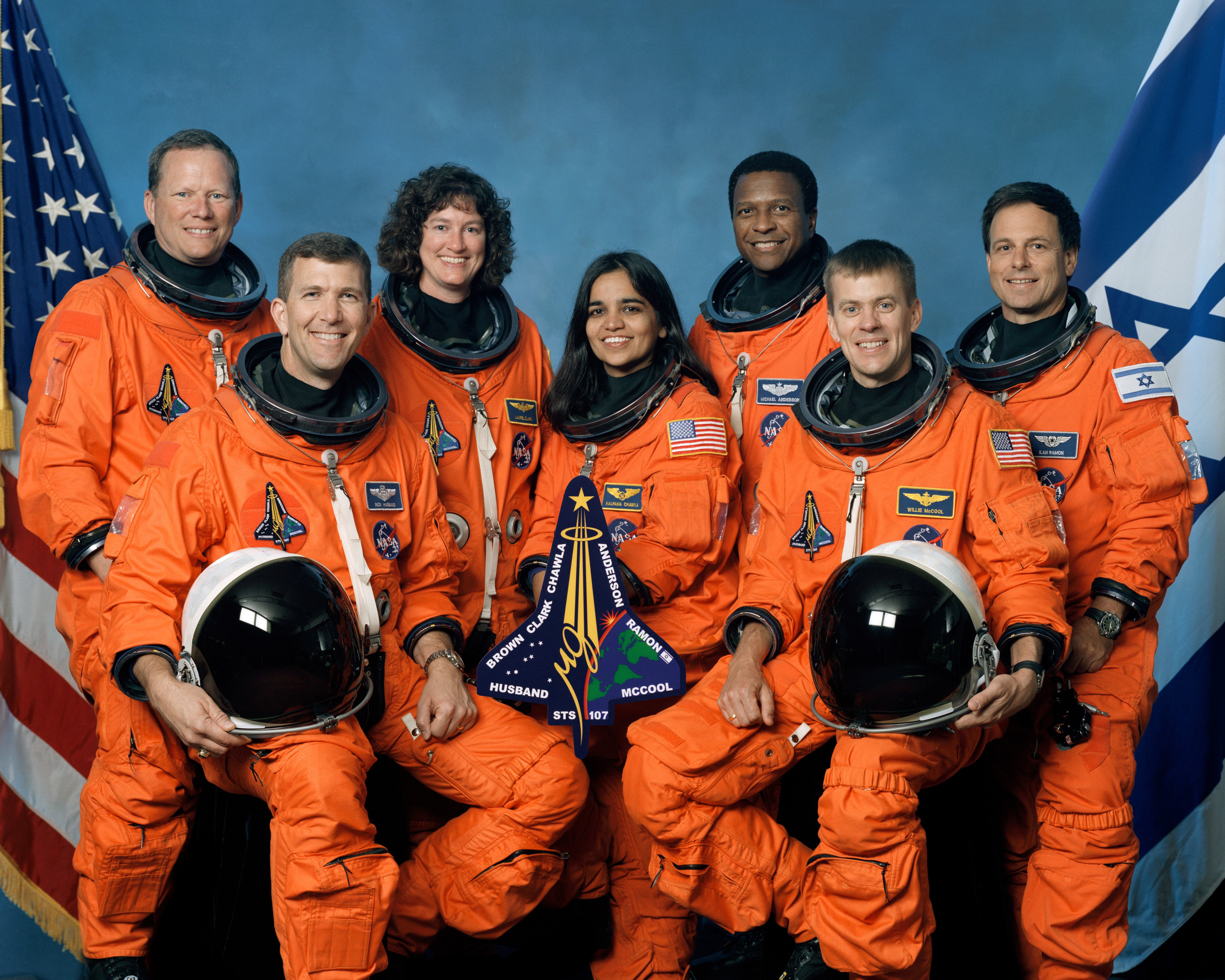
It was so very surreal for me, and still is. I worked with Columbia more than any other shuttle in the fleet. I had a friend on board her – I helped train Kalpana Chawla for her first mission, back in '97. I'd kept up with her, popping into the Astronaut Office to look for her whenever I was in Houston. We'd have a cup of coffee, sit down and catch up, laughing and chatting. But I was doing DOD work at that point, and had lost track of who was scheduled for which flights. It wasn't until my husband asked me if I'd known any of the crew that I thought to check. And I was horrified. KC had one of the widest smiles, the most cheerful demeanors, of anyone I have known, before or since. To think she went through that...it was, and is, hard for me to accept.

I'd written a book, entitled Burnout:The mystery of Space Shuttle STS-281. It was fiction, every bit of it. It was in the hands of my writing mentor, and later sometime co-author, Travis S. Taylor, to read and critique. He was going to help me polish it, then help me find a publisher. I'd researched using the information from the Challenger disaster, but decided to make it very obviously NOT that incident; I'd chosen a re-entry scenario instead. The disaster which now played out before my eyes was precisely what I'd written into the book. Travis had to talk me out of trashing it instead.

In the end, life went on for some of us. My book, and numerous more, have been published. In January 2012, I was invited to return to my undergraduate alma mater, Austin Peay State University, to help support the library and to give a talk and a book-signing. It was a messy, cold, stormy night with torrents of rain falling when I arrived at the location and began setting up. The Friends of the Library were setting up around me for a reception before the talk, when a gentleman showed up. In all honesty I cannot recall his name because what came next was very...I'm not sure the English language has the word for what I felt in those ensuing minutes.

Because he told me he had been one of the 3 field coroners for the Columbia disaster. He had come, partly to answer the questions I had about it that I'd never been able to answer, and partly to hear my perspective on it. He had copies of the autopsy reports which I was allowed to flip through – though I can't recall a word on any page. And he gave me the answer I didn't want to hear: my friend KC had been alive through the breakup – they all had. In fact, he told me, at least one crewman was found on the ground, body intact, death due to multiple blunt force traumas. He didn't say so outright, but I can interpret that – he died when he hit the ground.

A recent presentation I made on scientific and engineering work done since then included a summation of that chat. I was later gently challenged on the matter of the crew's deaths. This upset me because, unable to remember the man's name, I hadn't a way to verify his credentials. (If you're out there, mystery man, please contact me through this blog.) But today, as I refreshed my memory on the details of the catastrophe, I found a newspaper report that took its information from the final version of the CAIB report, and I quote:

The Working Group found no irregularities in its extensive review of all applicable medical records and crew health data. The Armed Forces Institute of Pathology and the Federal Bureau of Investigation conducted forensic analyses on the remains of the crew of Columbia after they were recovered. It was determined that the acceleration levels the crew module experienced prior to its catastrophic failure were not lethal. The death of the crew members was due to blunt trauma and hypoxia. The exact time of death - sometime after 9:00:19 a.m. Eastern Standard Time - cannot be determined because of the lack of direct physical or recorded evidence.” [http://www.spaceflightnow.com/columbia/report/030826crew/]

As a result of all this, some colleagues and I from SIGMA, the science fiction think tank [www.sigmaforum.org], are in process of developing a new system called SPEARED – Single Person Emergency Atmospheric Re-Entry Device. (This is the “scientific and engineering work” I mentioned earlier.) We have patents pending and hope that someday soon this new system will prevent deaths such as those aboard Columbia, and maybe even Challenger.

I'll keep you posted.


-Stephanie Osborn

Monday, February 25, 2013

Remembrance: Columbia (Part 1)

by Stephanie Osborn


You may remember that I started my career as a payload flight controller for first Shuttle, and then Station. And that I had a friend aboard Columbia during her final flight. For those who have read my all-too-painfully prescient book, Burnout: The mystery of Space Shuttle STS-281, you know I dedicated that book to my friend Kalpana Chawla, her crewmates, and all those who have died in pursuit of space. "Ad astra, per ardua." ("To the stars, through struggle/adversity.")

We've just passed through a period of time of which most people are unaware. You see, all of the major space disasters that America has experienced all occurred within a 2-3 week span on the calendar. And interestingly, they occurred in chronological order on the calendar.


Apollo 1 Fire - January 27

Space Shuttle Challenger disaster - January 28

Space Shuttle Columbia disaster - February 1


~~~

Columbia - What happened?


On February 1, 2003, space shuttle Columbia experienced a catastrophic malfunction during re-entry. This was a result of damage sustained during lift-off 17 days earlier, on 16 January. Debris – specifically, a briefcase-sized piece of insulating foam from the external tank (ET) penetrated the leading edge of the port wing, and gouged a groove the length of the wing, possibly dislodging and at least damaging the flashing surrounding the port landing gear, and driving part of the carbon-carbon composite heat shielding on the leading edge into the wing’s interior.

The combination resulted in softening the wing struts, shearing off the wing when hydraulic pressure failed, resulting in a loss of control.

The resulting total loss of aerodynamic stability as well as wing loss caused a failure of structural integrity of the vessel, which broke apart around the crew at ~Mach17 or higher.

Kalpana Chawla, my friend, was a crew member.

But why did all this happen? Why did the foam turn loose? How could FOAM damage the wing?

First of all, remember when we talked about the Challenger disaster, how the SRBs (solid rocket boosters) had to be cast in segments like concrete? It's sorta like that for the external tank, too. Oh, it doesn't have to be done in segments, but it's next to impossible not to, because the thing is so durn big. So you spray your container for as far as it'll go, then you get another and pick up where you left off. That still results in a kind of segmentation, because there's a slight discontinuity in the uniformity of the foam at the point where you stopped and switched to a fresh container. At that discontinuity, you can get tiny cracks, you can get bubbling, you can get ice crystal formation, especially given the ET's function of holding cryogenic fuels. Unfortunately there's just no other way to do it with current technology. And while it had been noticed in several previous Shuttle missions that bits of foam would spall, nothing serious had ever come of it.

Until Columbia's last voyage, of course.

So how the blazes (pardon the rather dark pun) did a hunk of foam do this?


The foam is largely composed of a variety of dichlorofluoroethane. That stuff has a density of 1.25g/cc at 20°C. For a suitcase-sized piece, we'll assume dimensions of roughly 3in x 12in x 15in – this just happens to be the size of one of my laptop cases, and a reasonable approximation. That translates to 7.62cm x 30.48cm x 38.10cm. This yields a volume of 8849cc. This gives a mass for that little chunk of foam of just a smidge over 11kg (24lb and change)! At the time it detached, the Shuttle was moving at a little under Mach 2.5, about 840m/s or 1,870mph. Engineers estimated the impact occurred with a closing speed of ~530mph (~883km/hr or 245m/s) Therefore the kinetic energy of the impact was ½mv2, which is 0.5 x 11kg x (245m/s)2, which comes to roughly 330,000J. Put a simpler way, over a falling distance of about one meter, that is the equivalent of about 37 tons of force.

Not exactly a light tap.

So, at T + 82s, a chunk of foam fell off the left bipod foam ramp, hit the leading edge of the wing – one of the most crucial areas, as the only thing to take more friction heat during re-entry is the nose – and punched a hole in it, and according to the information I had, may also have gouged a scratch down the bottom of the wing.


During the mission, something was observed floating away from Columbia's underside on orbit. It is still not known for certain if this was a piece of the reinforced carbon-carbon heat shielding, or if it was a piece of flashing from the landing gear bay door, or something else. Also during the mission, the ground reviewed footage of the launch, specifically that from the camera which had become routine only 2 launches prior, to look for evidence of possible damage due to foam spalling. Concern was raised, but NASA management refused despite multiple requests for DOD viewing assistane from the engineers and scientists who worked on the heat management system. In this respect, the Columbia Accident Investigation Board (CAIB) reached the same conclusions that the Rogers Commission reached after Challenger – a difference in the views of management and the working engineers and scientists. To quote Richard Feynman from the Rogers Commission, "It appears that there are enormous differences of opinion as to the probability of a failure with loss of vehicle and of human life. The estimates range from roughly 1 in 100 to 1 in 100,000. The higher figures come from the working engineers, and the very low figures from management. What are the causes and consequences of this lack of agreement? … we could properly ask, 'What is the cause of management's fantastic faith in the machinery?'"

But that is precisely what happened. Per the blog of Wayne Hale, one of the Flight Directors on that mission, JSC's Director of Mission Operations, John Harpold, told him, “You know, there is nothing we can do about damage to the TPS. If it has been damaged it’s probably better not to know. I think the crew would rather not know. Don’t you think it would be better for them to have a happy successful flight and die unexpectedly during entry than to stay on orbit, knowing that there was nothing to be done, until the air ran out?” [http://waynehale.wordpress.com/2013/01/13/after-ten-years-working-on-the-wrong-problem/]

Unfortunately, according to Hale, the Astronaut Office agreed. Everyone in charge agreed. And so nothing was done, no attempt was even made to find out if there was anything seriously wrong.

At the point in time when management decided to let the crew fly blind, the end game was set.

Next week we'll chronicle Columbia's final moments.


-Stephanie Osborn

Monday, February 18, 2013

Remembrance: Challenger

by Stephanie Osborn
http://www.stephanie-osborn.com

You may remember that I started my career as a payload flight controller for first Shuttle, and then Station. And that I had a friend aboard Columbia during her final flight. For those who have read my all-too-painfully prescient book, Burnout: The mystery of Space Shuttle STS-281, you know I dedicated that book to my friend Kalpana Chawla, her crewmates, and all those who have died in pursuit of space. "Ad astra, per ardua." ("To the stars, through struggle/adversity.")

We've just passed through a period of time of which most people are unaware. You see, all of the major space disasters that America has experienced all occurred within a 2-3 week span on the calendar. And interestingly, they occurred in chronological order on the calendar.

Apollo 1 Fire - January 27

Space Shuttle Challenger disaster - January 28

Space Shuttle Columbia disaster - February 1

~~~
Challenger - What Happened?

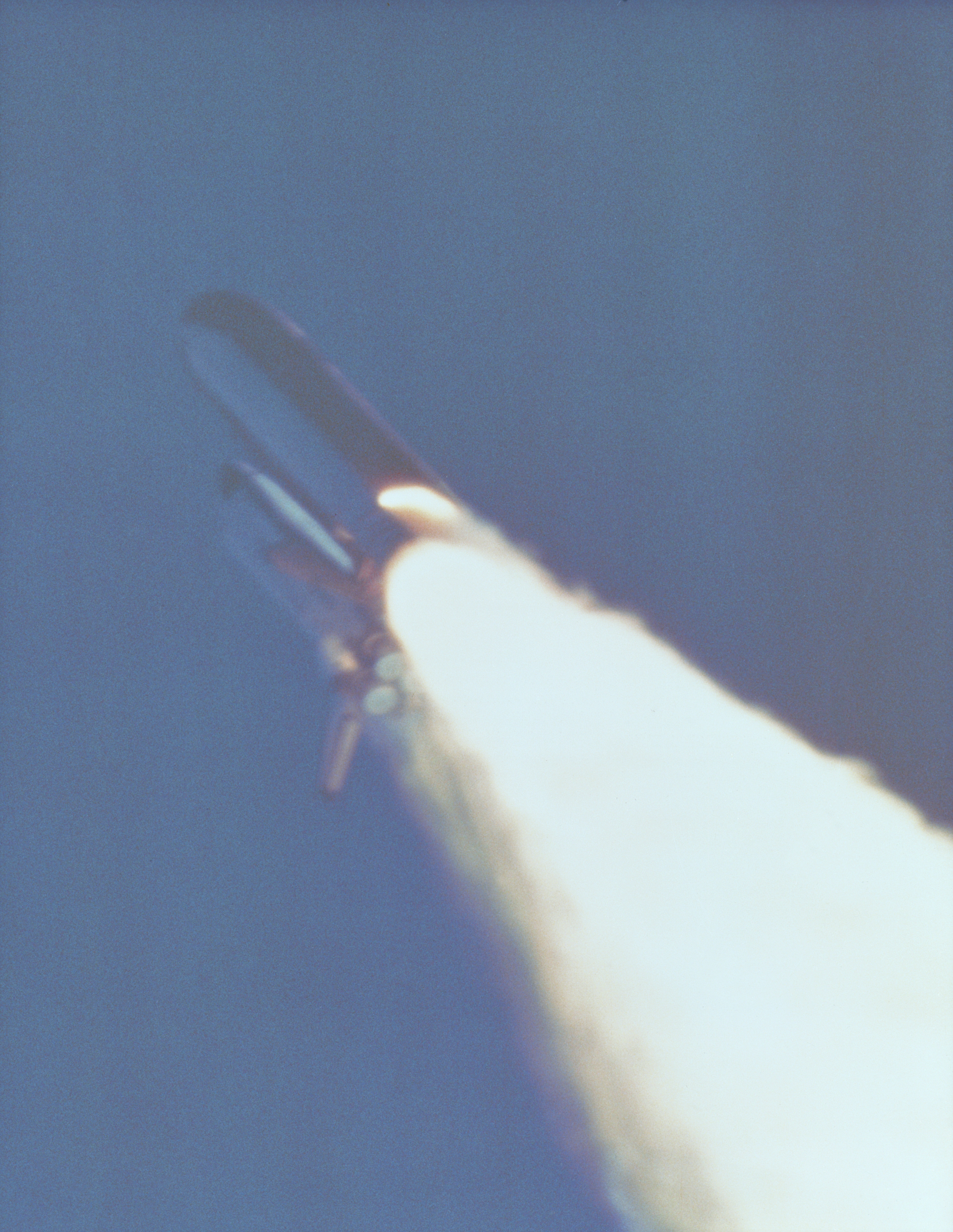
On January 28, 1986, Space Shuttle Challenger launched on mission STS-51L. It carried the first teacher in space, Christa McAuliffe, as well as astronauts Mike Smith, Dick Scobee, Ron McNair, Ellison Onizuka, Greg Jarvis, and Judy Resnick. At MET (Mission Elapsed Time) 00/00:01:13 (T+73sec), Challenger exploded. There were no survivors.


Some personal background

On January 28, 1986, I was about a month and a half into my first full-time job post-graduate school. I was the resident astronomer on a defense project that was in Phase 1 R&D. (I can't tell you much more than that, 'cuz then I'd have to kill ya. *jk* But you get the picture.) Phase 2 was to have been prototype development and testing, including prototype flight and testing aboard the Shuttle. They needed a payload specialist for that flight. My hat was in the ring and I was a likely candidate.

The Challenger disaster grounded the fleet indefinitely. This was a factor in the cancellation of Phase 2 of my project. So my PS candidacy dream exploded with that shuttle.

I ended up transferring over to the space programs division of my company and working for many years as a payload flight controller, scheduling activities for Shuttle missions, and even training astronauts (more about that next week). I fit in an entire career between two of only three major space disasters that NASA has had in its existence.

I remember the day clearly. I was sitting in my cubicle working when my friend from grad school and coworker, Jim, leaned over the top of the partition (Jim is really tall).

"Steph? Steph!"

"Yeah, Jim? What's up?"

"The Shuttle just blew up."

"Ha. Ha. Very funny."

"I'm serious."

It wasn't until he said that, that I truly diverted my full attention from my work and looked him in the face. And I knew. He really WAS serious.

I flung my pen at the desk, shoved my chair back, and rounded the cubicle partitions at a full sprint. Our boss had a small TV in his office, and when I got there, most of the branch was crammed in his office watching. There was nothing else on - everyone was covering it. We all sat in silence and watched the reports come in, and the replays of the explosion. To this day I can't stand to watch footage of that explosion anymore.

Later I went down the hall on some errand, and across the building to the cafeteria for lunch. All the halls were empty except for offices that had TVs, where people spilled out into the hall trying to watch said TV. One or two doors were closed and I thought I heard the sounds of weeping from behind them - or else similar sounds from behind restroom doors. It was not something I'll ever forget. Sometimes I wish I could.

So what happened?

This is something I know a fair amount about, because I used the Challenger disaster information as part of my research for writing my first book, Burnout: The mystery of Space Shuttle STS-281.

The gist of it is that the entire vehicle is only certified to to 40F, and they launched in 18F temperatures. Management felt it was a high profile mission with McAuliffe aboard, and ignored all warnings from the scientists and engineers who knew better.

What many do not know is that equipment on the launch pad also failed, possibly due to the cold. In the end, those were ruled out as part of the cause of the accident, but they so easily COULD have been, that it is worth mentioning. Now, on to what actually happened.

It had been discovered in previous flights that SRB ignition caused the first segment of the SRBs to warp, the casings ballooning out from the stress, and opening the joint between it and the next segment.

Wait. Back up, I hear you say. Why is the SRB in segments in the first place? Because the solid propellant has to be poured, cast, and cured like concrete. And just like concrete, if you pour too big a slab, it will crack during the curing process. This crack will act as a fuse for the fuel burn to travel along, and cause not only uneven thrust (a significant danger in a craft whose thrust must remain balanced on each side), but also a burn-through of the casing. So it's cast in segments, and those segments stacked.

Ok. So the joint opened up. Regularly. It was found, however, that the primary O-ring tended to shift, compensating for the warp and sealing the opening. This took a certain amount of time, but it was generally short enough to prevent anything but hot gases from escaping - no actual flame ever got past. Now granted, the hot gas was around 5000F, but it still wasn't flame, and it was only for fractions of a second, maybe a half-second at most, and all within 3-4 seconds of liftoff, so that was considered more or less okay. This behavior actually ended up being retroactively added into the specs.

However, the flexibility of the O-rings, as we all know now, is temperature-dependent. The colder the temperature, the less flexible the rings, and the longer it takes for them to shift into position to block the blow-by, as the escaping gas was termed. Turns out that 18F pretty much "de-flexed" the O-rings into rigidity. The primary O-ring didn't flex into the "new" position - evidently at all - and the secondary O-ring was unseated by the warping of the casing. There was nothing to stop the blow-by until the aluminum oxide components from the solid propellant essentially clogged the opening. By that time the O-rings had been burned away for nearly a quarter of the circumference of the starboard SRB. But the metal oxides had sealed the hole. No problem.

Not quite.

From approximately T+37sec (launch plus 37 sec) to T+74sec, the Shuttle encountered a layer of heavy wind shear, stronger than ever encountered before. This wind shear broke open the aluminum oxide seal that was holding the starboard SRB closed. A plume of exhaust immediately formed and became well defined as blow-by resumed. This in turn ate away at the casing, enlarging the hole and allowing for more and more blow-by. The thrust of the SRB began to drop, as part of it was being redirected out the hole in the side.
A recovered piece of the starboard SRB, showing the hole and blow-by scorching.


Soon the plume struck the external tank (ET) and began eating into it. (Hot gas and plasma has a way of doing that.)

The plume develops on the side of the SRB, near the ET.

It didn't take long (~T+66sec, two seconds after the ET plume formed) before the liquid hydrogen tank began leaking fuel, adding to the whole mess by burning as it entered the plasma exhaust stream. This led to two additional problems. One, the pressure in the LH2 tank was dropping steadily, which would cause problems in operation of the Shuttle main engines (SSMEs or Space Shuttle Main Engines). Two, this would cause an additional thrust vector - and remember what I said earlier about needing to have balanced thrust? Different thrust angles means that there are now torques (twisting forces) being applied to the Shuttle "stack" that it's never experienced, and is not designed to experience.

At this point neither the crew nor the flight controllers have registered that the drops in pressure are due to something other than normal ascent; the Shuttle is passing through "Max Q," the segment of the trajectory that experiences the maximum stress from the atmosphere, and breaks Mach 1. Once it has done this, the aerodynamic forces drop (the SSMEs have throttled back to about 65% for this, to minimize stress), and at T+68, CapCom Dick Covey called, "Challenger, you are go at throttle-up."

Commander Dick Scobee replied, "Roger, go at throttle-up," indicating that they would increase the SSME operations back to 104%. It would be the last words heard on the Air-to-Ground loop from Challenger.

At ~T+72, the rear strut attaching the starboard SRB to the ET... broke, pulled loose, whatever...and the inevitable accelerated into its awful climax. The craft slammed to the right, and the onboard black box recorder caught Pilot Mike Smith remarking, "Uh-oh." This appears to have been the first indication the crew had that anything was amiss. It was far too late.

At fractions of a second past T+73, the rear of the LH2 tank ruptured and the spilling LH2 apparently ignited, causing the tank to act like a rocket. It slammed forward into the rear of the liquid oxygen (LOX) tank. At the same time the starboard SRB pivoted on its remaining strut, slamming into the ET. The ET failed (aka "busted open") and the LH2 and LOX mingled, igniting and producing a huge cloud of water vapor. Everything went to hell in a handbasket as the Shuttle veered off course, experiencing forces far beyond its specs (20G as opposed to 5G), and it essentially shattered.

Interestingly, this did not indicate demise of the crew, only the Orbiter and stack. (The ET had already broken up, and once the Range Safety Officer determined the SRBs were in free, uncontrolled flight, he initiated detonation to protect ocean vessels and land inhabitants.) There is some debate about whether or not the mid-deck crew survived the breakup, as that area caught a considerable amount of force during the devastating disintegration. It is beyond doubt, however, that the flight deck did in fact emerge intact. Three of the four emergency oxygen systems for the flight crew were found activated, with sufficient oxygen used to just equate to the free fall. For the commander and pilot to be wearing them, it was necessary for the mission specialists to don theirs, unstrap, put on the masks for the CDR and PLT, then sit back down and strap in - they were found masked and strapped in. Also instrument settings on the console had been changed, and could only have been changed by the pilot in an effort to reaquire cabin electricity.

The crew cabin during free-fall.

However, the emergency oxygen system was not pressurized, and at that altitude unconsciousness would have occurred quickly. This is probably merciful because the impact on the ocean surface generated forces in excess of 200G, which neither the crew nor the remains of the cabin could survive.

Aftermath

The Shuttle Fleet was grounded for a significant period of time, approximately three years. During this time, investigations into exactly what happened and why were extensive. So were redesigns, including a new joint design for the SRB segments, which included a mortise and tang design that was significantly reinforced with thick layers of steel. A new bailout procedure and equipment was developed; this was actually depicted in the movie, Space Cowboys (but it would not have saved the crew of Challenger). A new abort procedure was developed, known as Return To Launch Site, or RTLS (which would also not have saved the Challenger crew). The Office of Safety, Reliability, and Quality Assurance was created within NASA. The crew returned to wearing pressure suits for ascent and re-entry. Numerous other changes were made within the organization of NASA, to foster a different attitude in the management. Those of us who worked the actual missions took it very seriously.

Unfortunately, as we'll see next week, NASA management failed to remember the lesssons learned from this catastrophe.

-Stephanie Osborn
http://www.stephanie-osborn.com