Banner

Banner

Wednesday, March 12, 2014

Elements of Modern Storytelling: Romance

by Stephanie Osborn
http://www.stephanie-osborn.com

Last week I promised you a new series of blogs, to include many guest authors, on The Elements of Modern Storytelling. This week we start the first element, which I have chosen to be Romance. The plan is for me to lead off each new element with my own blog post, followed by views from other authors. Some elements may have more posts, some less, depending entirely on the inspiration of my guest authors, and it's entirely possible that my own schedule could get wonky, in which case someone else may lead off on an element. But that's the plan. And we all know that a good plan never survives first engagement with the enemy (Time, in this case), so we'll see. Anyway. On to the disccussion.

~~~



I write, as most of you know, principally science fiction mysteries. It's a deliberate cross-genre blend. But I also usually have some element of romance in my stories as well. I even (GASP!) allowed Sherlock Holmes to fall in love in my Displaced Detective series. That in itself has created a lot of stir. And a significant number of science fiction fans (mostly male per my observations, interestingly enough) think that romance has no place in sci-fi.

I beg to differ.

Few things are so revealing of one's character as one's behavior when falling, or fully, in love. This is as true in real life as it is in fiction. Granted, it is possible for some to hide their true natures; it's why people get immersed into a relationship only to discover that the partner is abusive, and the like. But in general, I think it's so. When we were dating, my funny, impetuous, spontaneous now-husband grew a serious, gentle side, a courtly side, and he's never lost those things. Meanwhile, curious, serious, reserved me, always with a plan, discovered that spontaneity could be fun. We learned something new about ourselves. It wasn't so much that those things were never in us to begin with as it was that each helped the other discover it in themselves.

This is why I use romance as a tool in my writer's kit. Romance enables me to more fully flesh out the character. To me, it is one of the things that helps bring a character to life in the mind of the reader. And if you'll recall some of my recent posts, that's my ultimate goal in creating a character: bringing him/her/it to life in your imagination. I used it on both protagonists in Burnout: The mystery of Space Shuttle STS-281, in different ways, to pretty good effect, I think.

So if watching the internal struggle, the anxieties, fears, joys and triumphs of a person in love cannot bring that character to life in the reader's mind, frankly, nothing can. It is a microcosm of life.

Okay, fine, so why the [expletive redacted] did you make Sherlock Holmes, of all people, fall in love?

Well, I didn't. That was sort of his idea. And once he explained it to me, it made sense. He's also stubborn enough to insist on it anyway, whether I liked it or not -- which he did, but initially I didn't.

[See, the characters, on some level, become real to me, too. I have yet to decide if the theory of alternate universes where literary characters exist as actual people might be real, or not. But sometimes it surely seems as if the ideas come from somewhere Out There.]

Now, I'll admit that I deliberately challenged him with a brilliant, genius-intellect modern woman. Mostly because I wanted to see if this was a stressor to him. The whole point behind the first Displaced Detective story (which takes place across two volumes, The Case of the Displaced Detective: The Arrival and The Case of the Displaced Detective: At Speed) was to take the great intelligence of the Great Detective, along with all his imagination, creativity, strengths, foibles, preconceptions, and faults, and plop him down in a situation that was so outre that a lesser man would have gone mad. And then I wanted to see what he'd do. This was an experiment on my part, because I didn't have any particular clear plan for what would happen, save that I knew major plot events and I knew who the antagonists were. I set the initial conditions and let it run, following what was in character for the various personae dramatis.

There is also one other thing that I added to the mix as a running theme, and that was the concept of parallelism. If we are going to discuss parallel worlds, universes, then we might as well look at how they are similar -- or not -- across multiple continua. And so I introduced the idea that there were parallels to Holmes' native continuum in Skye Chadwick's, and one of those...was her.

You see, in her own continuum, the one to which Holmes moves, at least until his advent she WAS him. She was her world's Sherlock Holmes. Only, just as other, more direct, versions of Holmes didn't all become detectives (this is mentioned in some of the later books, which haven't come out yet), so too did Chadwick fall into another field of endeavor, namely hyperspatial physics. She is (in her universe) to hyperspatial physics what Albert Einstein was to relativity. (No, not really another parallel. Just a metaphor.)

Well, I mean really. Holmes has been accused of being narcissistic. So doesn't it stand to reason that, when presented with a version of himself in reasonably attractive female form, he might fall? Especially if he's in a highly charged emotional situation such as being yanked to a freakin' different spacetime? He thought so, and when once he had laid out his logic, I did, too.

"I have never loved, Watson, but if I did and if the woman I loved had met such an end, I might act even as our lawless lion-hunter has done."
~Sherlock Holmes, The Adventure of the Devil's Foot

Right here, in Arthur Conan Doyle's own story, he admits that he knows his own emotions would be powerful, in the circumstance. So what if...?

And once again, romance proved a useful tool. Because we -- "we" being Holmes and me -- were able to demonstrate that the great intellect still functions well even through the throes of a tumultuous beginning love affair. And, that relationship having been firmly established, he reverts even more to the Victorian gentleman he always was. And Doyle was right -- the powerful intellect has powerful emotions, even if he does keep them largely hidden from the rest of the world. ("Still waters run deep," and all that.) And such a relationship is capable of being to him the distraction, the divertissement, that an active mind sometimes needs to be able to see the forest through the trees.

I always knew Holmes was a strong character. My intent was to make Chadwick a strong character as well, a strong woman to Holmes' strong man, an equal. How much the more, then, when they have formed such a strong attachment to one another, yet each must still let the other go marching into danger? I've found the arrangement to be ripe for displaying their strengths and weaknesses.

I think it is, also, one of the reasons why the series has a strong fan following.

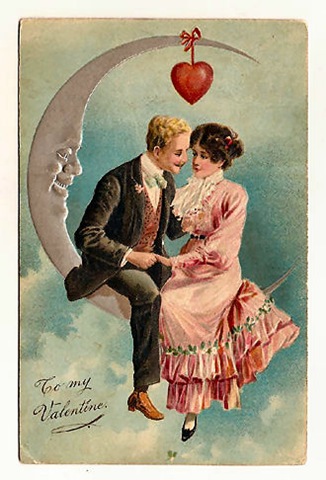
Romance. It's good for way more than just a fling.
~~~

Next week, Christine Amsden's take on The Elements of Modern Storytelling: Romance.

-Stephanie Osborn
http://www.stephanie-osborn.com

Wednesday, March 5, 2014

A New Idea for an Old Blog

by Stephanie Osborn
http://www.stephanie-osborn.com

I've been trying to figure out some interesting options for this blog. It's been around a few years now, and I wanted to do something different for my readers. An online chat with a friend and fellow author generated a spark, and I have that idea, and more, agreement from the appropriate people to help me pull it off.

So, starting next week, I'm going to have a running series of posts -- some guest, some my own -- that answer the question,

Where does [insert element here] fit as an element of modern storytelling?

Hopefully this will result in some interesting dialogue between authors and readers, hopefully in the comments of this blog (which for some reason, people seem to be shy about commenting upon, despite the fact that I have a goodly international readership), and elsewhere. So please stick around while anywhere from 8-12 authors discuss the elements of telling stories and how each one personally incorporates them. And by all means, post your thoughts and reactions in the comments.

I think it will be worth your while. And I think we're all about to learn some stuff.

Heads up: Next week we begin...
Where does ROMANCE fit as an element of modern storytelling?


-Stephanie Osborn
http://www.stephanie-osborn.com

Wednesday, February 26, 2014

On J.K. Rowling and Books

by Stephanie Osborn
http://www.stephanie-osborn.com

By now many of you may be aware of a certain article on the Huffington Post which calls down J.K. Rowling and berates her for her work, and for not stepping aside to allow others to move up. I'm not linking to it because I don't want to give that kind of tripe the time of day, let alone the hits. I must admit it's caused a bit of a stir in writing circles.

But I am giving it some time of day now, because such thought is double-plus ungood. In fact, it's just plain stupid.


Larry Correia and me, waiting for a panel to start.

It came to my attention on Facebook the day it was published, and again the next day when a friend/fan tagged me with it. I'll paste my comment in below:
"I read the article last night. I was, frankly, shocked. Summmarized, the message was, 'You've made enough money now. Go away and let the rest of us have it instead.' 
"While I might debate the worthiness of a popular offering (ONLY if it is particularly bad), I would never EVER go so far as to say that ANY writer should ever stop writing. (Quite aside from the fact that it is, for any true writer, impossible to do.) 
"It's very much an entitlement viewpoint. I have no interest in it, or her.  
"And as many have already said, she caused me to lose all interest in reading anything she has ever written. If her logic is this faulty, I'm pretty sure I'd throw it through the window well before finishing it. And before someone tosses out the argument that I'm doing what she's been accused of doing (condemning without reading), I HAVE read something she wrote: I read this article. In detail. It's very much akin to my refusing to go see [the movie] Armageddon after having seen the trailer: there were so many factual errors just in the trailer, I knew I'd walk out before the film hit the halfway mark.  
"Much thanks to Fritz for the compliment to my writing. I'm not sure scifi/mystery crossovers can truly be termed "literary," though many (including my publisher) have done so. I shall, I think, simply accept the accolade and move on from here. *bows*"

I would like to add that said debate of an offering's worthiness would be in private, with only a couple of other people, and certainly not trumpeted from the rooftops of social media.
Me at the release party of my Displaced Detective book 3


There is also this bit of disingenousness that I caught and tagged. The below is a compendium of my posted comments on Larry Correia's blog on the subject:
"I think I’mma call bullshit on her whole claim of, 'I’ve never read a word (or seen a minute)' of the stories. 
"Why? She refers to Rowling’s body of work as a 'Golgomath.' 
"Now, I’ve read all the HP books and seen all the HP movies, and I still had to Google the word to discover that it’s the name of the “new” leader (the old leader having been assassinated by same) of the tribe of Giants in Russia, from one of the later HP books (Order of the Phoenix), and he’s on Voldemort’s side. Probably the most obscure and least-referenced of all the Giants mentioned in all of the HP books…yet she manages to zero in on it and use it. 
"I’m an HP fan too, though maybe not as fierce as some, and I didn’t catch it. 
"And if you wanted to use a simile riffing on giants, why use one that nobody, not even HP fans, would instantly recognize, and that requires hunting to find, when you could just refer to Rowling’s body of work as a 'Goliath' which is a metaphor that most everybody is likely to at least recognize? 
"And if you’ve never read any HP, how do you even know there are any giants IN it? 
"What’s wrong with that picture…?"
The notion that one author has to step aside so others can move up is utter claptrap ridonkulous. Now, if one is at a convention, where the attendees have only the funds available on their persons, there's something that approximates a zero-sum model. Note I said APPROXIMATES. These days we have credit cards and Squares and electronic swipes and ATMs to get around that problem, and while I'm not Larry or J.K. I still do pretty well at a con. Outside, in the world at large, there isn't a zero-sum game -- nowhere close. 
In the company of Les Johnson and Chris Berman.

More, and frankly, telling Rowling to knock it off is telling a grand master of the game to take her chess pieces and go home. Note I didn't use a simile there; I didn't say it was LIKE telling a grand master to go home. I said it IS TELLING a grand master to go home. In the end, it's no different from someone having told J.R.R. Tolkien, or Sir Arthur Conan Doyle, or even Shakespeare, the same thing. They also wrote for love of writing and for the paycheck. Doyle even revived a character that he hated -- Sherlock Holmes -- for the sake of the paycheck, and because he got so many fan letters wanting more...much the way Rowling is getting fan letters wanting more Harry Potter books. Last I heard, she was considering (depending on who you talked to) either an adult series about the aurors they became, or a series involving some of the other children at Hogwarts. Whichever, I'll be getting them. If she writes them, we will buy.
And that is good, because the kids will also buy, and they will become avid readers. And they will grow up to be avid readers, and they will buy our books too.
But tell me this: how can you criticize and put down another author's work as childish (which the writer of this article did, because she said it was a shame that adults ever read the books), when you claim never to have read the material? How can you know it really is the way you think it is, without seeing for yourself?
The first book co-authored with Travis S. Taylor.

Yes, I freely admit it. I am a Harry Potter fan. I am not a particularly rabid one, but I did enjoy the films, which in turn introduced me to the books, and I ended up reading every one, and waiting for the latter books to come out -- though not with bated breath. It was more a case of having piqued my curiosity to see how it would all work out in the end. (This is, by the way, the sign of good writing -- she made me care about the characters. If there are other problems -- punctuation, grammar, awkward wording and structure, too much description, all these accusations have been leveled at Rowling -- look to the editors; it is their job to see that those things are corrected by the writer.) More importantly, I am a writer myself. I know how the business works, on many levels. I know what constitutes good writing, and I know that success in this industry is to some extent dependent on whatever the Next Big Thing is, and whether or not you manage to catch that metaphorical wave with the surfboard of your writing. Okay, crazy sounding analogy, but still, it fits. 
The second book co-authored with Travis S. Taylor.

You know what I tell interviewers -- and students -- when I'm asked how to become a writer? I tell them to READ. Then read, and read, and read some more, and read the GOOD STUFF. The stuff that becomes, or already is, classic literature. Because in the end, they all started out the same way we do: potential writers sitting down with a blank piece of paper and an idea, having never written a story before. But they do it in such a way that it speaks to the human condition, to the human heart, and that's how and why they become classics. In reading classics, modern and historic, the conscious and subconscious mind picks up on how and why these stories "work" for us, and then when you sit down to write your own stories, your brain 

distills out what it learned from reading the classics, and your own writing becomes better for it. If you're lucky, like I have been, you have friends among those upper levels willing to take you under their wings and mentor you, teaching you to make your writing better and better. If not, why not? I've found that the majority of authors are more than willing to sit down and talk to a newbie writer, or to a writer who hasn't had the same level of success, and offer suggestions and advice. How do I know? Hey, look at some of the pictures in this particular blog article -- I took my own advice and ASKED 'em!
What you DON'T do is tell the writers of those classics, those best-sellers, to take a hike.
The HuffPo writer started off by saying her friend told her people would think it was just sour grapes.

Hey, Ms. Shepherd? She told you so.

--Stephanie Osborn
http://www.stephanie-osborn.com

P.S. There are some other really good commentaries over on Sarah Hoyt's blog and the Mad Genius Club blog.

Wednesday, February 19, 2014

Fulfilling A Promise To You -- SPEARED

by Stephanie Osborn
http://www.stephanie-osborn.com

I suppose it's appropriate to discuss this at this time of the year. You see, as it turns out, all three of the major catastrophes in our national space program landed in the same week of the calendar. The Apollo 1 fire occurred on January 27. The Challenger disaster took place on January 28. The Columbia disaster occurred on February 1. The dates spread over a scant six days. Friends have told me that NASA should shut down that week, from now on. I try to explain that need for supplies, and orbital mechanics, doesn't work like that.

I'm old enough to remember all three disasters, though the Apollo 1 fire, well, I was SO small I really didn't quite get it. (It helps, I suppose, that my memory goes back an astounding way, at least according to my mom, back into infancy, it seems.) But it was what first drew my attention to NASA and the space program. I'd just moved to Huntsville not a full two months before the Challenger disaster, and I managed to cram an entire career in the space program in between the Challenger and Columbia disasters. And had a friend aboard Columbia's final flight. (For details of these disasters, see my blog posts: Apollo 1, Challenger, Columbia part 1, part 2.)


The gist of it is that my friend, Kalpana Chawla, was aboard. And Columbia was the bird I'd worked with the most. AND...I'd just finished the first draft of Burnout: The mystery of Space Shuttle STS-281, which featured a Shuttle disaster that very nearly perfectly mimics what happened to Columbia, with the few minor differences caused by the fact my fictional scenario was due to sabotage. To say I was devastated would be putting it mildly. And the more I found out, the more upset I got. And I found out a lot, what with reading the reports as they came out, and even getting a chance to chat with one of the field coroners. Without putting too fine a point on it, or telling my readers details that, frankly, contain images that nobody needs in their heads, suffice it that if I could find a way to prevent such a thing ever happening again, while still permitting space flight, I'd consider my life had been worthwhile.


In the same year I talked to the field coroner, Felix Baumgartner made his historic "jump from the edge of space." And something in my head clicked. I contacted my colleagues in SIGMA, the science fiction think tank, and founder Arlan Andrews and Dr. Tom Ligon signed on for the duration.

And SPEARED was born.

SPEARED is an acronym that stands for Single-Person Emergency Atmospheric Re-Entry Device. Cool name, huh? What we're trying to do is to develop what is essentially an ejection seat/escape pod combo for astronauts (or cosmonauts, taikonauts, whoever wants to go into space that might have issues coming home again). We're still in early stages yet, just very basic R&D (research & development), working on what materials we can use, and what shape things need to be in -- no, I mean literally, what geometric shapes this stuff needs to have to protect the space travelers in an emergency atmospheric entry.

We already have a preliminary patent, have done some materials testing that indicate that we are headed in the right direction, and have presented the concept at a couple of professional conferences, to interested audiences. What we don't got is funding...yet.

We've been doing this all with our own money, see -- that's how strongly we feel about it, and how sure we are that we can find a way to make it work. But we can't afford to keep pouring our own funds into it indefinitely, and there are starting to be things that we need done that all three of us together don't have the funds to do -- like have some very sophisticated computer modeling run, to help us determine what the best shape for the pod is (we're divided between spherical and aerobrake shapes). It needs to be as simple as possible to follow the adage of K.I.S.S. (Keep It Simple, Stupid -- the simpler a device, the fewer things there are to go wrong), yet sophisticated enough to accomplish several functions, including:
1) protecting the astronaut from the heat of re-entry,
2) protecting the astronaut from impact,
3) preferentially having some degree of steering/guidance so that the landing point is not too inimical an environment,
4) notifying rescuers of the astronaut's location,
among other things.

So it isn't a simplistic problem, even if our final design proves to be relatively simple.

I can't go into a whole lot of detail yet. We just finished and submitted an article on SPEARED to Analog magazine, and Analog only publishes first-run stuff -- it can't have been in print before. So if and when the article gets published, I'll be sure to note it here, so you can all go get copies and read it. It'll have a lot more detail in it than I could put in here, anyway, and it tells the story of SPEARED's development from the points of view of all three SPEARED researchers -- myself, Arlan, and Tom.

I'm really hoping that we'll get some serious interest in it -- from NASA, from ESA, from the various commercial space leaders -- because I am passionate about this system, about seeing it developed, about seeing it put into place as a standard emergency system. I worked for a couple decades in the civilian and military space industries. I know my stuff. I know what my friend KC went through. And if I can help prevent that from happening to any other space explorer, then it can never be said that I lived my life in vain.

-Stephanie Osborn
http://www.stephanie-osborn.com

Wednesday, February 12, 2014

A Writer’s Responsibility

by Stephanie Osborn
http://www.stephanie-osborn.com

There’s been a lot of talk in the science fiction community as a whole about...stuff. About what should go into our writing: morals, “agendas,” ethics, world views, theology, prejudice, all kinds of stuff like that. The gist of the argument is about whether or not we as writers are responsible for...teaching, I suppose...our readers. There have been very...forceful...words...said by a lot of people, some of which I agree with, and some of which I don’t. Some of it has been civil, and some of it hasn’t.

What I want to do in this blog entry is to put in my $0.02 worth on what I think we, as writers, should be writing, fully recognizing that that, and about five bucks, might get you a cuppa Starbux. I also want to do it in a civil, peaceful fashion, with no insult or denigration intended to anybody. I recognize that that’s very hard to do, and I also recognize that there are those who will accuse me of being milquetoast or too cowardly to take a stand. But I am the sort that prefers just to get along with folks, and I find I simply don’t enjoy argument for the sake of argument. If anyone takes offense at what I’m about to say, it is purely accidental. It’s also based on a post I made on the subject in a LinkedIn group conversation, so those of you who are in that group will have already read some of what I’m about to say.

Geronimo.

Basically and very simply, I write stories I would enjoy reading myself. If it’s not something I would want to read, chances are that I won’t maintain sufficient interest and drive to finish it, anyway. It is also a true statement that there have been times when I wanted to read a certain thing in a certain sub-genre, and upon finding that it didn’t exist (or was so hard to find that it might as well have not existed), I sat down and wrote it myself.

And I try to stay true to myself in the doing, which means, while I want it to sell well, I'm not willing to throw out my personal morality, nor to hop on the latest bandwagon for the sake of hopping on. (For example, I refuse to write about a sparkly werewolf/vampire hybrid Elf Victorian angsty gay warlock with a disability.) [insert laugh here]  In other words, don't expect me to go along with the latest fad. In turn, that means that my personal morals and beliefs tend to slip in (which I think is probably true of 99.99% of writers, unless they are trying hard and actively to prevent it -- which I do try to do, sometimes, when it’s appropriate). It’s also true that the subconscious things to which we each tend to default will creep in, as well. And as far as I'm concerned, in general, that's okay. 

That doesn't mean I don't try to do things that shake people up, things that make readers think. I try hard to do that. (Heck, in my first novel I destroyed a frakkin' Space Shuttle, for pity's sake.) Sometimes that means having a plot twist that makes ME uncomfortable, but which makes sense in context, and if it does, I do it -- because what's most important to me about the characters I write is making them come alive to the reader -- so no cookie-cutter characters/beliefs/personalities/morals. 

In fact, one of the two most important aspects of writing is, in my opinion, the ability to create a character that comes alive for the reader (and usually for me, too). I have had male fans meeting me for the first time find themselves mildly surprised to be meeting a woman -- because, they said, the male characters I write are so spot-on to how men think that they thought a guy surely must have written it. And I have had other fans contact me to find out how a particular character was reacting to a big news event that happened near where the character “lives.” (I use that choice of wording deliberately.)

I delight in these things, these responses. It means I have done what I set out to do: I have created a PERSON. I have created someone who lives in your mind so strongly that it is entirely possible to forget that s/he is NOT real. Because it is the characters who make you care about them, who make you want to know what happens to them.

The other most-important aspect is, of course, the story itself. This is, simply put, the tale of what happens to those characters that I’ve just made you care about. Because even if a real person has the potential, if his/her life is boring, you never hear about ‘em on the evening news.

What's that old saying? "Well-behaved women rarely make history." I'd paraphrase that to read, "People who don't take chances rarely make history."

If the character is what makes you care, their stories are what get your attention. Combined, the two are what keep you reading.

And I'm not really observant of genre boundaries: I tend to cross over, a lot, and by design. I mostly write science fiction mysteries with elements of romance, suspense, and thriller. Consequently I'm a member of several different writers' groups, and the bane of my publisher when she tries to figure out what TWO categories in which to enter my latest book on Amazon. (Yes, you read that right: Amazon only allows two categories for any given book.) And it's why my fans in a podcast chat, and the host of the podcast, together devised the title, "The Interstellar Woman of Mystery," for me. (I thought it was hilariously good fun, and very apt when you got down to it, so I had my publicist incorporate that title in my bio, and put it in the title of my website, on my email sig file, etc. Yes, I have a d@#^ inconvenient, and very warped, sense of humor at times.) 

And I'm doing well for myself with this approach. I'm not a NYT best-seller...yet. But I do have a couple of ebook best-sellers to my credit, and a burgeoning fandom. 

And frankly, trying to layer a given belief, morality or "lecture" (because that's really what it is) on top of the story tends to backfire in general, because it usually ends up too heavy-handed, and the reader feels like they're being beat about the head and shoulders with it. Ultimately, we writers are the intellectual descendants of the storytellers of old, the bards, the shamans sitting around a fire. Can there be a moral to the story? Sure. “Aesop” did that, a loooong time ago. But the moral always comes AFTER. The STORY-- and the character -- comes first.

Hope all that makes sense.

-Stephanie Osborn

http://www.stephanie-osborn.com