Banner

Banner

Wednesday, August 20, 2014

Elements of Modern Storytelling: Character Development, A Guest Blog by Barb Caffrey

By Stephanie Osborn
http://www.stephanie-osborn.com
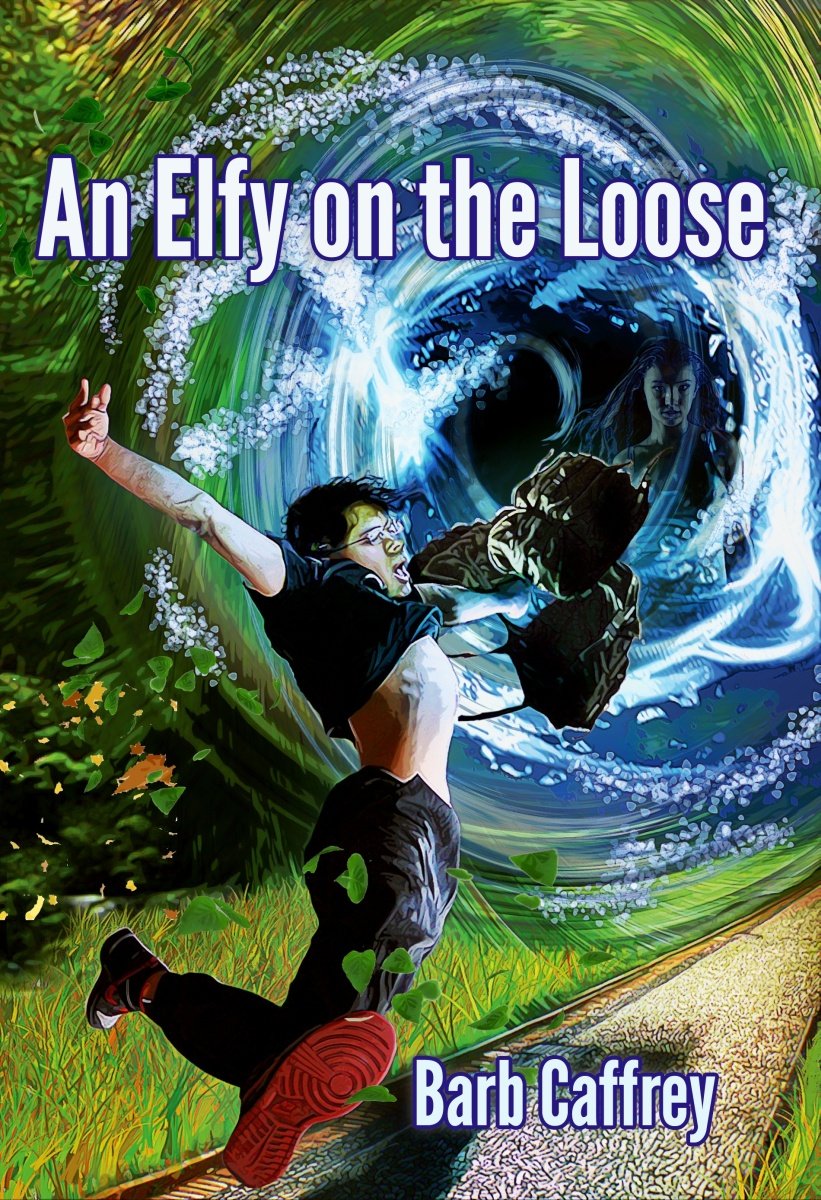
I'm pleased to welcome back Barb Caffrey, book reviewer, editor extraordinaire, and newly-published author of the delightful fantasy/romance/comedy/mystery genre-crosser, An Elfy On The Loose. Today she talks about character development, and she does so from a broad range of experience in literature.

~~~

Barb:

Without characters, you don't have a story.

I mean, think about it: Who'd remember the Harry Potter series if Harry Potter wasn't there? Or his buddy Ron Weasley? Or his other buddy, Hermione Granger? And that's just the good characters.
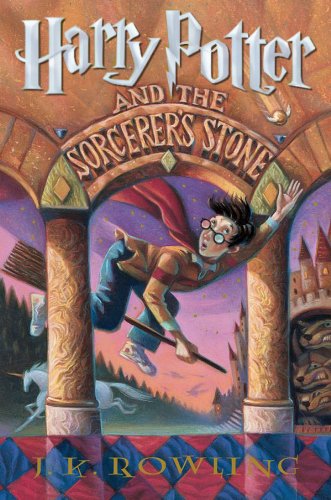
What about the enigmatic Severus Snape, the villainous Voldemort, or Harry's own uncle and aunt? Without them factoring into the equation, how would the seven books about Harry Potter interest anyone?

No, books are built on characters. It can't be any other way.

Even in a story where it's all about one man's struggle against the elements – such as Ernest Hemingway's The Old Man and the Sea or the movie 127 Hours, the true story of hiker Aron Ralston (who had to amputate his own arm in order to survive) – you still must buy into the main character's dilemma. You have to care about Hemingway's old man. You have to care about Aron Ralston (as played by actor James Franco). Or the story doesn't make any sense.

And it's always been this way.

Consider, please, that Geoffrey Chaucer's Canterbury Tales were all about characters. The ones we remember best, such as the stories about the gregarious and lascivious Wife of Bath, are because the characterization was so strong, people just couldn't help getting sucked into the tale.

The biggest and most obvious example, though, is the Bible. There are so many memorable stories there – stories of Moses, of David and Goliath, of Samson and Delilah, of wise King Solomon, and of course last but certainly far from least, Jesus of Nazareth. Most of these stories have narratives we completely understand.

For example, Moses tells the Egyptian Pharoah that if the Pharoah doesn't let Moses's people go, Egypt will be afflicted. The Pharoah doesn't listen, Egypt gets ravaged, and finally after a great deal of suffering, the Pharoah tells Moses to take his people and go.

Mind, if this particular story wasn't in the Bible, we'd see it as a story of action, adventure, mayhem, perhaps even as fantastic...but it works predominantly because we believe Moses is a grounded, down-to-Earth person who's telling the flat truth at all times. We also believe the Pharoah doesn't understand who – or Who – he's messing with, so when the Pharoah (and by extension, all of Egypt) gets his comeuppance, the reader can clap and cheer. (Or at least want to do so, which is one reason why the Bible is among the best-selling books of all time.)

But there's a different Biblical story I'd like to discuss, and that's the story of Job. He's a guy who seemingly has it all at the beginning of his story, and is described as being both "blameless" and "upright." He has a good family, lots of money, lots of property, is well-respected, and has many friends. But because his life is so comparatively easy, Satan turns to God and says, in essence, "Hey, Job has it really easy. I bet he'd not be so good if he had nothing at all."

God's reply is to cause Job to be afflicted with a great deal of unnecessary suffering. Job has no idea why he loses everything, why his family suffers right along with him and most of them die – all he knows is that God has apparently forsaken him, when Job himself hasn't done anything at all to deserve this. And all but a few friends desert him, too – and the few friends left all believe Job must've done something to cause this, even if they don't know what.

Job, though, really is as good as God said he is. So Job keeps being himself, tries to help others, and while he's obviously and understandably upset at all the undeserved misery that's befallen him and his family, he doesn't lash out at other people.
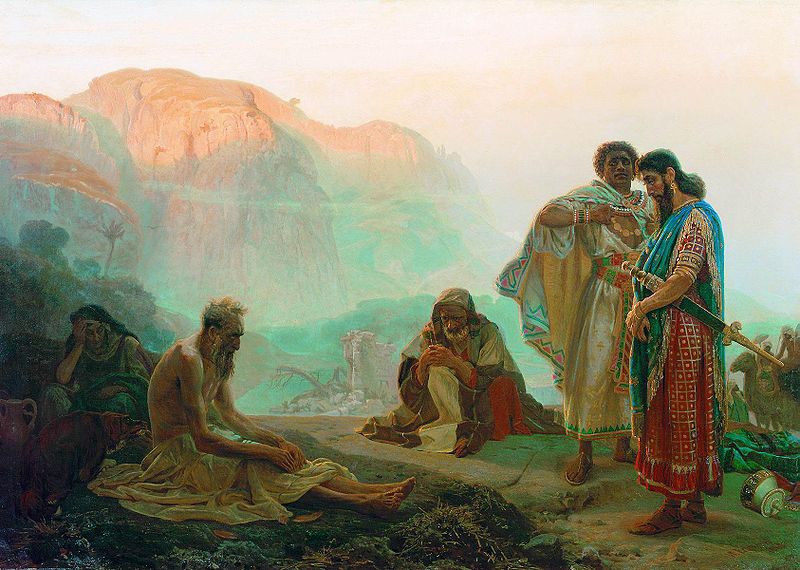
Because of Job's exemplary behavior, eventually much is restored to Job, though Job never gets a true answer as to why this happened. Instead, God basically stays above the fray and says Job cannot judge God – and Job accepts this.

Now, why does much of this story work, even to modern readers who don't accept that a Deity figure would ever behave in such a peremptory way? Well, it's simple: We all know people who've suffered unnecessarily cruel things. We don't know why this has happened. Often, the ones suffering get hectored by their friends, the same as Job was, and that just adds insult to injury. And finally, we respect a man who has shown he truly is good, deep down, in all the ways that count – because anyone can be a good person when there's no adversity in his life.

But it takes a very strong person indeed to be good when everything's stacked against him.

In Job's story, we have two main characters – God, who we can't possibly understand, and who even says so. And Job, who we definitely do understand . . . so if we didn't buy into Job's character, why would the story of Job still be resonating millennia after it was originally written down?

Job's story in particular illustrates why characterization is so important. Because if you don't have someone memorable to build a story around (like Job, Moses, Harry Potter, the Wife of Bath, or my own Bruno the Elfy), what good is the story? Who will remember it? And why should anyone care?

So when you sit down to write, make sure your main character – whether he's human, Elfy, completely alien, Godlike, or many other disparate things – is memorable. Because without that, you can't possibly interest a reader.

~~~

Well, it seems appropriate at this point to simply say, "Amen"...

If you haven't read Barb's new book, An Elfy On The Loose, by all means, do so!


-Stephanie Osborn
http://www.stephanie-osborn.com

Wednesday, August 13, 2014

Elements of Modern Storytelling: Character Development, a Guest Blog by Dina von Lowenkraft

by Stephanie Osborn
http://www.stephanie-osborn.com

Dina von Lowenkraft is the author of the excellent fantasy, Dragon Fire, released through Twilight Times Books. 


Some choices are hard to live with. 
But some choices will kill you.
 When seventeen-year-old Anna first meets Rakan in her hometown north of the Arctic Circle, she is attracted to the pulsing energy that surrounds him. Unaware that he is a shapeshifting dragon, Anna is drawn into a murderous cycle of revenge that pits Rakan and his clan against her best friend June.
Torn between his forbidden relationship with Anna, that could cost them both their lives, and restoring his familys honor by killing June, Rakan must decide what is right. And what is worth living  or dying  for.

Today Dina talks about character development.


~~~

Dina:


Character Building
Character Creation and Development


One of the pleasures in writing is creating characters -- vivid, dynamic characters who come alive.

Character Building is a multi-layered process, interwoven with other aspects of writing. Although the spark for a character can come from anywhere -- an image, an event, a plot arc or even a theme one wants to deal with -- the actual process is one of on-going discovery as each character takes on a life of their own.

I’m a plotter but I like creative freedom. Or I could say, I’m a pantser but I like to know where I’m going. So the tools I often see for character building don’t work for me. I have never been able to fill out a ‘character questionnaire’ before writing a book because I always stop after a few questions -- my mind will have jumped elsewhere. However, when my agent sent me a 3-page character questionnaire so that she could better understand my characters’ motivations in a completed manuscript, I was able to sit down and answer every question without pausing to consider what the answer was. But I did not, contrary to what she said often happens, learn anything new about my characters. By the time I have written and revised a manuscript, my characters are very much alive for me -- even the secondary ones.

So how do I get to that point if I never sit down and write it all out? Essentially, character building comes in waves for me:

1. General idea of characters which then mixes with plotting: Who Are These People?
2. Deepening my understanding by writing a few scenes and doing some more detailed plotting before writing the first draft: What Do They Want?
3. Digging further into motivation and objectives while writing the first draft: How Do They Show What They Want?
4. Checking for voice and expression as I revise and rewrite to get to a second draft: Can They Live Outside My Head?


1. Who Are These People?
 
Whether a book idea comes from an image of a world, a situation, a feeling, a theme or a character trait, I always have a vague idea who my characters are in terms of gender, age, etc. At this stage, I go back and forth between the story idea and the characters involved, since each character’s identity juggles with the plot to define itself. For example, when I was creating the main character of DRAGON FIRE, a shapeshifting dragon named Rakan, I only realized after I began plotting that he had to grow up outside of the normal Draak family structure. Otherwise, he wouldn’t be able to fall in love with a human, since most Draak see humans as nothing more than animals to be exploited. So I adjusted his upbringing accordingly.

At a minimum though, to get a story idea fleshed out enough to know where it is going, I need to have a decent idea of age, education level, family structure, and attitude of the main characters.

Having worked out some of these basic details, I will usually start writing -- maybe just a few scenes here or there in the story, or sometimes backstory. This allows me to get to know the character better and gets me to a point where the real work in character building can start.


2. What Do They Want?

Once I have written a few scenes to get a better sense of who my characters are and how they react to one another, I then like to flesh out my plot. As I do this, I delve deeper into what my characters want.

Compelling characters have a strong drive -- whether it is physical, emotional or intellectual will depend on your story, and your character. But whatever the plot line, and whoever your characters are, there will be a goal, a problem to overcome and hopefully, a mix of internal and external needs that conflict with each other.


3. How Do They Show What They Want?

I don’t worry about getting all of the character details figured out before I write, just those that seem most relevant to the story/characters involved. But by this point I have a clear idea of each main character’s internal and external motivations. This is essential since emotional tension and conflict work together to drive the story forward -- and result in a compelling read.

As I write each scene, I think about each character’s motivation. Given what I have already determined, and what comes up as I write, their motivations should be clear. If they aren’t, I look first to see if I haven’t clarified that part of their personality/situation yet. If that seems clear, I look at the scene itself -- maybe it is a scene that doesn’t carry enough weight. Maybe something else needs to happen (or not happen) to increase tension or build more suspense. In other words, I will look at the scene to clarify its objective and make sure it helps bring my character, and the plot, forward.

4. Can They Live Outside My Head?

Once the first draft is finished, it’s time to revise. I know many writers who don’t like revising, but I actually find it is a great time for deepening characters. By this point, I know my characters well. I know where they are going and how they get there. As I re-read and revise, I check to see if their actions are in line with their internal motivation, if their voice is clear and unique and if the plot arc and the emotional arc come together at the end.

For me, Character Building is an on-going process that is in constant flux. Characters grow and develop with the manuscript, and as they grow, so does the potential emotional impact of their story.

Thank you for inviting me to participate in this fun series on craft, Stephanie!


Author Bio:

Born in the US, Dina has lived on 4 continents, worked as a graphic artist for television and as a consultant in the fashion industry. Somewhere between New York and Paris she picked up an MBA and a black belt. Dina is currently the Regional Advisor for SCBWI Belgium, where she lives with her husband, two children, three horses and a cat.

Dina loves to create intricate worlds filled with conflict and passion. She builds her own myths while exploring issues of belonging, racism and the search for truth... after all, how can you find true love if you don’t know who you are and what you believe in? Dina’s key to developing characters is to figure out what they would be willing to die for. And then pushing them to that limit.

Dina is repped by the fabulous Kaylee Davis of Dee Mura Literary.

Twilight Times YA & NA Books on FB: https://www.facebook.com/TwilightTimesYAandNAbooks

~~~

Thank you for participating, Dina! This was very insightful. I find that you and I build our characters similarly, I think; but mine is rather more an intuitive process that might gain strength from using your questions to flesh them out better. Certainly by the time I am, say, five books into the series, I do know my characters! 

I look forward to hearing your comments on our next element!

-Stephanie Osborn
http://www.stephanie-osborn.com

Wednesday, August 6, 2014

Elements of Modern Storytellilng: Character Development, A Guest Blog, Part 2 by Aaron Paul Lazar

By Stephanie Osborn
http://www.stephanie-osborn.com

Today we continue a new take on developing characters:  how their tastes in the arts helps to form and shape those characters. My friend Aaron Paul Lazar spoke about this last week. This week he's going to finish up what he started. Have at it, Aaron!


~~~


Aaron:

Does Music Move Your Characters Forward?
Part 2
[copyright Aaron Paul Lazar, July 9, 2014]
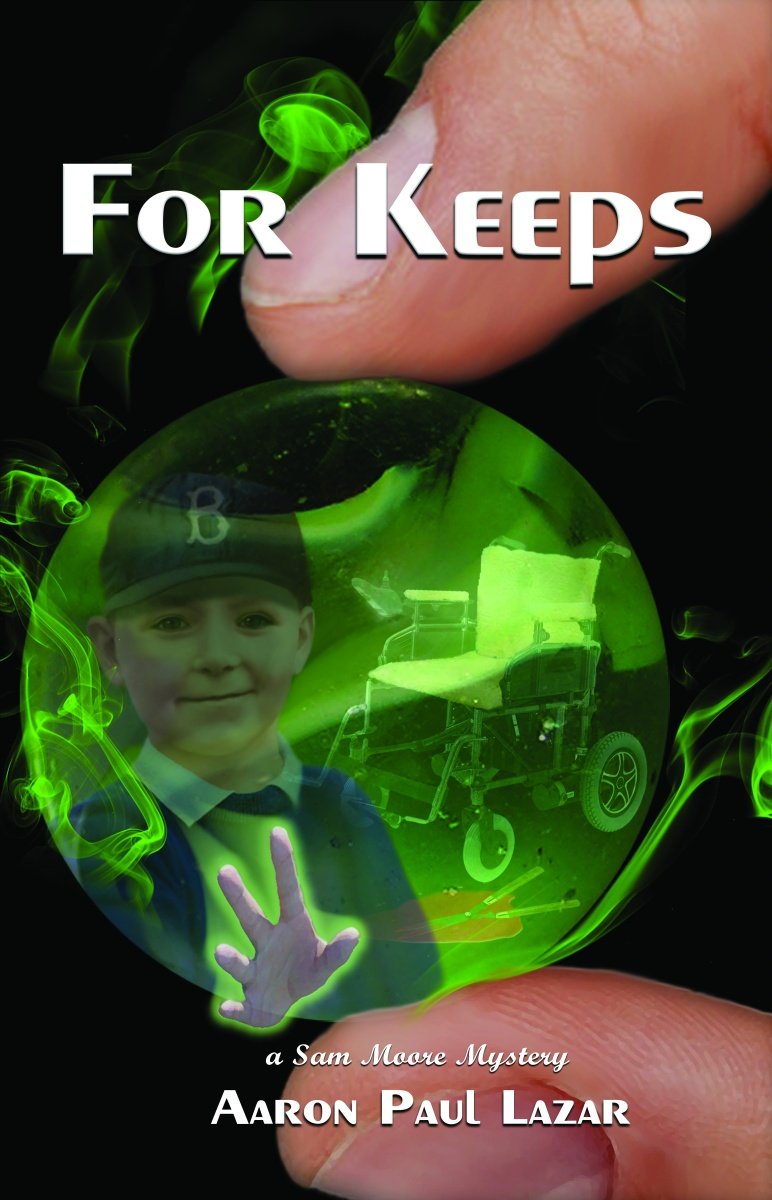
Here's another scene from the next book in the series, book #3 in Moore Mysteries, entitled For Keeps. In this example, Rachel is trying to get Sam to open up to a new style of music, quite unlike his favorite, Ms. Fitzgerald. I also enjoy using my books to cross-pollinate my own series (see reference to Gus LeGarde's radio show in Sam Moore's book) and to give free plugs to writer friends whose books I want to promote.

In this segment, Sam has just come in from an unsettled meeting with the local coroner, who seems to have a crush on him, which makes him extremely unsettled.

***

From chapter 11, For Keeps:

“How’d it go, sweetie?”
Sam slumped against the doorframe. “Pretty much like you said it would. But it’s still damned uncomfortable.” a
“Oh, poor baby,” she said, patting the sofa beside her. “Come listen with me. Japanese Melodies, by Camille Saint-SaĆ«ns. They’re so pretty.”
Reluctantly, Sam shuffled to the couch and dropped beside Rachel. “Okay. Maybe for a little while.” Sam’s usual tastes ran to Ella Fitzgerald’s crooning and Duke Ellington’s band. But he tried to maintain an open mind as he slid close to her and slipped an arm around her shoulders. She snuggled into him and closed her eyes.
The cello and piano duet invaded the room, soothing and saddening Sam at the same time. The music glided into his heart, plucked at his emotions, and tantalized him. The piece Professor LeGarde analyzed was particularly evocative, with searing melodies that sounded mildly Japanese and Spanish at the same time. Sam imagined a Japanese tea garden with a flamenco dancer poised on an ornate bridge. The next time he saw Gus in Wegmans, he’d have to thank him.
When it was over, Rachel clicked off the radio with the remote and sighed, almost as if she were about to burst into tears. They sat for a few minutes in silence.
He finally broke the spell. “Wow. You were right.”
***
Music is an essential element throughout my three mysteries series. Matter of fact, Professor Gus LeGarde (of the ten-book LeGarde Mystery series) is the chairman of the music department at Conaroga University. He lives for music. He teaches daily. And in many cases, I try to further his development by showing his listening reaction, as well.

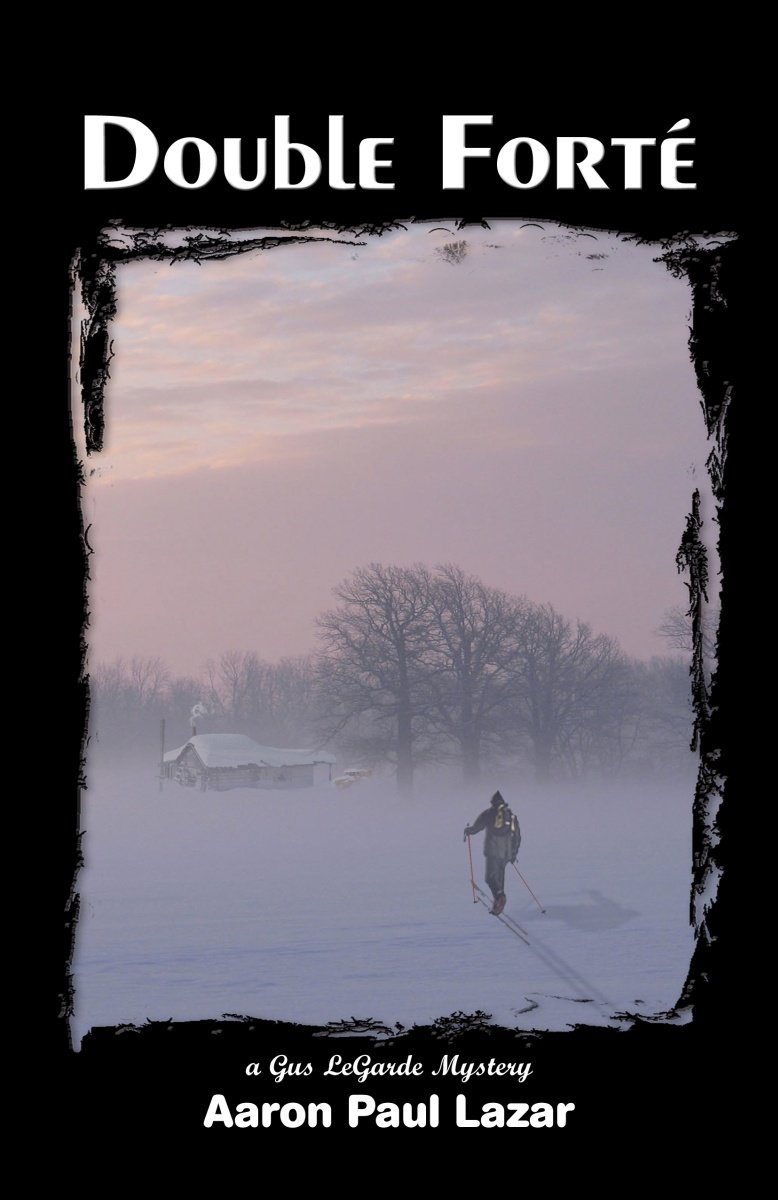
Gus’s first wife, Elsbeth, leapt to her death from the cliffs of The Letchworth Gorge four years before the first book in the series takes place. (Double FortĆ©) One morning, he’s teaching an opera class and happens to be knocked for a loop when he realizes the parallels between the operatic story and his own life. Here’s the end of the scene, where Gus is speaking to a roomful of students, having played arias from Puccini’s Tosca for the past half hour.
***
“The opera ends when Tosca’s enemies approach. Overwhelmed with grief, she runs to the top of the battlement and soars into the air in a dramatic, self-sacrificing leap. Of course,” I paused dramatically and finished with a flourish, “she can be happy only in the afterlife, with her beloved Cavaradossi.”
I pointed the remote at the sound system and clicked the CD to the final aria in Act III. The students listened with wide eyes. The cloying, beautiful melody surged out of the speakers in the finale. From the expressions on their faces, I figured the entire class was imagining Tosca racing up the stairs to leap t to her death. Even Ronny Kuczynski sat with a pensive expression, his eyes cast down.
A feeling of melancholy wafted over me, catching me unaware. It stabbed me with growing pangs of depression. Familiar sorrow migrated into my throat and gripped me—hard.
I’d often related Tosca’s leap to her death with that of my wife, Elsbeth. Although it had been four years now, the pain of the loss still killed me. It felt like yesterday.
Pushing away the thought, I struggled to forget the vision of Elsbeth lying broken and battered at the bottom of the Letchworth Gorge.
She’d been so much like Tosca, with her own diva-like personality.
Exchange the battlement parapet in the opera for the craggy Letchworth Cliffs, and there was the appalling parallel. The vision of Elsbeth returned. I pictured her plunging from the cliffs, her white nightgown flapping around her as she tumbled through the night air.
The music ended, and a final thought hit me. It was true that an awful analogy existed between Tosca and Elsbeth, but there was one huge exception. Tosca leapt toward her love, whereas Elsbeth had left me, very much alive and very alone.
***
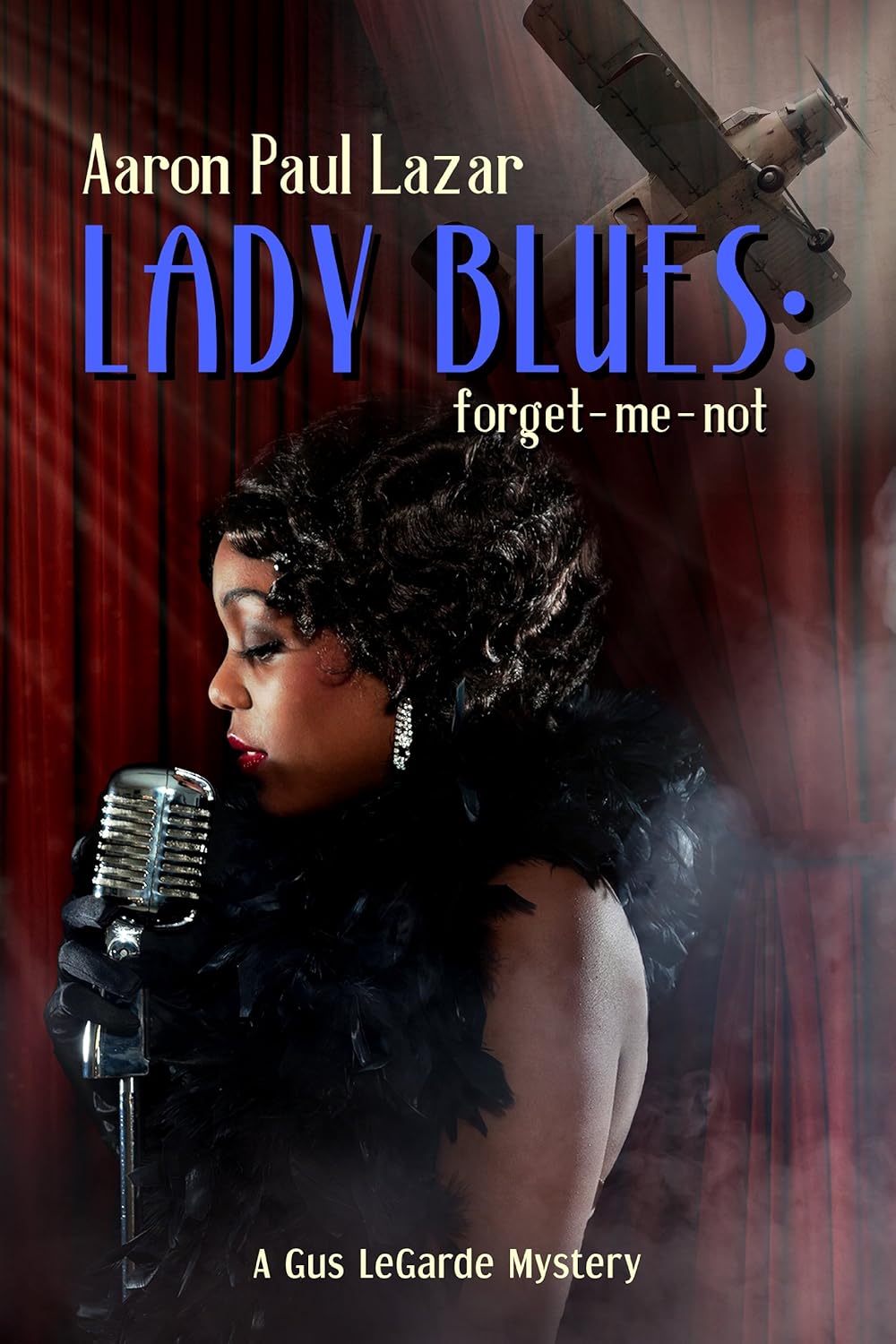
Here’s one last example of how using music in a scene might enhance the character development of a father Lady Blues: forget-me-not)
who’s just realized his teenage daughter had a hidden musical talent, on top of the uncomfortable knowledge that she is growing up too fast…way too fast. (From
***
Shelby nodded, stood up, and let loose, progressively relaxing and making use of smooth portamento passages, light vibrato, and musical sighs. I played from memory, watching as she added facial nuances to match the words.
Maddy tapped her toes on the floor, Joe stayed awake, and even Siegfried stopped to listen in the kitchen doorway, shushing Johnny and the twins.
Chills snaked down my spine.
What a gift she has.
I’d thought maybe musical theater would be her venue, since she’d been interested the previous year in trying out for shows at school. But something had changed in this sixteen-year-old child/woman. Long dark curls framed her delicate heart-shaped face. Her eyes, dark and long-lashed, closed periodically to squeeze every spark of splendor from the notes.
She stood barefoot in faded jeans and a soft yellow sweater, her young lithe arms gesturing to match the words.
Realization hit, and I fumbled the notes.
She isn’t a little girl anymore.
Smooth and engaging, she exuded confidence that scared the hell out of me.
I recovered, but felt unsettled for the rest of the night. We’d already dealt with Shelby’s boyfriends, had been horrified, worried, and traumatized like other parents, but somehow it hadn’t hit me.
Shelby’s a young woman now.
A shudder of fear ran through me. I remembered Freddie’s teenage years with a mixture of joy and horror. But now, did I have the strength to go through it again?
God, help me.
After saying goodnight to everyone, I pushed down the panic and followed Camille and the dogs up to bed.
***

There you have it.

Have you read books which included musical scenes that have affected you in the past? Have they deepened your knowledge of the characters? I’d love to hear your thoughts on this below.
But, before I go, I’d like to thank Stephanie Osborn for having me here today. And as always, it’s a great pleasure to talk about writing and books with all of you!

~~~


As always, lovely to have you, Aaron my friend!

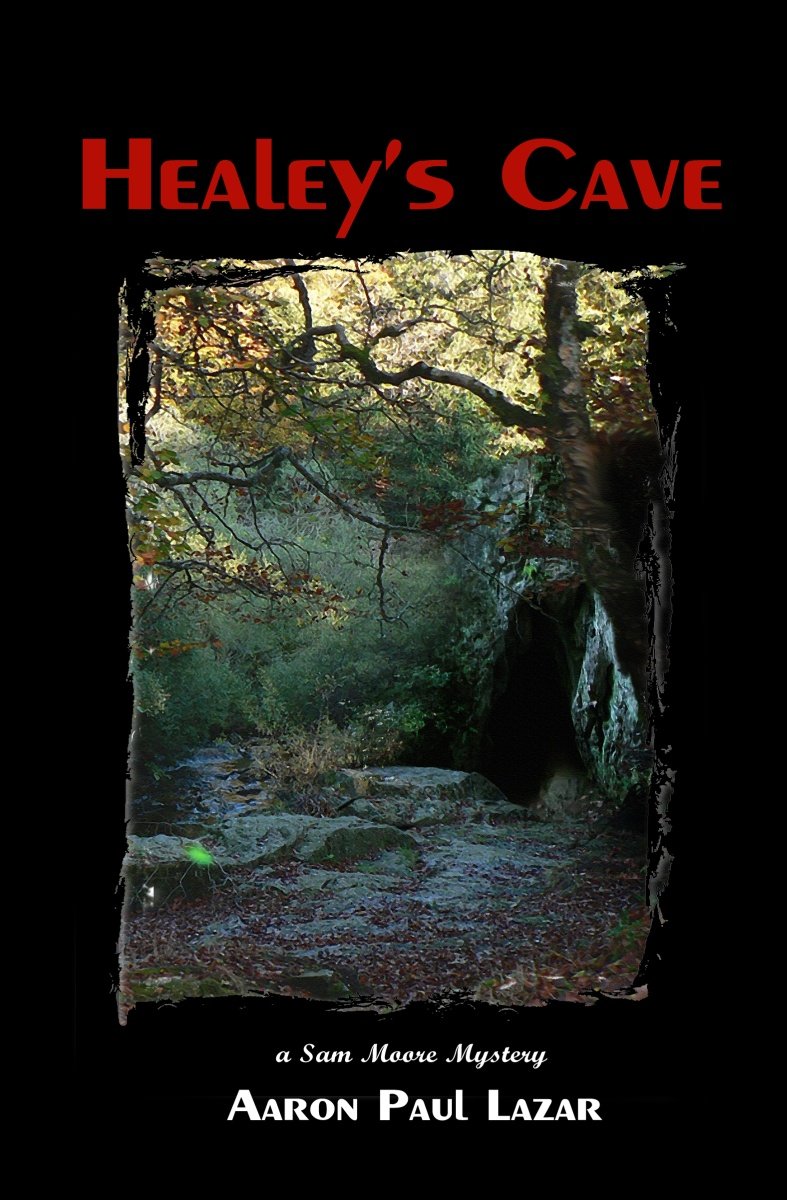
Book 1 of the Sam Moore series is Healey's Cave, if you want to start at the beginning.

Also, Aaron has two new books out: Devil's Lake, a standalone romantic thriller; and The Liar's Gallery, the next book in the Gus LeGarde series. Buy them!

-Stephanie Osborn
http://www.stephanie-osborn.com

Wednesday, July 30, 2014

Elements of Modern Storytellilng: Character Development, A Guest Blog, Part 1 by Aaron Paul Lazar

By Stephanie Osborn
http://www.stephanie-osborn.com

Today we have a completely different take on developing characters, and that is how their tastes in the arts helps to form and shape those characters. My friend Aaron Lazar will be talking about that, this week and next week. Let's get right to it, because I'm realizing that this is a really good technique, and one which I think I've used myself without being fully aware of it...

~~~


Aaron:

Does Music Move Your Characters Forward?
Part 1
[copyright Aaron Paul Lazar, July 9, 2014]
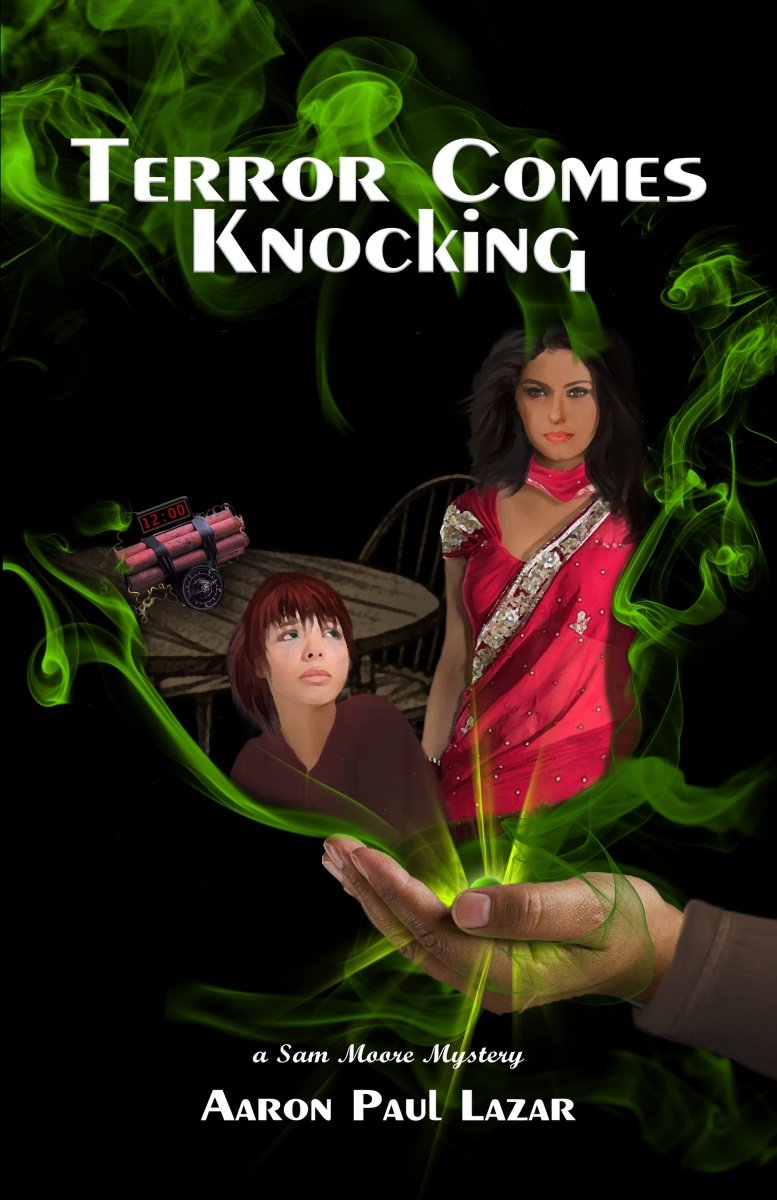
Yesterday I was listening to audiobook tracks from my second Sam Moore Mystery, Terror Comes Knocking, recorded by accomplished actor/narrator, Mr. Robert King Ross. Mr. Ross does a wonderful job representing Sam Moore in this book, and also has a great knack for dialog. In this scene, Sam and Rachel were listening to music together, and it brought them closer at a time of life when most sensuous moments had faded to memories because of Rachel Moore’s deteriorating condition with multiple sclerosis. The scene is a poignant moment for both characters, and it made me think about how music can be used to develop characters’ personalities, as well as emphasizing their complex backstories without dumping information on the reader. (Listen to sample here.)
As I drove along the highway headed in the direction of home, it struck me that writing about a character listening to a singer, or playing a piano, or being engulfed in an opera can be quite challenging. I love music (who doesn't?) and try hard to describe my own reactions to listening during some of these scenes. I also find that it can be an especially nice spot to insert a little poetry, for those of us who try not to be too flowery within the bulk of our prose, but who love describing flowers dripping down a stone wall or the heady scent of essential oils wafting through the air.
In chapter twenty of Terror Comes Knocking, Sam's wife Rachel just received surgery for two dislocated and fractured shoulders. (That really happened to my wife, Dale, a few years back...long story!) This segment describes their ride home from the hospital.

Let me know what you think of the musical aspect of this partial scene - and see if you can tell which aspects of my character(s) I intended to emphasize. Sam reveals a lot about his marriage and life with inner thoughts, and I find passages like this help to clarify the “character of ones characters.”
***
From Chapter 20, Terror Comes Knocking

Rachel closed her eyes. “How about some music? I just want to rest and listen to something nice.”
Sam nodded and leaned forward to switch on the CD player. Ella Fitzgerald was in the number one slot of his six-CD device, singing from "The Best of the Songbooks." He selected track three.
Ella’s velvet cream voice prowled over him, enveloping him with its sensual tones. He went limp inside and let the notes glissade, massaging his soul in sugary splendor.
He and Rachel had danced to these tunes in their youth. They’d seen Ella several times as teenagers. In ‘62, they’d seen her twice. His collection was extensive. He owned every song ever recorded by the jazz queen, including early works from her first recordings. The music trickled over him like soft rain falling on petals…molasses poured over pancakes. It reminded him of days gone by, particularly nights gone by. With Rachel. In their most intimate moments.
She remembered, too. She opened her eyes for a minute and slid a sideways glance at her husband. “You’re remembering, aren’t you, Sammy?”
Sam grinned, slow and lazy. He hadn’t felt like this in a long time. “Yeah… What times we had, hey, darlin’?” He dropped his hand from the wheel and touched her knee. The hospital gown had ridden up mid-thigh.
She laughed out loud. “Now don’t get any ideas, you devil.”
Sam shot a glance at her. The bittersweet knowledge of their life together now hit him hard. They hadn’t made love in years, probably wouldn’t, either. He had to make do with memories. Wonderful, passionate, amazing memories. He saw her in that light now, with her long dark hair rippling over her creamy white shoulders, her dark eyes smoldering, her fluttery fingers touching him in that way…
“Sorry, Rach. Can’t help it. You still drive me wild.”
Her eyes puddled, full of the stark knowledge that Sam accepted with equanimity. He exchanged smiles with her, patting her again. “We were blessed, weren’t we?”
She nodded. He plucked a Kleenex out of the dispenser and leaned over to dab her cheeks.
***

What do you think? Does listening to that music almost transport you back to Sam’s memories, too?

~~~

Part Two comes next week, with more cool excerpts from Aaron's books to illustrate how he develops his characters. Stay tuned!

[Book 1 of the Sam Moore series is Healey's Cave, if you want to start at the beginning.

Also, Aaron has two new books out: Devil's Lake, a standalone romantic thriller; and The Liar's Gallery, the next book in the Gus LeGarde series. Buy them!]

-Stephanie Osborn
http://www.stephanie-osborn.com

Wednesday, July 23, 2014

Elements of Modern Storytelling: Character Development, A Guest Blog by Ken Johnson

By Stephanie Osborn
http://www.stephanie-osborn.com

Today we move on to a new element in the modern storyteller's tool kit: developing a character. But I've decided to let someone else lead off; Ken Johnson is a social scientist and what once would have been called a "loremaster," and he has chosen to analyze several of my own works of fiction with an eye toward how I created and developed the characters in them. We have had several interesting chats on writing and my philosophy and techniques, and he has taken them into consideration in penning what you are about to read.


~~~
Ken:


truly think it is a honor to be asked by Stephanie Osborn to write something for her blog.  She is an accomplished lady who has done more in her lifetime than five men could.  To be even considered means that you have a voice with something to say.  Indeed, that is rather reaffirming in today’s world.  So, it should go without saying that I see this opportunity as being extremely important when she asked me to write on the topic of character development. 

As a culturalist (social scientist), I try to stay aware of how art, music, literature, and other “relics” of a culture’s “archaeology” are symbolic of their values, beliefs, social protocols, etc.  Are all of the lead characters men, women, or mixed? What is the age range of the main characters?  What is their education level?  What percentage of diversity is shown in the characters?  “What is the character’s nationality?”  Such questions must be asked and contemplated in order to best understand how the character represents a given concept and point of view. 

Being that I also do art (paintings on feathers), as well as fictional writings, I also have to appreciate the artistic and technical nuances that take place with not only how the character is created but also as to how a character develops.  “What is his back story?” “What drives her?” “Has his emotional past changed him physically?” These questions and more color what will ultimately be the characters in print. 


I remember some time back, while researching for a forthcoming book on monster allegory, asking Stephanie about how she comes up with her stories.  She explained to me that she has to envision the character both before and after the story she is actually writing.  As she told me, oft times there are entire stories that she knows about her characters which never make it to print only because she knows the character that detailed enough that she can finally write about them.   

Indeed, my research of accomplished authors has revealed this intriguing commonality as being the foremost trait of sophisticated character development.  If you do not know your characters then how can you write about them?  For instance, in a story I am wanting to write, I have pieces to a character’s story that I can see almost as if it is a movie in my mind.  However, just as I can see these scenes there are also gaping holes in the storyline that I cannot see yet.  So, I cannot write the story until I know my characters inside and out.  For the writer, this can be maddening at times because there are untold, and oft times unfinished, stories clouding the mind and yearning to be free.   

This is one reason why I often prefer short stories and novellas because they are concise and often do better justice to the overall story and the characters involved.  The writers of shorter stories are not trying to meet some ambiguous word count minimum/maximum set up by a publisher.  Instead, they only set out to tell the story that they know. 

Sadly, television has corrupted writing to the point now that most writers are trying to play “screen writer” in their books rather than as authors.  Third person omniscient is now becoming status quo.  It is the equivalent of a watercolor artist narrating a painting as to why the paint flowed a certain way, why it blended the way it did, etc.  The narration ultimately becomes the main stage element and what is being narrated now takes a back stage.  When the reader knows everything about the characters then there is little surprise.  Thus, many authors compensate with more and more absurd situations rather than focusing their attention on practicing a modicum of restraint. 

The only caveat to this is when one writes about a genius.  Here, writers often try to make the character an enigma.  I remember researching out a number of authors recently who were talking about how to develop an ingenious character.  These experts all basically noted that time is something that is on the author’s side.  In other words, the “genius” character in the book may not have time to Google “hairy bottomed frog” to give a quip but the author does.  This allows for a character that seems almost supernaturally intelligent.  So, in such a case, you may have a scene where the genius asks a colleague how (s)he is doing, and gets a response as to something like, “I am fine as a frog’s hair split three ways!” only to have the genius retort by saying, “You know, there is actually a hairy bottomed frog in Africa which, during mating season, grows projections on its rump that looks like hair.  Even cut three ways, I dare say that it is anything but ‘fine.’  I guess we shall endeavor to make your day better then.”   


Other ways may also include the author leading the reader astray, and surrounding the “genius” with more simple-minded characters, so as to make the “genius” look even more intelligent by comparison to his or her surroundings.  In television, this is done all the time.  For instance, on the show “Endgame,” an agoraphobic, Russian chess grandmaster is left in his hotel solving cases.  As he tries to figure out the puzzle, the viewers are taken down multiple wrong paths only to have the grandmaster reveal the truth at the end.   

Verily, the core of any good character is research.  However, how you develop the character with this knowledge base can be done a number of ways.  Most authors like to do a linear development of characters.  But, a few will venture out and take a static point of view.  Linear development is nothing more than having the character(s) follow a given timeline of events where they grow and morph along the way.  A static development is where the character does not change, usually because it is so complex or formidable that change is nonexistent, and so then the story becomes one of how the character got that way to begin with. 

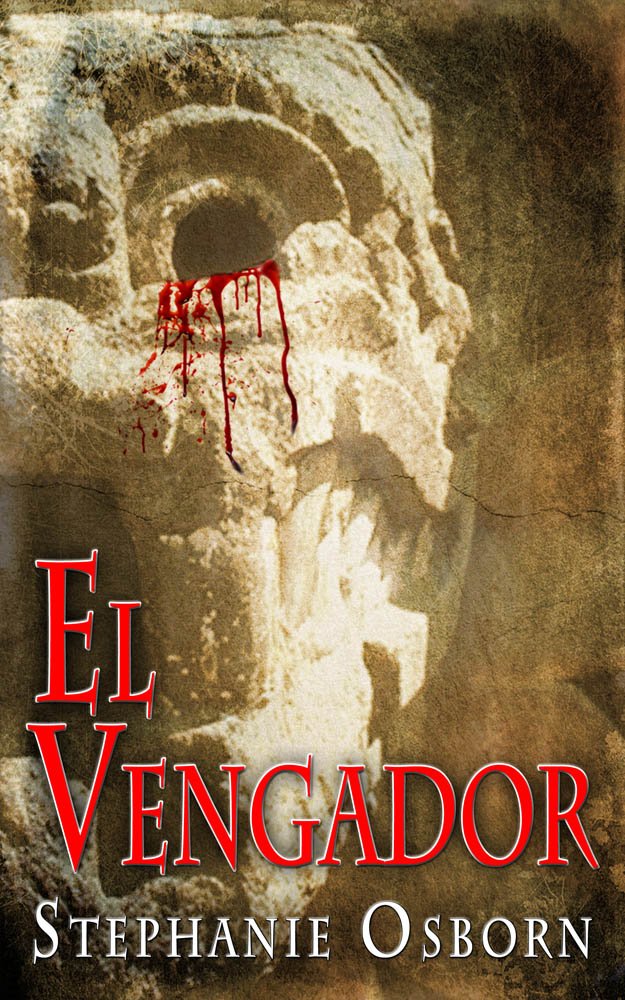
A great example of static character development is El Vengador.  As I once wrote in a Yahoo! Voices article on werewolf allegory, Stephanie changed paradigms as to what a werewolf represented.  However, she did this by taking the often underutilized static form of character development.  Until the end, the reader does not realize that the monster is a single, cursed being.  In the end, even though the killing spree and attacks never end, the true story was in depicting how the monster came to be, where he came from, and what motivates him. 

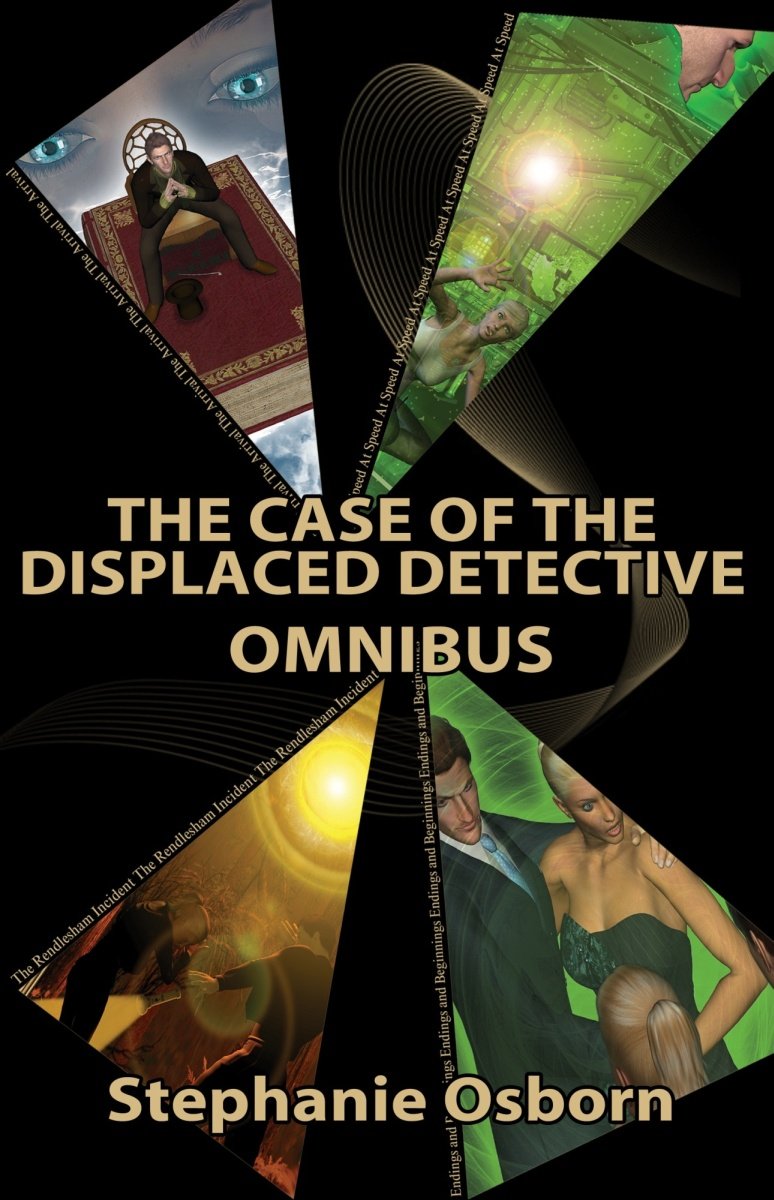
In contrast, the Displaced Detective Omnibus gives the reader a compilation of multiple books which takes the reader along a given time line where Sherlock Holmes is taken from his time and dimension and placed in our world during our time period.  While Stephanie gives insight into some of their thoughts, she refrains enough in the story so that you have to work to see and understand the characters independently for who they are.  In other words, she does not let the narrative overshadow the characters.  What is important to note about the series is the development of Sherlock.  In the book, he goes from being a very static, Victorian gentleman to being more animated.  Her taking into account cultural and temporal norms allows for unmalleable character to become dynamic.  Where his time required men to be almost asexual, he is now allowed to show passion and tenderness openly without the author sacrificing the traits that makes Holmes such an iconic character.
~~~
Ken Johnson is an independent researcher and culturalist who typically writes on issues of culture, conflict, conservation, and literary allegory.  Starting college at the age of 16, Ken now holds a BA in Social Sciences, an MBA, and special certifications from the USDA and the Florida Supreme Court in the field of mediation.  Predominately a non-fiction writer, he has a book due out in August 2014 called Unbroken Circles SM for Schools. In 2005, he was commissioned as a Kentucky Colonel for his good works by the governor of Kentucky.  He has also been nominated for the Grinnell Prize as well as two media awards given by the Society for Personality and Social Psychology. 
~~~

I'd like to thank Ken for his analysis of my works and my writing style. He does indeed have my thought processes correct, and to see someone else's take on my attempts at creating other beings has been fascinating!

-Stephanie Osborn
http://www.stephanie-osborn.com