Banner

Banner
Showing posts with label El Vengador. Show all posts

Monday, October 27, 2014

Interlude: El Vengador, by Stephanie Osborn

by Stephanie Osborn
http://www.stephanie-osborn.com

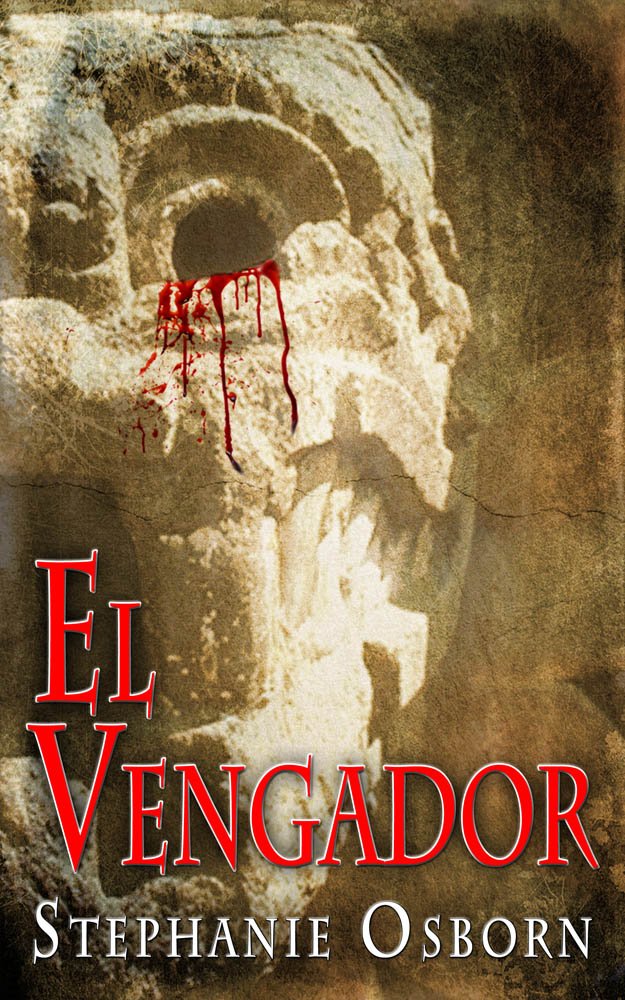
Today I thought I'd put up an excerpt from my paranormal horror novella, El Vengador.

Deputy Sheriff Michael Kirtchner gets an "unknown disturbance" dispatch call to a remote house trailer in the swamp. There, he discovers an old woman and a dog, terrorized by a mysterious beast, which he takes to be a bear. But when he contacts Game Warden Jeff Stuart to come trap the animal, Stuart tells him to get out if he values his life - this is no ordinary animal. Is Kirtchner up against a Swamp Ape ― a Florida version of Bigfoot - or something more...sinister?


Based on a true story.

~~~


“Ma’am?” he ventured. “Ma’am, could you please put down the shotgun?”
“What? Oh ― oh, yeah. Ah’m wavin’ it ever’where, ain’t Ah? Ah’m so sorry. Ah know better. Ah…it scared me, ya see, and Ah didn’…”
She put the shotgun aside, just inside the doorway. It was then that Kirtchner noticed she was weeping.
“Ma’am… are you okay?”
“NO! Ah’m not okay! Ah’m scared out of muh mind, officer! Why do ya think Ah called ya?” she exclaimed in a thick rural accent.
“Why are you crying?”
“’Cause Ah’m just so glad you came! Somethin’ attacked mah house, an’ Ah thought Ah was gonna die!”
“What was it?”
“Ah dunno. But it was big, an’ it was fast. An’ it stunk t’ high heaven!” Her voice, already pitched high from stress, cracked and became whiny halfway through this speech, and upon its completion, she began trembling. Kirtchner came to her, sat her on the steps, and worked on getting her calmed down.
“Shh, it’s okay. I’m here now. I’ve got my gun,” he patted his holster, “and you’re safe. What’s your name?”
“Elsie Moore,” she sniffled, glancing about in apprehension, studying the foliage past his squad car in considerable trepidation. “Uh, Missuz. Ah’m a widder-woman.”
“Do you prefer Mrs. Moore, or Miss Elsie?”
“Ah dunno as it matters. Don’t nobody ever come out here nohow.” She shrugged. “Call me Elsie, Ah reckon.”
“Fine, Elsie. So, someone attacked your mobile home?”
“NO! Weren’t no some one! It were a something!” she blurted.
“Shh. It’s okay. How long ago was this?”
She glanced at a battered old men’s wristwatch, then muttered, “’Bout an hour, hour-fifteen, afore you showed up, Ah reckon. Ah called right aft’r Ah shot at th’ thang. It musta run off inta th’ woods.”
“And what happened?”
“Ah be damned ‘f Ah know,” Elsie answered, running the last three words together. “There’ uz this turr’ble smell, wild animal smell ya know, like a skunk, onliest it ‘uz worse’n any skunk Ah ever heared tell of. Ah got plumb nauseous, an’ lost mah dinner inna trash can. Then there ‘uz a horrible ruckus right a’most up unner me ― unner th’ trailer, that is. Metal skreechin’ an’ bendin’ an’ somethin’ roarin’ an’ howlin’ fit to kill. Ah looked out th’ nearest winner, an’ there ‘uz a big ol’… thing… clawin’ at th’ back.”
“A thing? What did it look like?” Kirtchner wondered.
“Ah couldn’ tell ya,” Elsie tried to explain, “on ‘counta it ‘uz half up unner th’ trailer. Ah could only see its hind end.”
“…Which looked like?” Kirtchner prodded.
“Like a big ol’ furry butt,” Elsie retorted. “Long shaggy brown, or maybe black, fur, with some green.”
“Green?” Kirtchner straightened up, raising an eyebrow.
“Green,” Elsie reiterated, a hint of defiance in her tone now. “Like… you ever read ‘bout them jungle critters, them whadda they call ‘em… sloths?”
“Oh. Yeah, I think so.”
“Ah caught part of a show on th’ tee-vee,” she said. “Th’ sat’lite dish ain’t worth much, an’ Ah didn’ see all of it. But they showed ‘em, an’ th’ fur ‘uz kinda green, an’ ‘ey said it ‘uz ‘cause moss an’ algae an’ shit grew in it.” She nodded sagely. “It ‘uz like ‘at.”
“Oookay,” Kirtchner remarked, pulling out his tablet and swiping across its pad, taking notes. “Do you think you’re settled enough now to show me where it was?”
Mrs. Moore drew a deep breath, then popped to her feet as if launched. She reached inside the door of the trailer and retrieved her shotgun. It was a Winchester model 1897, he noted absently; a 16-gauge, to judge by the barrel length, and anything but new. It looked to need cleaning, too. He restrained a frisson of anxiety with an effort.
“Yeah,” she averred, “but we ain’t goin’ nowheres until you git yer shotgun, too. Ah knows as yew po-lice types carry ‘em, so yew jus’ go gitchers right now.”
“You don’t need that. And I have my pistol.” Kirtchner was less than thrilled with this development. If she gets antsy and shoots that thing, no telling what will happen, he thought. It doesn’t look like it’s been maintained in a couple of decades. I wonder when this husband of hers kicked it.
“’At little pop-gun? Agin the beast what attacked mah trailer?” She gestured at his holster. “Ah don’ think so.”
“It’s a forty-five,” Kirtchner pointed out. “It’ll handle the situation. Please put down your weapon.”
“Ah ain’t puttin’ it down, mister. Yew ain’t seen ‘at monster. Ah did. Now, yew git y’r shotgun, or Ah ain’t a-goin’ nowheres ‘ceptin’ inta th’ house, an’ lockin’ th’ door behind me. Yew kin take yer chances.” Elsie tilted her head up, setting her jaw, determined to stare him down.
So to placate the woman, he got his Mossberg, set up for 12 gauge, out of the cruiser. He made sure the magazine was fully loaded with magnum shells, and followed Elsie around to the back of her trailer.
* * *

The scene that greeted him when they got in the back yard looked like somebody had attacked the rear of her trailer using some kind of giant, multi-pronged steel fork. The heavy gauge aluminum siding was torn to hell and back, and it was peeled away in several places starting from the bottom of the trailer and curling up its side. There were great long gouges, some longer than 2 feet in length, which looked like nothing so much as giant claw marks torn into the aluminum siding of the trailer. Even the insulation had been pulled out in places. Some of the gouges had what was obviously fresh blood smeared along the edges.

~~~

I thought it appropriate to put this up before Halloween, in the middle of the holiday preparations! Hope you enjoyed it, and check it out on Amazon!

-Stephanie Osborn
http://www.stephanie-osborn.com

Wednesday, July 23, 2014

Elements of Modern Storytelling: Character Development, A Guest Blog by Ken Johnson

By Stephanie Osborn
http://www.stephanie-osborn.com

Today we move on to a new element in the modern storyteller's tool kit: developing a character. But I've decided to let someone else lead off; Ken Johnson is a social scientist and what once would have been called a "loremaster," and he has chosen to analyze several of my own works of fiction with an eye toward how I created and developed the characters in them. We have had several interesting chats on writing and my philosophy and techniques, and he has taken them into consideration in penning what you are about to read.


~~~
Ken:


I truly think it is a honor to be asked by Stephanie Osborn to write something for her blog.  She is an accomplished lady who has done more in her lifetime than five men could.  To be even considered means that you have a voice with something to say.  Indeed, that is rather reaffirming in today’s world.  So, it should go without saying that I see this opportunity as being extremely important when she asked me to write on the topic of character development. 

As a culturalist (social scientist), I try to stay aware of how art, music, literature, and other “relics” of a culture’s “archaeology” are symbolic of their values, beliefs, social protocols, etc.  “Are all of the lead characters men, women, or mixed?” “What is the age range of the main characters?”  “What is their education level?”  “What percentage of diversity is shown in the characters?”  “What is the character’s nationality?”  Such questions must be asked and contemplated in order to best understand how the character represents a given concept and point of view. 

Being that I also do art (paintings on feathers), as well as fictional writings, I also have to appreciate the artistic and technical nuances that take place with not only how the character is created but also as to how a character develops.  “What is his back story?” “What drives her?” “Has his emotional past changed him physically?” These questions and more color what will ultimately be the characters in print. 


I remember some time back, while researching for a forthcoming book on monster allegory, asking Stephanie about how she comes up with her stories.  She explained to me that she has to envision the character both before and after the story she is actually writing.  As she told me, oft times there are entire stories that she knows about her characters which never make it to print only because she knows the character that detailed enough that she can finally write about them.   

Indeed, my research of accomplished authors has revealed this intriguing commonality as being the foremost trait of sophisticated character development.  If you do not know your characters then how can you write about them?  For instance, in a story I am wanting to write, I have pieces to a character’s story that I can see almost as if it is a movie in my mind.  However, just as I can see these scenes there are also gaping holes in the storyline that I cannot see yet.  So, I cannot write the story until I know my characters inside and out.  For the writer, this can be maddening at times because there are untold, and oft times unfinished, stories clouding the mind and yearning to be free.   

This is one reason why I often prefer short stories and novellas because they are concise and often do better justice to the overall story and the characters involved.  The writers of shorter stories are not trying to meet some ambiguous word count minimum/maximum set up by a publisher.  Instead, they only set out to tell the story that they know. 

Sadly, television has corrupted writing to the point now that most writers are trying to play “screen writer” in their books rather than as authors.  Third person omniscient is now becoming status quo.  It is the equivalent of a watercolor artist narrating a painting as to why the paint flowed a certain way, why it blended the way it did, etc.  The narration ultimately becomes the main stage element and what is being narrated now takes a back stage.  When the reader knows everything about the characters then there is little surprise.  Thus, many authors compensate with more and more absurd situations rather than focusing their attention on practicing a modicum of restraint. 

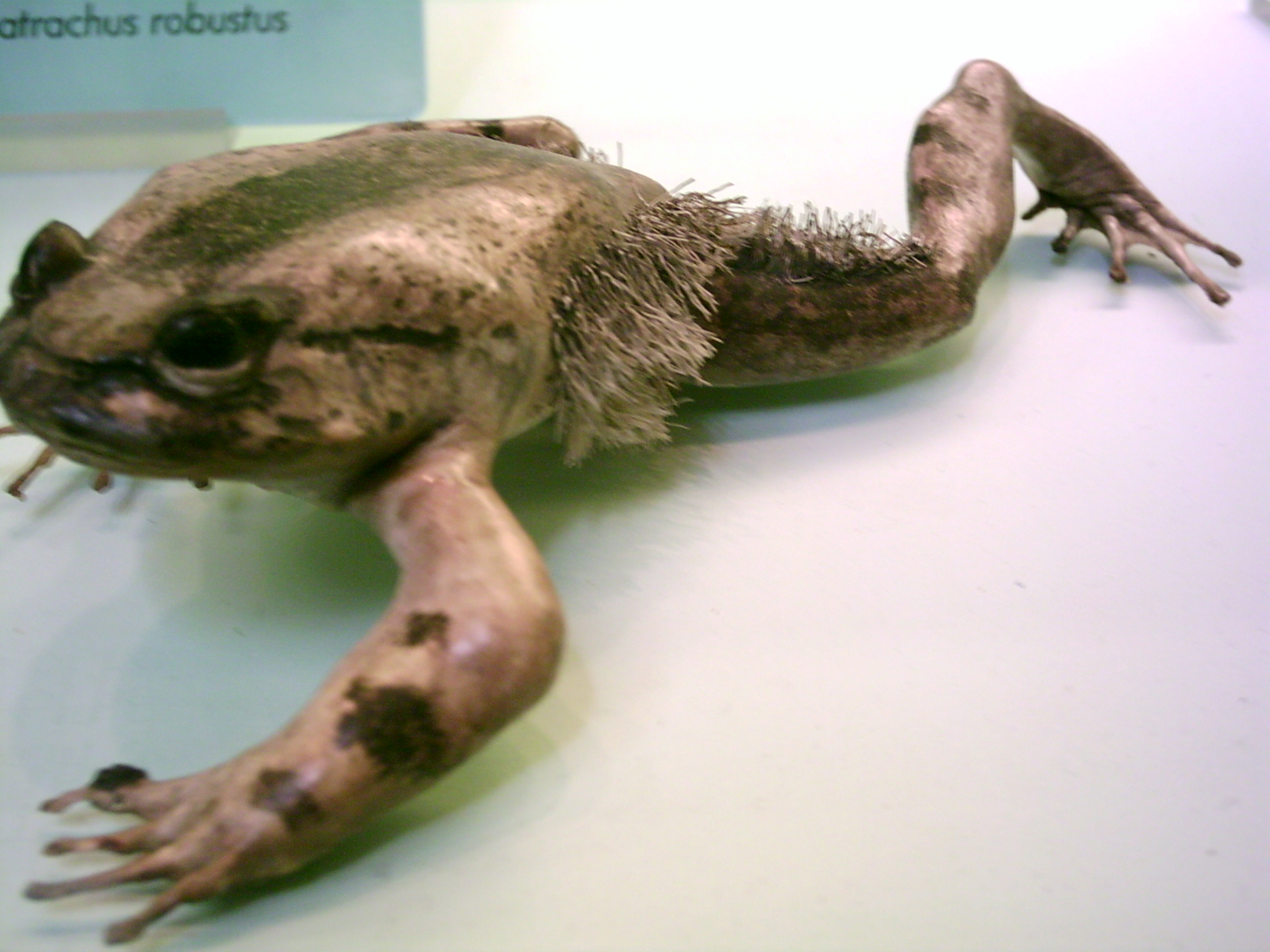
The only caveat to this is when one writes about a genius.  Here, writers often try to make the character an enigma.  I remember researching out a number of authors recently who were talking about how to develop an ingenious character.  These experts all basically noted that time is something that is on the author’s side.  In other words, the “genius” character in the book may not have time to Google “hairy bottomed frog” to give a quip but the author does.  This allows for a character that seems almost supernaturally intelligent.  So, in such a case, you may have a scene where the genius asks a colleague how (s)he is doing, and gets a response as to something like, “I am fine as a frog’s hair split three ways!” only to have the genius retort by saying, “You know, there is actually a hairy bottomed frog in Africa which, during mating season, grows projections on its rump that looks like hair.  Even cut three ways, I dare say that it is anything but ‘fine.’  I guess we shall endeavor to make your day better then.”   


Other ways may also include the author leading the reader astray, and surrounding the “genius” with more simple-minded characters, so as to make the “genius” look even more intelligent by comparison to his or her surroundings.  In television, this is done all the time.  For instance, on the show “Endgame,” an agoraphobic, Russian chess grandmaster is left in his hotel solving cases.  As he tries to figure out the puzzle, the viewers are taken down multiple wrong paths only to have the grandmaster reveal the truth at the end.   

Verily, the core of any good character is research.  However, how you develop the character with this knowledge base can be done a number of ways.  Most authors like to do a linear development of characters.  But, a few will venture out and take a static point of view.  Linear development is nothing more than having the character(s) follow a given timeline of events where they grow and morph along the way.  A static development is where the character does not change, usually because it is so complex or formidable that change is nonexistent, and so then the story becomes one of how the character got that way to begin with. 

A great example of static character development is El Vengador.  As I once wrote in a Yahoo! Voices article on werewolf allegory, Stephanie changed paradigms as to what a werewolf represented.  However, she did this by taking the often underutilized static form of character development.  Until the end, the reader does not realize that the monster is a single, cursed being.  In the end, even though the killing spree and attacks never end, the true story was in depicting how the monster came to be, where he came from, and what motivates him. 

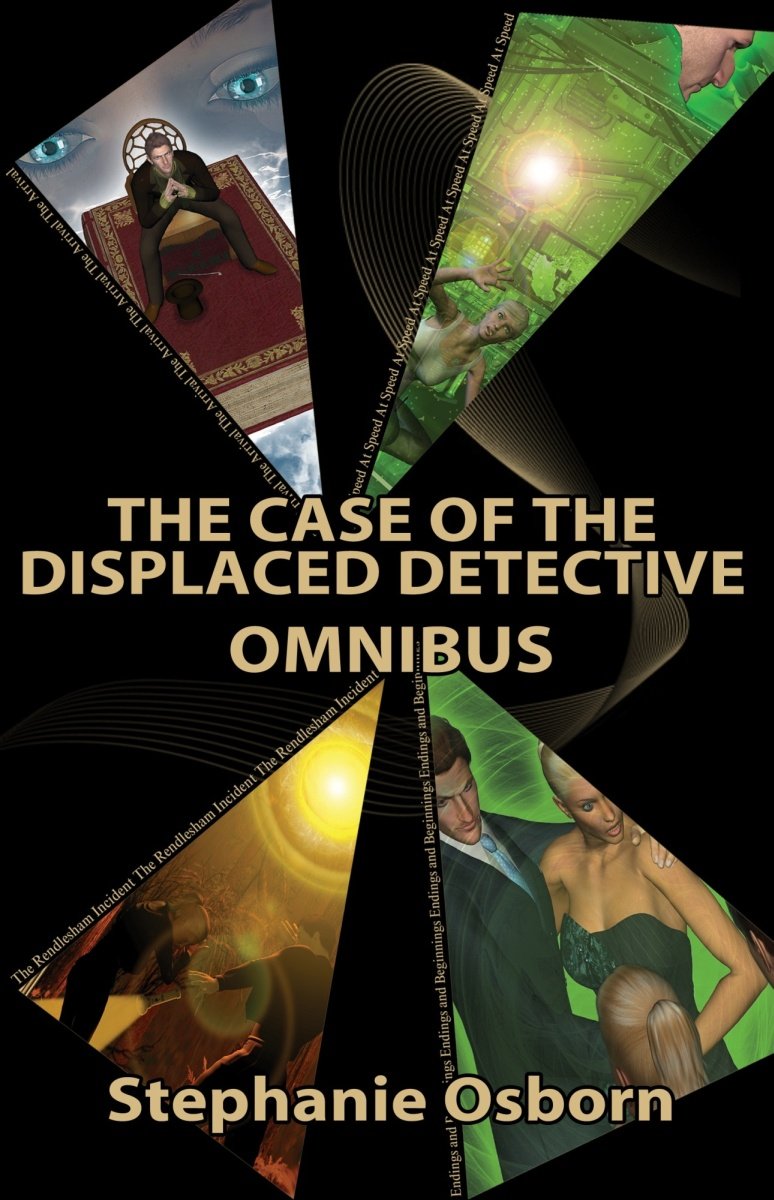
In contrast, the Displaced Detective Omnibus gives the reader a compilation of multiple books which takes the reader along a given time line where Sherlock Holmes is taken from his time and dimension and placed in our world during our time period.  While Stephanie gives insight into some of their thoughts, she refrains enough in the story so that you have to work to see and understand the characters independently for who they are.  In other words, she does not let the narrative overshadow the characters.  What is important to note about the series is the development of Sherlock.  In the book, he goes from being a very static, Victorian gentleman to being more animated.  Her taking into account cultural and temporal norms allows for unmalleable character to become dynamic.  Where his time required men to be almost asexual, he is now allowed to show passion and tenderness openly without the author sacrificing the traits that makes Holmes such an iconic character.
~~~
Ken Johnson is an independent researcher and culturalist who typically writes on issues of culture, conflict, conservation, and literary allegory.  Starting college at the age of 16, Ken now holds a BA in Social Sciences, an MBA, and special certifications from the USDA and the Florida Supreme Court in the field of mediation.  Predominately a non-fiction writer, he has a book due out in August 2014 called Unbroken Circles SM for Schools. In 2005, he was commissioned as a Kentucky Colonel for his good works by the governor of Kentucky.  He has also been nominated for the Grinnell Prize as well as two media awards given by the Society for Personality and Social Psychology. 
~~~

I'd like to thank Ken for his analysis of my works and my writing style. He does indeed have my thought processes correct, and to see someone else's take on my attempts at creating other beings has been fascinating!

-Stephanie Osborn
http://www.stephanie-osborn.com

Wednesday, November 6, 2013

Excerpt: El Vengador

Hard on the heels of Halloween comes this story! El Vengador is my first venture into paranormal horror.

Deputy Sheriff Michael Kirtchner gets an "unknown disturbance" dispatch call to a remote house trailer in the swamp. There, he discovers an old woman and a dog, terrorized by a mysterious beast, which he takes to be a bear. But when he contacts Game Warden Jeff Stuart to come trap the animal, Stuart tells him to get out if he values his life - this is no ordinary animal. Is Kirtchner up against a Swamp Ape - a Florida version of Bigfoot - or something more...sinister?

Based on a true story.

My recommendation? Don't read this at night.

-Stephanie Osborn
http://www.stephanie-osborn.com

~~~


Elsie Moore ungracefully mopped her perspiring brow on the hem of her dress, then continued cooking her dinner on the tiny gas stovetop. A small pot on the back burner bubbled merrily, releasing a spicy smell as white grains of rice, gradually turning a greenish-tan, churned up. As a waft of strong skunk smell drifted through the tiny trailer kitchen from the open window, she wrinkled her nose and stared down in distaste at the skillet containing crawfish and boudin noir while poking at it with a spatula.

The foul odor from outside was not helping her opinion of her ingredients. She wasn’t fond of blood sausage in the first place, but it had been cheap, and she didn’t get into town much for groceries, so she made do. Being unemployed, she wasn’t overmuch blessed with cash and didn’t have a vehicle, so she was forced to depend upon distant friends for a ride to town, or more often, she just walked ― which ended up taking the better part of a day. So inexpensive and quick to get hold of were the rules of the house. The crawfish had come from a Cajun friend who lived up the bay. She wasn’t Cajun, nor was she from one of the local Native tribes, but she knew people in both communities, and they looked after her when they could; she was a fairly skilled herbal healer, and had been known to treat strangers more than once. Abruptly the skunk stench increased to nearly intolerable volumes, and she turned away from the stove, covered her nose with her free hand, and fought back a nearly unbearable urge to retch.

"Damn," she cursed. "Ah’m gonna have ta git somethin’ done ‘bout that skunk den, an’ soon, don’t Ah’m gonna end th’ summer unable t’ eat nothin’ f’r the stink. It ‘uz bad enough in th’ spring when they moved in, but now it’s hot, Ah gotta keep th’ winners open, ‘r suffocate…" Her German shepherd let out a long whine from somewhere in the back yard, and she yelled out the window. "BILLY! HUSH! Ah ain’t got time f’r that racket!"

She returned her attention to her makeshift excuse for jambalaya ― not, she thought, that it would amount to much without any celery or bell pepper, but at least she’d found some wild onions that morning ― and tried to ignore the smell coming in from outside, and which was threatening to spoil her appetite for good. A buzzer sounded, and she reached up to turn off the timer, then put a lid on the pot of seasoned rice, switching off the burner to let the dish soak up the extra liquid and finish cooking on its own.

By the time the crawfish were cooked, the rice was ready. It was early for dinner, but Elsie’s day started early, out the door before full dawn, wild-crafting edibles to eke out her meager supplies of food and gather herbs for medicinals.
The sixty-three year old widow of ten years and three grown-and-departed children dumped the tiny pot of rice into a plate, then upended the skillet’s contents on top. Fishing a bent-tined fork from a drawer, she moved into the den, sat in her favorite chair, and began to eat. After a few minutes, she grabbed the battered remote control and turned on the television. Static and snow greeted her from that appliance, and she reached for another control, fiddling with it until the dish outside had picked up another satellite. The picture was still fuzzy and staticky, but at least she could see and hear the broadcast. Then she settled back with her meal to watch a series of game shows.

Halfway through her meal, Billy, her German shepherd, came to the front door, pawing and scratching as he whined.

"NO, Billy!" she told the dog. "Ah’ll let ya in at sundown, no sooner, an’ yew kin curl up onna foot o’ th’ bed like usual. Y’re s’posed ta be a guard dawg, not mah pet, even iffen ya are mah onlies’ real friend. Jus’ settle down! What’s got inta yew today, no how?"

The dog whined and scratched harder.

"GIT!" she called. There was a scrambling sound on the wooden stoop, then Billy ran around to the back yard, where he began to bark like a fool. "Damn dog."

All of a sudden Billy began to yelp, loud, high-pitched sounds like a dog in pain, or maybe in terror. This mingled with a low growling sound, and unexpectedly the trailer filled with a horrible, intolerable stench. Elsie shoved her half-empty plate onto the end table, grabbed the nearby plastic waste can, and threw up her dinner. Before she could even wipe her mouth, a deafening clamor sounded right outside, and the trailer shook. Billy let out a kind of canine scream, and this was followed and drowned out by an animal roar of rage. The trailer shook again. Elsie shot to her feet.

"BILLY!" she cried, alarmed. "Billy! What’s wrong, puppy-dog? Whatcha got treed?" She ran to the nearest window and looked out. She saw nothing. The trailer shook again. She looked down.

Practically beneath her, pressed up against the back wall of the trailer, was the hind end of some very large, powerful, furry creature. The color was an odd, ticked shade of browns and blacks, mottled with blotches of livid green. A roaring howl, which seemed to come from beneath her, fairly made her guts vibrate. She watched the animal’s hindquarters tense, and the trailer shook yet again. Just then, Billy let out a pitiful yip… and was silent.

~~~

El Vengador is based on a true story. Yes, there really was a deputy sheriff in the Pensacola, FL area who really did answer a call just like this.

Care to see what happens next? Have a look.
 
-Stephanie Osborn
http://www.stephanie-osborn.com
Wednesday, June 26, 2013

The Creation of El Vengador

By Stephanie Osborn
http://www.stephanie-osborn.com
Today we are having a "book bomb" for my new ebook, El Vengador! A book bomb is when all of the fans and readers of an author get together and purchase their copies all on the same day! This can get the ball rolling on sales, because it results in a significant bump in the sales rankings, that in turn pulls in people who are browsing but unfamiliar with the author. But first, a little bit about El Vengador, just to...you know...whet your appetite.


Deputy Sheriff Michael Kirtchner gets an "unknown disturbance" dispatch call to a remote house trailer in the swamp. There, he discovers an old woman and a dog, terrorized by a mysterious beast, which he takes to be a bear. But when he contacts Game Warden Jeff Stuart to come trap the animal, Stuart tells him to get out if he values his life - this is no ordinary animal. Is Kirtchner up against a Swamp Ape - a Florida version of Bigfoot - or something more...sinister?


El Vengador is my first deliberate foray into the paranormal and horror genres. I’ve had numerous friends try to convince me to do so in the last few years, but never was able to get hold of the right story idea. So I waited and let it “percolate” in the back of my mind.

But when a Facebook friend (who wants to remain anonymous - for obvious reasons!) told me the story of his encounter of a mysterious “Florida Swamp Ape” during his tenure as a deputy sheriff, I was fascinated. And when he gave his permission for me to fictionalize the story, I knew I had found my paranormal horror story.

So I took his basic story from his own words and I transformed it. I cleaned it up, couched it in proper writer’s grammar, changed the point of view. I changed the deputy’s name, added the perspective of other civilians who encountered the creature…and then I twisted the knife.

Because, you see, I have some Cherokee in me. Oh, the family can’t prove it, not after the way the Cherokee were ejected from their properties during the Trail of Tears; any Native American who could pass as white in those days, did, and all records of their heritage were lost. But because I have several distinctive genetic expressions of that heritage, I am accepted by most elders I know as Cherokee. And my curiosity being what it is, along with my sincerity in wanting to know, I’ve been taught numerous things that most people don’t generally know.

Like the fact that the Cherokee (along with the Seminole and the Iroquois Confederacy, among others) are purported to have been offshoots – colonies, if you will – of the Maya peoples. It’s interesting to note that, just as the “Cherokee” are a group of tribes [Cherokee, Choctaw, Chickasaw, etc.], the Seminole are a group of tribes [Seminole, Creek, Miccosukee, etc.], the Iroquois Confederacy are a group of tribes [Mohawk, Onondaga, Oneida, Seneca, Cayuga, and later Tuscarora] ― so too are the Maya really a collection of tribes [Yucatec, Tzotzil, Tzeltal, Ch’ol, Kekchi, Mopan, and more]! The Maya comprised, and still comprise (oh yes, they’re still around ― they were laughing their butts off at the white fear of the “end” of their repeating calendar), more than 25 different peoples. The notion of splinter groups of this huge nation (it covered a substantial portion of Central America, butted up against the Aztec/Olmec empire, and expanded out into the Caribbean) moving up into Florida, then up the East Coast of North America, isn’t hard to believe at all.

It’s also true ― as I mentioned in the story ― that the medicine people and elders hold that the Maya, in turn, came from some place across the Great Sea to the East. Depending on who you talk to, this means we/they originated in Ancient Egypt, Phoenicia, Greece, the Biblical traders of Tarshish, or even Atlantis!

So it seemed to me that it would put a fun spin on things if I had this swamp ape, this mysterious unknown creature, be something other than pure animal. As it turned out, my research into the Maya turned up a mysterious “Howler Monkey God,” one Hun-Batz by name, and an entire mythology in which this god was set. Monkey = simian, and ape =  simian, so it wasn’t a huge jump for me, to proposing a curse invoking the Son of Hun-Batz. And suddenly the whole thing congealed into this amazing, suspenseful, paranormal horror story.

How amazing and suspenseful? Well, let’s just say I literally creeped myself out. I’m a night owl, prone to insomnia and getting up in the night to putter around until I can fall back asleep. And I immediately discovered that I didn’t enjoy that anymore; I had a constant feeling that there might be...something...outside, in the yard, in the dark, watching through the windows and doors. When I did go back to bed, it was only to have lucid nightmares about the creature and the events in the book! I took to closing the curtains and blinds, avoiding the windows at night. Finally I gave up writing on the story after sundown, choosing to write only in the light, and hoping to get the imagery out of my head by bedtime.

I was more or less successful in that. I find that I still do better not to think about the book at night, and I still have the blinds and curtains closed at night. But our neighborhood is well lit with street lights, and the birds cluster in the trees around the house and sing cheerfully. So I know there’s nothing out there that they think is unusual. And that is comforting.

I don’t know that I’ll regularly write horror. I’m inclined to think, from my experiences with El Vengador, that I might not be cut out for that! Still and all, much of the science fiction mystery I do write tends to have strong elements of both paranormal and thriller, with the occasional seasoning of horror concepts thrown in for good measure. So I think I can take what I have learned from the experience and fold it back into my other works. And I think they’ll be the better for it.

And you never know. After all, my friend really did encounter…something…in the swamps of Florida…
~~~
El Vengador is an ebook available through Amazon. If you're interested, please seriously consider purchasing it today, and let's see how high we can drive the sales ranking! Best-seller? Through the roof!
 
-Stephanie Osborn