Banner

Banner

Wednesday, July 2, 2014

Elements of Modern Storytelling: Romance, A Guest Blog by Darcie Wilde

By Stephanie Osborn
http://www.stephanie-osborn.com


Today's blog article is by another new friend, Darcie Wilde, who does not write science fiction, but romance. THIS should be interesting! [Some frank language is used; be aware, you who are easily embarrassed.]

Welcome, Darcie!


~~~

Darcie:


First of all, thanks to Stephanie for hosting this blog, and this series. 
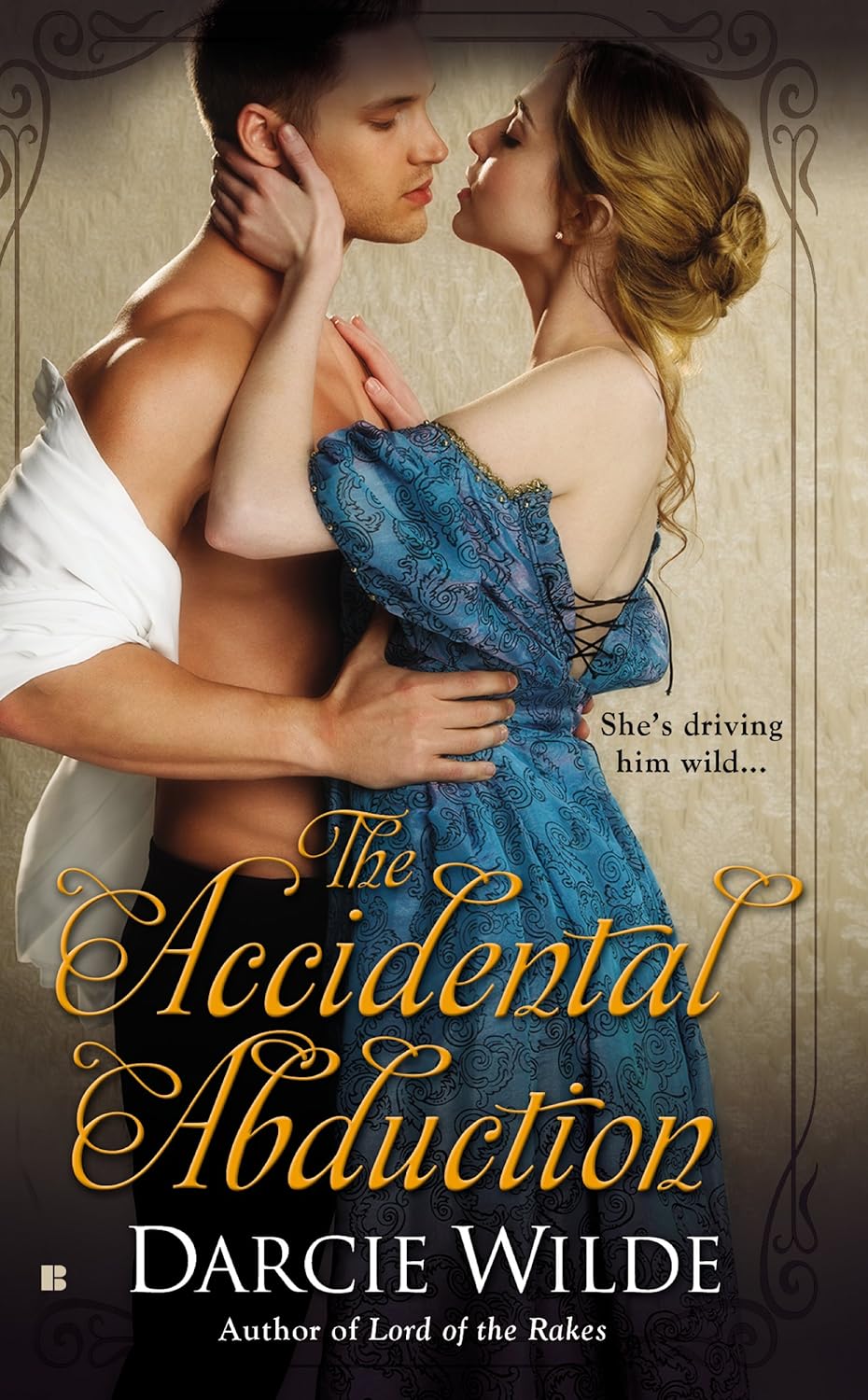
I’m Darcie Wilde, and I write Romance.  My latest book, LORD OF THE RAKES is out now, and the sequel THE ACCIDENTAL ABDUCTION, arrives in stores and online in September. 
I’m here to talk about romance as the most potentially subversive of all storytelling elements. 
You heard me. 
First, some data points: 
Romance is the biggest of the literary genres.  Fifty-two percent of the paperbacks, and a similarly massive percentage of the ebooks sold are Romances and the majority of the readers are women.  An estimated five percent of Romance readers and writers are male.  Even with this gender disparity, there isn't another genre that matches romance for reach and diversity among the reading public.  Romance readers come from across the spectrum; young, old, middle-aged; rich, poor, middle-income; high school educated, college educated, Ph.D.  All racial and ethnic groups.  It’s one of the few genres that extends its reach every year, even without monster hits like 50 SHADES OF GRAY. 
And yet.    
What do we hear about Romance? It’s shallow.  Formulaic.  Stupid.  It’s only read by bored housewives.  It’s Mommy porn.  I’d never read that stuff.  I don’t like romance in my science fiction/fantasy/mystery. 
Why?   
Why, despite its indisputable reach, breadth, profitability and interest among the reading public, is Romance, or even the romantic element, so loudly and continuously frowned on?  To the point where some readers aren’t comfortable admitting that they do read it?    
Because Romance is subversive. 
Yes, it is.  And I can prove it. 
See, Romance is not only primarily read by women, it is primarily edited and published by women.  This is a trend that started back in the 1980s and has only grown.  Not coincidently, this is when Romance, which was already a large genre, exploded.  There’s a really clear reason for this.  It was the first time and place in history that women were able to take control of their own fantasy lives from top to bottom.   
That’s right.  Romance is women in charge of their own fantasies. 
Women are expected to control their fantasy lives as tightly as they control their physical lives.  They are expected to limit not just their real-life dreams and ambitions but they must limit how they think about those dreams and ambitions, especially when it comes to sex and relationships.  Not only are they not supposed to have sex, or enjoy sex, until they find The One (man), they are not supposed to
even think about sex.  And this is when they’re young and single.  

Once they become mothers, let alone grandmothers, they aren’t even supposed to consider sex.  Never mind the shame and humiliation of not being pretty.  There are endless movies and TV shows in which a nebishy fat guy wins true love.  When was the last time you saw a positive portrayal of a sexually active overweight woman?  
Women are also supposed to treat their marriage and family as the single most important piece of their lives.  They are expected to make any sacrifice to the needs of that marriage and that family.  But they are not supposed to think about, much less consider, what it would take for those relationships to be fulfilling and these sacrifices to be worthwhile, never mind reciprocated.   
Because that’s shallow.  That’s stupid.   You’ll only be disappointed when he’s not Mr. Darcy.  Men like that don’t really exist. 
So, love-and-marriage is the most important part of your life, but don’t think about it.  Don’t dream about it.  Don’t consider whether you might have a right to respect, friendship and frequent orgasms or what it would take to get any of these.   
Except, then there’s Romance. 
You can consider all these things in Romance, or in a romance.  You can explore types of relationship, not to mention the boundaries of friendship and respect, in terms of how people who look like you feel about them.  You can try on roles, identities and, yes, problems as freely as your men get to in every single other storytelling environment.  You can imagine winning at what you’ve always been told is most important part of your life.  You get to engage in any kind of sexual fantasy floats your boat, and a few that you’ve only kind of heard about, in an absolutely safe environment without judgement or shame.   
Nowhere else does a woman get to do this, except Romance.  In Romance a sexually active woman is not judged, she’s the heroine.  In Romance a woman who has suffered is not just the victim, she’s triumphant.  In Romance, it is men who are judged, weighed and evaluated, and the primary consideration is their conduct towards women.  In Romance, the woman is not just expected to care enough to sacrifice her time and ambitions for her family, somebody out there cares enough to make those sacrifices for her.  She is not just servant, she is served (and yes, you can take that however you want).  She’s not going to die because the monster always eats the slut first.  She’s not going to be shamed because she looks different, she’s going to be considered beautiful for it.  She’s not going to be abandoned because she slept with the wrong guy.  Her sexuality does not define or limit her.  She is guaranteed to have other female friends, family members and co-workers around her who she can and does talk to about any subject, including her love life. 
She gets to make the ultimate decision as to whether she goes or stays, and who she stays with.  She can fall in love with a monster, and it will still work out.  She chooses.  She wins.   
And she makes the money for writing about all these things, and bringing them to the reading public.  Sometimes astoundingly good money.  
And it’s not just women.  Gay men, lesbians and yes, men and women of minority ethnic groups — especially African American men — expressing the full range of sexuality, attraction and relationships in positive romantic settings, whether vanilla or kinked, and gaining happy endings, is so controversial as to be a tiny fraction of published fiction, even within Romance itself.   
This is not because there’s no interest.  When such books are published, they do well, if (and it’s a big if) they can be found.  People across the human spectrum like to try on relationships, and ideas about relationships and power and love, within the safe setting that a work of fiction provides.  They like to see people who look like them triumph in love, and sex and family without restrictions imposed from the outside. 
Because it is ultimately this range of emotion, this expression, this full, free, fair choice in life and love, that says who is fully human and who is fully powerful. 
This is massively subversive.   
It’s also insanely popular, and yet almost universally criticized. 
It's something to think about.  
~~~

Fascinating! This is an interesting take on the subject from someone who writes in the genre -- not merely uses it in another genre. It is certainly true that once upon a time women had fewer options for exploring their dreams than they do today. It is also true that such works of fiction were frowned upon in that day and age because of the perception of such things as libertine. I wonder if that's from whence comes the modern attitude of disdain for romance.

-Stephanie Osborn
http://www.stephanie-osborn.com

Wednesday, June 25, 2014

Elements of Modern Storytelling: Romance, A Guest Blog by Mindy Klasky

By Stephanie Osborn
http://www.stephanie-osborn.com

[Today is a special day for me -- it so happens that we are discussing romance on my wedding anniversary. GO US! Ahem...now on to the regular blog.]

Today's guest in our ongoing series of elements of storytelling is Mindy Klasky!

Mindy Klasky learned to read when her parents shoved a book in her hands and told her she could travel anywhere through stories. As a writer, Mindy has traveled through various genres, including hot contemporary romance. In her spare time, Mindy knits, quilts, and tries to tame her to-be-read shelf.


~~~


Mindy:


I've been following the various guest posts about Elements of Storytelling with great interest, especially the posts about romance.  Over the years, my own writing has transitioned from traditional fantasy to humorous paranormal romance to contemporary romance (with no magical or fantasy element.)  My writing has also become a great deal "spicier" than it was in my early books.  Therefore, I'm looking forward to chatting about an important Element of Storytelling:  The Love Scene. 

Okay.  Not everyone is going to call this subject matter a love scene.  A lot of people will say that I'm talking about sex scenes.  I used to think the difference was academic – a discussion point used by romance writers to remind the world that their work isn't just about sex; rather, we write about real emotions with real personal stakes. 

I've come to realize, though, that the nomenclature does matter.  Because when a scene-with-sex is done right, it becomes much more.  It becomes a scene about characters, a scene about emotions.   

Most readers are completely familiar with the mechanics of sex, both the basic physical function and its most common variants.  If the only purpose of a sex scene were to describe that relatively limited range of physical activity, our books would get boring almost immediately. 

But a well-written love scene does more than describe the mechanics of sex.  A proper love scene informs the readers of the emotions of the characters before, during, and after their physical interaction.  Those emotions become the engines of the scene, providing the layers that keep readers from skimming and yawning (or, occasionally, laughing uproariously at physically impossible actions). 

Imagine these scenes: 

  • An imaginative woman seducing a willing man, making love for the first time and discovering each other's preferences and reactions to assorted stimuli (for example, a key love scene in my novel PERFECT PITCH) 
  • A couple who have known each other for decades, never acting on their mutual attraction because of society's condemnation of May/December relationships (the background for CATCHING HELL) 
  • An experienced lover with extensive knowledge of sexual stimuli seducing a willing but inexperienced and partner for the first time (the setup for REACHING FIRST [coming soon]) 

The mechanics can be identical in each of these scenarios – naughty bits will rub against naughty bits.  But the weight of the scene, the meaning of the actions, will vary vastly depending on the underlying emotional gloss.  Therefore, as an author of love scenes, I need to focus on the emotional words in the scene.  I need to pay especially close attention to my action verbs, to my adjectives, to my adverbs. 

Love scenes have a lot in common with action scenes in a novel.  Sure, it's great to know my hero is the greatest broadswordsman in the history of broadswordsmen.  But a truly great fight scene will show me what it costs him to use his weapon – how he needs to harness all his strength, what it takes for him to heft the blade after his ribs are broken by his opponent, how the bones of his arm jangle after each clash.  He must be aware of each cost of every action (and inaction) in every second of his battle – his deeds may result in his own injury or death and/or in the injury or death of all his allies. 

Violence.  Sex.  When written well, they both allow an author to reveal depths of a character. 

What books have you read that have effective love scenes – scenes that divulge information about the characters, even as they advance the story with the sexual activity they present? 

~~~

Nicely done, Mindy! Yes, I must agree -- a well-done love/sex scene is a powerful way of depicting the inner lives of the characters involved!

So, Gentle Readers, care to answer her closing question in the comments? What books can you think of that have love scenes that advance the story AND tell you more about the characters?

-Stephanie Osborn
http://www.stephanie-osborn.com

Wednesday, June 18, 2014

Elements of Modern Storytelling: Romance, A Guest Blog by Dan Hollifield

by Stephanie Osborn
http://www.stephanie-osborn.com

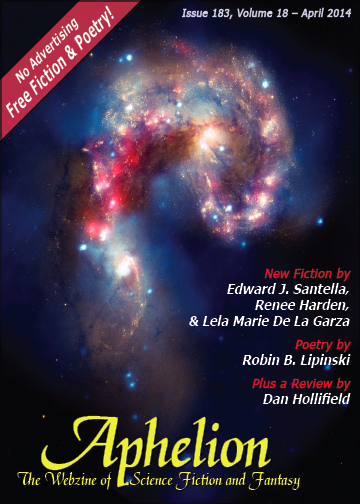
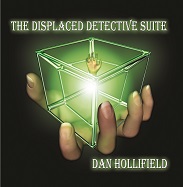
Dan Hollifield is an all-around great guy and unbelievably talented. He builds gorgeous handmade props for cosplay; he's an excellent writer; editor in chief of Aphelion webzine; AND he composed an entire album of (licensed) music based on my Displaced Detective series! (DVD here; digital downlink here. I didn't know he was such a fantastic musician!)

He's also a not-so-closet romantic at heart, and I knew he'd have an interesting take on our topic!
~~~

Free Clipart ImagesFree Clipart ImagesFree Clipart Images

Dan:

How important is the element of romance to a Science Fiction story? I can see that it is almost a requirement in a Fantasy genre story, but is a romantic side plot right for a story that you're writing? Andre Norton managed to weave G-rated romance into quite a few of her novels. Marion Zimmer Bradley added tasteful plot points of both male/female and male/male romance into her Darkover books. So tasteful that if a reader wasn't  paying strict attention to the subtext, they'd miss it entirely. There is romance even in Terry Pratchett’s Discworld novels. Now, I'm not talking about the occasional semi-explicit sex scenes that some books contain. My focus here is on romance, a love story element and whether or not it can be used to bring your characters more life within the story. I have used romance as a story element in several of my stories, but I personally prefer to keep any actual sex off-stage, as it were. But this is just what I feel comfortable writing. I primarily write adventure stories, and I've found there are times when the story is in full flow that a couple of the lead characters sometimes do tend to develop a romance as I'm composing the tale. Not something I usually plan to have in the story, but when I reach the point where the characters take over and start telling me what to say, sometimes they're falling in love with one another. So obviously there is a romance circuit in my brain that kicks in when characters start behaving a certain way towards one another. It works for me as a writer, on those occasions.

But, aside from the "I do it" element, my question is, "Is it necessary?" Does it advance the plot? Does it improve or detract from the story? Does it  improve the characters? Does a romance within the story read as if it were a natural thing between the characters concerned?

My view is: if it makes the story more fun to read, leave it in. Anything that makes the story less fun to read should be considered for editing out. But that's just me. What works for me might not work for everyone. Now, don't get me wrong. I'm not saying that you can't have bad things happen to your characters. It'd be a pretty boring story that didn't have challenges for the characters to overcome. And there's no need to be sexist, either. In one story I have my Mighty He-Man Hero clubbed in the head and his girlfriend having to save him from the Big Bad-Guy. And that wasn't even a re-edit. The scene just played out in my head that way. My hero wound up taking a blackjack to the head and his girlfriend leaped in to save the day. That scene worked a whole lot better that way than it would have if I'd made my hero ten feet tall and bulletproof, and his girlfriend a helpless paper-doll cutout.

But my original question remains, how important to a story is a romantic plot element?

I would guess that if said romance advances the story, fleshes out those characters, improves the reader's experience, and "feels" real for those characters, then it is a good addition to a story. If it comes off as a forced thing added in just to have an additional plot point, then a rewrite may be in order. In short, everything hinges on the story itself, the characters, and how those characters have developed as the story progressed. Obviously, the shorter a story is, the more difficult it happens to be to put a lot of character development into it. Flash Fiction, 1000 words as a limit? Really hard to write all on its own. You've got to work to weave in a romantic sub-plot inside a Flash story. 25,000 words? Now you're getting into a story length where a writer can have more room for characters to grow. A writer can play a bit, can develop the characters reasonably well.100,000 words? Your characters better grow a lot, or you run the risk of losing your readers.

But is romance a good way to make your characters more interesting to a reader? I hate to say that it depends on the reader, but I think I'll have to express it that way. But after having said that, I can add that then you wind up with a chance to tell a story that can be read on many different levels at once. Think about your target reader. Adult? Young Adult? Pre-Teen? Each group one aims a story at will come with its own list of requirements. A good writer can work within such restrictions, while at the same time they are by-passing them. Just what am I saying by that? Well, remember that your readers are going to bring their own individual levels of worldly experience into the story as they read. A Pre-Teen is going to have a different idea of what “romance” is than would a Young Adult or an Adult. These differing levels of experience will alter the reader's perception of the same story. A Pre-Teen reader might think, “Oh, first they were arguing, then they made up and became friends, then they went into a room together and closed the door,” after reading one of your romantic scenes. A Young Adult reader might read the same scene and think, “Oh, that's just like in the movies! They're falling in love...” While an Adult reader could read the same scene and think “I know what's going on behind that closed door! Someone's getting busy!” Same words, different readers, different levels of experience with how the world works. But how does a writer do that? How can we layer different visions of the same scene for different readers, using only one set of words?

Remember that every writer has a toolbox. Using the correct tool for a particular job is the key. It all comes down to what words a writer chooses to use to tell a particular story. Your target reader sets the limits. But you can transcend those limits by careful choice of the words you use. Andre Norton did it in almost every single novel. Keith Laumer did too. You don't have to be all overt about anything. You can be subtle. The right word choices can allow a very young reader to understand a scene one way, and an older reader to understand the same scene a different way.

But how does a writer learn how to do that? One thing I am always harping on about in my essays on writing is that a writer has to fill that toolbox. We have to develop a huge vocabulary. We have to understand the way different people see the world. We have to read everything we can lay our hands on. And we have to watch how real people interact in real life. These are things we can learn to do without having to think about it too much. An inexperienced writer does have to work at it. A good writer has spent years filling that toolbox. But the way to learn how to use those tools is to write, and write, and write some more.

And then you edit, proofread, rewrite, and edit some more. That is a never-ending process. Call it “polishing” if you will. The more you polish a story, the shinier it becomes, until you reach a point where [you think] it can't possibly get any brighter. Then you let someone else read it and you *listen* to what they say afterward! You're always going to be too close to the story to see every single flaw. Everyone needs an editor to help them turn out their best work. Adding romance into a story is one way to make your characters more real to your readers. The more real your characters seem to your reader, the more they're going to enjoy your stories. Read, watch, learn, and gain experience for yourself. Writers never stop learning, they never stop reading, they never stop trying to understand *why* people act the way that they do. And everything we see, hear, read, or experience can wind up inside a story.

I'd really like to see a long discussion on this topic. What are *your* views? I'd really like to know.
~~~

So would I, Dan! Because frankly, I agree with you -- it can be essential to character development if handled well. But if handled badly, if it doesn't advance the story or the reader's understanding of the characters involved, it would be better done without.

Readers, let's have at it! What do you think?

-Stephanie Osborn
http://www.stephanie-osborn.com

Wednesday, June 11, 2014

Elements of Modern Storytelling: Romance, A Guest Blog by Scott Eder

By Stephanie Osborn
http://www.stephanie-osborn.com

Scott is a fellow Twilight Times author, a successful writer of excellent fantasy books. Today he gives us his perspective on romance as a tool in the modern author's kit.

Welcome, Scott!


~~~


Scott:


The Three Great Laws

I'm a Fantasy guy, both as a reader and a writer. The reading came first, of course. I started with Tolkein, Brooks, Hickman, McKiernan, and Eddings back in the day, gobbling up epic tales of elves and dwarves and dragons, magic and mysticism, and good versus evil on a planetary scale. Man, I loved that stuff. Still do, actually. Over the years I've read a gazillion books, but the stories that stick with me, the ones that hold a piece of my soul, are those that not only satisfied my need for the magic, but also spoke to my romantic side.

At heart I'm a romantic, and I love stories that explore the spark, the attraction, between two characters. I'm not one to wander into the Romance section and pick the current best-seller or comb through the shelves overflowing with bare-chested Adonises (Adoni?); but combine a romantic plotline with a big ol' sword and sorcery slobberknocker and I'm done for. I'm not too proud to admit that I cried at the end of Terry Brooks' The Elfstones of Shannara. Actually, I threw the book across the room, and then I cried because the boy did not get the girl. She turned into a tree, damn it. Freakin' authors and their twists.


Anyway…Elfstones came out in 1983, and I remember well the feelings it engendered. And that's the point really. A strong romantic storyline, carefully fed and nurtured, can turn a good story into a magnificent tale that brushes against the reader's soul. And what writer doesn't strive for that each and every time he puts words to paper?

Now, Elfstones is considered Epic Fantasy, not a Romance or even a Fantasy Romance. While it contains strong romantic elements, it does not follow the rules. Turning a girl into a tree…really? For a story to be considered a capital 'R' Romance, it must abide by three Great Laws:
·         First Law of Romance – HEA– the story must have a "Happily Ever After" (HEA) ending.
·         Second Law of Romance – Astronomical Odds – the odds against the characters realizing their HEA must be so astronomical, the reader cannot possibly foresee how they could ever get together.
·         Third Law of Romance – Forever Apart – keep the budding lovers apart for as long as possible.
I'm sure there are a host of minor laws too, but let’s focus on these big ones.  

The HEA – Remember the fairy tales where the prince and princess got together at the end and "lived happily ever after?" Remember how great those endings made us feel? The bad guy/gal was defeated, the boy and girl walked into the sunset hand in hand, and all was righteous in the universe. Hazzah! Well, guess what? Just because we grow up doesn't mean we lose the desire to feel that way. When a reader opens the cover of a Romance novel, she already knows the ending will be, "And they lived happily ever after." Well, maybe not those exact words, but some collection of sentences that communicate the same sentiment, leaving the reader fulfilled, happy, and ready for the next book. One caveat to the HEA law is the "for now" clause. Readers know the score, they realize times have changed and not every great courtship will blossom into an enduring relationship. A story ending with the characters living "Happily Ever After…For Now" can work just fine.

Astronomical Odds – Since the reader expects the HEA, the writer's challenge is to create interesting, relatable characters separated by nearly impossible obstacles that keep them apart until the climax. The writer wants the reader wondering how on Earth air-breathing Jake and water-breathing Sarah could possibly overcome the physical challenges and societal pressures to realize their own HEA, and eagerly turning the pages to find out.

Forever Apart – in a Romance, the rising tension in the story comes from the near misses – the episodes in the story where just when it seems the characters are going to get together, something swoops in and drags them even further apart. The more widely impacted the relationship with each near miss, the more satisfying the HEA. Having the HEA too soon deprives the reader of the vicarious relationship experience. S/he wants to be swept away, to fall in love right along with the characters. If that HEA happens in the second chapter of a twenty chapter novel, what the heck is the rest of the novel about?

Regardless of whether Romance is the backbone of the plot, or a subplot in a greater story, the Laws must be followed. Certain expectations must be met. Readers are the street judges in this literary Megacity, and if the story doesn't measure up…

My Chronicles of the Knights Elementalis series [Book 1, Knight of Flame, is available in the usual places --Steph] is Fantasy with strong romantic elements, no big 'R' romance. And so, like Mr. Brooks, I have the freedom to turn any of my characters into trees before the romance plotline comes to fruition without violating any of the Great Laws. Not that I would do that, of course. I have a heart. I remember how it felt.


BUT…the story ends as the story ends. Mwahahaaaaa.

~~~

Gotta love Scott's sense of humor! And I learned something: I had an intuitive grasp of the Three Laws, but had not seen them set forth before. Thanks, Scott!

-Stephanie Osborn
http://www.stephanie-osborn.com

Monday, June 9, 2014

Special Guest Blog: Parallel Universes, by Barb Caffrey

by Stephanie Osborn
http://www.stephanie-osborn.com

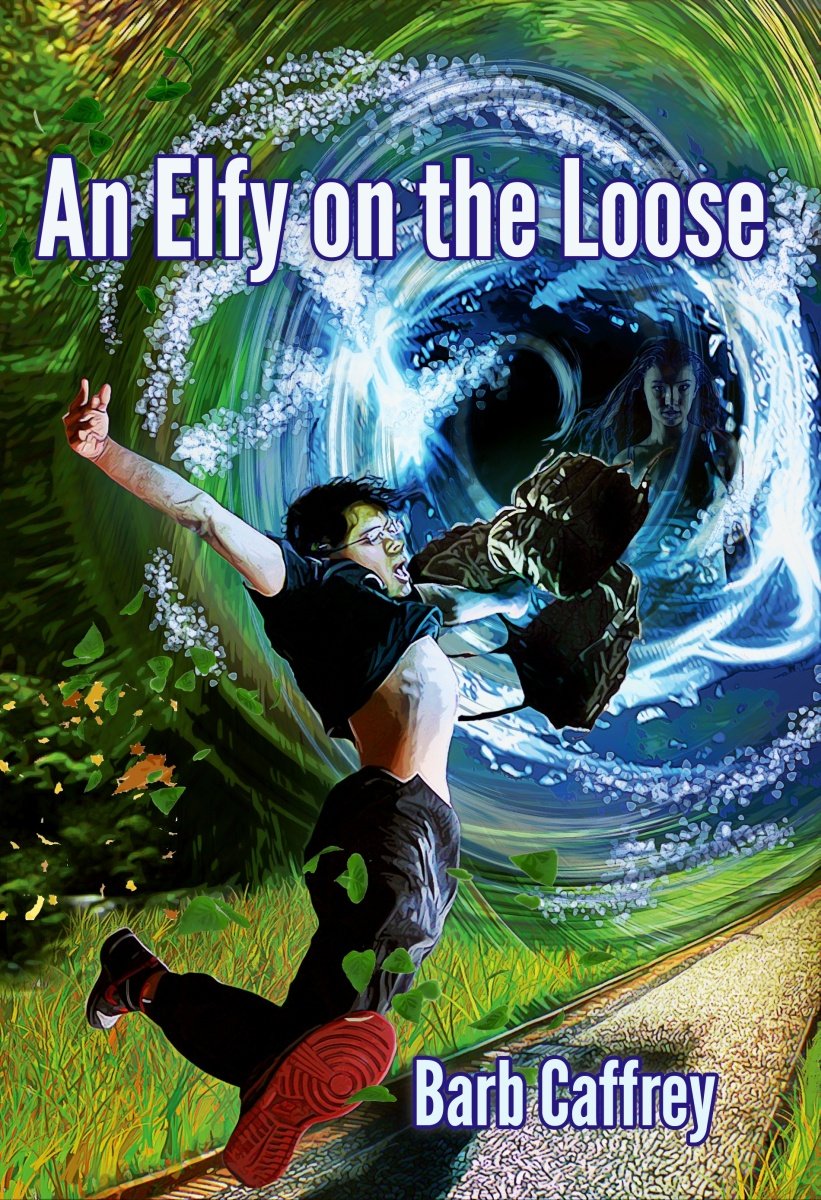
Barb has been participating in the Elements of Modern Storytelling series of blog articles. She is a professional book and music reviewer, as well as recently having her first book published, An Elfy On The Loose. She pitched an interesting guest blog at me and I liked it -- a lot! So here it is for your enjoyment.

~~~

"Why Use Parallel Universes in Fantasy?"
by Barb Caffrey

Some readers of my debut YA urban fantasy/romance novel, AN ELFY ON THE LOOSE, have had one question: Why did you use the parallel universe theory for the location of the Elfy Realm?


But first, you need to know what the parallel universe theory is.

The parallel universe theory – that there are universes like our own, that developed much like our own, but history went differently there so it's possible to have different versions of the same person, perhaps, or different races emerging from what is substantially the same world – has been used to great effect by many science fiction novelists in the past, including Stephanie Osborn herself in her Displaced Detective series.

But fantasy novelists have not used it very often.

Instead, novelists such as L.E. Modesitt, Jr., Alan Dean Foster, Barbara Hambly, and more recently, Christopher Nuttall, have sent people from our world into a completely different fantasy world, one where the rules are completely different. That allows for magic. It also allows for science, too, as brought in by the protagonist – most particularly by Modesitt, Jr. and Nuttall. But primarily, this is to account for the alienness of the world and everything within it.

As a plot device, that's fine. But it's not the one I came up with.

Why? Well, I gravitated far more toward the theory that eldritch beings have always been a part of our world. (Hence the Bedlam's Bard universe as conceived of by Mercedes Lackey, Ellen Guon and Rosemary Edghill.) But I didn't think the idea of Underhill would work for me…and besides, the idea had already been done very well.

So I decided that each race would have its own Realm, which is all a version of Earth. In addition to the Elfys and the Elfs (do not call them Elves in the Elfyverse, or that will get you killed most unpleasantly), there's the Trolls, the Dwarves, the Orcs, and many, many more, all living on various parallel dimensions of Earth and going by these names: The Elfy Realm. The Elf Realm(s). The Dwarven Realm. And so on.

I figured it's much easier to have one world that's split via the parallel universe theory than it is to send someone somewhere else where nothing is familiar whatsoever. I liked the idea that the supposedly familiar could also be intensely strange – as the Elfys, at first, know very little about us, the Humans, and we definitely know even less about them. And I really liked the idea that a magical being like a Dark Elf – that is, a being committed to violence and darkness and death for its own sake – would "pass" as Human because we've forgotten that Dark Elfs exist.

As to how I got around the magic part, considering our world does not seem to be magical? Well, as many other novelists have done, I said that magic exists, but our world has mostly forgotten about it.

The theory of parallel universes, in short, enhances my story because it gives me a huge canvas to play with. Bruno's upcoming adventures include a trip to the Elfy Realm (he must tell off those twits comprising the Elfy High Council somehow), and future novels have adventures in the Troll Realm, more in-depth looks at the Elfy Realm, and of course a great deal continues to go on in our own world, the Human Realm…

So despite there being much magic and mystery involved in the creation of AN ELFY ON THE LOOSE, underneath it all lies a solid principle of physics – even if it's not used exactly as most physicists would probably approve. And yes, I did it deliberately, because it fit the story and worked as a plot device and gave me a great deal to work with.

My view of the question I started with is simple: Rather than asking, "Why did you use the parallel universe theory," why not ask why other fantasy novelists haven't used the parallel universe theory?

That question is exactly why I used it.

 ~~~

And that's also why I liked it so much. The universe Barb created is different, and unique, and that's fascinating...as well as darn good writing. An Elfy On The Loose is a great book, guys. Give it a try and you'll see what I mean.

-Stephanie Osborn
http://www.stephanie-osborn.com