Banner

Banner

Wednesday, October 1, 2014

Elements of Modern Storytelling: Character Development, A Guest Blog by Sara Stamey

By Stephanie Osborn
http://www.stephanie-osborn.com
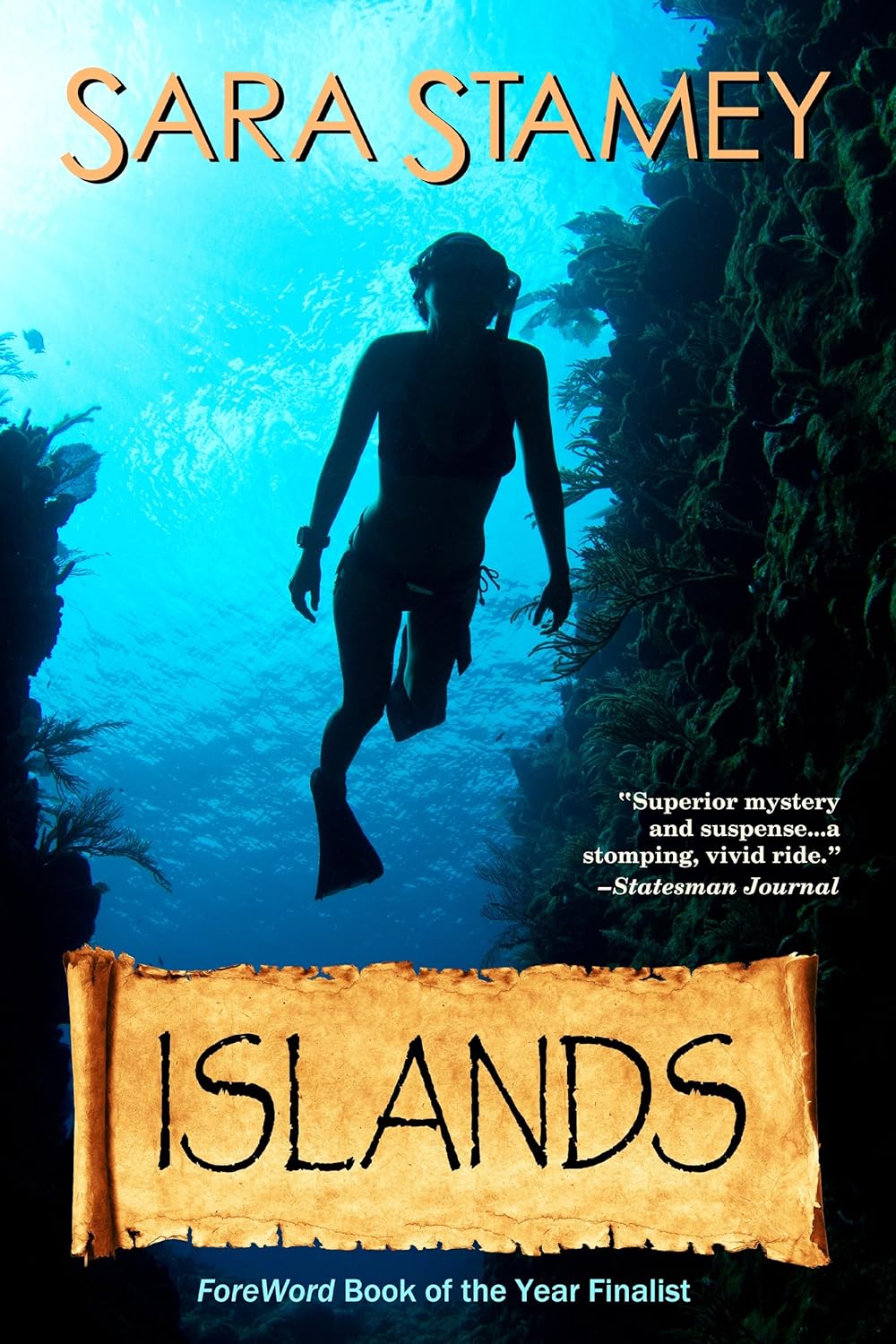

Sara Stamey’s extended travels in out-of-the-way corners of the globe include treasure hunting and teaching scuba in the Caribbean and Honduras, operating a nuclear reactor, and owning a farm in Southern Chile. Now resettled in her native Northwest Washington, she teaches creative writing at Western Washington University and offers editing services as a “book doctor.” She shares her Squalicum Creek backyard with wild critters and her cats, dog, and very tall husband Thor.


Her romantic suspense novel Islands is described by reviewers as “an intellectual thriller” and "a superior suspense novel….a stomping vivid ride.” A new eBook edition is available from Book View Café. BVC will also release her new metaphysical thriller set in Greece, The Ariadne Connection, in October 2014.


~~~

Sara:


“How do you come up with the characters in your novels? Are they based on real people? Do you make lists of their work, family, education, hobbies? Is it better to describe them in detail, or let readers flesh them out in their minds?”

These are questions novelists hear from readers eager to understand the mysterious workings of a writer’s mind. I’ve heard all kinds of advice about how fiction-writers “should” create fully dimensional characters, but I think every writer finds her own ways.

I confess that I have based several characters on people I know (or knew), and have found “seeds” in characters in films or even music videos. It’s a boost to start with appearance, speech, or personality tics you’ve already observed, then go on to morph that seed into your own character. Most of the time, my models never recognize themselves in the transformed character, which is the way it should go.

Take Heinck, the creepy ringleader of a criminal gang in my second science fiction novel, Win, Lose, Draw. (I hate that title my publisher chose instead of my original Resistance Coil, but that’s another story!) He’s whippy, with slicked-back dark hair and a lot of “pain-dure” tattoos that advertise how tough he is, a sadomasochist who has absolutely no morals. The man I took as my initial model probably never reads, so I don’t have to worry that he’ll recognize himself – besides, Heinck is probably smarter.

Years ago, when I was working as a scuba guide and instructor in the Bay Islands of Honduras at an isolated inn reachable only by boat or rough trails, I was pretty much held hostage by the lowlife temporary manager who was driving away the few tourists and making life miserable for everyone else. He waved around an arsenal of guns, bragged about his previous scams, and kept me and the other employees from taking a boat to the only distant town to radio the absent owner back in the States about the state of crisis at his inn. When the owner finally arrived to fire the manager, he skulked away to the relief of everyone. (spoiler alert) And later, I took secret pleasure in killing him off as my fictional villain. One perk of acting Deity in our own invented worlds!

Flipping the coin, I created a modest tribute to my original writing mentor by making him a minor, helpful character in my Caribbean suspense novel Islands. My mentor was R.D. Brown, a source of inspiration to his many students at Western Washington University. He was a very tall man, with a slouch perhaps as the result of ducking through doorways, a bald head, a jowly face, and an incisive wit animating his eyes. When I created Captain Wilkes, a native police chief who aids my archeologist/sleuth Susan Dunne, I called on images of R.D.: 
A big native man was unfolding his height from a dusty compact. He slouched over to me in rumpled slacks and a linen dress shirt, dark scalp gleaming above a graying frizz, face drooping in folds like an intelligent basset hound.
You’ll see that I’m in favor of providing appearance details of my characters. I feel that leaving them a blank slate makes it hard for readers to invest or even keep track of who’s who.  BTW, Captain Wilkes is my only character-based-on-real where I’ve been caught out: When his partner read the novel, she immediately recognized R.D. as the model, and we all got a chuckle out of it.

Of course, there’s a lot of work to do once the original image and basic personality forms. Voice is perhaps the biggest challenge for me: What kind of diction would this person use, and does it fit his background and upbringing? Or deliberately contrast with it, for plausible reasons of education or choice? Is each character meant to be sympathetic or not? Even if she’s “the bad gal,” does she embody at least a little ambiguity as a complex person? When I teach fiction-writing at the university, I point my students toward good advice from writing guru Janet Burroway: “Give your character a consistent inconsistency.” In other words, some habit or preference that seems at odds with the initial presentation or “type,” so he has a realistic individuality.

I do depart from some writerly advice (including Burroway’s) to create a detailed summary about every character, including history, family, hobbies, etc. I feel that it constrains the characters if everything about them is pinned down at the start, and prevents them from “acting out” to inform me that they would do this or wouldn’t do that. But I do have to work during revision to make sure they “add up” to realistic personalities.

#

Because my novels are often set in foreign countries where I’ve lived or travelled, I face a special challenge in creating characters from different cultures, working to present them as authentic, with believable voices that might mirror their different diction or accents from English/American speech. I usually present these characters through the observations of an American point-of-view character, hoping to avoid “cultural appropriation” or just plain blunders in accuracy.  The more you experience and observe people in actual life, the closer you’ll come to capturing the essence of characters, whether from familiar cultures or foreign. In my travels, I’ve found that there are definitely cultural variations in beliefs and social interactions, but also that most humans at heart have much in common and are willing to make a connection.

One more example from my latest novel set in Greece, The Ariadne Connection, to be released in October 2014 from Book View Café. My heroine’s uncle Demetrios has retired to a mountain village on the southern coast of Crete. In real life, I was backpacking in this region with my former partner, when we found ourselves stranded in a remote, rocky village without a place to stay during the Easter holidays when all the busses stopped running.  We were trying to find a level, unrocky spot (not likely!) to pitch our tent, when we were befriended by a local dignitary, Stelios Mamalakis, who offered us the famous Greek hospitality of a place to stay and a tour of the local landscape. Here is a bit I borrowed from him for my character Demetrios:

Wild asparagus. Ariadne touched the slender soft buds Uncle Demetrios had always favored. She could still see him, all those years ago, climbing ahead of her up a narrow ravine beside a rain-swollen stream, pushing through thorn thickets to find the new asparagus shoots, tearing his trousers to get the last one. 
“But I can’t resist it! This one is the best, Kri-Kri, just look at it. Tender youthful perfection, the most sublime Platonic ideal of a sprout. Now this is beauty. We will eat it tonight and be strong and beautiful, too.” His white teeth flashed beneath the long pirate mustache.
I will leave you with this thought: We writers have to love our characters, even the villains. With love, and patience, they will live and breathe.


~~~

All I can say, Sara, is that you're a woman after my own heart.

-Stephanie Osborn
http://www.stephanie-osborn.com

Wednesday, September 24, 2014

Guest Blog: The Life of a Writer, by Christine Amsden

by Stephanie Osborn
http://www.stephanie-osborn.com

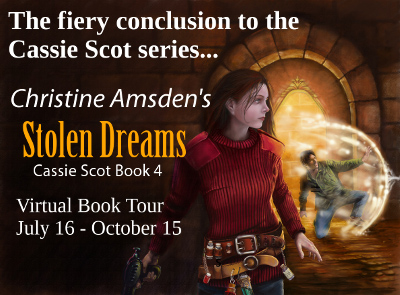
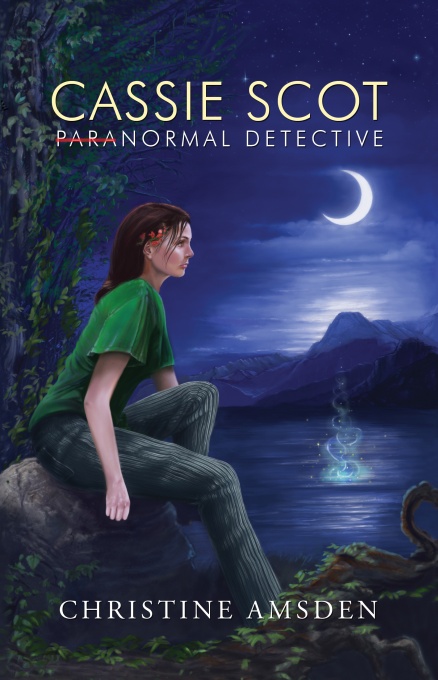
Today we're welcoming fellow Twilight Times author Christine Amsden in for a little break in discussing character development. Instead, we're celebrating the end of a series -- Christine's Cassie Scot series!


Christine Amsden has been writing fantasy and science fiction for as long as she can remember. She loves to write and it is her dream that others will be inspired by this love and by her stories. Speculative fiction is fun, magical, and imaginative but great speculative fiction is about real people defining themselves through extraordinary situations. Christine writes primarily about people and relationships, and it is in this way that she strives to make science fiction and fantasy meaningful for everyone.creative work may be enough to write an entire novel draft (under extremely bizarre I-officially-hate-you circumstances), or it may only be enough to learn one important lesson before going back to the drawing board. An inspired writer can take a few stolen hours and create magic. An uninspired writer…well, that's the problem with the ideal of the “full time writer,” aside from the paycheck thing. Sooner or later you run out of things to write about.  


At the age of 16, Christine was diagnosed with Stargardt’s Disease, a condition that affects the retina and causes a loss of central vision. She is now legally blind, but has not let this slow her down or get in the way of her dreams.


In addition to writing, Christine teaches workshops on writing at Savvy Authors. She also does some freelance editing work.


Christine currently lives in the Kansas City area with her husband, Austin, who has been her biggest fan and the key to her success. They have two beautiful children.

~~~


The Life of a Writer 

So…you want to be a writer? Are you a dreamer? A story teller? Do you simply love the way words feel when they come together to create a picture? Climb on the crazy train then, and get ready for a long, bumpy ride. 

Besides being a writer, I'm also a writing coach. I'm exceptionally good at it for one reason that has come as a surprise to me: I'm honest. Now, I always knew I was honest; what I didn't realize was how rare this quality is, even in a coach. I tell the truth as I see it because only by reflecting both beauty and flaws can I inspire growth in a writer.  

With that in mind, let me tell you the hard, cold truth about being a writer. It doesn't pay. The handful of bestsellers out there cluttering up the pop culture notion of what a writer is represent less than one tenth of one percent of traditionally published authors (I'm not even talking self pub here). If anyone has said, “Don't quit your day job,” they weren't trying to be mean. They were trying to be honest.  

I didn't listen. :) 

I quit my day job ten years ago when I got married, urged by my husband (who made enough for the both of us to live comfortably) to follow my dreams. I took the risk; one of the biggest of my life, and I have no regrets. Children came two years after marriage, filling my days with a combination of domestic and writerly activities that I found perfectly compatible. In a way, diluting my days with a wider variety of activities helped inspire me and make me more productive. I have written six complete novels in the eight-and-a-half years since my son was born (this doesn't include a couple of dead-end projects that were, nevertheless, learning experiences). 

Creative work isn't like other types of work. It isn't linear. It isn't easy to quantify. Forty hours of

That's why I started coaching. It's also why I'm currently looking for creative new opportunities for part-time work. I've got a gig as a judge in a cooking competition coming up soon. Should be fun! 

I know a lot of writers. Their stories are all different, their day jobs all unique, but one common theme rings true: We all long for the day when we can write full time, when our income from writing will support us in a comfortable middle-class lifestyle. I think knowing this story so well is one of the reasons why I'm a fan of TV talent shows like The VoiceAmerica's Got Talent, and (most recently) Rising Star. The acts all come on and say the same thing -- that they dream of getting paid to perform. To do what they love. 
 
You don't want me to sing, but putting that aside, I understand. I really, really do.  

And yet I understand one other thing, or at least, I am working towards understanding. (Self-actualization is more a journey than a destination.) I understand that I am a writer. Fame and fortune are not necessary for us to do what we love. We can do it just because we want to. Because, for whatever reason, these activities fulfill us. 

One of the most common interview questions I get on tour is, “What advice would you give to aspiring writers?” I answer, “Only write if you love it.” The full answer is that if you're writing for fame, or fortune, or for any external force, it's not worth it. Writers write because the written word is our currency. It is an end in and of itself.  

Between one thing and another, I lost track of that fact in the last year or two. I've taken the summer off from writing. I'm spending more time with my kids while they're still young (6 and 8), working on promoting my Cassie Scot series, and still doing a little coaching. Writing will call to me again, sooner or later. It always does. I've already started to feel the pull of a project that would take me in a completely different direction from anything I've done before. It may pan out. It may not. Luckily, as an independent author I can write whatever I like. No one owns my time or my creativity.  

If you want to be a writer, then write. It never even has to be something someone else sees. (Kind of like me singing in the shower where no one else can hear. :) ) If and when it grows to the point where you would like to share it, come seek us authors out on the Internet and join our circles of madness. But if you can, even then, try to keep it in perspective. There is always the dream; we are dreamers by nature, but don't let the dream keep you from living your life now. 


~~~

It's unfortunate, but it's true: If you want to be a writer, don't quit your day job. 

Thanks for that insight, Christine! You're welcome on my blog anytime!

-Stephanie Osborn
http://www.stephanie-osborn.com
Monday, September 22, 2014

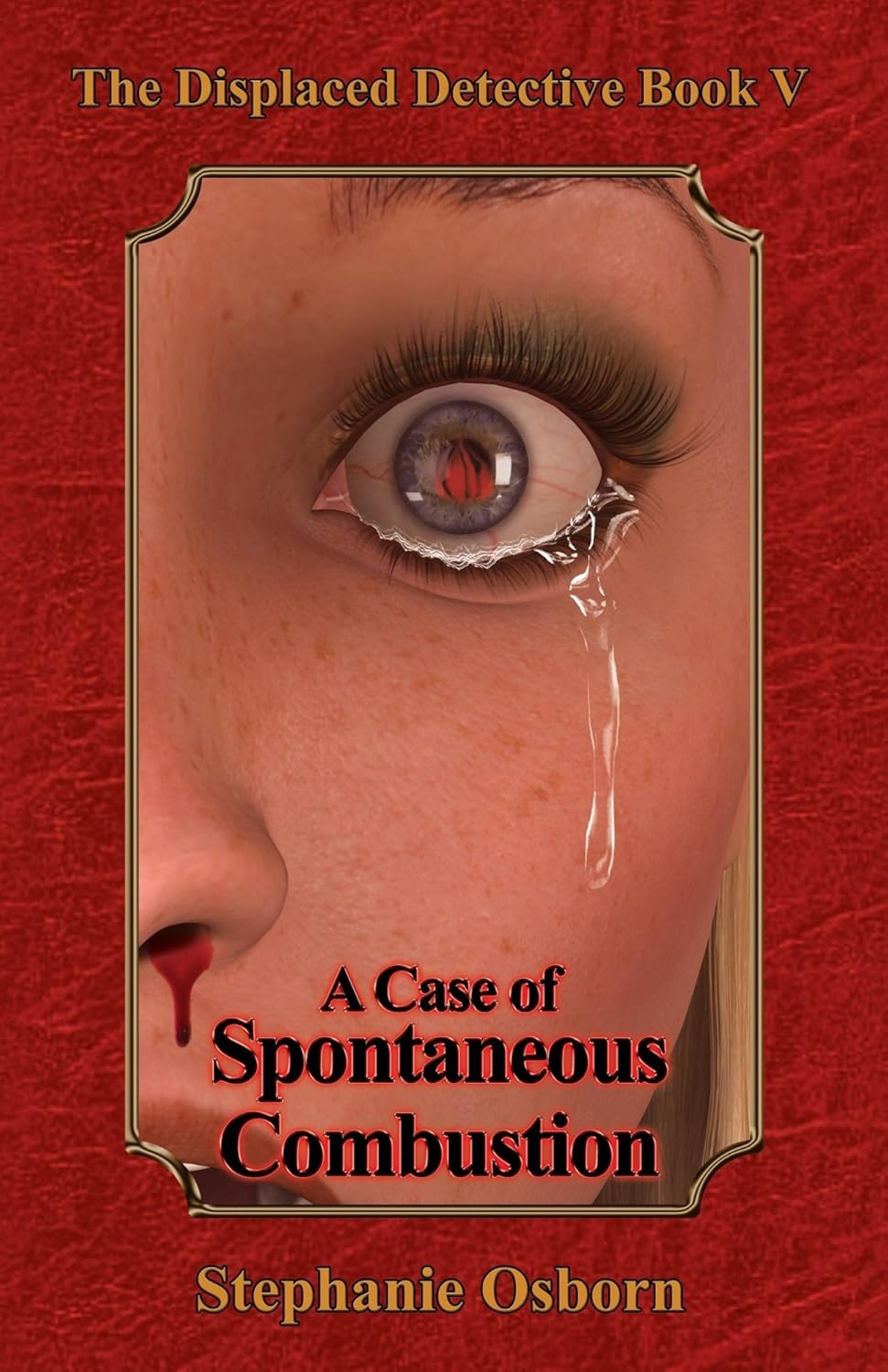
TODAY! Print Release of A Case of Spontaneous Combustion, Book 5 of the Displaced Detective Series!

By Stephanie Osborn
http://www.stephanie-osborn.com

Effective today, I am pleased to announce the print release of book 5 of the Displaced Detective Series, entitled A Case of Spontaneous Combustion!

This book continues the science fiction/mystery adventures of Sherlock Holmes, who has been yanked from an alternate reality in the which he exists, into our modern day reality by Dr. Skye Chadwick, chief scientist of Project: Tesseract. Unable to return to his own place and time, Holmes is forced to adapt, learn, and grow. With Skye's help, he succeeds admirably.


But when an entire village west of London is wiped out in an apparent case of mass spontaneous combustion, Her Majesty’s Secret Service contacts The Holmes Agency to investigate. 

Once in London, Holmes looks into the horror that is now Stonegrange. His investigations take him into a dangerous undercover assignment in search of a possible terror ring, though he cannot determine how a human agency could have caused the disaster. 

Meanwhile, alone in Colorado, Skye is forced to battle raging wildfires and tame a wild mustang stallion, all while believing that her husband has abandoned her.

Who — or what — caused the horror in Stonegrange? Will Holmes find his way safely through the metaphorical minefield that is modern Middle Eastern politics? Will this predicament seriously damage — even destroy — the couple’s relationship? And can Holmes stop the terrorists before they unleash their outré weapon again?


~~~Excerpt~~~

Prologue—Changes in Routine

Stonegrange was a little old English hamlet in the County of Wiltshire in the Salisbury Plain of England, much like any other such ancient British village: a tiny central square in the midst of which crouched a hoary, venerated church, surrounded by a few small shops, and residences on the outskirts tapering off into the surrounding farmlands. On Sundays the church was full, and on Thursdays the outlying farmers brought their produce in to market. The occasional lorry carried in other supplies, and the Post Office ran every day but Sunday. So small was the village that the constable wasn’t even full time.

Still and all, it wasn’t very far from a main thoroughfare, the A338, that ran through Salisbury and on down to Bournemouth and Poole, and it wasn’t uncommon for lorry drivers to stop for a bite in the local pub, or even park their rigs in an empty lot just off the square for a good, safe night’s rest. Sometimes they even used the lot to hand off cargo from one freight company to another.

So no one thought twice when a flat-bed trailer showed up overnight in the lot, a large wooden crate lashed firmly to its middle. The locals figured it was either a hand-off, or someone’s tractor rig had broken down and been hauled off for repair, while leaving the cargo in a safe place.


* * *

Dr. Skye Chadwick-Holmes, horse trainer, detective, and one of the foremost hyperspatial physicists on the planet, answered the phone at the ranch near Florissant, Colorado.

“Holmes residence,” she murmured. “Skye speaking.”

“Hi there, Skye, Hank Jones here,” Colonel Henry Jones, head of security for Schriever Air Force Base, greeted the lady of the house from the other end of the line. “If you don’t mind, grab Holmes and then hit the speaker phone.”

“Oh, hi, Hank,” Skye replied warmly. “Good to hear from you, but I’m afraid I can’t oblige. Sherlock’s not here right now. Billy Williams called him down to the Springs to update him on some new MI-5 HazMat techniques; I completed my certification last month, but Sherlock had a nasty little cold and missed out.”

“Oh,” Jones said blankly. “Well, are YOU available?”

“Um, I guess so, for whatever that’s worth,” a hesitant Skye said. “Depends. Whatcha got?”

“Murder in the residential quarters at Peterson,” Jones noted, grim. “Suspects and victim were all Schriever personnel, though, so I get to have fun with it. Joy, joy.”

“And you could use a bit of help?”

“‘Fraid so,” Jones sighed. “As usual, I’m short-handed right now. The Pentagon never seems to get the fact that ‘Security’ means ‘document control,’ ‘police force,’ ‘guard duty,’ ‘investigation,’ and half a million other different jobs all rolled together, on a base like this.” He sighed again. “Listen, is there any chance you could meet me down there in about an hour or so, have a look around the crime scene yourself, then call your husband in when he’s available if you need to? As a favor to me? I need to get rolling on it A.S.A.P.”

“Um, okay,” Skye agreed after a moment’s thought. “Yeah, I can at least get started on it, and collect the initial data for Sherlock. Maybe even come to some basic conclusions and formulate a theory for us to work on. Gimme the address and I’ll buzz on down…”


* * *

The trailer remained where it was, off Stonegrange’s central square for two days, and still no one thought to question. After all, tractors had mechanical difficulties just like the residents’ own autos and lorries, and sometimes those difficulties took a few days to repair. So no inquiries were made. The trailer was ignored.

Until, at precisely 11:02 p.m. three nights after its arrival, the crate emitted a soft, reverberating hum. No one was near enough to hear it, however—at least, no one curious enough to bother checking it out. Exactly five minutes later, a loud zap! sounded from the box.

Stonegrange was as silent as the tomb the rest of the night.
 

~~~End Excerpt~~~

The official release date for A Case of Spontaneous Combustion was 15 September in trade paper print format, and it has now worked through the suppliers to the stores! (Ebook formats were available in May. If you prefer a link to Barnes-Noble's website, it's here.)

If you've enjoyed reading the adventures of Sherlock and Skye as much as I've enjoyed writing them, hurry out and get your copy of their latest adventure!

Wednesday, September 17, 2014

Elements of Modern Storytelling: Character Development, A Guest Blog by K. E. Kimbriel

By Stephanie Osborn
http://www.stephanie-osborn.com

Today K. E. Kimbriel will be telling us a bit more about how to properly develop characters. Last week we saw how Dina von Lowenkraft used a series of questions to do that very thing, and I thought it was good, because my character development is rather more intuitive. What I mean by that is simple, and yet complex: How would this character act if s/he was a real person? Would he be grumpy over not getting his morning coffee? Would she be happy over that promotion, or dread the inevitable move to another city? Which is in itself a series of questions, I suppose, but far less formal and more...visceral.

So let's see what Kat Kimbriel has to say.

~~~

Kat:


Writers think a lot about characters.

We think about them in the abstract, and we think about those individuals who rent an apartment in our subconscious and start rummaging around, looking for utility hookups and how to arrange forwarding on their mail.  Sometimes they are just visiting for a few months or years.

Other times they move in and don’t check out until we do.

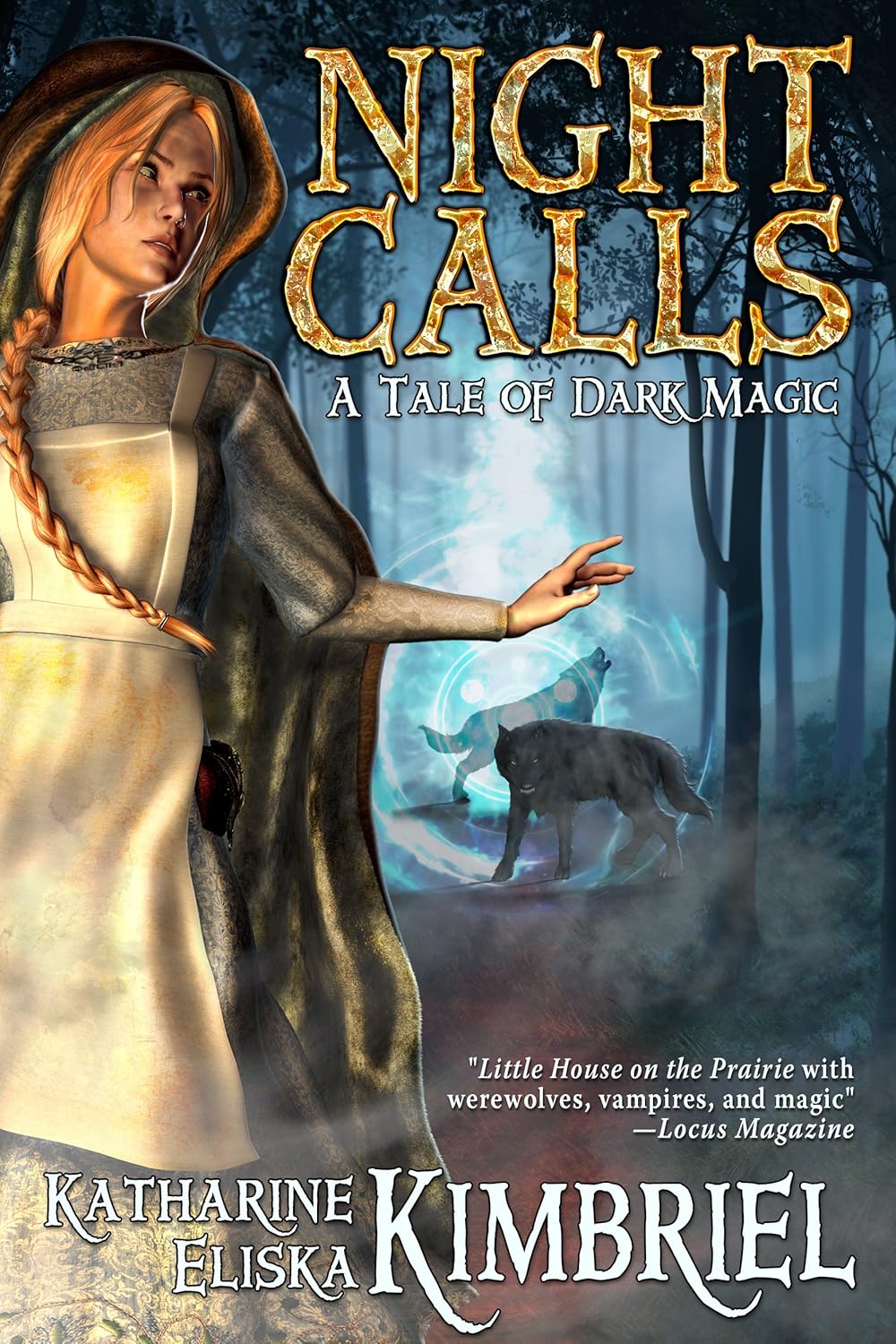
I ended up in the so-called genre areas for very specific reasons.  The foremost of those reasons is that I read for interesting characters dealing with a plot that draws me into a world.  It can be a version of our modern world, as when I read any of the excellent twists and turns on Sherlock Holmes (you can sample Laurie King, Carole Nelson Douglas, or Stephanie Osborn’s take on him just for starters).  It can be a left turn in our own worlds, contemporary or historical.  My Night Calls fantasy novels set in North America circa 1810 could fall into this category.  Laura Anne Gilman’s Retrievers or PUPI crime scene investigators are mystery-fantasies that are contemporary in nature.  Her New York is not our New York (or is it?) but we recognize much about it.

I also prefer SF and fantasy because sometimes you can get people to think about important things if you introduce them to the idea in a fantastic story.  There is subtlety and strength in metaphor. 

Lately I have been thinking about new ways to build characters.  I’m building a checklist of questions for your characters that I think might be a revealing place to start.  In the meantime, David Mamet has come up with several questions that can help you narrow down why a character is in your story.  I’m using them to help me with my next book.  (Yes, I am finishing the last one, no one panic!)

The questions are:
1. Who wants what from whom?
2. What happens if he (she) doesn’t get it?
3. Why now?

It’s very easy to get swept up in world building and character building.  Most of us have met at least one person who has binders and binders of notes about a world they are creating.  There’s a danger to too much of that work.  You get so enthralled with the condiments of your world, you forget about the main course.  Spices and crushed herbs add greatly to your story, and will help make it memorable.  (It is how you tell the story that counts.  There are almost no new ideas—only new combinations and slants.  When it’s unique to you, it will be unique to the reader, too.)  But where is the protein, the special fats that will give your reader sustenance?

Mamet’s questions get down to the heart of “what makes your character tick?”

Who wants what from whom?

Even the most altruistic people want something.  They want to be loved, appreciated, rewarded for work they have done, recognized for their efforts.  They want security, they want power, and they want wealth.  They want their children to be safe, well-educated, have good jobs, meet the right spouse.

You may (and should) have more than one thing going on in a story.  But you should have a dominant story line and a protagonist, and you should start there.  I’m a firm believer in “if the supporting story is coming on strong and the main plot is not, maybe you’ve chosen the wrong protagonist to carry the ball.”  It’s all right if the main plot is letting you get a handle on the supporting tales.  But if the main plot just refuses to show up?  It may not be time for that story—or the story your subconscious wants to tell may be a different story!

Who is tucked behind your forehead, telling you a story or perhaps lurking there, waiting for the opportunity to speak? What is so important that it begins to drive them through this portion of their life?  Is it something new that has dropped from the sky, and unlucky protagonist, she happened to catch it?  Is it an old fear or incident come back to haunt her?  Is everything good about to unravel in her life?  Or is a streak of bad luck about to end…and be careful what you ask for?

Who is on the other side of the equation?   Are they a willing participant in the story to come, or are they dragged along in the wake?  Are they willing to help the protagonist, or will they fight?

What happens if they don’t get it?
 
If you are writing character- and plot-driven fiction, “what happens” should be important.  This is not “if I don’t get the soufflé to rise, dinner is ruined” plotting.  This is, “If dinner doesn’t gel, the Venusian Ambassador may eat his attaché, thus an interstellar incident erupts in my home,” territory.   And the ambassador eating his attaché should be only the beginning.  When the ambassador later gives birth to a spanking new baby Venusian born with the memories of the eaten attaché, and people start plotting to place that infant in a position of power, you’ll know you’re not in Kansas anymore.

So you need a person who wants something, probably from someone or something, and you need consequences if your protagonist doesn’t get it.  If the McGuffin isn’t delivered by Friday, your heroine loses her soul.  Which vial is actually missing from the deep freeze at the CDC, and what happens if the microorganism cuts loose?  A tourist has been injected with an unstable explosive that will turn them into a human bomb within 24 hours.  And your lover is on the same plane (this could work for any of the three!).

It must matter to the protagonist—and you must make it matter to the reader.

Why now?
 
What makes story a novel?  One thing is that the story has a beginning and an end.  Good fiction gives you the illusion of both history and a future for your characters.  It’s hard to care about a symbolic everyman or everywoman, but if s/he’s written well enough, you will slot yourself into their life for a brief moment.  In a novel, you have the chance to observe or be someone else—just for a while.  You can sample more lives than you can ever live yourself, more adventures, more puzzles to solve, more thrills to experience—a book will take you anywhere you want to go.  If it won’t get you where you want to go?  Write the story yourself.

A story has a build to it, a rising action that must peak and ebb until the final rise into a climax and coda.  (Yes, it’s not your sneaky mind; there is an echo of foreplay and consummation to a good story.)  The best stories give you weight—they pin a tale to a place and time so that you can smell the street vended rolls, taste the hint of salt from sea water creeping into the water table, hear the free musicians outside the music hall, feel the river mist against your skin as you greet the pale dawn light.  A classic tale can be transported to another place and time, but the elements that make it riveting should be transportable with it.

What are usually transportable are the characters and their inter-relationships.  We recognize the scalpel of Sherlock Holmes’s intelligence, the brilliant madness of Professor Moriarty, the compassion and empathy of Doctor Watson, no matter where we drop them and how they look on the outside.  If their names are different we may still refer to them by those symbolic names, because we know their core, what they stand for—we know what they want and how they will respond if they don’t get what they want.  In their purest forms they become archetypes, and we use them to build new worlds.

You can diagram any decent story using these suggestions.  See if you can distill some of your favorites in this game.  With a series of books, you will probably find two “What do they want?” answers—what is their core response, why they are driven to go on, and why this particular adventure at this time.

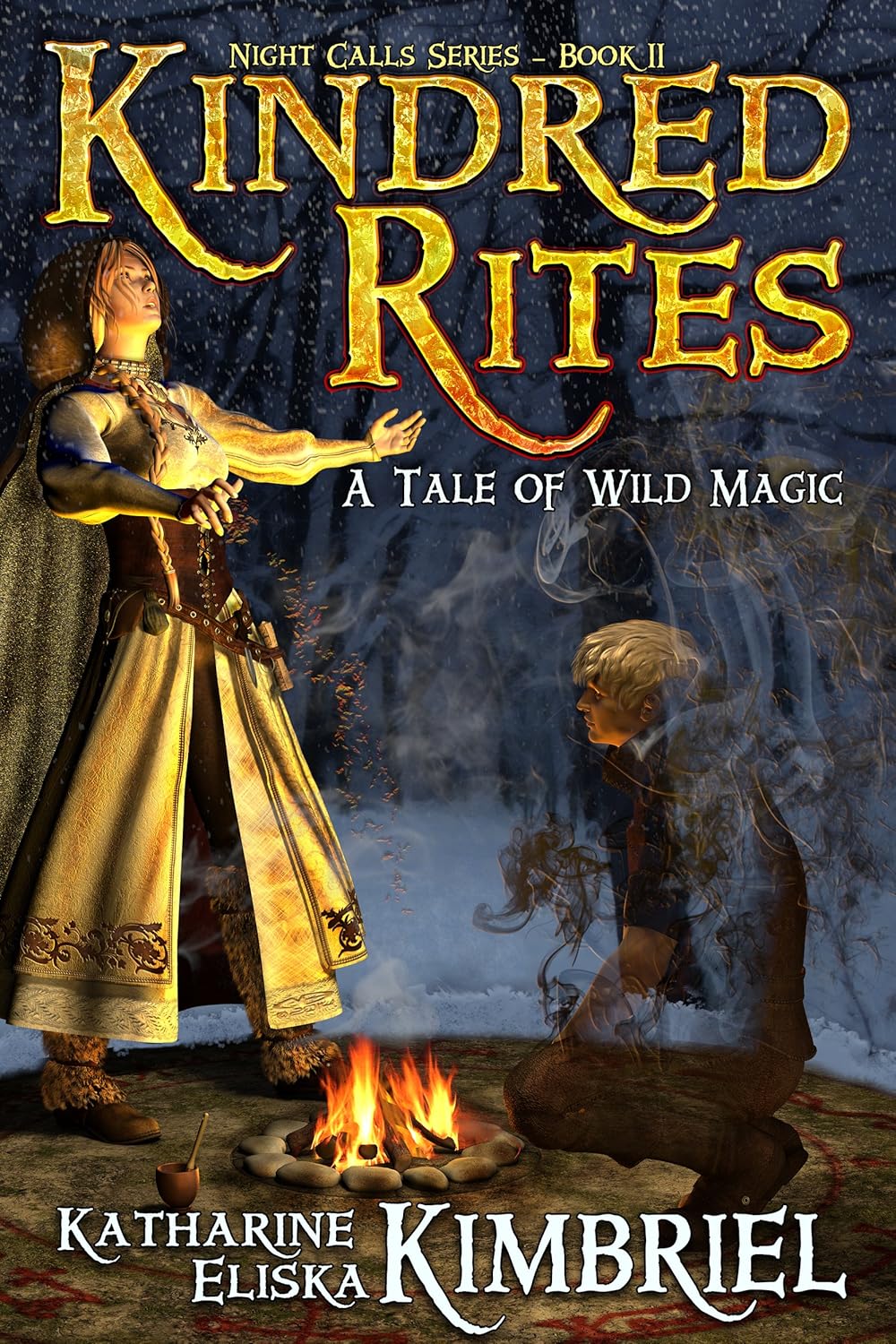
With my character Alfreda Sorensson in Night Calls, Kindred Rites, and the forthcoming Spiral Path, we have a young girl who discovers that not only was she born of a line of great magic-users—she is one of the chosen.  It’s a calling, and a dangerous one—her mother apparently resisted the call.  But Allie sees it as Hobson’s choice—she must be trained, and there must be trained people to protect loved ones from being eaten by the Dark Side and its creatures.  The magic has bloomed; there is no time to lose.  In Night Calls, the sudden appearance of magic late, at 11, means they rush to get her into training, even as she is already attracting the attention of dark creatures.  In Kindred Rites Alfreda runs up against a family of sorcerers who think that an untrained child of power would be a good thing to add to their family tree.  Her kidnapping means now is the time for the tale.  And in Spiral Path, Alfreda has to learn ritual magic quickly to protect her from control by powerful entities.  That means joining the exclusive school of elusive Cousin Esme.

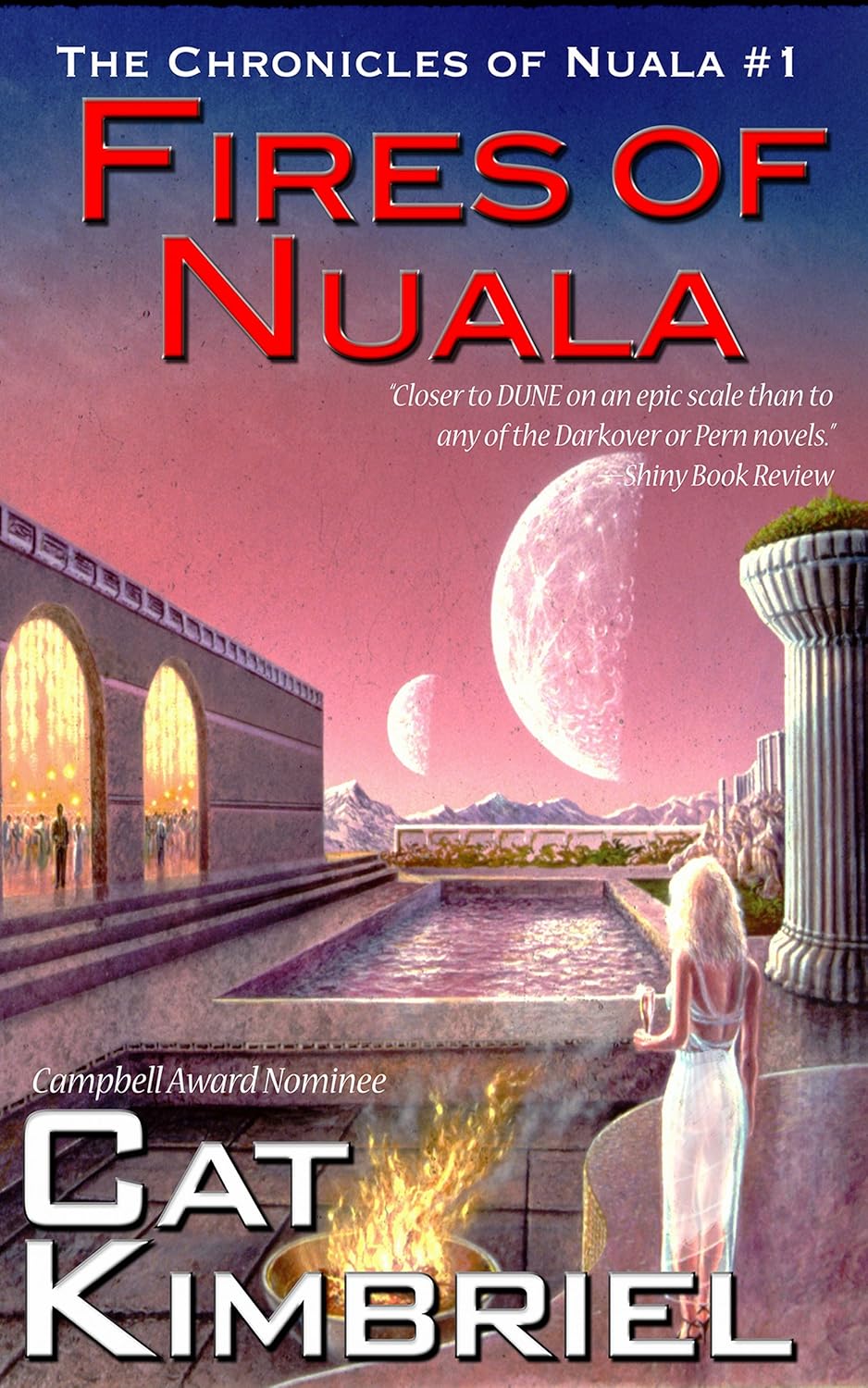
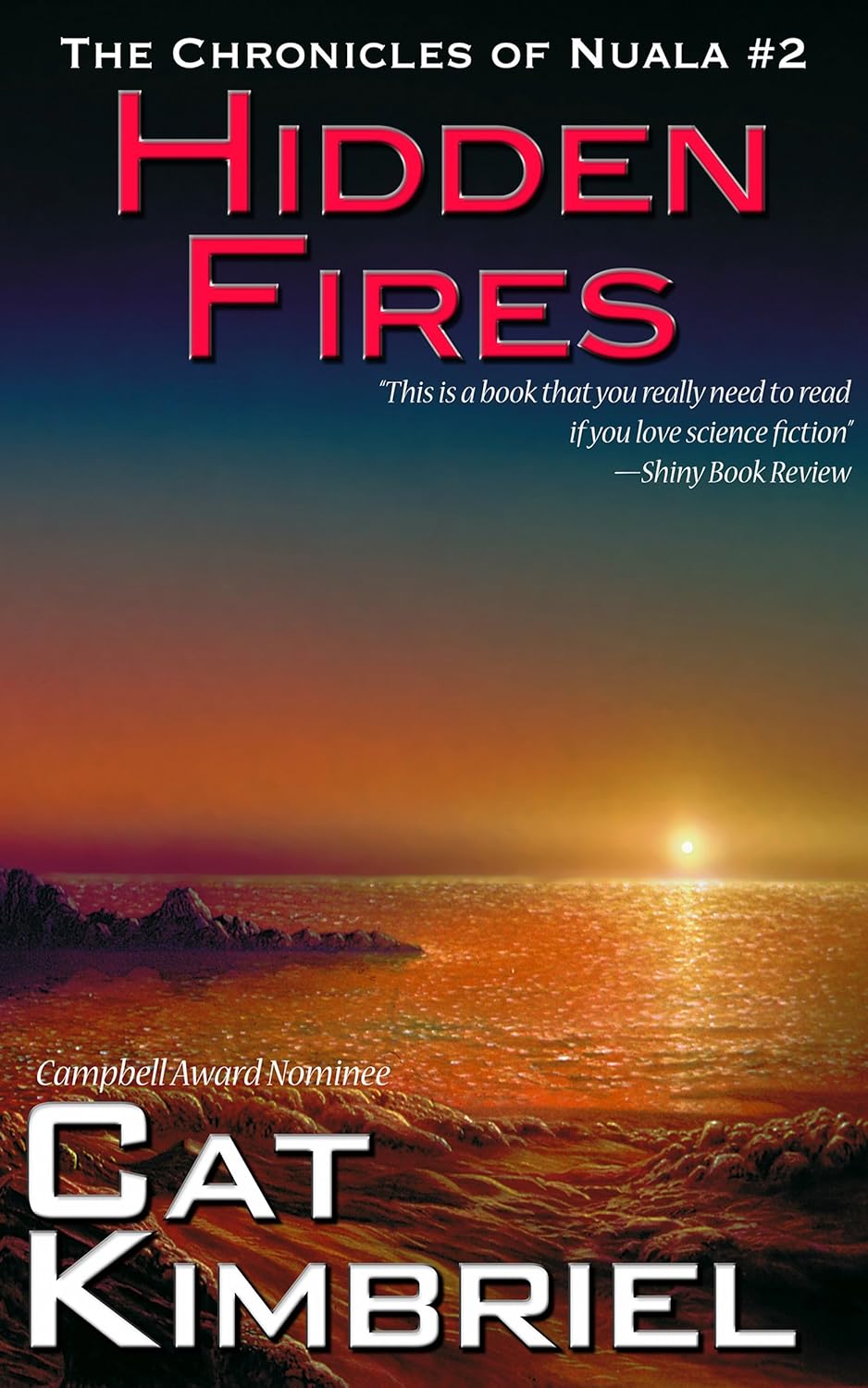
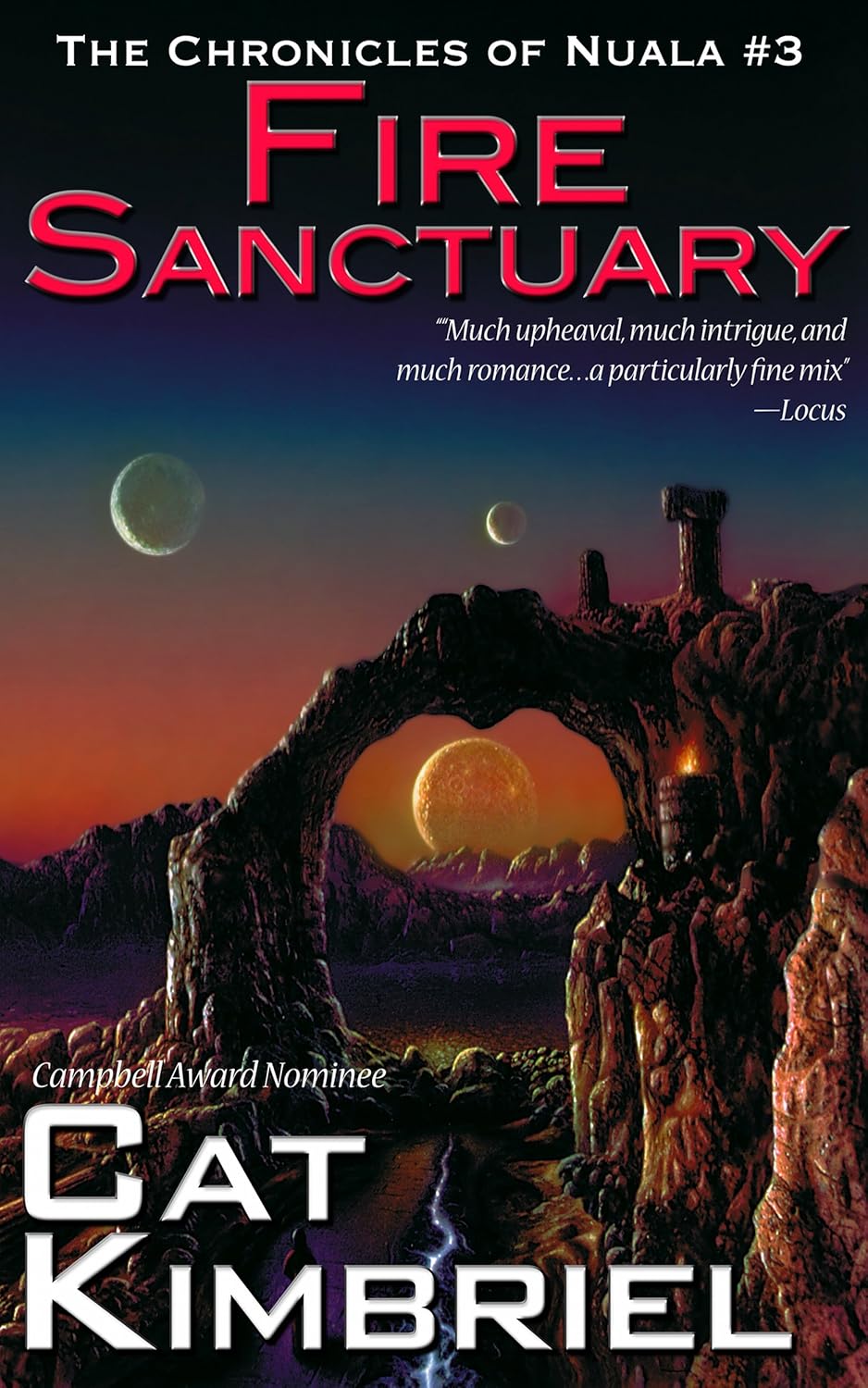
In my Nuala science fiction, I have characters who are dealing with crises of succession and war, of treason and skullduggery.  Men and women alike are trying to protect those they love and solve problems before those problems come home to roost.  In Fires of Nuala, a beautiful free trader (i.e. high end thief) named Darame has come to Nuala to help steal obscene wealth—but others have come to overthrow a government.  She is forced to help the surviving heir hang onto his power to prove the innocence of those she loves.   In Hidden Fires Darame has made a very good life for herself on Nuala.  She found the wealth she thought she wanted, but also the family she never had—and she plies her talents to protect them, whatever the cost to her.  She will protect them even when her own past catches up with her from an unexpected quarter.  In Fire Sanctuary the distant descendants of the previous books deal with intergalactic betrayal and war.  They have little time to protect themselves and consolidate their resources and power.  And there is a price for the support of unexpected allies.

Examine your favorite books.  Who wants what from whom?  What happens if s/he doesn’t get it?  Why now?


~~~

Fascinating that Kat and Dina both favor a questionnaire/checklist for character development, and of similar natures. Yes, I definitely think I need to put all these questions together and use them to help me make my character development even stronger. 

I wonder what I'll learn next week...?

-Stephanie Osborn
http://www.stephanie-osborn.com

Wednesday, September 10, 2014

Unbroken Circles for Schools, A New Book by Kenneth Johnson

By Stephanie Osborn
http://www.stephanie-osborn.com
Kenneth Johnson is a fascinating guy. Principal Chief of the Florida Tribe of Cherokee Indians, folklore master, culturalist, social scientist, negotiator/mediator, teacher, and more, now he's set out to write a book for teachers about teaching -- specifically, how to handle conflict in the classroom, in a way calculated to keep bad behavior from escalating to something that requires the court system. Given some of our conversations, I'm really looking forward to reading it.

~~~


Ken:

First, let me say that it is always an honor to be invited to guest blog for Stephanie Osborn. What a talented individual! NASA scientist, former detective, ordained minister, bestselling author—you name it and she has probably done it. But, that is a polymath for you.

Usually, I am talking about allegory and culture.  After all, that is what I do as a culturalist – I study cultures through the lens of a social scientist.  And with culture also comes conflict.  That is also the reason why I trained with the Florida Supreme Court’s Dispute Resolution Center (FL DRC) and the University of West Florida College of Professional Studies (UWF COPS) in the fields of Conflict Resolution (CR) and Restorative Justice (RJ).  Specifically, I am a Certified County Court Mediator through the FL DRC.  I exclusively trained at UWF COPS under a best-selling Simon & Schuster author while learning RJ.  Part of this training also required that I do some field work at Holman Prison in Atmore, Alabama – a maximum security “death house.”

Conflict is a natural part of life.  It can build you up – as in anabolic conflict.  Or it can destroy relationships – as in catabolic conflict.  Sadly, the world focuses too much on the bad and too little on the good to see the field for its dynamic complexity. 

The 1990s were my teen years.  Ironically, this decade arrested more youths than all of previous US history combined.  One academic in particular capitalized on this national fear of our youth with a Simon & Schuster best-selling book called Body CountHere, pre-teen boys were called Godless, murderous thugs who killed and raped without remorse.  This book, along with other writings from the author, proposed a myth called the “Superpredator Theory.”  Later, politicians like Florida Senator Bill McCollum used this theory to push for stronger anti-juvenile legislation at the federal level while states compounded the issue with even more onerous forms of legislation.  In particular, Florida Governor Charlie Crist pushed for as much as 7% of the juvenile population of the state to be arrested and charged as adults for felony and misdemeanor crimes. 

This book [Johnson's book, Unbroken Circles] is essentially a stand that I made.  I asked myself, “Why not me?  Why can’t I do something to stem this tide?”  Others have written books that would have helped.  However, to fully understand all of the ins and outs of the programs, a school would have to fork over to the author and his/her company thousands of dollars for program manuals, books, cards, and other tools.  So, instead, I decided I would break from the herd and give a holistic approach that would empower the community to make the changes that they felt were needed.  Best of all, I offered up everything for free.  This, I felt, would allow for the schools to develop their own programs tailor-fitted to their specific needs.

It would seem that I am not alone.  Lately, Florida is now following suit with California to no longer be the top arrester of juveniles in the country.  Just this past June, Florida Senator Greg Evers, along with other extraordinary leaders in the Legislature, passed the “Pop Tart” bill that Governor Rick Scott just signed into law.  The bill gets its name from an incident in Baltimore, Maryland where 7 year old Josh Welsh was suspended for nibbling a pop tart until it was somewhat in the shape of a gun.  Nationally, 2 million students are arrested each year.  Even more are suspended and expelled with the majority being for offenses such as what Josh Welsh did.    Sadly, the media still plays these incidences off as being trivial, weird, atypical, and rare rather than being epidemic.  And while this new law will stem the tide of many suspensions and expulsions, it does nothing to stop the 58,000 arrests per year of juveniles in Florida.

The timing of this book’s release could not have been more perfect.  Communities are hurting all over this nation with practically nothing being reported in the media.  If you are poor, of a given racial/ethnic class, a male, etc. then your chances of going to jail or prison as a juvenile are significantly higher than that of an adult.  Schools have even supported this trend by bringing in grant-funded School Resource Officers (SROs) in response to performance-based funding on standardized tests.  Social Scientists now call this the “Test-to-Prison Pipeline” since an arrested student cannot have their tests generally counted towards their overall school performance. 

Here’s how the book works – I merge CR and RJ practices into what is known as a Collaborative Justice practice.  My book Unbroken Circles SM for Schools:  Restoring Schools One Conflict at a Time is broken into two parts.  Section I is designed to give an overview of the programs needed as well as an understanding of what conflict really is.  Personally, I would buy the book just for Chapter 1.2’s discussion of the history and nature of conflict.  Meanwhile, Section II is devoted to the “nuts and bolts” of how to make a Collaborative Justice program work effectively.  It gives options to best use, and even eliminate over time, the SROs from schools.  Using Circles, Peer Mediation, Panels, Conferences, and Justice/Peace Circles the book fosters a meshing of various practices together in order to form a network of overlapping programs to eliminate catabolic conflict while fostering the benefits and transformative powers of anabolic conflict. 

Through this book, communities are urged to become empowered to address issues at the local level rather than waiting for dictates from the legislative and bureaucratic process.  Concepts such as “Community of Care” and “Reintegrative Shaming Theory” are used with proven science to back them up as being better alternatives to the status quo.


Ken Johnson is an author, lecturer, and conflict specialist.  His book Unbroken Circles SM for Schools: Restoring Schools One Conflict at a Time is published by SYP Publishing (ISBN-10: 1940869161 & ISBN-13:  978-1-940869-16-2).  He can be found on Twitter (@KenJohnsonUSA) as well as on LinkedIn (www.linkedin.com/pub/ken-johnson-mba/8/241/b3/), Crokes (@KenJohnson), and Facebook (www.linkedin.com/pub/ken-johnson-mba/8/241/b3/).   You can learn more about Ken Johnson and his works at http://kenjohnson.americasculturalist.tripod.com.


~~~

Fascinating, Ken! I'm really looking forward to reading this!

-Stephanie Osborn
http://www.stephanie-osborn.com